

Amplified hazards: night flying with the police

For police fliers, night operations amplify complexity across three dimensions: human factors, environmental constraints, and systems and regulatory framework. How do police aviation units worldwide equip and train their officers to deploy at night? Robin Gauldie finds out
“In city environments, police aviators operate amid dense infrastructure (towers, cranes, wires), high ambient light, complex RF environments, and confined operational corridors,” according to Marie-Eve Breton, spokesperson for the Royal Canadian Mounted Police (RCMP), Canada’s nationwide force.
“In residential suburban areas, challenges include mixed lighting and varied street layouts, frequent transitions between built-up areas and green spaces, and careful management of noise footprint,” she added.
Tasked with missions including regular law enforcement operations, surveillance, and search and rescue (SAR), the RCMP operates fixed-wing and rotary aircraft from bases in each of Canada’s 10 mainland and island provinces. All aircraft are capable of night operation, and the fleet includes Airbus EC130/AS350 B3, H145, EC120, and Sikorsky H-60 Black Hawk helicopters, plus fixed-wing types including the Cessna 206 and 208 Caravan, De Havilland Twin Otter, Kodiak 100, and Pilatus PC-12, with Pilatus PC-24 aircraft arriving in spring 2026. A multi-year fleet renewal program will include upgraded night vision goggles (NVG), infrared (IR) lighting, and other innovations in night operations technology, Breton said.
Night operations, Breton pointed out, amplify almost every hazard associated with police aviation, with reduced situational awareness, increased workload, sensor and aircraft limitations, and regulatory constraints such as visual flight rules (VFR) minima and noise abatement provisions. Night operations increase crew workload, she emphasized, calling for more NVG scanning and other sensor management, while NVGs increase capability but introduce their own challenges: narrow field of view, reduced depth perception, and incompatibility with some types of cockpit and external obstacle lighting.
Police aviation colleagues worldwide, and their equipment suppliers, cited similar challenges. Flying at night significantly reduces horizon references and ground detail, increasing the risk of spatial disorientation. Urban light pollution can create false horizons, while remoter rural environments may often provide no light cues, and night operations over water or snow at night present a particular risk. Night flying reduces a pilot’s ability to visually detect deteriorating weather and regulatory requirements, and weather minima are more stringent.
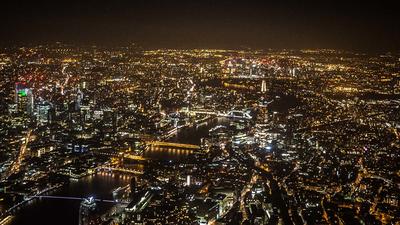
In rural surroundings, endurance, sensor sensitivity, and precise air–ground coordination become paramount in an operating environment of sparse lighting, large search areas, variable terrain, and fewer visual references, according to Chief Superintendent Fiona Gaffney, Accountable Manager at the UK’s National Police Air Service (NPAS).
“Night operations are among the most demanding aspects of police aviation,” she added. “Reduced visual cues increase cognitive load. Dense urban environments pose hazards such as high-rise buildings, cranes, wires, and complex RF environments. Rural terrain introduces challenges such as sparse lighting, sudden topographical changes, and wildlife activity. Weather effects (fog, low cloud, precipitation) are more limiting at night due to reduced contrast and degraded depth perception,” she pointed out.
NPAS operates a mixed fleet of Airbus EC135 and EC145 helicopters and Vulcanair P.68 fixed-wing aircraft from 15 bases across England and Wales. Both categories are fully capable at night when equipped with synthetic vision / NVG-compatible systems, mission consoles containing specifically selected equipment, forward-looking infrared (FLIR) sensors, and searchlights.
“At night, NPAS missions primarily focus on law enforcement tasks and locating high-risk missing persons,” Gaffney said. “Typical operations include surveillance, suspect searches, vehicle pursuits, public order support, counterterrorism, and firearms incidents.”
Aircraft type selection
Platforms are selected for factors including endurance, on-scene requirements, proximity, and capability, Gaffney stated. She cited the EC135 and EC145’s agility, hover capability, tight turning radius, and stable low-speed flight, making them ideal for surveillance and containment. Trade-offs, she pointed out, include higher operating costs.
“Hover and low-speed operations are particularly challenging at night in areas with low ambient light and limited horizon definition, requiring careful crew coordination and reliance on NVG and sensors. This is due to reduced visual cues, not increased weather dependence,” according to Gaffney. In contrast, NPAS says the fixed-wing Vulcanair P.68 offers lower cost per hour, greater endurance, and efficient area coverage for surveillance, but is less flexible than rotorcraft in rapidly evolving dynamic incidents, and its crew configuration potentially means a higher workload.
NPAS is taking final delivery in 2027 of seven new H135s to replace its older rotorcraft and ensure compatibility with next-generation mission systems. The helicopters will have enhanced night vision imaging system (NVIS) capability, including advanced FLIR cameras, 3D spatial audio, and upgraded video architecture to support advanced sensor integration. Meanwhile, 4G/5G connectivity will permit faster, more reliable data sharing between other NPAS aircraft and force ground assets, and enhanced capability of remote use of sensors and mission handover between platforms. Additional enhancements will include weather radar, collision avoidance systems, high-definition (HD) air-to-ground and air-to-air data links, automatic number plate recognition (ANPR) capability, and ergonomic workstation design.
For New Zealand Police’s ‘Eagle’ Air Support Unit, based at Onehunga, Auckland, with a fleet of three Bell 429 helicopters, most night operations occur at around 1,500–2,000ft over New Zealand’s largest city, according to Aviation, Maritime, and Border Manager Inspector Darren Russell.
We need to balance safety, noise mitigation, and optimal observation angles
“We need to balance safety, noise mitigation, and optimal observation angles,” he said. “Night limitations are largely standard civil aviation considerations: weather, terrain, noise, and regulatory constraints.”
Eagle primarily operates in the Auckland metropolitan region but can be deployed nationwide, and operating at night over New Zealand’s varied terrain, embracing urban high-rise areas, coastal regions, and complex rural and alpine environments, combined with often-changeable weather conditions, can create challenges.
“The Air Support Unit is primarily a law enforcement observation platform tasked with tracking fleeing vehicles and offenders, coordinating ground units at serious incidents, providing overwatch for high-risk events, and searching for missing or vulnerable people,” Russell added. “We are used to support search and rescue missions in a search capability only, with winch or rescue operations the responsibility of specialist emergency medical services (EMS) helicopters.”

Introduced to the Unit in 2019, the Bell 429 has benefits including enhanced safety margins at night, better endurance, improved speed, modern avionics, and more usable cabin space, according to Russell. Aircraft carry FLIR, night vision equipment, gyro-stabilized binoculars, GPS-integrated mapping, a spotlight, and a modern navigation system that frees up crew to focus externally. Mission and navigation displays are configured for low-light use and to preserve night vision effectiveness. All crew are NVG trained, Russell said.
“Future enhancements will likely be around reliable data while airborne through Starlink, and further stand-off distances from our cameras to aide with target identification and noise mitigation,” added Russell.
Police Scotland, with its partner air ambulance and SAR entities, faces – on a smaller scale – some of the same challenges as its counterparts in Canada and New Zealand. Glasgow City Region, Scotland’s largest conurbation, has a population of 1.8 million spread across 3,500km² of densely populated inner city, residential suburbs, industrial areas, farmland, and commuter towns. Beyond Scotland’s Central Belt, Police Scotland’s single helicopter, based at Clyde heliport in Glasgow, covers the wildest, most mountainous terrain and coastlines in the UK, with occasionally sub-Arctic conditions in winter.
Babcock provides the H135 aircraft (and one backup) and pilots under contract, and the type has been chosen for its low direct operating costs, compact dimensions, and twin engine safety, according to Inspector Scott Anderson of Police Scotland.
Law enforcement and missing person searches take up most of the crew’s time
“Law enforcement and missing person searches take up most of the crew’s time. We are occasionally involved in SAR incidents; however, HM Coastguard [the UK’s national maritime emergency service] provides dedicated aircraft with a winch capability specifically for this role,” he said.
Cockpit configuration
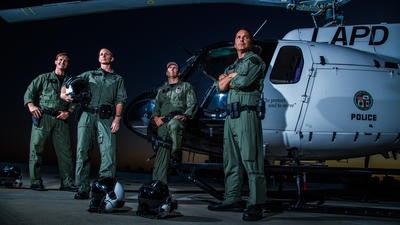
Tony Tsantles, Director of Operations and Chief Instructor at Aviation Specialties Unlimited (ASU), a specialist supplier of NVIS aircraft modifications based in Boise, Idaho, highlighted key challenges for crews, including visual separation and deconfliction with other airspace users while maintaining visual contact with activity on the ground.
“Nighttime operations can cause some additional considerations when scanning to identify traffic, looking both aided and unaided, through the NVGs and around them,” Tsantles said.
Nighttime operations can cause some additional considerations when scanning to identify traffic, looking both aided and unaided, through the NVGs and around them
Avoiding other aircraft and at the same time coordinating with both air and ground teams can be highly demanding for pilots and tactical flight officers (TFOs), he added. As part of ASU’s modification process, cockpit consoles are evaluated for NVG compatibility, and any light source that is not NVG friendly is adjusted to ensure TFOs can use the goggles effectively. Improperly filtered light can create glare, reflections, and other interference that hinders outside scanning, Tsantles pointed out.
On board NPAS rotorcraft, mission consoles and cockpit environments are configured for night use with dimmable, non-glaring NVG-compatible cockpit lighting and workstation and panel component backlighting synced with cockpit instrument lighting. Dimmable displays and anti-glare screens maintain readability without compromising night vision, and optimized control layouts and symbology minimize eyes-off time, supporting rapid sensor-to-map correlation.
According to Gaffney, future innovations are likely to include sensor fusion, combining thermal, electro-optical and infrared (EO/IR), and map data streams to improve detection and reduce false positives; artificial intelligence (AI)-assisted identification, with automated cueing to likely persons/vehicles of interest for faster triage; and improved digital connectivity, with higher-bandwidth downlinks and real-time geospatial sharing. In addition, new equipment including short-wave infrared (SWIR) sensors, laser technology, and use of filters will provide additional situational awareness in environments that provide challenges to current systems, she said.
The importance of shift work
Shift work has been central to New Zealand Police’s air operations since 2017, when the Air Support Unit moved to 24/7 operation, and it’s central to the Unit’s model, according to Russell.
“Crews operate under aviation fatigue rules for pilots and police rostering systems for TFOs,” he said. “These rosters are fatigue tested to ensure staff fatigue does not impact operational safety.”
Pilots maintain civil night flying currency via in-house training, and TFOs receive training covering observation, tracking, equipment use, and incident coordination.
Shift work is also integral for night readiness at NPAS, Gaffney said.
“Crews operate on regulated duty rosters with scheduled rest and controlled handovers to manage fatigue,” she said. “Training emphasizes cognitive resilience, crew resource management, and scenario rehearsal to sustain decision quality during extended night shifts. Operational procedures aim to minimize workload spikes through clear tasking, disciplined comms, and effective air–ground coordination.”
Crews operate on regulated duty rosters with scheduled rest and controlled handovers to manage fatigue
New developments make rigorous training vital
Innovations likely to impact police aviation within the next three to seven years will include greater use of AI, helmet-mounted displays and augmented reality (AR) overlays, and digital NVGs, according to Breton. “Analog NVGs will slowly give way to digital low-light sensors, thermal and image-intensifier fusion, and overlay of aircraft flight symbology directly into the NVG view,” she said. “AI is already being integrated into mission systems.”
Breton identified helmet-mounted displays and AR overlays as “one of the biggest future trends”, with real-time mapping overlays, sensor picture fused with NVGs, and “through-the-aircraft” vision using 360° IR cameras.
Over the next five to 15 years, the RCMP foresees the advent of fully fused cockpit environments, with FLIR, NVG, moving map, and synthetic vision all merged into a single immersive display, Breton said.
With new rotary and fixed-wing platforms, plus equipment such as ASU’s E3 – which the manufacturer says offers increased situational awareness and a 33% weight reduction compared with legacy NVGs – in the pipeline, training is vital, and police aviation operators must find the right combination of external and in-house training, as well as balancing simulation and real-life sessions.
“The RCMP contracts out our recurrent training, which includes night emergencies and full-on touchdown autorotations at night on NVGs,” Breton said. Some simulator training is provided, but most of the training is completed in-aircraft, she added.
“Most operators rely on a blend of outsourced instruction and rigorous in-house training when available,” according to Tsantles.

“Annual refresher training is especially important for law enforcement pilots, who often attend simulator sessions to review aircraft-specific emergency procedures that can be difficult to practice safely in real aircraft,” he said. “These yearly sessions help reinforce perishable skills, ensure pilots remain proficient under stress, and keep them prepared for rare but critical situations.” ASU continues to recommend conducting NVG training in an actual aircraft, he added.
“Modern simulators replicate night-flying conditions increasingly well, but real-world nighttime environments – and particularly challenging landing zones – provide visual complexities that simulators cannot fully reproduce,” he pointed out.
Modern simulators replicate night-flying conditions increasingly well, but real-world nighttime environments – and particularly challenging landing zones – provide visual complexities that simulators cannot fully reproduce
“Practising the use of visual cues for landing in both illuminated and completely unlit areas significantly enhances pilot and crew confidence, strengthens situational awareness, and ensures safe, consistent performance during mission operations,” Tsantles said.
At NPAS, training plans include a familiarization course beginning in early 2026 to prepare crews for new systems, according to Gaffney.
NPAS training combines in-house programs, which cover NVG procedures, sensor employment, airspace/terrain risk management, comms disciplines, and scenario-based decision-making tailored to policing tasks. “Mission equipment training embraces instruction for operational systems such as FLIR, mapping, consoles, and downlink, and is delivered by NPAS pilots and TFO trainers using syllabi and training material created and maintained in-house using a range of resources,” Gaffney said.
“Simulation plays an increasing role, allowing crews to rehearse complex scenarios safely and cost-effectively before live flights,” she added.
At Police Scotland, Babcock provides initial NVG training, with subsequent in-house training, including simulation, conducted by Police Scotland Air Support Unit training officers.
Operating at night is one of police aviation’s most demanding tasks. Rigorous training, meticulous mission planning, and an ever-growing array of advanced technology can help operators rise to the challenge.
May 2026
Issue
Training for special missions is on another level, so it’s a great pleasure to bring you the training edition of AirMed&Rescue for May. We have features on night flights for police aviators; the simulators for military special missions training; the systems and scenarios for hoist operations; and engineering training for airframe and powerplant mechanics.
Robin Gauldie
Robin Gauldie is a former editor of Travel Trade Gazette and other travel and tourism industry titles. Now a freelance journalist specialising in travel, aviation and tourism, he writes for a variety of international consumer and business publications including International Travel & Insurance Journal, AirMed and Rescue, and Financial World.