
Case study: Final flight: Liverpool to Lima

Leah Rutter, Flight Nurse at REVA Air Ambulance, presents a case of a young patient with terminal cancer on her final flight home to Peru from the UK, emphasizing the importance of critical care and the humanity in mortality
In March 2023, 20-year-old Alexandra Angeles Caycho sought medical care after a back injury while playing rugby at Lancaster University. By April, she was diagnosed with terminal inoperable stage three pancreatic cancer. While completing chemotherapy and radiation at the Clatterbridge Cancer Centre, she finished her fine arts degree. By mid-August 2024, the cancer had metastasized extensively in the upper abdomen, involving the duodenum, liver, and pancreas, which caused an increased encasement of the vascular structures. This left Alex with tumor-related pain, hematemesis, hematochezia, ascites, pneumobilia, metastasis to right lung and bones, thrombosis of the right upper extremity, pyrexias, anemia, thrombopenia, and an acute kidney injury. Alex and her loved ones were made aware of her prognosis. A Do Not Resuscitate document was signed and her dying wish was set into motion, to pass away in her home surrounded by loved ones.
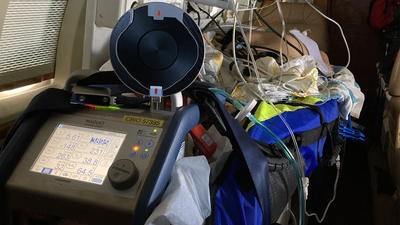
It was a race against time as Alex began decompensating and the physicians gave her days to weeks to live. Her cancer support group peers took to GoFundMe and ITV News, raising over £166,000 within a week to fund an air ambulance from Liverpool, England, to Lima, Peru. Specialist Rescue Group and REVA Air Ambulance orchestrated unparalleled logistics to repatriate Alex home. The pre-flight considerations included whether to fly her at sea level or altitude, affecting fuel calculations and cost; how many fuel stops and where; and immigration delays. Further logistics included the restocking of medical supplies, medications, blood products, and plans to divert were she to expire in-flight. Alex, her mother, her boyfriend, and two cats were met and briefed by the REVA flight team, ready to embark on her final flight.
The pre-flight considerations included whether to fly her at sea level or altitude, affecting fuel calculations and cost; how many fuel stops and where; and immigration delays
The flight team’s goal was not only to provide continuous critical care and sustain her vitality but to ensure Alex preserved her autonomy, dignity, and formidable spirit. Clinical stability was maintained at altitude for the entirety of the flight. Alex required 10 blood product transfusions, titration of various IV medications, and invasive procedures of intraperitoneal drain, foley catheter, and additional peripheral IV access. The total flight time was 30 hours and required three aircraft swaps, three pilot swaps, one medical crew swap, and five fuel stops in Iceland, Canada, the USA, and Panama.
Countless hands from across the world came together and worked tirelessly to fulfill a stranger’s dying wish. With effective team communication and meticulous clinical care, Alex successfully landed in Lima, Peru. This afforded her two more weeks in the familiarity of home, to be surrounded by family and friends as she transitioned from life to death. Although young, Alex lived a full life, receiving her degree, living around the world, and falling in love. She led with appreciation and gratefulness and taught us all to measure life by its quality, not solely quantity. Alex wanted to spread her story to bring awareness to terminal diagnoses in the younger population. This profound case shows how overwhelming humanity can be when a human being is seen as more than just a patient and mortality is faced together with compassion.
Alex wanted to spread her story to bring awareness to terminal diagnoses in the younger population
To be a part of this mission has been the greatest privilege of my professional career. It has fundamentally altered me as a human and as a clinician.
October 2025
Issue
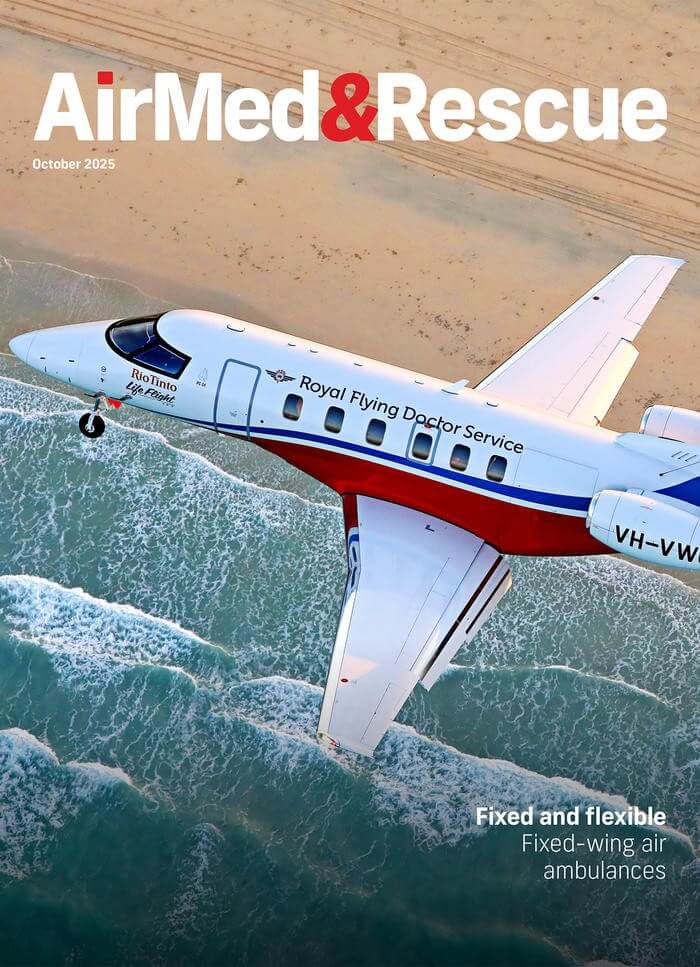
In our October edition, we bring you news, features and more showcasing special missions from around the world. We have features that focus on the fixed-wing air ambulance platforms that are enhancing air medical operations; the care and considerations when transporting children with infectious diseases at risk of deterioration; the law enforcement agencies that use aircraft to find and track persons of interest; and the challenges of treating patients with hyper- and hypothermia.
Leah Rutter
Leah is a Flight Nurse with a decade of critical care experience in emergency and trauma medicine, Federal Emergency Management Agency (FEMA) disaster response, domestic travel nursing throughout the USA, and international fixed-wing transport.