
Choosing for the long term: why vendor stability matters to special missions operators

Following Vellox Group’s inclusion in the 2026 Inc. 5000, CEO Aleks Banas explains what sustained growth means for customers, why vendor stability deserves greater attention, and how a growing technology company can continue earning operator trust
Special missions operators do not change core operational systems lightly. Software may support dispatch, flight operations, safety, maintenance, and reporting around the clock, so the choice of provider carries operational as well as commercial risk. For organizations responsible for patients, crews, and aircraft, continuity of service is part of the buying decision, not a secondary issue considered later.
What does Vellox’s place on the 2026 Inc. 5000 signal to operators?
For operators, it is an independent signal of sustained growth, customer trust and our ability to continue investing for the long term. For special missions organizations in particular, that matters because the systems supporting dispatch, crew coordination, safety, maintenance, and reporting must remain reliable around the clock. The recognition reflects decisions made by operators who have trusted us with important parts of their operation. Our responsibility is to turn that growth into better products, stronger support, and lasting value for the customers who rely on us.
Why should vendor stability be considered alongside product capability?
Because operational software is difficult to replace once it becomes part of a 24-hour service. A change can involve migrating data, retraining teams, revising procedures and managing implementation without interrupting missions.
If an air medical operator, for instance, opens a new base, adds aircraft or wins a new contract, the technology partner needs to scale with it. Operators should assess what a system can do today, but also whether the supplier has the stability, aviation knowledge, and investment capacity to support them in five years.
What does Vellox’s growth suggest about what operators now expect from their technology?
Operators are becoming more deliberate about the number of systems and vendors they manage. They still need depth in dispatch, operations, safety, fleet, and maintenance, but they also want information to move more naturally between those areas.
That does not mean every team should work in exactly the same way. It means reducing repeated entry, improving handovers, and making it easier to understand how a change in one area affects the wider mission. The demand is not simply for more software; it is for fewer operational gaps and a partner capable of supporting the broader picture.
How do you make sure growth strengthens the customer experience rather than changing what customers value?
Growth only benefits customers if it increases our ability to deliver. We need to reinvest in product development, implementation, and support, while retaining the aviation expertise and responsiveness that customers already value.
We also have to listen closely. Special missions organizations operate across different regulatory environments, fleet structures, and mission profiles, so product priorities cannot be set in isolation. Customer feedback has to remain central.
The practical outcome should be greater capacity, consistent service, and a long-term commitment to the operation. An award can provide a useful signal, but the real measure is whether customers feel better supported year after year.
Aleksandra Banas
Aleks is Chief Executive Officer of Vellox Group, a global leader in aviation dispatch, fleet management, maintenance, and operational and safety solutions. With a proven record of transformative leadership, Aleks drives innovation and excellence in aviation technology, fostering cutting-edge solutions and shaping the industry's future through strategic vision and expertise.
September 2026
Issue
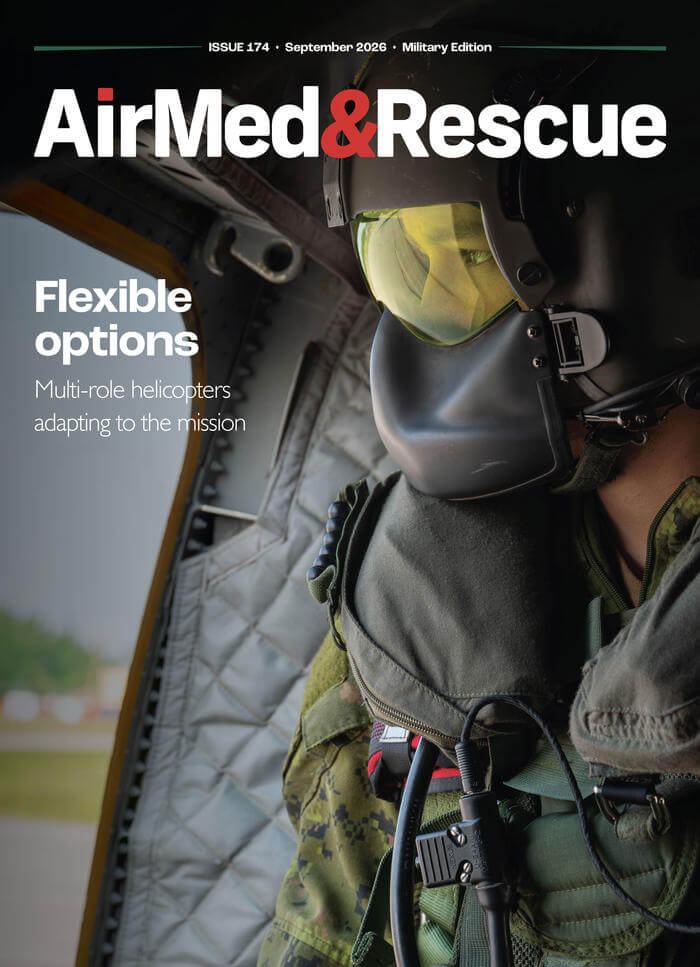
As we reach the equinox, I’m happy that we have an interesting military edition of AirMed&Rescue for you to read on those longer nights. We have features on the benefits of governmental institutions having a multipurpose helicopter; why military operators are at the forefront of exploring optionally piloted aircraft; how uncrewed aerial vehicles are serving as platforms for sensors that can operate in extreme situations; and on the equipment that is essential to carry on board an emergency medical services aircraft.
Editorial Team
The AirMed&Rescue Editorial Team works on the website to ensure timely and relevant news is online every day. With extensive experience and in-depth knowledge of the air medical and air rescue industries, the team is ready to respond to breaking industry news and investigate topics of interest to our readers.