Communication that keeps missions moving

The next generation of communications equipment from Global-Sys is designed around the mission, ensuring that HEMS and SAR operators have a flexible and robust solution so that crew are able to hear, speak, and act at the right time
When every second matters, communication should never get in the way. In helicopter operations, noise, vibration, workload, and constantly changing conditions make communication a real operational challenge. Pilots need to stay focused while crew members, medical teams, rescue specialists, and ground personnel coordinate seamlessly. In helicopter emergency medical services (HEMS) and search and rescue (SAR), communication is more than a matter of comfort. It is critical to effective coordination, ensuring the right people can hear, speak, and act at the right time. AirLink 60 turns communication into an operational advantage.
One solution, multiple configurations
Every team has its own way of working. AirLink 60 offers a wide range of configurations, allowing each HEMS or SAR team to find the setup that best matches its roles, procedures, and operational requirements. Supporting up to 16 users and multiple configurable talk groups, it enables pilots, crew chiefs, medics, nurses, winch operators, and ground teams to communicate within the same extended network while keeping conversations relevant to their roles. Whether coordinating a medical evacuation, preparing a winch operation, or working with teams on the ground, users can organize communications to suit the mission. Compatibility with aircraft radios and external communication equipment further extends communication beyond the cabin.
“We designed AirLink 60 around the mission – not the other way around. Every operation is different, so communication must be flexible enough to adapt instantly to the people, the roles, and the environment,” said Rémi Doutriaux, CEO of Global-Sys.
Seamlessly connect and communicate
In a helicopter, communication must remain immediate, reliable, and clear, even in demanding environments. AirLink 60 combines full-duplex wireless communication with advanced digital audio processing and noise cancellation in a 300m range. Crew members can speak naturally and simultaneously, while background noise is reduced and voice clarity preserved. This helps teams exchange information without repeating messages or competing for airtime, supporting seamless coordination when every second counts. From the flight deck to the cabin and personnel outside the aircraft, clear communication helps maintain a shared understanding of the situation as it evolves.
Designed around the crew
During a mission, communication should not become another task to manage. AirLink 60 features a dual interface for intuitive access to communication and audio settings, alongside a compact, lightweight design suited to demanding operational environments. For pilots and crew members, this means fewer distractions and easier access to the tools they need, even when workload is high. Its combination of intuitive operation, flexibility and robustness supports the demands of repeated use in the field. By making essential communication functions straightforward to access, AirLink 60 helps crews stay focused on their priorities and respond effectively as operational needs change.
“The best communication system is the one the crew doesn't have to think about.
AirLink 60 is designed to become almost invisible – so operators can focus entirely on the mission,” said François Grandjeat, Marketing and Sales Director at Global-Sys.
Built on proven expertise
AirLink 60 builds on more than 30 years of Global-Sys expertise in wireless communication for demanding environments. It is the next generation of the proven AirLink 3085 range, already deployed by the main actors in SAR, HEMS, law enforcement, and even armed forces all over the world. Airbus Helicopters also offers the AirLink solution as factory-installed option on the H160.
Rémi Doutriaux
Rémi is an electronics engineer with an MBA from INSEAD. After an extensive career in business development with several global professional electronics original equipment manufacturers, he acquired Global-Sys from its founder in 2022, determined to build on the company’s pioneering legacy. Based near Paris, Global-Sys introduced wireless intercom in the 1990s and is a market leader, trusted worldwide by airlines, ground handlers, and helicopter crews for missioncritical communication. Rémi works with the team to shape an entrepreneurial vision and turn ambitious growth plans into results, combining hands-on business development with close attention to operational performance. He is the proud father of four girls.
November 2026
Issue
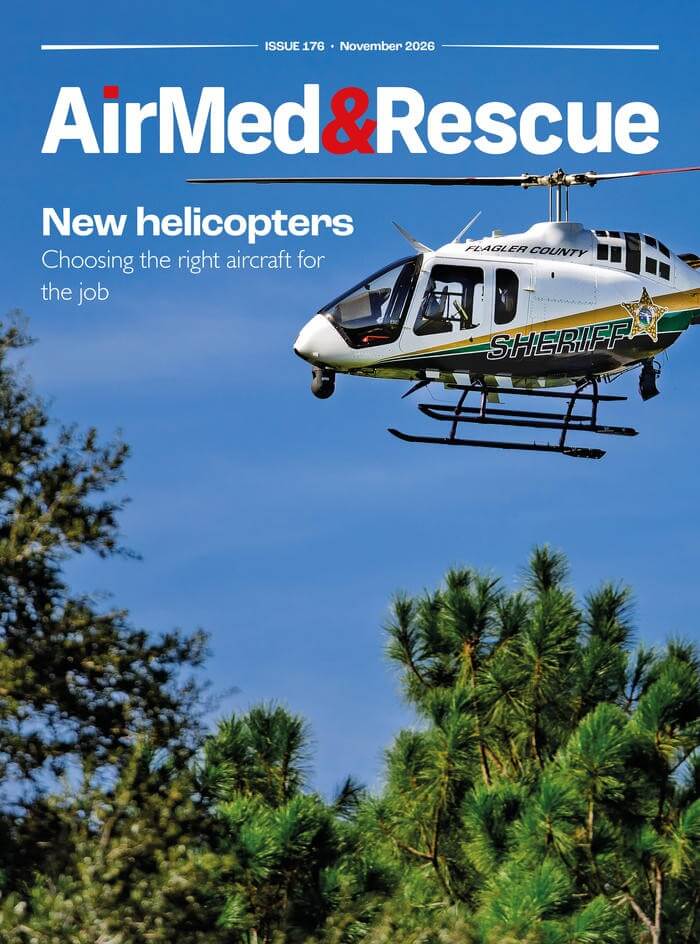
The November edition of AirMed&Rescue has a wealth of articles to keep you informed and engaged. We have features that explore the challenges associated with cable snag and entanglement; determine how and why special missions operators choose a new helicopter; look at the risks, regulation, and requirements of temporary helicopter landing sites; and examine the inroads that are being made by the drone industry into the medical sector.
Editorial Team
The AirMed&Rescue Editorial Team works on the website to ensure timely and relevant news is online every day. With extensive experience and in-depth knowledge of the air medical and air rescue industries, the team is ready to respond to breaking industry news and investigate topics of interest to our readers.