

Conference review: Southeast Asia Clinical Considerations in Aeromedical Transport

The 3rd Clinical Considerations in Aeromedical Transport (CCAT) training course, produced by CCAT Aeromedical Training of the UK and organised by Asian Assistance, took place at Rangsit University in Bangkok. Dr Yin Min Khine reports on the event
An Open Sky policy has significantly boosted the number of tourists coming into Southeast Asia, and recently, health tourism has become one of the fastest-growing sectors of the tourism industry – a fact that makes the CCAT training courses especially crucial in the region. Asian Assistance, in conjunction with CCAT Aeromedical Training Ltd, first brought CCAT to Asia in 2017, and since 2018, the training has been done in collaboration with Rangsit University (RSU). The training promotes competencies and skills for healthcare personnel engaged in the transport of patients in and out of Southeast Asia to different parts of the world. Our training is designed to enhance the safety of patients during aeromedical transport.
The two-week training programme was directed and taught by Dr Terry Martin, the founder of CCAT Aeromedical Training Ltd in the UK. Dr Martin provides a wide spectrum of aeromedical and related healthcare and aerospace training packages around the world, with Bangkok being the chosen centre in Southeast Asia. These highly regarded courses attract students from across the globe, offering an international and universal standard of teaching that covers basic flight and atmospheric physics, flight physiology, and risk analysis strategies, as well as covering the clinical and logistical aspects of aeromedical transport.

2019 course success
The training in 2018 was successful beyond words, leading Asian Assistance to organise more training in 2019. With increased demand from interested candidates in Asia, in addition to the six-day Foundation Level programme, the team has added the new three-day programme, which combined commercial repatriation and medical assistance introduction, aeromedical crew resource management and medical emergencies in flight.
Dr Martin undertook the bulk of the training package, but two local highly experienced guest speakers helped to deliver the syllabus. Together, they shared their experiences on providing high-quality care during air ambulance transfers for complicated cases such as major trauma, critically ill, paediatric and neonatal patients.
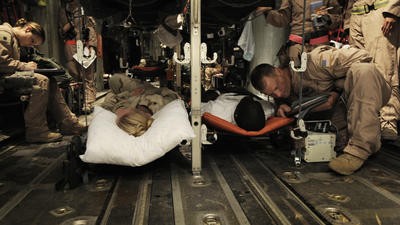
Additional activities included hands-on training in emergency flight procedures in the aircraft cabin simulator room, a field visit to fixed-wing hangar, and a tour of the medevac alarm center in Bangkok, Thailand.
Additional activities included hands-on training in emergency flight procedures in the aircraft cabin simulator room, a field visit to fixed-wing hangar, and a tour of the medevac alarm center in Bangkok, Thailand.
Susanne Morch, Managing Director of Asian Assistance, commented on the increasing popularity of the course: “In addition to CCAT alumni from all Southeast Asian countries as well as Nepal and South Korea, this year we have participants from Qatar, Hong Kong and Taiwan. I am proud to report we successfully ran our third CCAT training in 2019 with a total of 40 participants.”
Asian Assistance is hoping to reach more participants within the region, particularly the Greater Mekong Subregion (GMS), who it hopes can join this course in the future. The company has said it is open to collaborating with organisations that can support human resources in the region. Morch added: “Our plan is to broaden the curriculum to cover non-clinical consideration aspects and the implementation of international standards of aeromedical transport into the ASEAN region to maximise safety and standards in this industry.”
January 2020
Issue
In this issue:
Fighting fires with science: The value of drones in aerial fire fighting
Paw patrol: Dogs as SAR assets
Helicopter shopping Part II: The role of providers
Defining the role of helicopter technical crew
The increasingly complex role of SAR and HEMS technical crew
Provider Profile: Royal Flying Doctor Service
Australia’s iconic flying medics
Dr Yin Min Khine
Dr Yin Min Khine is Chief Medical Officer of Asian Assistance.