

Electric dreams: advances in avionics over the last year

As avionics technologies have advanced and improved, Jon Adams examines what has developed in the past 12 months
There have been advances all over different aspects of avionics in the last year. Advances that have improved safety, workload, accessibility and situational awareness. The special missions sector has benefited from this progress and has also been the recipient of many changes specifically designed to improve operations within the search and rescue (SAR), aerial firefighting, police aviation and air ambulance space, with greater numbers of platforms getting certified to carry the latest technologies. New technology and improved iterations of existing equipment and devices have flowed into the special missions sector this year with key developments in many areas, although there has been a high response from the communications industry. Many of these advances are also easily implemented; software can go through simple updates, and hardware has been designed to be fitted or replaced with simple steps.
Communications and connectivity
A significant upgrade announced this year has been to the NH90, after a contract was signed between NHIndustries (NHI) and the NATO Helicopter Management Agency (NAHEMA) on behalf of Belgium, Germany, the Netherlands, and Italy, crystallizing the Block 1 upgrade (also known as Software Release 3 (SW3)). This is an upgrade to the NH90 communication suite and the integration of Data Link 22, allowing beyond-line-of-sight interoperability without going through satellite communications. IFF Mode 5 Level 2 (the latest version of the device used to identify and track military aircraft) will also be integrated. Other upgrades will be available to the operators and include the integration of a latest-generation electro-optical system.
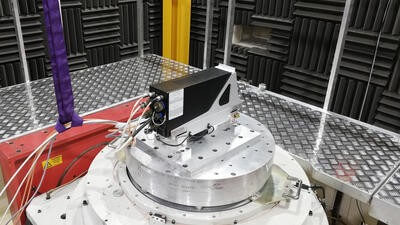
Upgrades do not always mean bigger and more powerful. Astronics took this challenge and launched the Ballard NG1 Series Avionics I/O Converter. The NG1 provides an out-of-the-box solution for converting and streaming avionics data over ethernet for distributed control or remote input–output (I/O) applications, reducing costs and speeding deployment on command, control, communications, computers, intelligence, surveillance and reconnaissance (C4ISR) systems, and does so in a tiny lightweight package. Furthermore, the NG1 has been built to meet military requirements for shock, vibration, temperature, humidity, and pressure.
The NG1 has been built to meet military requirements for shock, vibration, temperature, humidity, and pressure
Another compact communication conversion solution comes from Avionics Networks, which has released the LECO-Solaris, designed for the Velaris network, part of the Viasat network. It is capable of 200kbps data transfer for both uplink and downlink, presenting a wide flow of data bandwidth for mission-critical applications, permitting real-time video streaming as well as the ability to download documents, emails, or browse the internet.
Also working to improve the provision of data communication and streaming, Skytrac announced a partnership with Videosoft to provide ultra-low-bandwidth streaming services over Skytrac’s family of Iridium Certus connected systems. This will allow real-time video transmission over wireless networks with limited bandwidth, a critical enhancement for airborne observation and surveillance operations. Videosoft’s streaming platform will enable Skytrac’s customers to access various features, such as simultaneous streaming of multiple scenes, AES 128- and AES 256-bit encryption, high-resolution (hi-res) snapshots, and hi-res video retrieval. Videosoft’s streaming service will enable operators to access reliable video footage over Iridium satellite, cellular, and other radio-based IP networks at speeds as low as 4kbps.

Having reliable and secure data links is not always feasible for smaller operators or organizations on tight budgets. In response, SPX Communication Technologies has launched Evenlode Lite, an entry-level video downlink system in its Evenlode family designed to cater for companies new to airborne surveillance or those looking to enhance their ISR provision. The Evenlode Lite system comprises an air data terminal and ground data terminal, providing secure, real-time transmission of up to 4K video, audio, GPS, and telemetry data from airborne platforms to static or mobile ground teams. Its more basic design than other data links lowers the barrier to entry for operators wanting to access this functionality or improve their current services.
Creating data encoders with a low size, weight and power (SWaP) profile while still being able to ensure all the functionality of streaming is a challenge that VITEC has fully committed itself to. As a result, VITEC has released its new MGW Diamond-H, a 4K and dual-channel SD/HD HDMI encoder. Its capabilities include streaming ISR video feeds over RF or satellite links, which provides real-time situational awareness, enhancing tactical decision-making. The MGW Diamond-H is also capable of sharing screens to enable collaboration and coordination among team members, sharing mission-critical information in real time. Using stream protection technologies like Zixi, SRT, RIST, and Pro-MPEG, the encoder also ensures secure and reliable transmission of critical data, maintaining operational integrity. Additionally, power over ethernet (PoE) functionality simplifies deployment by delivering both power and data over a single ethernet cable, reducing the need for additional power sources and making it ideal for rapid, flexible installations, with its small SWaP profile.
In the challenging aerial firefighting sector, new standards and requirements are brought in to be observed, so Anodyne Electronics Manufacturing Corp (AEM) has been working to ensure firefighters have the best, latest communication technology. AEM has been granted a new supplemental type certificate (STC) for its MTP136D P25 Forest Service radio. The STC was awarded by Transport Canada for operators providing aerial firefighting services using the H125 (AS350) aircraft. Designed with the US Forest Service and aerial firefighting operators in mind, the MTP136D is a Project 25 (P25) Phase 1 compliant VHF FM solution for digital and analog communication on all channels across the 136MHz to 174MHz frequency band. It can be integrated into tactical systems, platform upgrades, and is a plug-and-play replacement for existing legacy radios.
Designed with the US Forest Service and aerial firefighting operators in mind, the MTP136D is a Project 25 (P25) Phase 1 compliant VHF FM solution for digital and analog communication on all channels across the 136MHz to 174MHz frequency band
Additionally, Technisonic is also supporting the aerial firefighting market with its introduction of Forestry Mode on both the TDFM-9000 and TDFM-9300 radios. Forestry Mode addresses the space and installation challenges in the cockpit and antennas associated with updated Forest Service communications requirements. Developed to meet these requirements of multiple main/guard radios, Forestry Mode is an advanced software/hardware interface combination that allows either the TDFM-9000 or TDFM-9300 to operate as either two or three forestry-compliant radios. Main and guard capability is addressed via a software-defined VHF-FM module grouping on the radios’ front panel. The ASU-9000 hardware switch combines each main and guard combination of antenna, mic, audio and PTT ports to a single position, thereby requiring only two or three antennas and audio positions depending on radio configuration, resulting in significant cockpit panel, antenna space and weight savings.
Operational control and organization is improved by accurate telemetry and tracking, so the aerial firefighting community is benefiting from the partnership of Trotter Controls with v2track as they completed the integration of the v2track system with the DataVault telemetry system. The v2track integration adds satellite/cellular communications capability to the DataVault platform and provides an additional hardware interface to the v2track platform. DataVault is able to connect to v2track via its internal Iridium satellite modem or an optional external v2track-supplied satellite/cellular modem to provide firefighting authorities and operators with near real-time situational awareness of the aircraft’s position and delivery location. V2track is fully approved for aerial firefighting with the DataVault family of telemetry products, including the FRDS GEN III DataVault system used in the Air Tractor AT-802F platform, for instance.
Sensors
Sensor solutions provider HENSOLDT announced that its EuroNav 7 mission system for critical airborne applications is now integrated with Smith Myers’ ARTEMIS mobile phone detection, location, and communication system. This not only enables effective help for people in distress, but also provides support in disaster control, detecting people smugglers, and supporting other maritime patrol operations. The system can also detect a cell phone’s country of origin, making it well suited for detecting border intrusions. “ARTEMIS interacts with and geolocates the cell phone quickly and precisely using the cellular protocol itself,” explained Andrew Munro, Managing Director of Smith Myers. “EuroNav 7 displays this information and enables the automatic steering of other sensors onto the cell phone’s location. The location of thousands of handsets can be established very quickly and displayed on EuroNav 7.”
ARTEMIS interacts with and geolocates the cell phone quickly and precisely using the cellular protocol itself
As well as integration with other systems, Smith Myers has also released an upgrade to the ARTEMIS system with ARTEMIS+. It comes with a new set of features designed to meet the requirements of new sectors as it evolves with new operational roles. Recent contract awards from organizations that cover long-range maritime patrol, aerial firefighting, border/pollution control, law enforcement and military, and the upgrade reflects this wider scope beyond the SAR it was originally envisioned for. Additional capabilities include advanced cellular mission analysis tools, advanced cellular interactions, mission replay, new map options and more. Existing ARTEMIS systems are compatible with this new capability set and can be upgraded with a simple software update.

Being able to spot points of interest from farther away and at a higher fidelity is one of the gains supplied by Teledyne FLIR Defense’s new offering with its UltraFORCE 380-HDc imaging system. The new long-range airborne surveillance solution has improved high-definition multi-spectral imaging in a compact, low-profile package. It has full 1080p resolution across its visual, thermal, low-light, and shortwave infrared (SWIR) cameras. UltraFORCE 380-HDc also features a laser rangefinder and pointer, allowing users to covertly ‘light up’ targets or points of interest and to coordinate operations with observers wearing night vision goggles (NVG) or similar devices. Intelligent, automated operation optimizes tracking and continuously indicates size, location, speed and distance of multiple targets, particularly useful for public safety applications. The system will also be configurable with the company’s 380X upgraded imaging capabilities, including multi-tile video management, touchscreen, and de-scintillation filter that removes atmospheric effects, such as fog and smoke.
UltraFORCE 380-HDc also features a laser rangefinder and pointer, allowing users to covertly ‘light up’ targets or points of interest and to coordinate operations with observers wearing night vision goggles (NVG) or similar devices
Other avionics and delivery
When flying special missions, workload saturation can limit the overall situational awareness available to crew and can hamper safety. With this in mind, FlySight introduced a new feature in its OPENSIGHT Mission Console in order to increase real-time situational awareness for onboard operators, to simply, easily and dynamically indicate topographical hazards to crew. The Terrain Above Elevation Visualization Capability allows operators to visualize areas that pose a collision risk based on current flight trajectory. The module displays in red the obstacles (such as possible mountains, wooded areas, buildings) with an altitude above the current helicopter height, while areas with lower elevation, which no longer pose a collision risk with the helicopter’s flight path, gradually turn green. The colors are dynamically adjusted in areas to indicate their level of risk, providing real-time, easy-to-see visual feedback to the operator, allowing them to make informed decisions based on the changing risk level as the helicopter’s altitude changes.
Reducing workload and improving pilots’ ability to manage other tasks has been addressed by Garmin’s GFC 600H Helicopter Flight Control System, which is now available in an instrument flight rules (IFR) configuration with a stability augmentation system (SAS). This configuration includes collective control, adding a full four-axis capability to the GFC 600H system for the first time. Leonardo Helicopters’ AW109 Trekker is the first platform to incorporate this new GFC 600H with IFR and collective axis capabilities, providing operators with an advanced flight control solution. The GFC 600H features a console-mounted mode controller with push-button controls and an NVG-compatible display. Digitally controlled, high-performance servos and new Garmin-developed linear actuators allow for faster, crisper, more powerful responses – enabling the GFC 600H to perform with smooth handling throughout the flight envelope. Autopilot modes supported include altitude acquire, altitude hold, approach auto-level, radar height hold, as well as vertical speed, indicated airspeed, heading select, attitude hold, and more. By using navigation system inputs, the GFC 600H is also capable of flying various approach types.
As part of the upgrade for Airbus’ new H160M helicopter, Astronautics Corporation of America’s AeroSync Max wireless airborne communication system was selected as the line-fit connectivity solution. It is already the line-fit connectivity solution for the base H160 platform, so it was inevitably going to be a strong contender for the military variant. The AeroSync Max is a hardware-partitioned and domain-segregated connectivity system, or avionics domain gateway, designed to provide security between the helicopter’s avionics and the open world. Each AeroSync Max shipset consists of Astronautics’ AFS6400 airborne communication server, AFS6460 connectivity module, and AFS6480 remote media device. As a whole, the system provides a secure and integrated wireless data transmission system that enables the transfer of maintenance data via Wi-Fi with data storage to create a connected ecosystem throughout all phases of flight.
As a whole, the system provides a secure and integrated wireless data transmission system that enables the transfer of maintenance data via Wi-Fi with data storage to create a connected ecosystem throughout all phases of flight
Astronautics was also selected by Erickson to upgrade 12 of its S-64 Air Crane helicopters with a glass cockpit solution that includes the Badger Pro+ Gen 2.0 integrated flight display system, engine data concentrator unit (EDCU), and AeroSync Mission connectivity system. The Badger Pro+ Gen 2.0 is the latest generation of Astronautics’ Badger 6x8in smart multifunction displays. The integrated system shows primary flight, navigation, engine, and mission data, while integrating key data from all the subsystems on the aircraft. Highlights of the system include better readability, high-resolution video, and night vision compatibility. The Badger Pro+ Gen 2.0 system is being customized to specifically enhance situational awareness for S-64 Air Crane helicopter pilots according to the types of missions that they fly, such as upgrades to include mission display pages that indicate the status of onboard systems such as the retardant tank, hoist and pendant, and video from the enhanced vision system cameras. The AeroSync Mission system is a lightweight connectivity system for data collection, storage, and export, along with broadband connectivity. AeroSync collects avionics data during flight and can then wirelessly provide that information to a tablet or ground server post-flight to enable improved planning for aircraft maintenance.

Modernizing the communications systems on its C-130H Hercules fleet, the Polish Ministry of National Defence will equip them with Collins Aerospace TruNet AR-1500 networked radio. The TruNet AR-1500 is the international variant of Collins’ US ARC-210 radio, providing the same frequency range and performance as the ARC-210 Gen6, with a selection of waveforms and expanded capabilities, including L-Band and Link 22 data links. It’s designed with the latest software-defined radio tenets and architectures, enabling proven, fully secure communication with the ability to be easily upgraded as needs and mission change.
Norwegian SAR got a boost when Bristow selected the Flightcell DZMx and Guardian Mobility G6 Certus 100 terminal for its S-92 helicopters. The Flightcell DZMx is an all-in-one satellite and cellular communications system. It’s designed to provide seamless connectivity for aircraft, enabling voice, push-to-talk, messaging, advanced tracking and exceedances reporting, and real-time data transmission capabilities. Along with the Flightcell DZMx, deploying the Guardian Mobility G6 Certus 100 terminal will provide access to the Iridium Certus broadband network to deliver global satellite IP data connectivity with low-latency and uplink/downlink (transmission) speeds of up to 88kbps. Together, they integrate cellular and satellite communication technologies for onboard devices such as electronic flight bags, personal electronic devices, medical devices, mission PCs, and video encoding solutions connected with ethernet and/or Wi-Fi. Flightcell DZMx also manages the data traffic by prioritizing the terrestrial mobile networks for higher speed and lower cost, and automatically switches to the G6 for satellite services when outside of 4G LTE mobile network coverage.
Airbus EC135 and AS332 Super Puma platforms now have access to GPMS International’s Foresight MX health and usage monitoring system (HUMS) as the Federal Aviation Administration (FAA) has granted STCs to GPMS
Airbus EC135 and AS332 Super Puma platforms now have access to GPMS International’s Foresight MX health and usage monitoring system (HUMS) as the Federal Aviation Administration (FAA) has granted STCs to GPMS. According to Ronnie Ries, Vice President of Marketing at GPMS, demand for new Foresight MX certifications has been driven primarily by three types of operators: current GPMS customers wanting to monitor their entire fleet, operators needing to meet contractual requirements, and operators looking at ways to mitigate significant business challenges. Ries said: “We’re finding external demand for HUMS has increased substantially because of new and evolving contracts requiring HUMS (like the US Forest Service Multiple Award Task Order Contract), Basic Aviation Risk Standard compliance requirements, and especially because of the impacts of supply chain and manpower challenges.” Ries continued: “The reality is operators are recognizing that the impact of unscheduled maintenance goes beyond the price of an AOG part. The stress to their already shorthanded maintenance team and the lost revenue from an easily detectable bearing that’s going to make metal is having skeptics take a closer look at why their peers are adopting Foresight MX HUMS.”
The Finnish Border Guard is replacing its aging fleet and addressing upcoming new challenges by commissioning SNC to deliver two RAPCON-X jets. The RAPCON-X family of systems is SNC’s newest integrated aerial ISR (A-ISR) solution, using a Bombardier Challenger 650 base platform configured to maritime surveillance (MVX) specifications, which provides a modernized and increased capability for the Finnish Border Guard’s fleet. The Finnish Border Guard monitors borders and territorial waters, supports rescue efforts in maritime emergencies, identifies environmental emergencies at sea and supports clean-up efforts. The new, more efficient, multipurpose aircraft will improve Finland’s border security and the monitoring of territorial integrity, particularly along the eastern border.
Conclusion
This is by no means a comprehensive list and the year is not yet over, leaving me in no doubt that there will be more advances in the days and weeks to come. However, as an overview of the growth and development of the avionics industry, it clearly represents a strong and healthy output and improvement, ensuring that special missions flights are becoming safer, easier and more capable than ever before. If 2024 is anything to go by, 2025 looks to be an exciting year for technological advancement.
December 2024
Issue
In the December edition, discover what goes into saving people that get into trouble on the ski slopes; find out about drones that are being used for search and rescue; learn about the treatment options for people with fractures; and see what has been happening this year in the realm of avionics development; plus more of our regular content.
Jon Adams
Jon is the Editor of AirMed&Rescue. He was previously Editor for Clinical Medicine and Future Healthcare Journal at the Royal College of Physicians before coming to AirMed&Rescue in November 2022. His favorite helicopter is the Army Air Corps Lynx that he saw his father fly while growing up on Army bases.