

Event review: VERTICON 2025

In the heart of Texas, aviation companies showed their passion, progress and connections with one another at the biggest vertical lift conference in the world. Jon Adams was on site to report
In Texas, the sun was shining on the Kay Bailey Hutchison Convention Center Dallas for the VERTICON 2025 trade show and conference. Exhibits, stands, workshops, educational sessions, demonstrations, reveals and contract signings all took place under one roof at the biggest dedicated vertical aviation conference of the year. First-timers and established organizations all participated in the event, where a large proportion of the goings on were explicitly in the aerial special missions sector. Attendees were treated to a range of updates and information, and we bring you some of the highlights.
Air Rescue UK
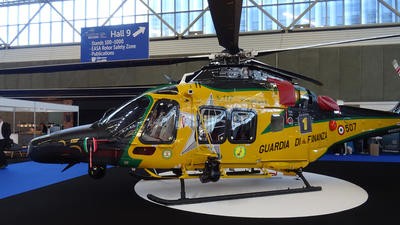
Air Rescue UK, a company that provides helicopter hoist operations, has announced plans for a joint venture with specialized helicopter operations firm Brim Aviation.
The collaboration will see the two firms bring “world-class helicopter hoist training and operational support” to the US market.
The partnership will combine Air Rescue UK’s expertise in hoist operations and simulation-based training, with Brim Aviation’s extensive experience in the fields of special missions, offshore, and utility aviation.
The companies stated that the intention of the venture was to “enhance safety, efficiency, and readiness across the industry”, and that further details of the joint venture and upcoming training programs would be announced in the coming months.
Air Rescue UK is also in the process of preparing a new training center, soon to be fully operational.
Airbus
In a glamorous countdown at its booth in the conference center, Airbus revealed its latest new light twin-engine aircraft, the H140. At the reveal, Bruno Even, Airbus Helicopters’ CEO, stated that the aircraft was a result of responding to the company’s “first responsibility”, the customer. He said that the industry had asked Airbus for “more performance, more comfort, more space and more competitiveness”. This led to the production of the H140. Designed as a multi-mission craft, the variant on show was in a medical configuration and the entry into service is planned in 2028 for the emergency medical services segment.
The H140 features a wide range of innovations, including a new T-shaped tail boom with an optimized Fenestron that reduces sound levels, a five-blade bearingless main rotor, and new powerful engines. The helicopter also features a bigger cabin space, large windows and optimized cabin layout that can accommodate up to six passengers. Designed with accessibility in mind, thanks to the large clamshell doors and the high tail boom, the H140’s rear loading capabilities allow the use of different types of stretcher systems, including intensive care ones and transport incubators, while its sliding doors facilitate access to the cabin.
Acknowledging the benefit of the craft for helicopter emergency medical services (HEMS) missions, Airbus made deals with several operators at the show: DRF Luftrettung signed a letter of intent (LoI) for the purchase of 10 of the craft; STAT MedEvac signed an agreement for up to three H140s; ADAC Luftrettung also signed an agreement for the purchase of five H140s; Global Medical Response (GMR) signed an agreement for up to 15 H140 helicopters; and Metro Aviation signed an agreement for up to 36 H140 aircraft.
Other Airbus deals included one with GDAT, out of China, which signed an HCare In-Service contract with Airbus to cover 10 H225 helicopters. The fleet of H225 helicopters will be used in multiple missions like emergency services and forest protection by governmental organizations. There was also a deal with the New York State Police, which ordered one Airbus H160 and three H145 helicopters, making them the first law enforcement agency in the USA to add an H160 to its fleet.

Ascent AeroSystems
Ascent Aerosystems, a specialist in coaxial uncrewed aerial vehicles (UAVs), revealed a brand new platform to the market, the Helius. The cylindrical form of the drone, with two rotors, provides a greater efficiency than other vertical takeoff and landing (VTOL) UAVs, and a larger overall rotor diameter across a smaller area provides more lift and stability. This is why, for trials in windy conditions, or over turbulent air such as you can find around wildfires, the coaxial drones are a superior choice. Peter Fuchs, Co-Founder and President, underlined this when he said: “According to the laws of physics and aerodynamics, coaxial is better.”
The Helius offers the same reliability and performance of the other systems (the Spirit and the NX30), but in a compact sub-250g package. At the unveiling, Fuchs said: “This is the drone we always wanted to make.”
Confirming the qualities of the Helius, and the potential use cases, Fuchs said: “Helius delivers unmatched capability in its class at a competitive price. It is the drone we’ve wanted to make from the beginning: small enough to fit in your pocket but powerful enough to meet the rigorous demands of public safety, emergency response, and critical industrial missions.”
Being smaller and lighter, and retaining the coaxial design, the Helius is more unobtrusive and quieter than other equivalent small UAVs, adding to its value as a public safety tool, while its ability to withstand rain, dust and other environmental hazards makes it highly suited to the scenarios performed by special missions operators. The drone is fitted with an integrated electro-optical 4K, 12.3MB ultra-low-light sensor that features digital pan, tilt and zoom, for crystal-clear imaging in any environment. Furthermore, it has field-swappable, rechargeable batteries to minimize operational downtime.
Astronautics
Astronautics Corporation of America is providing its new dealer Patria Helicopters AB with 32 RoadRunner electronic flight instruments (EFIs) to support the Royal Norwegian Air Force’s (RNoAF’s) Bell 412 upgrade program. The upgrade program is contracted between the Norwegian Defence Materiel Agency and Kongsberg Aviation Maintenance Services (KAMS), with Patria acting as a subcontractor to KAMS for aircraft modification and certification.
As part of the upgrade program, each RNoAF Bell 412 will be retrofitted with two Astronautics RoadRunner EFIs per cockpit, one for the pilot and the other for the co-pilot. Astronautics’ RoadRunner EFI is an easy-to-install, form-fit retrofit system for legacy attitude director indicators (ADIs) and horizontal situation indicators (HSIs), combining the functionality of both indicators into one modern digital flight instrument. The EFI eliminates avionics obsolescence while adding capabilities like navigation options based on global navigation satellite systems and pilot guidance and indications not available on the former analog, legacy systems.
Axnes
Axnes, a Norwegian technology company, is celebrating 30 years since it was founded in 1995. Its Polycon Next Generation (PNG) WICS is now used on over 2,500 aircraft around the world, as well as on at least five of the aircraft at the Verticon 2025 event in Dallas, Texas.
A truly wireless system allows freedom of movement, no entanglement and not being anchored in one place, Klaus Frühwirth, Chief Commercial Officer at Axnes, explained: “Wherever you have a loud environment, a loud harsh environment, where you have crewmen moving around for whatever reason who cannot be connected with a wire to an intercom system, we do this with a wireless extension, adding a lot of additional features.”
One of the features that Axnes boasts of its products is the adaptive noise cancelling. This is different and better than the active noise cancelling found on most headsets. Frühwirth described how the technology benefits operators working in noisy situations where mission-critical information needs to be conveyed clearly and precisely: “We have noise cancelling on the microphone. All modern headsets are active noise reduction headsets but that doesn’t work [in many situations] because imagine you’re standing outside under the rotor blades of the helicopter. If you get the noise of the rotor on the microphone into the intercom, the noise cancelling doesn’t help because it’s not an ambient noise anymore, it’s the noise coming from through the microphone. So that’s why our system is so different, because we developed an algorithm which can detect on the microphone the signal coming from the microphone. Our algorithm can detect what is noise and what is voice, and only the voice will be processed and the noise will be ignored.”
Bell
Bell had several aircraft on display, and also organized an open house of its training facility in nearby Fort Worth. At the Bell Training Academy, guests were able to see the classrooms, hangar and simulators. Visitors were also able to talk to instructors, pilots, and maintainers, and book a session on one of its flight training devices or full-flight simulators.
Bell also announced that it has delivered Global Medical Response’s first instrument flight rules (IFR)-configured Bell 407GXi, marking the beginning of 24 anticipated aircraft deliveries to the air medical service operator.
“Bell is proud to deliver the first aircraft in the series to Global Medical Response, highlighting a significant milestone in our relationship and reinforcing our commitment to being the premier HEMS mission partner,” said Lane Evans, Managing Director of North America Sales, Bell. “We are confident that the IFR-configured Bell 407GXi platform will enhance Global Medical Response’s operations and its ability to serve more patients in need.”

Boost Systems
Boost Systems, producer of fully certified human external cargo (HEC) systems, personnel carrying device systems, and related training services, demonstrated its innovation and expansion of its mission equipment offerings at the show displaying the Aerial Wash System, the ISOLAIR Tank, and the Quick Release Cargo Basket with Lightweight Step.
“The Boost Next-Generation Aerial Wash System is engineered to optimize fast and efficient aerial wash operations with minimal operator input,” said Jeff Yarnold, VP of Operations. “This allows for high-cycle wash programs on energized transmission lines and wind turbine blade cleaning or de-icing as needed.”
By integrating the ISOLAIR Tank and collaborating with Michael Powell, President of Isolair, Boost Systems has accelerated the development of this cutting-edge solution. “Partnering with other industry experts enables us to deliver innovative solutions using the latest technologies, ensuring we meet the evolving needs of our mutual customers,” Yarnold added.
Cherokee
Cherokee Federal unveiled its Mobile Vertipad Platform (MVP) at VERTICON, a rapidly deployable, auto-leveling landing platform.
Designed and manufactured in the USA, the MVP operates across diverse sectors – from commercial airports and defense operations to emergency response and humanitarian efforts in austere environments. Its robust design ensures stability, flexibility and efficiency.
The design of the MVP allows it to deploy in minutes with no prepared surface required, supporting aircraft of up to 30,000lb on its 24ft landing surface. Visual and infrared landing lights ensure safe operations in all weather conditions, while its mobility allows for easy transport by truck or sling load for rapid response.
Entrol
Entrol returned to VERTICON after it strengthened pilot training in the USA with the sale of a Bell 429 FTD Level 5 to Helicopter Institute. The installation is scheduled for summer 2025, further strengthening the academy’s training capabilities at its Fort Worth, Texas, facility.
The Bell 429 FTD Level 5 has been designed to deliver immersive and highly effective training experience, tailored to the needs of aspiring and professional pilots. The cockpit is equipped with Garmin GTN 650H Xi and GTN 750H Xi avionics, providing an authentic operational experience that optimizes learning and cockpit adaptation.
Additionally, the simulator includes a GMA340H intercom system, ensuring seamless communication between instructors and trainees during training sessions. It also features an advanced 200°x40° cylindrical visual system, which recreates highly realistic flight environments and enhances pilot situational awareness.
The flight simulator operates with a detailed database based on X-Plane 11, enabling the recreation of flight environments tailored to Helicopter Institute’s specific training requirements.
GPMS International
GPMS International announced that Precision Support Services (PSS) has agreed to the acquisition of up to seven additional AS332 GPMS Health and Usage Monitoring Systems (HUMS). This strategic investment not only enhances PSS’s operational capabilities but also expands access to advanced predictive monitoring technology for its diverse AS332 customer base.
“We’re thrilled to expand our collaboration and designate PSS a GPMS HUMS AS332 Center of Excellence,” said Ronnie Ries, Vice President of Marketing at GPMS. “They are actively promoting the system to all their clients and already have several installations lined up throughout the next year. A significant driver behind PSS’s investment is the growing trend among operators divesting from the AS332 platform. Although over 80% of AS332 helicopters are currently operated by military, government, and offshore entities, many are now seeking to exit the model due to evolving contract requirements and mounting maintenance pressures. This divestment trend has created new opportunities for companies like PSS to repurpose these capable aircraft into specialized utility, firefighting, and disaster management platforms.”
GPMS also announced that Trans Aero, has purchased two Foresight MX HUMS systems for their UH-60 Black Hawk helicopters. This acquisition marks a significant step forward in Trans Aero’s commitment to maximizing aircraft availability, safety, and cost efficiency through predictive maintenance technology. Trans Aero is known for its diverse rotary-wing operations across utility, firefighting, and transport missions.

Helitak
Helitak Fire Fighting Equipment, an Australian-based aerial firefighting tank manufacturer, presented at the show with a static stand and a booth following recent news that it was expanding its operations in the USA. The company is now able to produce its firefighting equipment from a 20,000ft property at Camarillo Airport in California for the North American and global market.
The new facility mirrors the production facilities of its Australian base in Lake Macdonald, Queensland, where the company currently produces its range of tanks that are exported around the world for customers utilizing one of the many proprietary external tanks for Type 1, 2 and 3 helicopter aerial firefighting operations.
Expansion of the company facilities in the USA will primarily focus on tanks for the recently Federal Aviation Administration (FAA) certified FT-11K CH-47 tank, the FT4500 tank for the Sikorsky UH-60, and the soon-to-be-certified in the USA FT1300 tank suitable for the Airbus H125/AS350.
As part of the product expansion, Helitak will introduce a select range of buckets to its offering, with sizes of 317gal, 871gal, and 2,642gal and other models to follow.
Kawak Aviation
Kawak was at the event, showing its dedicated support to its S-70 Firehawk customers: every S-70 Firehawk in California has the Kawak tank and snorkel.
As well as the continued support for the Firehawks, Andrew Mills, Vice President of Business Development for Kawak, said that there were orders for five new CH-47 Chinook fire tank systems. These heavy-lift aircraft are an invaluable asset in the battle against wildfires, able to carry huge amounts of water, and with the snorkel from Kawak, these tanks can be filled easily, quickly and efficiently.
As well as the support and growth of the tank market, Kawak is developing its bucket program to include more sizes, Mills said: “This year, we redesigned the base to a smaller size, and have come out with a bucket for a medium-sized aircraft: 320–350gal.”
The production and delivery for these new buckets, announced at VERTICON, will commence in April. Explaining the response to this new product offering in the bucket program, Mills said: “There’s definitely a need for a bucket that’s fairly light, and is rugged and reliable. And we back up every product we sell, we service and support all of our products; the operators really like that.”
Kawak confirmed at the show that the next size, currently in design with the prototype due to be ready in summer 2025, is a smaller 260gal bucket, suitable for lighter helicopters in the Airbus A-Star B3 or Bell 407HP class. Mills said that it was a perfect size for these craft and hopes the design will allow it to fold down and fit on an external rack, with possible delivery of the final product to customers towards the end of 2025.
Leonardo
Global sales of the popular AW139 platform increased at the event as Leonardo announced sales of the intermediate twin-engine helicopter, with orders for four more aircraft by LifeFlight and joint venture partner StarFlight as they celebrate 10 years of successful cooperation with the operator. The new helicopters will be used to carry out emergency medical service, law enforcement, oil and gas operations, and search and rescue response missions in Australia, with deliveries expected to be completed in 2027. It will make the combined LifeFlight and StarFlight AW139 fleet one of the largest in Australia.
The US HEMS market also benefited from a deal where Leonardo and Mercy Flight Central announced signing of the first training contract for the AW119Kx IFR helicopter, utilizing Leonardo's state-of-the-art Virtual and Extended Reality (VxR) simulator to enhance pilot training and operational readiness.
Recently approved by the FAA as a Level 7 simulator, the VxR will significantly improve Mercy Flight Central’s flight training programs. With this agreement, Mercy Flight Central takes a major step toward advancing HEMS flight training methodologies. The contract provides its pilots with an immersive and risk-free environment to refine flight skills in critical mission scenarios – tasks that would be too dangerous to perform in a real helicopter.
McDermott Aviation
McDermott Aviation announced that it would build new units of the Bell 214ST legacy platform. This was in response to the global shortfall in rotary-wing firefighting capability and the opinion that original equipment manufacturers (OEMs) were not currently suited to the aerial firefighting industry. McDermott Aviation owns all 24 of the remaining 214STs in operation of the 85 that were originally built, and are used for aerial firefighting around the globe as well as Australia.
The new 214STs will have weight-saving measures to reduce the empty weight, as well as the ability to have a higher gross weight, and the added benefits of a modern avionics suite. The craft will be able to be fitted with tanks or buckets to increase its versatility for firefighting missions.
The first six of these aircraft aim to be available by 2026 and would use existing transmissions and running gear already in McDermott Aviation’s inventory, helping to finance further production of new craft.
Metro Aviation
With a display at its booth, Metro Aviation introduced its latest air medical interior for the H135, featuring notable upgrades while retaining popular elements from the previous design.
“We developed this interior based on direct feedback from our customers, focusing on their needs and challenges,” said Metro’s Part 145 Director of Maintenance, Shawn Bruton. “The improvements enhance situational awareness and provide greater accessibility for medical crews.”
Key enhancements in the H135 2.0 interior include a relocated communication panel, now positioned for optimal accessibility by both attendants, improving ease of use. The redesign also maximizes the full width of the aft wall grid, creating more space for medical teams to work efficiently. Additionally, new ground-use-only area lighting enhances visibility for crews entering or exiting the aircraft at night.
Metro Aviation also said that it is set to deliver the first HEMS-configured Airbus H160 in the USA, with plans to secure a supplemental type certificate (STC) by the first quarter of 2026.
Milestone Aviation and VIH Helicopters
The world’s first firefighting-configured Sikorsky S-92A made its public debut at the rotorcraft manufacturer’s booth. Developed by lessor Milestone Aviation in cooperation with operator VIH Helicopters, it is the first utility-configured S-92 available to the commercial market.
The program was launched last summer in British Columbia with the assistance of government wildfire management agencies.
According to the companies, this S-92A has the capacity to carry up to 19 passengers, internal/external cargo, or 5,000L (1,320gal) of water in the expandable belly-mounted custom-built Helitak carbon fiber tank. The external tank weighs less than 700lb empty and is supplemental type certificated for the large-cabin helicopter. With its snorkel, it can fully fill from a body of water in just 48 seconds and can be removed from the helicopter in less than 30 minutes.
Other features include a lighter cabin interior, bubble window on the pilot side to enable more precise water drops and increased visibility when refilling, and exterior power gauge mounted just below this window for use during refilling.
VIH Aerospace is performs this reconfiguration in-house, a process that takes approximately four months, and expects to have three converted S-92s operational by the third quarter.
Moog and Genesys Aerosystems
Moog announced that its subsidiary, Genesys Aerosystems, is now subsumed and rebranded as part of Moog Avionics. All the product lines will remain the same; just now they will be fully covered by Moog brand umbrella.
Moog also announced successful hands-free operation of its Genesys GRC-4000 four-axis autopilot performing takeoff, approach, hover and land functions demonstrated on two separate platforms, the OH-58 Kiowa and the UH-60 Black Hawk. Moog said that the EC145 was in certification trials and other platforms are soon to follow – particularly useful for special missions operators wishing to improve safety during highly complex and workload-heavy situations.
Moog’s third announcement at the show was that it had expanded its Genesys EFIS products with a larger 13x8in touchscreen display, the IDU-1380. The IDU-1380 expands on the capabilities of the IDU-680 with increased mission planning options that can be quickly customized for specific mission needs and profiles.

Robinson Helicopter Company and Safran
In a grand reveal off site, Robinson Helicopter Company (RHC) announced a brand new platform, the R88. Much larger than its other platforms, it was “built for utility”, according to David Smith, President and CEO of RHC. RHC has doubled its engineering staff for this offering, the first new platform in 15 years. In response to customers’ “need for more, the need for more capacity, for more reach and for capability”, the R88 is designed for a variety of missions, including aerial firefighting, air medical transport, utility work, passenger transport and more. Its adaptable interior design allows for quick reconfiguration, supporting various mission needs, and the HEMS market was heavily referred to during the reveal, supported by its fold-down truck-bed-style rear access.
The aircraft are powered by the highly reliable Safran Arriel 2W engines and come with Safran’s Serenity Package for peace of mind. The Arriel engine family has accumulated over 66 million flight hours and is used in various demanding missions globally. The R88 also comes with an all-glass Garmin G500H TXi avionics suite.
“With the unveiling of the R88, we expect to disrupt the single-engine helicopter market, offering superior performance and capabilities at a competitive price,” said Smith. “As the most vertically integrated manufacturer of helicopters in the world, we have a unique opportunity to provide solutions that no other manufacturer can – a highly capable and affordable helicopter with readily available parts and predictable maintenance. This is exactly what our 10,000-plus existing customers have come to expect from Robinson.”
Smith said that the new platform would be a “workhorse” in the USA and around the world, especially the growing markets in the African continent and in India. As well as supplying new craft to the special missions sector, RHC expects the R88 to be an affordable option when replacing aging craft across the board. RHC is taking currently deposits for orders of the new aircraft.
Rotortrade
Rotortrade announced the launch of RotorLease, a new leasing line of services tailored to meet the evolving needs of the global helicopter market.
Officially set to commence operations in Q3 2025, RotorLease is designed to provide flexibility, competitive terms, and bespoke leasing solutions to operators worldwide with a wide range of leasing options, including operational short- or long-term leases, financial leases and transparent financial structuring.
Philippe Lubrano, CEO of Rotortrade, said that RotorLease was “very customer focused” and that “trust is everything, people, product, crew, all things”. Lubrano’s “vision” was to take lessons learned from the automotive industry, especially the German auto market, and apply them to aviation, providing benefits for customers in the speed, ease, and flexibility of aircraft leasing.
Rotortrade has also signed an agreement with Helicopter Alliance, a Czech-based aviation holding company whose member companies specialize in the modernization and operation of UH-60 Black Hawk helicopters. This partnership brings together Rotortrade’s global sales expertise and Helicopter Alliance’s advanced modernization capabilities, ensuring that highly capable and cost-effective UH-60 Black Hawk helicopters reach operators worldwide. The six member companies within Helicopter Alliance have established themselves as premier UH-60 service providers, offering full modernization programs that extend the operational life of Black Hawks by 20–30 years. Heli Company is currently the only operator of UH-60 Black Hawks with civilian registration in Europe, with a fleet actively engaged in aerial firefighting in the Czech Republic, Cyprus, and other regions under the rescEU program.
Sikorsky and Rain
Sikorsky was at VERTICON with a heavy firefighting focus, celebrating the brave firefighters from the recent wildfires in California, an S-92A configured for firefighting on the booth, and an announcement with Rain about the demonstration of the autonomous, optionally piloted Black Hawks for safer operations in wildfire situations. Rain’s technology works in concert with Sikorsky’s MATRIX to help the distributed Black Hawks to fly to and target early outbreaks of wildfires, drop water, locate a water source, refill and repeat as needed, with minimal input from the human operator overseeing and approving deployment.
Sikorsky also unveiled the S-92 Phase IV main gearbox, which features an auxiliary lubrication system that automatically engages in the event of primary oil pressure loss, eliminating the need for immediate landing and allowing operators to safely reach their destination. This solution has been validated through more than 800 hours of rigorous testing, and FAA certification is anticipated later in 2025. Four gearboxes have been completed at the company’s Stratford, Connecticut, headquarters.
Sikorsky invested more than US$100 million into developing the gearbox, enabling customers to meet future mission requirements and underscoring the company’s commitment to enhancing the S-92 platform. The S-92 helicopter is the workhorse of the offshore energy industry, and a trusted choice for search and rescue, head of state transportation, and other critical missions around the world.

Trakka Systems
Trakka Systems was at the show following recent announcements including the integration of its Total Mission Solution (TMS) into Windward Aviation’s BK117 helicopter, enhancing its operational capabilities to support critical public safety missions across Hawaii’s challenging environments.
Hawaii’s diverse terrain presents significant challenges for public safety operations. From active volcanoes and rugged landscapes to tropical storms and widespread wildfires, aerial missions demand precision, reliability, and adaptability. To meet these challenges, Windward Aviation has equipped its BK117 helicopter with Trakka’s advanced Critical Vision Technologies, enhancing situational awareness, improving safety, and optimizing operational efficiency.
The Chino, California, Police Department’s (PD’s) Airborne Unit also enhanced its public safety capabilities by outfitting their new state-of-the-art Bell 505 helicopter with Trakka Systems’ TMS. This advanced suite of critical vision technologies includes the TrakkaCam TC-300 Gen II EO/IR imaging system, TrakkaBeam TLX high-intensity searchlight, and TrakkaMaps TM-100 mapping and video management system. This fully-integrated system dramatically enhances Chino PD’s aerial surveillance, emergency response, and law enforcement operations.
“The addition of critical vision technologies on the Bell 505 helicopter enhances the aircrew’s situational awareness, and improves response times,” said Mike Kipphorn, Western Sales Director for Trakka Systems. “Officers are better equipped to follow suspects, assist in search and rescue missions, and support ground operations in real-time.”
United Rotorcraft
United Rotorcraft and DART Aerospace announced that they have partnered with Custom Helicopters as the launch customer for the Novel Super Puma Fire Attack System.
Designed to enhance the Airbus Super Puma platform, this system features an external belly-mounted water tank with a capacity of 4,000L designed to significantly enhance firefighting efforts from the air.
To showcase the system’s transformative capabilities, demonstration flights are planned to follow STC submissions and will provide industry stakeholders with the opportunity to witness firsthand the performance and operational advantages offered by the Novel Super Puma Fire Attack System.
Skyryse
Skyryse, the creator of SkyOS, the world’s first fully digitized aircraft operating system for flight, announced a strategic partnership with United Rotorcraft. The partnership includes integrating SkyOS into Black Hawks equipped for firefighting and pursuing the introduction of SkyOS into Airbus H125 and H130 helicopters.
This partnership combines Skyryse’s industry-leading flight automation with United Rotorcraft’s mechanical and implementation expertise, advancing safety, automation, and operational efficiency across multiple aviation segments. In particular, both United Rotorcraft and Skyryse are excited about the collaboration on Black Hawks equipped for firefighting, which play a critical role in wildfire suppression.
Vita Inclinata and Air Rescue Systems
Vita Inclinata was at VERTICON with a booth displaying its Vita Rescue System, demonstrating the ability to eliminate the need for taglines, to mitigate hoist swing and spin, and reduce the need for ground crew. Mike Martin, Vice President of Training for Air Rescue Systems (a Vita Inclinata company), was also on hand to discuss ARS 2.0, its enhanced training program. Martin said that it wasn’t a new course, rather the “core material is staying the same; we’re just adding” to it. Martin also stated that “technology was the main drive” for changing responses to challenging air rescue missions. He said the goal was to get “the end user, the equipment and the technology all on the same page” and find where there are areas that complement the training and avoid complication.
He said that the training provided by Air Rescue Systems was to make people safer, and that a lot of that involves “advocacy for an outside perspective”. Relating to simulation training, Martin said: “With newer simulation technology coming out, the more realist avenues of it, we are aggressively looking at integrating it at least at the beginning portions of our training.”
Wyoming Bucket
First-time exhibitor to VERTICON Wyoming Bucket presented its innovative bucket design at its booth. After experiencing the challenges of field repair of firefighting buckets, which, by its nature, needs to happen quickly or the bucket is out of service and the wildfire then poses a more significant risk to people, property and nature, Ed Keller, Owner and Developer of the Wyoming Bucket, saw a need for a better product. Experienced in fabrication and repair in the farming and aerial firefighting sectors, Keller designed a product that was more reliable, adaptable, quickly filled and easily repairable in the field than other offerings. The 660gal bucket can be filled in 36 seconds with the integrated pump, and can be emptied in less than 4 seconds. The pump can fill the bucket in water sources as shallow as 12in and can run off a low power. Keller has also added other safety features to his product that competitors lack, such as a light to enhance awareness in low-visibility conditions like smoky air.

April 2025
Issue
Our April edition has a special focus on aerial firefighting, with features that include rescues during wildfire situations; the coordination process and tools used between aircraft and firefighters; the distinct job of the smokejumper; the different use cases for buckets and tanks, and what needs to be considered for your airframe; the continued appeal of the Firehawk platform; and the importance of proper expertise when treating traumatic brain injuries; plus more of our regular content.
Jon Adams
Jon is the Editor of AirMed&Rescue. He was previously Editor for Clinical Medicine and Future Healthcare Journal at the Royal College of Physicians before coming to AirMed&Rescue in November 2022. His favorite helicopter is the Army Air Corps Lynx that he saw his father fly while growing up on Army bases.