
Gallery: CAL FIRE - fighting to keep California safe

As part of the agency’s continual training program, CAL FIRE operatives learn and reinforce training for water rescues. Maureen Bonessa was on hand to capture the images of this exercise at Stony Gorge Reservoir in northern California
The California Department of Forestry and Fire Protection (CAL FIRE) serves and safeguards the people and protects the property and resources of California with its own considerable resources. Boasting one of the largest fleets of firefighting aircraft in the world, CAL FIRE has responsibility for over 31 million acres of the US state’s privately owned wildlands.
The coverage and vast amount of aerial assets ensure that its initial attack aircraft can reach even the most remote corners of California within 20 minutes, enabling it to be on hand to achieve its goal of keeping 95% of fires contained at 10 acres or less.
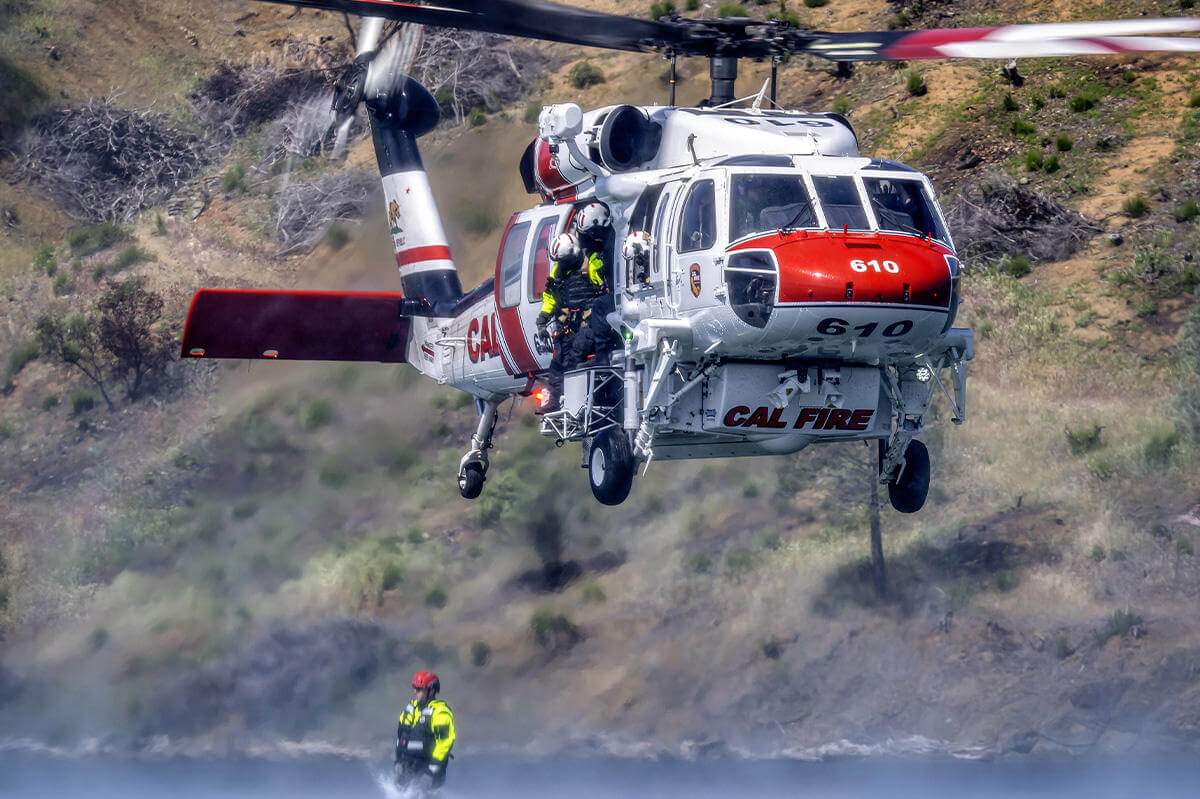
As well as firefighting, rescue plays a large role within the duties of CAL Fire. This CAL FIRE over-water air rescue training, taking place on 16 April at Stony Gorge Reservoir, Elk Creek, California, is part of the statewide air rescue class, which certifies new pilots and crew chiefs (hoist operators) in the air rescue program.
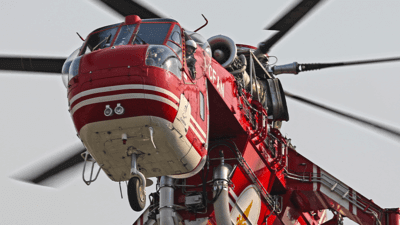
Participants from all of the CAL FIRE helitack bases throughout California gathered for the training. The type of aircraft used were a Bell UH-1H Super Huey and a Sikorsky S-70i CAL FIRE Hawk.
The scenario involved inserting a rescuer via helicast into the water, which means stepping off the helicopter and into the water. This operation was conducted as the helicopter was traveling approximately 10kts forward airspeed, roughly 10ft above the water. The rescuer inserted via helicast would become the simulated victim. The helicopter then returns to rescue the ‘victim’ by deploying another rescuer attached to the hoist hook. The simulated victim is then rescued utilizing a Cinch Rescue Collar or Quick Strop device. Once the simulated victim is secured in either of these devices, the Crew Chief retrieves both the rescuer and ‘victim’ to approximately 10ft above the water. At this point the helicopter is reposited to the shoreline, where they are lowered safely to the ground.
This full day of training is one component of the statewide air rescue class that consists of 90 total hours of instruction over the course of two full weeks.


August 2025
Issue
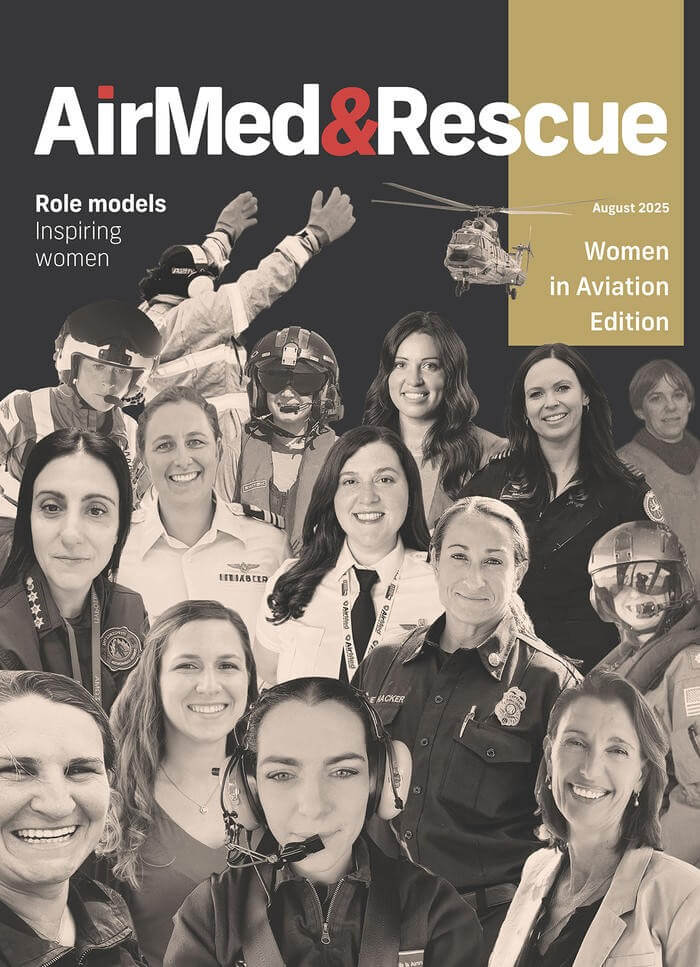
Our August magazine is the inaugural women in aviation edition, highlighting and showcasing female voices from the airborne special missions sector. We have features on blood products used in emergency medical services, challenging hoist rescues, pregnancy while flying, and portable water sources for firefighting. We also have interviews, a gallery, an industry voice, a news analysis piece, and a provider profile, as well as a review of the Paris Air Show.
Editorial Team
The AirMed&Rescue Editorial Team works on the website to ensure timely and relevant news is online every day. With extensive experience and in-depth knowledge of the air medical and air rescue industries, the team is ready to respond to breaking industry news and investigate topics of interest to our readers.