
Gallery: HEMS in Piedmont: training and qualification of new doctors and nurses

Dino Marcellino reports on and photographs the training of a new tranche of doctors and nurses for the Piedmont Regional Helicopter Rescue Service
Helicopter rescue in Piedmont
Helicopter rescue in Piedmont is managed by Azienda Sanitaria Zero, which collaborates with the Piedmont Alpine and Speleological Rescue Service for interventions in harsh and hostile environments. The aviation operator managing the four helicopter rescue bases through a regional contract is Airgreen.
Three bases are currently equipped with Leonardo AW139 helicopters, and are open for 12 hours a day.
The fourth base in Turin performs a 20-hour service; night operations are performed with night vision goggles (NVG) technology to land the helicopter ‘off-field’ and for special hoist operations.
In 2025, there were 3,270 missions, representing a total of 2,800 flight hours across the four bases.
The 2026 training and certification course
Dr Andrea Mina, Director of the Helicopter Rescue Service at Azienda Sanitaria Zero, outlined the criteria and procedures for the selection, training, and certification process:
“The criteria for doctors include specialization in anesthesia-resuscitation or emergency medicine, and at least three years of seniority in resuscitation/emergency services; nurses must all be experts in emergency care and have at least three years of seniority in advanced territorial rescue vehicles. The maximum age for admission to the selection process is 45.
“The pre-selection phase lasts five days. During this period, candidates’ theoretical and clinical skills are assessed, as well as their ability to apply this knowledge in managing simulated emergency scenarios, their operational skills in challenging environments, and their ability to manage typical helicopter emergency medical services (HEMS) intervention situations.
“The program concludes with a psychological and aptitude assessment conducted by a team of psychologists, aimed at exploring personal characteristics, decision-making skills, and stress management in highly complex contexts.
“The selection process is particularly rigorous: out of 45 available places, 140 applications were initially received.”
The final phase of the training program lasts several days.
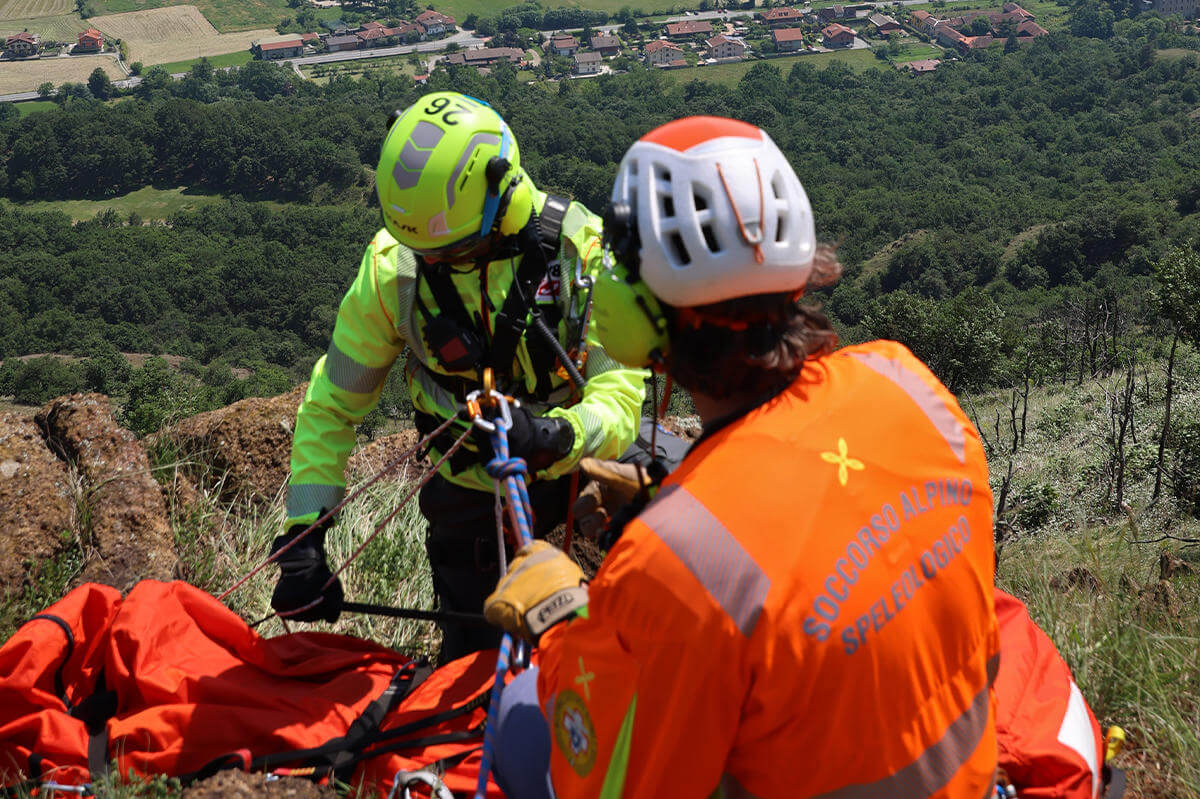
The first two days are dedicated to theoretical and practical classroom activities, illustrating the functioning of the air rescue service through sessions including those dedicated to crew resource management (CRM), which addressed aspects related to human factors, effective communication, and decision-making in highly complex and pressured contexts.
The following day took place at the Airgreen facility in Cafasse, where the trainees were able to experience firsthand the helicopter: on the ground, all the main procedures aboard the aircraft were simulated, including special maneuvers, embarkation and disembarkation procedures, and the use of equipment designed to handle patients in the environment.
The final two days are dedicated to in-flight activities. The first took place at the HEMS base in Turin, in a controlled and safe environment, where all the trainees were able to practice operating procedures with the helicopter: embarkation and disembarkation in hover, use of the winch with a stretcher, and movement of technical and medical personnel. The second took place in a rugged environment, on the slopes of Mount Musinè, where the same procedures were replicated in a scenario closer to operational reality.
Dr Mina specified: “Once certified, before undertaking independent operational activity, personnel must complete two real operational days flanked by at least one doctor or nurse, qualified as regional helicopter rescue instructors. To ensure continued competence, periodic training sessions are also scheduled, generally every six months, which include helicopter operations and field exercises.”
This program is made possible due to the collaboration between the medical and aeronautical components provided by Airgreen, and the technical components of regional and national Alpine rescue instructors.
It is the union of three dimensions – medical, aeronautical, and technical – that makes it possible to train professionals capable of acquiring new and highly specialized skills in a relatively short period. These skills, combined with their clinical experience, enable them to provide advanced rescue in the most complex locations and operational conditions.


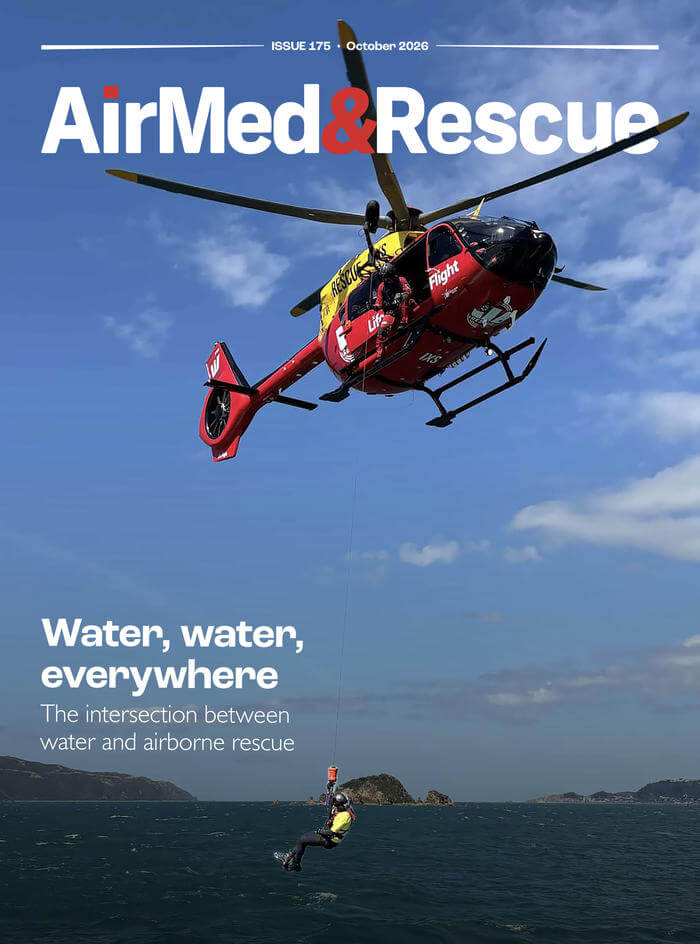
October 2026
Issue
The latest edition of AirMed&Rescue is packed full of content to keep you occupied in October. We have features on the challenges that swiftwater presents when trying to rescue someone; how sensor technology is affecting and improving aerial firefighting missions; why operators choose to have a varied fleet of aircraft to perform special missions; and what can be done to improve the accessibility and awareness of mental health assistance programs for safer and sustainable working conditions.
Dino Marcellino
Known around the world for his aviation photography and reports, Dino Marcellino has been fascinated by aircraft since his childhood, and has spent his life combining his passion for aircraft with that of photography. Flying on more than 25 different types of helicopters, he has worked with the Italian Navy, Army and Air Force, as well as police and rescue organisations.