
Gallery: Operation LENTUS in action

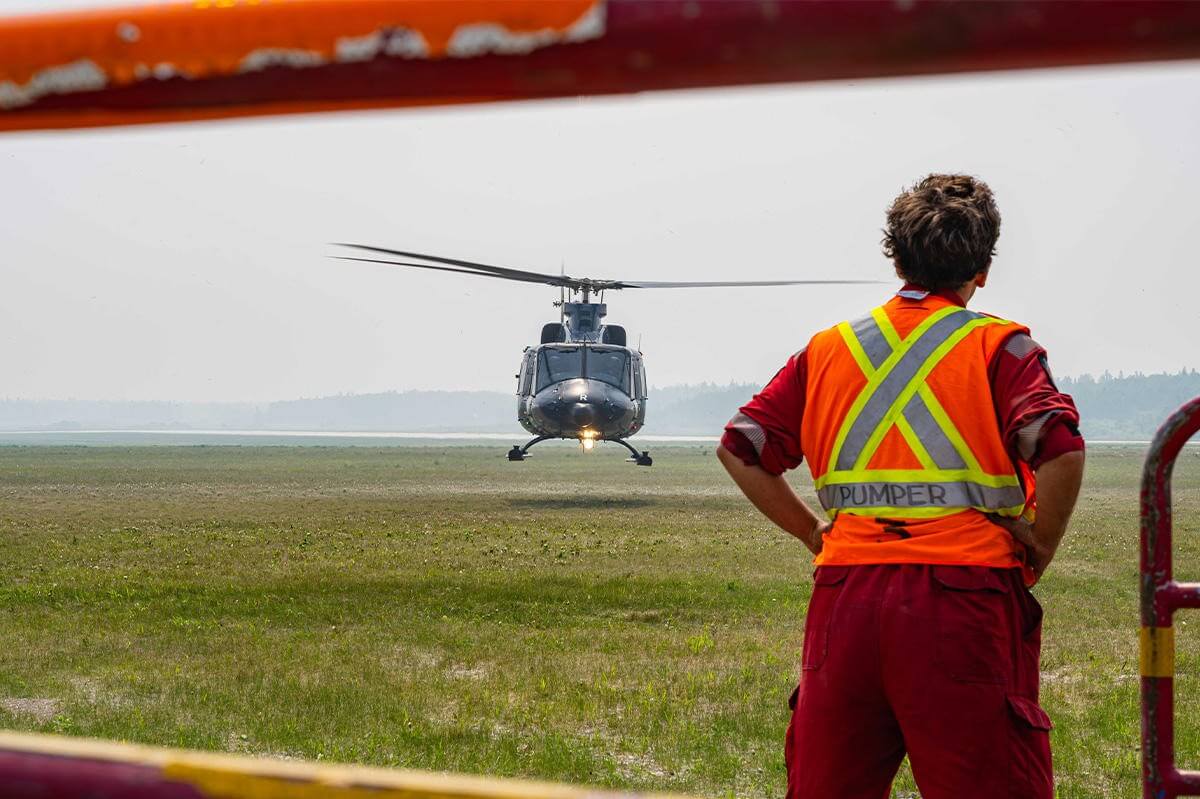
Protecting Canada from natural disasters falls to the federal government when the crisis becomes too large for local authorities to handle alone. Calling in the Canadian Armed Forces in these circumstances activates Operation LENTUS. Aviator Nicholas Zahari and Corporal Darren McDonald capture images of some evacuations conducted at the start of a long summer of wildfires
Canada is no stranger to natural disasters, and in a country as large as it is, the local emergency services can often get overwhelmed. As such, for over a decade, Canada has mobilized its armed forces to support its population with an ongoing operation called LENTUS. When provincial and territorial authorities ask for federal assistance from the Canadian Armed Forces (CAF) in the case of a natural disaster (such as a forest fire, flood, ice storm, or hurricane), this is the instigation of Operation LENTUS. Aid can be in the form of CAF personnel, equipment, and facilities to ensure the safety of Canadian citizens.
Originally just deployed once or twice a year, in 2025 alone, Operation LENTUS was initiated seven distinct times, responding to crises that included disruption to drinking water supplies, wildfire suppression, and mass evacuations.
Aircraft deployed to the regions asking for help included the CC-130 Hercules, CC-138 Twin Otter, CH-146 Griffon, CT-146 Outlaw, and CH-147 Chinook.
Pictured are some of the responders and evacuees from Operation LENTUS in Northern Manitoba and Northern Ontario at the start of June, where the Royal Canadian Air Force, Canadian Army, Canadian Rangers, and provincial and local authorities helped to evacuate residents. This took place in the first two weeks of June, but operations across the country were ongoing throughout July and August as wildfires took hold in different parts of the country to include Saskatchewan, Newfoundland and Labrador, and Nova Scotia.
© All rights reserved. Photos reproduced with the permission of DND/CAF (2026).


March 2026
Issue
This edition is bursting at the seams with articles from all corners of the special missions sector. We have features on the California wildfires that ravaged the state last year, what the cost–benefit analysis looks like for single-engine rotorcraft and autorotations, how the mission dictates the modification needed to the platform, and what can be done to further prevent the problems associated with inadvertent entry into instrument meteorological conditions.