
Industry voice: The cost of the cost of parts

Supply chain problems are just one consequence of the rising cost of parts, but higher prices can have more severe outcomes as well. Peter Turi offers his insights on the issue
Aviation has always been an expensive business, but, historically, the cost of exclusivity and operational expenses was more or less acceptable. The supply chain – comprising manufacturers, maintenance organizations, spare parts suppliers, brokers, operators, and end users (passengers) – was a well-established and predictable platform. This system was sustainable, with planning, aircraft on ground (AOG) and spares delivery times within tolerance limits.
However, what we have been experiencing since the onset of Covid-19, especially from suppliers, manufacturers, and maintenance partners, is concerning and increasingly unacceptable. The hunger for extra profit is alarming and threatens to undermine the entire industry, as service quality declines, delivery times lengthen, and spare parts costs soar.

But why is this happening? Don’t the stakeholders realize that this approach could collapse the entire sector and already endangers the livelihoods of thousands of people working within it?
In 2020, a windshield cost US$35,000 and had a delivery time of three months. Now, the price has jumped to $49,000 with a nine-month delivery estimate
Let me provide a specific example. In 2020, a windshield cost US$35,000 and had a delivery time of three months. Now, the price has jumped to $49,000 with a nine-month delivery estimate. How did this happen? Was there really a 40–50% inflation rate in the USA?
We all understand the basics of the economical processes, such as the relationship between the demand and the supply. But, in these cases, there must be something else behind it.
And there are numerous similar examples. On the other hand:
- The end-user market cannot absorb a 50% price increase; operators have had no opportunity to charge 50% more for their services since Covid-19
- Extended AOG times due to extreme delivery delays cause severe losses for companies, as their revenue-generating tools (aircraft) remain grounded.


Risk of a vicious cycle
Last, but not least: the shorter the repair and maintenance phase is, the earlier an aircraft would return for the next maintenance event after a normal operation phase, resulting in more frequent spare parts turnarounds, while an extended AOG blocks precious hangar space, and slows spares consumptions, too. So, a sufficient spare parts supply would definitely be healthier for the entire industry.
Every player in this supply chain relies on the others
Every player in this supply chain relies on the others. If spare parts manufacturers continue this inexplicable trend, companies will go bankrupt, and employees will lose their jobs. There is a risk of a vicious cycle here that could lead to an economic disaster.
Such an unjustifiable trend – namely, significant price increases coupled with extended delivery times – is unacceptable. This short-term thinking is risky because, even in the medium term, it could lead to a situation where the industry harms itself. One would accept the increased price but with a short delivery deadline, or a long waiting list, but with a significant discount.
We, as operators, should raise our voices and communicate how dire the spare parts situation is. We need to urge our suppliers to reconsider their approach before it’s too late.
December 2024
Issue
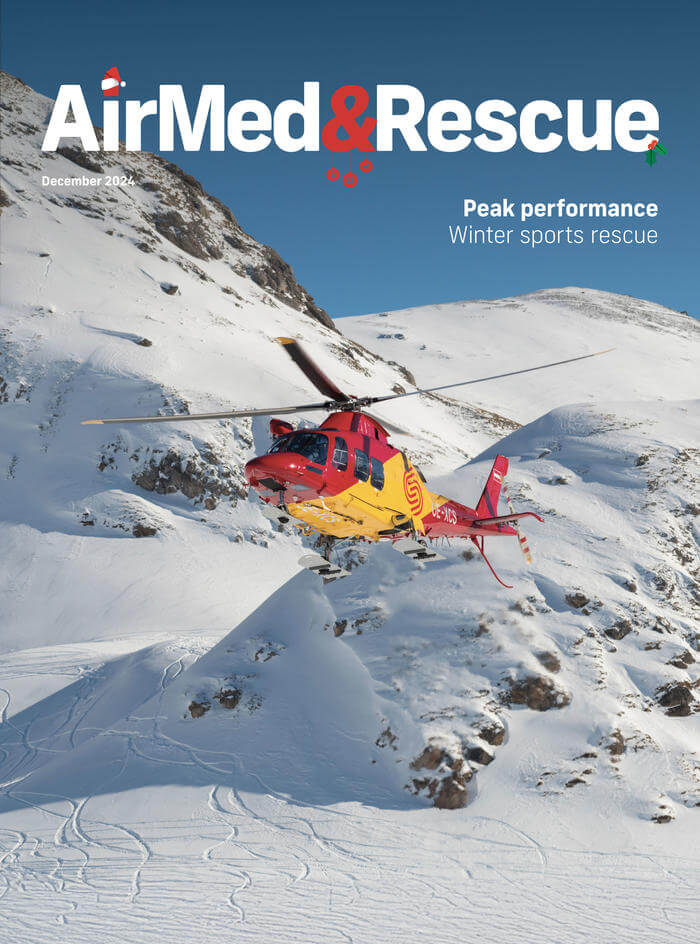
In the December edition, discover what goes into saving people that get into trouble on the ski slopes; find out about drones that are being used for search and rescue; learn about the treatment options for people with fractures; and see what has been happening this year in the realm of avionics development; plus more of our regular content.
Peter Turi
Dr Peter Turi gained national and international experience in hospital practice for 10 years as an accident and hand surgeon, and as a practicing ambulance doctor. He has worked for TrustAir Aviation since 2011 and has worked as the head of TrustAir Aviation since 2015. As international recognition of his professional work, he was elected a member of the EHAC Board in June 2021.