

Industry voice: Fixing the most important mission in aviation

Laura Epstein, pilot turned Founder and CEO of Pulse Charter Connect, explains how she is applying aviation’s culture of precision, accountability and preparation to help move organ transplant logistics forward
I inherited my love of flying from my dad. He owned a company that specialized in transporting precious art – including globally recognized exhibits like the Terracotta Warriors – to and from museums around the world. From him, I learned early that logistics is both an art and a science. That any flight, when done right, is less about speed and more about precision.
So it was only a matter of time before I pursued my private pilot’s license. I earned it at 23 after graduating with an aerospace engineering degree from the University of Virginia. Like many young pilots, I dreamed of flying fast, flying far, and maybe even flying for NASA. But I could never have imagined that aviation would one day lead me to the mission of saving lives through organ transplant logistics – a system that is complex, fragmented, and overdue for transformation.
Years later, while working at the Federal Aviation Administration (FAA), I had a front-row seat to the challenges of air operations in the USA. There, I worked with technologies like controller–pilot data link communications (CPDLC), a system that replaces voice transmissions with digital messaging to streamline air traffic control instructions. Seeing its efficiency firsthand – how it reduced radio congestion, minimized hear-back / read-back errors, and saved critical time for crews – I wondered: why couldn’t similar tools bring precision to organ transport logistics?
I also saw the rigor and structure that govern commercial, cargo, and emergency flights – the protocols, the real-time tracking, and the fail-safes. In comparison, organ transplant transport hasn’t always had access to the same level of coordination tools, despite its urgency. The difference was clear, and it sparked a question: if we can move everything from priceless artifacts to thousands of flights a day with precision, why not apply that same innovation and reliability to something as vital as a human organ?
In the USA, over 100,000 people are waiting for organ transplants. Time is quite literally life. A heart or lung must be transplanted within four to six hours of procurement. Kidneys, while slightly more forgiving, also degrade quickly. These organs often travel hundreds of miles by air, typically on small, private charter flights arranged on demand.
Behind every donation there lies incredible hope: one donor can save up to eight people and help many more through tissue donation. Each improvement in policy, logistics, and technology fuels our ability to meet the need – and deliver hope.
Yet, despite medical advances and the lifesaving potential of every donation, the journey from donor to recipient remains largely fragmented. These organs crisscross the country on quickly arranged charter flights, without a centralized coordination system. Transplant teams tend to work in silos, simply due to the complexities of their roles. Tracking is often patchy. Delays – whether from miscommunication, weather, or logistical hiccups – can mean the difference between life and death.
High rate of non-used organs
Each year, tens of thousands of organs are recovered from donors across the USA, but not all of them reach recipients. In 2023, approximately 28% of deceased donor kidneys were non-used. While some are declined for medical reasons, many lose viability due to late arrivals, flight delays, missed handoffs, and outdated communication methods. This represents missed opportunities for hundreds of patients annually and increased healthcare system costs.
In 2022, I returned to school to pursue my Master of Business Administration degree (MBA) at the University of Chicago Booth School of Business. During that time, I worked for a charter company that specialized in transplant flights, and that experience changed everything. I saw how transplant teams were operating under enormous pressure with minimal infrastructure to support their work. I watched the most time-sensitive missions in aviation being managed with the barest tools, and I knew we could do better.
What I saw was a system full of dedicated professionals doing everything they could to make lifesaving transplants happen. But, even with everyone working toward the same goal, the process needed a streamlined way to bring all the moving parts together – flight plans, hospital coordination, pilot communication – it was all happening, just not always in sync. It wasn’t about a lack of effort; it was about the need for a better infrastructure to support the effort. In a race against a four-hour window for a heart transplant, there’s no room for inefficiencies – every moment matters.
That’s when I founded Pulse Charter Connect, a centralized logistics and coordination platform designed specifically to streamline communications and scheduling for organ transplant logistics. Our goal was simple: make these missions faster, smarter, and more accountable. We built what we refer to as “an Expedia for organs”, a technology platform that connects transplant centers, organ procurement organizations, charter operators, and ground transportation vendors on a single, real-time interface.
Since launching in April 2024, our platform has helped save more than 65 lives – and we’re just getting started.
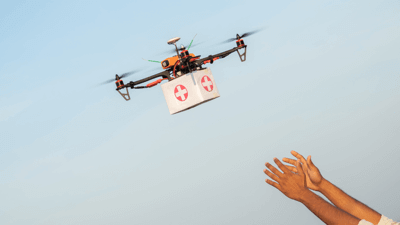
Aviation discipline saves lives
My pilot training gave me a unique lens through which to view this problem. In aviation, we are trained to think in systems – to anticipate potential delays, map out backup plans, and monitor every variable from weather to fuel load. There is a culture of precision, of accountability, and of preparation.
That mindset is exactly what can help move transplant logistics forward.
Flying also taught me something deeper: you’re responsible for more than just a machine; you’re responsible for what (or who) is on board. When I look at transplant transport, I don’t just see an aircraft. I see the patient waiting on the other side. I see a loved one – a daughter, a brother, a mother – someone whose future hinges on that flight making it on time.
Bringing aviation discipline into this space means treating every organ with the care, timing, and coordination it deserves. We’re not just shipping cargo; we’re stewarding hope.
Our mission is clear. With better tools, real-time coordination, and smart automation, we can reduce the number of organs non-used each year. We can relieve the burden on transplant teams. And, most importantly, we can save more lives.
But this mission isn’t just mine; it belongs to all of us. To every pilot who flies through the night for a transplant. To every nurse, coordinator, and doctor fighting the clock. To every family hoping for one more chance.
Behind every organ transport is a human story. And when that highly awaited call finally comes – the one that says “We have a match” – there should be full confidence in a system designed to get the organ there safely and on time.
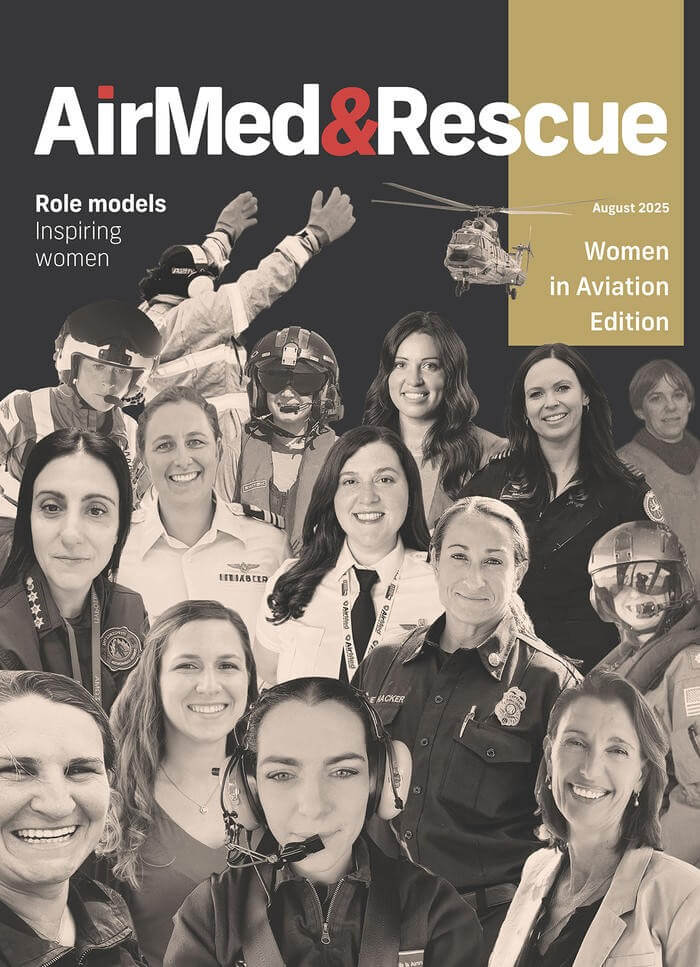
August 2025
Issue
Our August magazine is the inaugural women in aviation edition, highlighting and showcasing female voices from the airborne special missions sector. We have features on blood products used in emergency medical services, challenging hoist rescues, pregnancy while flying, and portable water sources for firefighting. We also have interviews, a gallery, an industry voice, a news analysis piece, and a provider profile, as well as a review of the Paris Air Show.
Laura Epstein
Laura is the Founder and CEO of Pulse Charter Connect, a company revolutionizing organ transport logistics. Drawing on her experience as both a pilot and a former FAA engineer, she recognized how centralized scheduling and real-time data could transform the system, making it faster, safer, and more efficient.