
Industry voice: Preparing for the 2025 fire season

Kyle Williams, Deputy Director of Fire Operations at the Oregon Department of Forestry, discusses how the agency and its partners utilize their aviation assets and the challenges they face in wildland fire aviation operations
In 2024, Oregon faced one of the toughest fire seasons in its history. The Oregon Department of Forestry (ODF) and our partner agencies set records for the number of fires, acres burned, money spent, and resources deployed within the state of Oregon. While large fires were making headlines, firefighters (both agency and contractors) were successful in extinguishing many smaller fires before they became news.
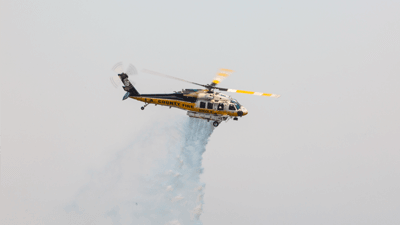
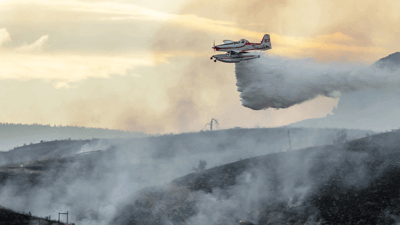
The department has a strong history of utilizing aviation assets for firefighting, and in 2024 our aviation resources were a key component of our success. ODF’s aviation assets include numerous exclusive-use (contractor) aircraft that are based across the state and ready to provide rapid aerial support to firefighters on the ground. These assets include four single-engine airtankers (SEATs), two single-engine water scoopers, three Type 1 helicopters, 10 Type 2 helicopters, three Type 3 helicopters, and two fixed-wing detection and reconnaissance platforms. Additionally, ODF and our Forest Protective Association partners own one light fixed-wing detection/aerial supervision platform and one multi-mission aircraft (MMA).
In addition to the exclusive-use contracts, ODF employees utilize call-when-needed aircraft to support a large fire response. ODF’s call-when-needed aircraft are hired for a specific assignment or fire based on the needs of that incident. Unlike the exclusive-use assets, these contractors have no set contract length and no guarantee of employment. Once the aircraft have completed their assignment, they are released to be dispatched to the next incident or returned to their home base. ODF is proud to have long-standing relationships with those companies that call Oregon their home base.
In total, ODF’s aircraft flew more than 4,000 hours on wildfire incidents in 2024. Helicopters delivered approximately 15,500 buckets of water, with an additional 1,650,000gal of water supplied by tanked helicopters. Type 3 helicopters delivered more than 190 firefighters to incidents. SEATs delivered nearly 382,000gal of fire retardant, while single-engine water scoopers delivered 395,000gal of water and 336,000gal of water-enhancing gel (fire suppressant chemical). These are the largest numbers in ODF’s aerial firefighting history.
As we move forward into the future, there are several challenges facing wildland fire aviation operations. There are fewer resources available to fire managers due to factors like an aging fleet, a shortage of contractor personnel, and competition for resources with partner states and federal agencies. Another issue has been the loss of many of the contractor-owned aircraft, which have been sold to other countries as they begin building fleets of aerial firefighting assets.
Fire managers are also facing a lack of middle management personnel. Government-contracted aircraft require an agency-qualified manager to help provide safety oversight, act as the liaison between the vendor and the agency, and ensure that all documentation is correct and submitted promptly. For a firefighter to become an aviation manager, they must pass a series of training courses, complete several trainee assignments, and get a task book certified. This entire process can take several years to complete.
Government-contracted aircraft require an agency-qualified manager to help provide safety oversight, act as the liaison between the vendor and the agency, and ensure that all documentation is correct and submitted promptly
The wildland firefighting community is suffering shortages across all positions, which in turn limits the number of potential candidates for these middle-management positions. Without middle management, aviation assets cannot be utilized. Agencies are working together to address personnel shortages and qualification issues, but the solutions will take time to implement.

Cooperation between agencies
There are many successes to recognize from the 2024 fire season as well. Relationships with partner agencies (both federal and state) contributed to the success of ODF. With the limited number of assets and personnel, each agency brought its strengths to the ring and worked together for the common goal.
Coordination was a key to success in 2024. ODF and our partner agencies worked together to identify issues and needs. Often if one agency is facing a problem or has concerns, another partner has the resources or knowledge to assist or is being affected by the same situation. This coordination makes our operations more effective and safer for all agencies.
One of the highlights of the cooperation between agencies is the different tools that the partners bring to the table
One of the highlights of the cooperation between agencies is the different tools that the partners bring to the table. Within the Pacific Northwest, the states (Oregon and Washington) contract assets that do not leave the region. This enables us to assist our federal partners when fires are burning in multiple regions across the country. The other side of that partnership is that the federal and other states’ contracted large airtanker fleets can be repositioned around the country as needs arise.
Another key to success in Oregon’s firefighting efforts is ODF’s long-standing partnership with the Oregon National Guard. Through activation from the Oregon Governor’s office, National Guard assets were dispatched to provide medevac and suppression aircraft when resource shortages reached critical status. In 2024, National Guard aviation assets spent 60 days assigned to incidents throughout the state. The Oregon National Guard is part of Oregon’s complete and coordinated system.
The ODF MMA continues to be a highlight of the aviation program. Using night vision goggles (NVG) and a forward-looking infrared (FLIR) camera system, the MMA flies during the night hours over areas where fire managers are concerned about new fire starts. This early fire detection tool allows fire managers to deploy resources while fires are still small and more manageable. During the 2024 season, the ODF MMA detected 24 previously undetected fires. Additionally, ODF utilized aircraft from the Washington Department of Natural Resources and Colorado Division of Fire Prevention and Control when the agency-owned aircraft was down for maintenance.
In addition to detection, the MMA also flew a handful of mapping missions for large fire support. Due to enhanced connectivity from the aircraft, the MMA was able to fly two operational support missions and provide live information to fire personnel on the ground. This tool allows ground personnel to make plans with a more detailed and current situational picture.
Uncrewed aerial systems (UASs) continue to be valuable tools. As technology evolves, and more personnel become pilots, UASs are ordered and utilized more on incidents
Uncrewed aerial systems (UASs) continue to be valuable tools. As technology evolves, and more personnel become pilots, UASs are ordered and utilized more on incidents. From lightning strike detection and hotspot identification to aerial ignition, ODF is finding more ways to utilize these tools. The agency is looking forward to the ever-evolving technology and usage of these assets.
2024 was an ultramarathon of a fire season. ODF is proud of the work our firefighters, contract resources, and partners accomplished, and, as we look forward to 2025, we remain committed to the citizens of Oregon. It’s hard to say what the fire season will bring, but we will be ready to respond to whatever comes our way.
April 2025
Issue
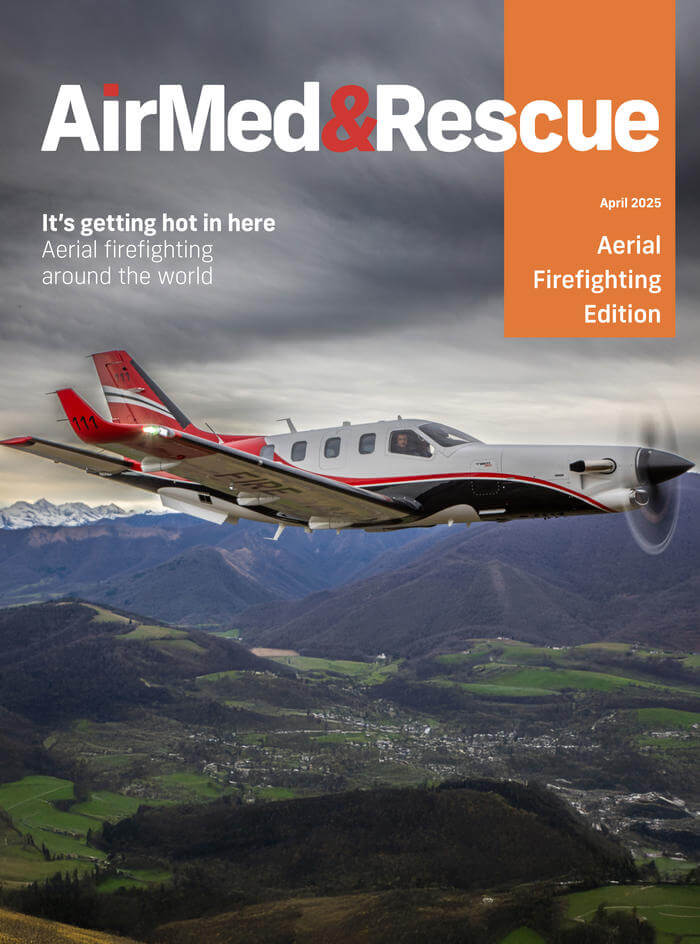
Our April edition has a special focus on aerial firefighting, with features that include rescues during wildfire situations; the coordination process and tools used between aircraft and firefighters; the distinct job of the smokejumper; the different use cases for buckets and tanks, and what needs to be considered for your airframe; the continued appeal of the Firehawk platform; and the importance of proper expertise when treating traumatic brain injuries; plus more of our regular content.