
Industry voice: Special training for aerial firefighting pilots

Aerial firefighting is demanding, so Conair have developed a training program to enhance their ability to effectively and safely train their pilots in a simulated environment
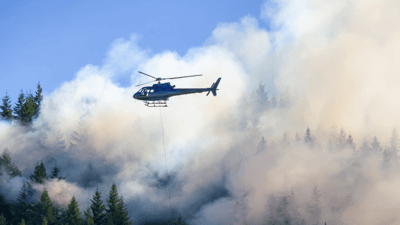
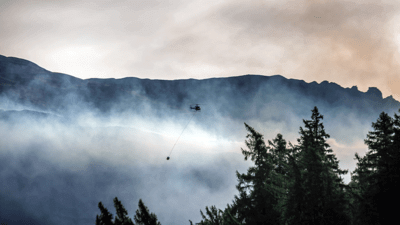
Each year around the world specialized aircraft called airtankers respond to fight wildfires. They support firefighters on the ground by dropping water or retardant, suppressing or slowing flames. Missions are difficult; more demanding than automated commercial flights and more unpredictable than agricultural spray flights. Operations over wildfires are comparable to military missions, requiring similar skills to achieve successful outcomes, with pilots overcoming a continuous stream of external obstacles while performing challenging maneuvers.
Nerves of steel
Aerial firefighting pilots hand-fly airtankers and bird dog aircraft through crowded airspaces, processing flight paths through smoke and drop directions from complex radio communications. Crews must continually assess temperature, humidity and turbulence, monitoring fire behavior and, at times, react to airborne debris, as they fly low and slow, releasing the tanker’s payload on a precise location at the right coverage level, avoiding crews working on the ground. It is not a task for the fainthearted. Each year hundreds of pilots look to claim a seat in the cockpit, drawn to the mission and purpose of protecting people, communities and resources from destruction. But the transition from pilot to aerial firefighter is not a quick one.
There is no global accreditation program to become an aerial firefighting pilot. Each individual governmental body or private company that operates or contracts an aerial firefighting fleet has their own specific criteria regarding pilot experience and training, but all the qualifications to enter the field are high. And the requirements to fly with Conair Aerial Firefighting, a global company based in Canada, are no different.
Safety: skill and experience
At Conair, safety is paramount. Aerial firefighting is unforgiving if not performed by a skilled pilot with appropriate experience, training and mindset within an exceptionally maintained aircraft. There are
It takes years to build the technical skills and experience necessary to enter the world of the aerial firefighter
immense risks and complexities involved that are unique to flying in forest fire conditions. Thousands of hours of flight time as pilot-in-command are necessary to be considered for a position at Conair, in addition to experience flying over mountainous terrain. Pilots that are selected must have the ability to fly in an automated environment – as found in commercial operations – plus have an expert ability in manual flying, navigating the aircraft in an unsupported low-level domain within challenging circumstances. It takes years to build the technical skills and experience necessary to enter the world of the aerial firefighter, building a diverse résumé that includes flying a host of aircraft types for a wide variety of services. And once an aerial firefighting pilot, advancing to captain requires dedication. The captain of the Dash 8-400AT airtanker operating in Queensland, Australia, has over 15,000 hours of flying experience, with 7,000 hours on the Dash 8 and over 15 years and 2,500 hours in aerial firefighting.
Training
At Conair, those that make the cut are provided extensive training each year. All 90+ pilots participate, regardless of their experience level, with everyone refreshing safety procedures and aerial firefighting techniques prior to deployment for the fire season. The intensive, specialized training at Conair includes ground, type and on-wing training from experts with decades of experience in aerial firefighting. Training also includes guest speakers, briefings of lessons learned from past seasons, and sessions on maintenance. In addition, pilots learn about the mechanics of fighting a fire, from strategy to fire behavior, fire weather, and human factors. But what sets Conair’s training apart from other aerial firefighting operators is their Training + Tactics Centre, the only platform in the world wholly dedicated to training pilots on aerial firefighting missions.
Historically, there was no opportunity for pilots to train on aerial firefighting missions in a setting that mimicked true-to-life scenarios. Conair recognized the need to provide pilots with better tools and, in response, developed the most comprehensive aerial firefighting simulation program in the world. The program began with a Level D RJ85 simulator, along with a Level 5 AT802 Flight Training Device that incorporated wildfire graphics. But the most innovative achievement to date is the Mission Training System (MTS).

The MTS is composed of multiple flight training devices, with each replicating flight characteristics and cockpit layout of the aircraft type in Conair's fleet. The flight training devices are linked virtually so pilots can train together over the same simulated mission, practicing in the same environment as they would experience in real life, simultaneously. It is the first commercial aviation mission-based training system in the world that has been built to the standards of military mission simulation and debriefing. First envisioned in 2017, it wasn’t until 2021 that Conair completed the MTS as proof of concept, which included three flight training devices (two AT802/ C208) linked locally. During Conair’s spring training, 500 hours of training were conducted. Leveraging the lessons learned, Conair launched an expanded MTS in 2022, incorporating two airtankers (Dash 8-400AT/RJ85) with a TC690 bird dog.
The MTS platform includes a Master Instructor Operating Station that has visibility into all the training devices and controls the variables of the scenario, including the fire and weather, plus it can input malfunctions and emergencies. Missions are dynamic with visuals allowing all aircraft to see each other for de-confliction and formation flying and observe retardant or water drops land on the ground. Emphasis is also placed on communications between crew and aircraft, mirroring live events.
Missions are dynamic with visuals allowing all aircraft to see each other for de-confliction and formation flying and observe retardant or water drops land on the ground
The true value of the MTS is in the debrief. Debriefs give crews the ability to replay recorded training exercises, identifying errors and lessons learned, finding ways to improve. Vantage points include all cockpits plus the outside of any aircraft, with radio communications synced. The debrief is designed to teach situational awareness that is nearly impossible to replicate in practice without a real fire.
At the heart of the MTS is Conair’s wildfire propagation model that Conair created using Presagis technology and integration services. The wildfire propagation model simulates real-world wildfire behavior by taking into account relative humidity, terrain, wind, fuel type and temperature, producing an accurate visual representation of forest fire behavior. The flight training devices are replicas of the Conair aircraft cockpits, further recreating a realistic mission environment, with connected communications simulating the complex and crowded radio channels that happen over a fire involving multiple aircraft, giving pilots the opportunity to learn to filter out noise and focus on effective communications.
Pilots who had never experienced this level of simulator training program were impressed. A 20+ year veteran air attack officer summed it up: “After several MTS training sessions, I feel like I’m operating at my mid-season peak performance." He underscores the objective of the MTS: to provide crews with training so realistic they feel like they’ve fought several fires already before they even fight the first fire of the season, all to foster safe operations, reaching higher standards. The program represents an evolution of the way that aerial firefighting pilots are trained, improving outcomes for these specialized missions.
January 2024
Issue
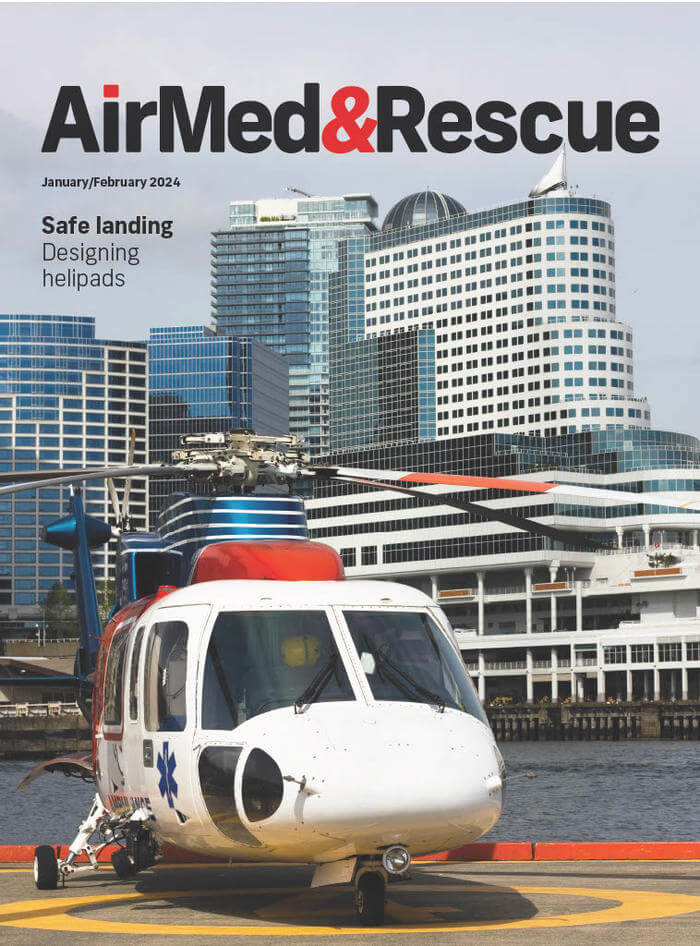
In the January/February edition, we get swept along by swiftwater rescues; we land upon the qualities that make good helipads; we monitor the rise of HUMS on mid- and light-weight aircraft; and we channel the recent advances in avionics; plus more of our regular content including a heart-warming air ambulance case study for the new year
Conair Group
Conair is a global leader in specialty aerial firefighting operations, delivering an extensive range of next-generation aerial fire control products and services to a variety of national and international customers and partners.
Keep on reading
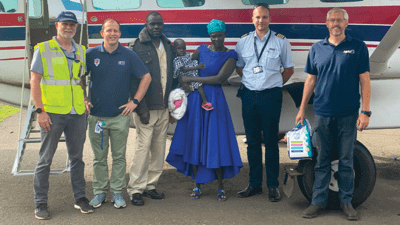
Case study: Medevac of three-year-old for lifesaving surgery
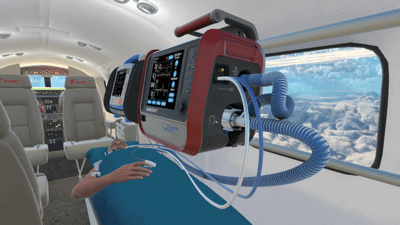
Industry voice: AI above the clouds