
Interview: Firehawks for Colombia

Mandy Langfield spoke with Carl Marquez, Aerial Firefighting Regional Sales Manager for North and South America at Air Methods, about the international move for the company’s Firehawk helicopter, which will soon see action in Colombia
What were the biggest challenges in adapting the Firehawk configuration to meet Colombia’s geographical and environmental conditions?
The biggest challenge was balancing the required systems for current Colombian Air Force (COLAF) fleet commonality, redundancy, and mission requirements with the upgrades for the Firehawk package while simultaneously keeping the aircraft weight light enough to allow for maximum water capacity. Considering the most at-risk areas for wildfires are in the higher-elevation areas, it was vital to keep the aircraft weight as low as possible.
How did Air Methods decide on the specific upgrades included? Were they customized to Colombia’s needs?
We worked through multiple builds and packages throughout the process directly with the COLAF technical teams to identify their mission requirements, certification paths, and fleet integration requirements to build the Firehawk that was ultimately selected by the Air Force.

What training and support package is being provided to the COLAF and the Colombian National Unit for Disaster Risk Management (UNGRD) for operating, maintaining, and servicing these converted UH-60L helicopters?
United Rotorcraft [the Air Methods division responsible for the Firehawk conversion] will provide pilot training specific to aerial firefighting and maintenance training for the Firehawk modification. The COLAF are already a highly capable operator and maintainer of the UH-60 aircraft and will only require training for the aerial firefighting aspect of the program.
What logistics, delivery, and supply chain arrangements are in place for spare parts, field maintenance, and local collaboration?
The COLAF already has a robust supply chain to support the UH-60 aircraft. We will include a support package of spares for the Firehawk system that should allow the COLAF to keep the aircraft in normal operation for two to three years. United Rotorcraft has a dedicated Customer Experience Manager (CXM) for the COLAF that will manage the program as we build and deliver the aircraft, and, once the aircraft have been delivered, the CXM will remain their key point of contact at United Rotorcraft to help with logistics, spares, and aircraft on ground (AOG) requirements after delivery.
What metrics or performance benchmarks will be used to evaluate the effectiveness of the Firehawks in Colombia (e.g. speed of response to wildfires, water drop capacity per hour, operational availability, cost per mission)?
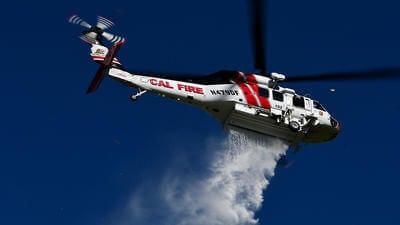
The metrics and benchmarks will be set by the COLAF internally. As the program moves closer to completion, the COLAF intend to work closely with our current US operators (CAL FIRE, LA County Fire) to help them identify and shape those metrics, as well as learn some techniques, best practices, and build their own safety programs for their aerial firefighting mission.
April 2026
Issue
Launching into spring, we have another great edition covering the world of airborne special missions. We have features on the European approach to aerial firefighting; how maintenance, repair, and overhaul companies are still managing the complex supply chain environment; neonatal transfers in regions that are not conducive to easy ground transport; and how helicopter emergency medical services deal with attending to traumatic accidents and injuries.
Mandy Langfield
Mandy Langfield is a Director of Palladium Media Partners and former Publishing Director at Voyageur Group. She has written extensively on international travel and health insurance, medical assistance provision, and air medical transportation. She was Editor of AirMed&Rescue from December 2017 until April 2021. Her favourite helicopter is the Chinook, having grown up near an RAF training ground.