

Night vision goggles – military to civilian

When flying in low light, or complete darkness, night vision goggles are indispensable tools in the cockpit for police, SAR, and HEMS, writes Jennifer Ferrero
Like many inventions, night vision goggles (NVGs) were an innovation of war. In the Second World War, in the early 1940s, they were created to help troops see at night using infrared light. The problem with search and rescue (SAR) and helicopter emergency medical services (HEMS) is the ability to see contrast and obstacles at night. Modern NVGs enable pilots and crew to see at night, along with ambient light from celestial and urban light sources. Night vision goggles have advantages and limitations, such as green and white phosphor. There are usage considerations, such as size, weight, fidelity, and field of vision. Training is taken seriously in all international programs.
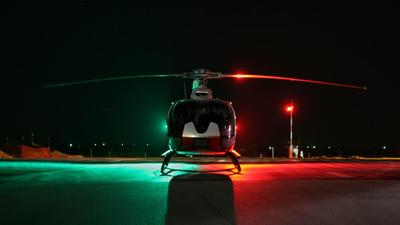
The importance of using NVGs
Matt Johnson, a single-pilot instrument flight rules (IFR) Captain with Metro Aviation, a US-based air medical services organization with about 600 pilots and 100 bases, is a 20-year pilot who has used NVGs for 15 years. He lives in Cincinnati, Ohio, a northeastern state, which experiences the winter solstice with shorter days and longer nights. When interviewed in March, he said: “I’m on the night shift tonight. It will be dark by 6:30pm. Due to the sunset and sunrise angle, we generally use goggles one hour after sunset and one hour before sunrise.”
He said NVGs are critical in rural areas that are not well lit. However, in urban areas, there is more ambient light, and when added to celestial light, depending upon the moon’s phase, he may have the goggles in a stowed position on his helmet.
Stu Parker, Sales and Marketing Manager at Aero Dynamix, concurred: “NVGs are best suited for low-light environments where situational awareness is critical. Their effectiveness varies by scenario.” Parker described the way that different sectors leverage the technology: “HEMS and SAR aviation use NVGs for remote scene approaches and help pilots navigate terrain, avoid obstacles, and land safely in unlit areas. Law enforcement aviation use NVGs for covert surveillance, SWAT operations and rural tracking. Firefighting is starting to use NVGs more and more, which can allow drops at night when the winds are lower. This night use can assist firefighting departments extinguish fires sooner with less widespread damage.”
Firefighting is starting to use NVGs more and more, which can allow drops at night when the winds are lower
Johnson said that NVGs amplify the available light 5,000–10,000 times, although they do not magnify or make objects larger. In describing the NVGs, he said they are two monocular lenses that come together on a pivot adjustment shelf to provide binocular vision. He said they are always available, so if he needs them immediately, he can hit a spring-loaded release, and the goggles come down.
His shift starts at 17:30 hrs, and he will preflight the aircraft and wear the helmet with goggles, which will be on until the end of the shift. He also noted that the flight nurses sit up front as they travel to a scene and have a pair to look for hazards. Additionally, they keep another set under lock and key in a secured cabinet.
“They can be very delicate and expensive, and they are somewhat of a control device; you can’t buy them at a hardware store.” He noted they can cost about $15,000–$20,000. Plus, NVGs are subject to the International Traffic and Arms Regulations (ITAR), which come with conditions regarding permitting.
Johnson and other subject matter experts (SMEs) noted the weight of the NVGs on the helmet. They concluded that while the NVGs are lightweight, the weight seems to increase after wearing them for long periods, even when stowed on the top of the helmet or worn down in an active position. Several SMEs said they hope that technological innovations include lighter-weight NVGs.
Training with NVGs
Using NVGs is not to be taken lightly; training is ongoing and intensive. International players such as Metro Aviation (Louisiana with US services), Black Wolf Helicopters (Guatemala-based training), Avincis (Portugal headquarters with services in Spain, Italy, Sweden, Norway, Finland, Mozambique, and Chile), and Night Flight Concepts (US-based, international training) all offer initial pilot training with NVGs, with ongoing recertification training.
Avincis, a 60-year-old company with about 2,400 employees, is “…one of the world’s leading emergency aerial services operators,” said Rickard Gillberg, Captain and Flight Operations Manager in Sweden. “The environment we work in is challenging and complex. Still, our purpose is clear: we exist to save lives and protect communities wherever we serve.”
They use NVGs in all HEMS missions, primarily interhospital air ambulance missions. They noted early afternoon and late morning darkness in many service areas.
Regarding NVG training, Gillberg said: “We have our own night vision imaging system (NVIS) instructors, both for the theoretical ground course and the initial training. Most of these instructors have extensive experience as NVIS instructors in the armed forces before – or in parallel to – coming to Avincis.”
Black Wolf Helicopters trains aircrews to become autonomous SAR units and provides SAR services as a company. It trains about 250 crewmembers annually, on both rotor- and fixed-wing aircraft. Its NVG training starts with a basic eight-hour introduction. The owner, Chris Sharpe, said: “It is a blend of didactic and practical introduction, and we then transition on to more advanced use, primarily in the civilian environment (as lighting systems and actual use are different).”
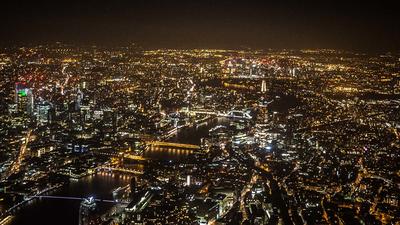
He said that military and police (plus Air Force combat SAR (CSAR)) crews progress into more refined use, with the following topic headings:
- NVG flight planning
- Night vision and user vision deficiencies
- NVG system history and types
- Orientation (i.e. user checks and familiarity)
- Terrain interpretation.
Sharpe said that, due to ITAR registration and the costs of NVGs, civilian operations in Guatemala don’t use them. However, the Guatemalan Air Force and special forces helicopter units can receive a certain technical limit or specification, even though they are tied to the US Department of Defense (DoD). Interestingly, there are no night lighting systems at Guatemalan airports, except at Guatemalan La Aurora International Airport, which would be necessary to use NVGs. Their more significant problem, however, is insufficient ground communication systems.
Adam Aldous, President of Night Flight Concepts, which exclusively provides worldwide NVG training, said the technology continues to improve. “It has been around for over 20 years and has been enhanced and enhanced to where we are today. It is difficult to squeeze more juice out of the lemon now.”
It has been around for over 20 years and has been enhanced and enhanced to where we are today. It is difficult to squeeze more juice out of the lemon now
Aldous said, regarding NVG training: “We aren’t teaching pilots how to fly – we just want to integrate the goggles, so they know how to use them.” Training includes academic work, simulator training, and flight training. Pilots need to be able to conduct maneuvers and demonstrate proficiency. Aldous said it is critical safety training for missions due to depth perception, spatial disorientation, and visual acuity adjustments, which require rapid response and precision landings. He said they focus on high-quality training to operate confidently and safely. “There are scenarios where it is paramount that law enforcement, EMS and SAR have a tool to do that.”
Recent changes in NVG training include: “For hover work, for flying with NVG in low-altitude maneuvers in areas with tall grass, you may become spatially disoriented and may not recognize it immediately. We teach it upfront so they look at those things and know their options. Is takeoff feasible?”
Gillberg said that Avincis pilots recertify every year through an “NVG proficiency check” in the simulator. “The proficiency checks are set up as a line-oriented flight training (LOFT) session with some emergency procedures embedded. The crews undergo an annual NVIS line check in their operative environment and are bound to strict recency requirements.”

Platforms and models of NVGs
Gillberg said: “We’re using the Elbit F4949 (AN/AVS-9) system, with a gradual transition from green to white phosphor. As always, we have a standardized setup in each aircraft.” They maintain one per cockpit crewmember, base, backups, and simulators.
For Gillberg, an efficient dynamic range is most important with NVGs. “With a limited dynamic range, which is quite symptomatic to NVGs, bright lights can easily mask out darker obstacles,” he added.
With a limited dynamic range, which is quite symptomatic to NVGs, bright lights can easily mask out darker obstacles
Sharpe said he prefers white phosphor NVGs primarily because they fly over the jungle at night, and the green doesn’t differentiate.
Johnson and Metro Aviation also use ANVIS-9s, which he said are standard. But he thinks this technology may be replaced with something better in the next decade. He said today’s technology is the ANVIS-9 and generation 3 tubes. “The ‘engine under the hood’ scenario uses the same image technology in a different housing and binoculars device, which helps with a newer product and can decrease the system’s weight.”
Differences in NVG technology can affect the effectiveness of the ability to perform missions at night, so choosing the right one is important, stated Parker: “There are differences in how NVGs perform in cockpits. Key factors include phosphor type, model generation, and cockpit compatibility (e.g. lighting and filtering). Green phosphor was the standard and widely used in military aviation. It has been known to cause more eye fatigue over time due to unnatural color contrast. White phosphor is a newer technology, often preferred for better contrast and perceived depth, and some pilots report better situational awareness. Older NVGs have a narrower field of view (FOV), lower resolution and gain, and are more susceptible to blooming from bright cockpit lights. The more modern models (AN/AVS-9) have better resolution, clarity, and FOV. They are also designed to work better with cockpit integrated kits.”
Aldous said his trainees prefer white phosphor over green phosphor. He also noted that newer pilots training on NVGs prefer white because of the higher contrast. But he said it comes down to mission needs, personal preferences, and the ambient light the pilot is working with.
Parker explained that NVGs weren’t a drop-in solution, and that aircraft had to be compatible: “The primary limitation of using NVGs in a cockpit that hasn’t been modified to integrate NVIS compatibility is light incompatibility, particularly from cockpit lighting systems. Standard cockpit lighting emits broad-spectrum or white light, including wavelengths that can overwhelm or blind NVGs. Non-NVIS lighting can cause blooming or halo effects in NVGs, which degrade image clarity and impair the pilot’s ability to read instruments or see outside. This effect limits the effectiveness of NVGs, making it harder to fly safely at night. Without NVIS modifications, cockpit lighting interferes with NVG function, creating a dangerous situation for pilots who rely on NVGs for night operations. NVIS-compatible systems use filtered lighting and special displays designed not to degrade NVG performance.”

Success stories with NVGs
Aldous shared that NVGs greatly enhance depth perception, but they don’t help on a sea landing or when flying into a dark area with a searchlight, which will debase their usefulness. He added: “For me, it is easier to determine height and motion parallax, and depth perception is better with NVGs.”
Aldous said that amplifying unaided light thousands of times through the image tube, taking ambient and infrared light, for example, “can turn a night environment with an unaided night into something you can see with good visual acuity”.
With over 20 years of experience and thousands of nights of HEMS missions, Gillberg said: "For us, magic happens every day in our cabins, where our highly professional medical crews work. Using the NVGs, we maximize the ability to fly that cabin safely from A to B (and onwards to C or A) so that the medical crew can give our patients the best chances for survival. In doing so, the NVGs are a key factor for success, and every patient saved is an accomplishment. As a paradox to the lifesaving ambition, every mission aborted due to discovering hazards or deteriorating weather conditions thanks to the NVGs is also a success story. In the end, we want to save lives without risking any lives. The NVGs help us in doing so.”
In the end, we want to save lives without risking any lives. The NVGs help us in doing so
Describing how the demand for night operations has changed, Parker explained: “[Using NVGs with] helicopters are most common, mission-diverse and most in demand. The close proximity to terrain and low-level operations make NVIS crucial. Currently helicopters are being used for police air operations, EMS, medevac, firefighting and SAR. Over the past decade we have seen more smaller fixed-wing aircraft that are now being used for airborne intelligence, surveillance and reconnaissance (ISR) missions.”
Future technology predictions of NVGs
Aldous predicts: “We are on the cusp, within the next decade or so, [of] replacing this technology with something even better.” On the US military standardization technology side, you have the ANVIS-9 and the generation 3 image tube technology that goes into those systems – “under-the-hood technology: other manufacturers make it and put it into a different housing or binocular device”. He concludes that some will make minor size, weight, and appearance modifications, but he said the image tube technology is still the same.
Sharpe added: “The move to white phosphor has been a massive leap forward, and I think in the future, the combination of white phosphor with an ability to include thermal imaging (at the user’s decision) will help SAR crews more effectively.”
Johnson added: “I wouldn’t do this job without NVGs.” In the future, he said, “I see the weight going down; that’s the biggest thing. Some operators are using white phosphor instead of green monochromatic view.” Metro Aviation uses white phosphor as standard, he said, because it is the newest technology.
June 2025
Issue
Our June edition covers a range of articles with a wealth of experiential information in the features, such as search and rescue as a career route, the latest night vision technology, the increasing popularity of drones for firefighting, the importance of helmets in special missions, why diversity matters in aviation, and why switching to special missions as a job is more fulfilling; plus we have more of our regular content.
Jennifer Ferrero
Jennifer Ferrero owns Ferrero Agency. She focuses her writing on feature stories for aerospace and manufacturing trade publications. She also provides marketing and public relations services. She has been an entrepreneur and writer for over 25 years. She lives in Spokane, Washington.