

From one course to 550 graduates

Ian Gaertner, SART/TAC Manager at Priority 1 Air Rescue, discusses the growth of the organization and what building a coast guard pipeline has taught Priority 1 Air Rescue about building any hoist program regardless of the size of the organization being trained
This September marked eight years since Priority 1 Air Rescue began providing instructor-led training for US Coast Guard Flight Mechanics. In that time, more than 550 students have come through our USCG ‘C’ School in Mesa, Arizona, completing over 130,000 synthetic hoist training evolutions before returning to their operational units to conduct life-saving search and rescue (SAR) missions.
When we started the program in 2018, we built a single ab initio course as required by the contract. Based on our experience with similar programs, we knew the course would adapt over time. As we learned more about what the MH-60 and MH-65 communities each needed, we focused onto their airframe-specific tracks. Over the years, we typically host USCG Standardization Instructor personnel a couple of times a year. Combined with USCG input and our own lessons from the field, we continue to adapt the program to ensure that graduates meet their operational standards.
That discipline of training to a standard applies to all our programs, large or small. Not all our customers operate with multiple aircraft and bases, in fact, a large majority of agencies operate a single helicopter, and many have just a few aircraft in their fleet. A typical example could be a state highway patrol or county sheriff’s unit that already flies its helicopters for patrol and wants to broaden their mission set, whether SAR, firefighting, or other emergency response missions. Our initial goal is to train rear crew to a solid, standardized baseline.
From there, we develop further capability in deliberate stages rather than all at once. Ab initio comes first, typically starting with daytime inland environments. A good example is progressing to night operations, which follow on once day hoisting competencies and experience become second nature. Then comes the more complex mission sets the unit faces; perhaps vertical surfaces or mountain terrain for one, swift water or maritime work for another. Each block builds upon the standardized foundation. That’s how a small unit grows a hoist capability while safely managing risk. Periodic audits help to identify procedural drift and reinforce standards.
How we deliver that training depends on the unit. We work across four modalities: classroom, physical simulation in our hoist procedural towers (HPTs), virtual simulation in our advanced aircrew mission simulator (AAMS), and then progressing to live flight. There’s no fixed recipe. A unit with a tight flight-hour budget gets more from front-loading reps on the HPT and AAMS, so the early, rough repetitions happen on the ground rather than in the aircraft. A team with steady turnover may need a repeatable baseline course it can easily send new crew through every year. Some units come to our facility in Mesa, for others, we bring instructors to them to train on the agency’s own aircraft. We start by understanding what the crew needs to be able to do, their challenges (operational or administrative), what their current capabilities are, and then design an efficient training program to close the gap.
Eight years and over 550 USCG Flight Mechanics for this program alone (and 15,000 students across all programs), the lesson is that standardization scales in both directions. The approach behind a national training pipeline works just as well for a two-aircraft unit standing up its first hoist program.
Ian Gaertner
Ian manages Priority 1 Air Rescue’s Mesa Search and Rescue Tactical Training Academy. A retired US Coast Guard Chief Aviation Maintenance Technician, he served for 25 years as a Flight Mechanic and Chief of the MH-60 Enlisted Standardization Team. He has logged over 10,000 hoist evolutions and leads curriculum development.
November 2026
Issue
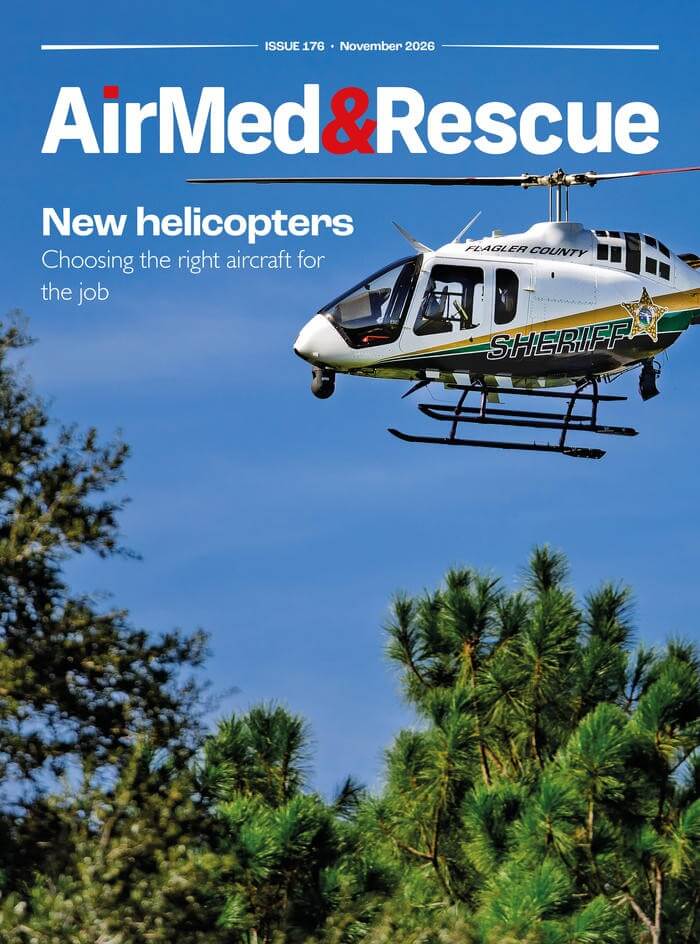
The November edition of AirMed&Rescue has a wealth of articles to keep you informed and engaged. We have features that explore the challenges associated with cable snag and entanglement; determine how and why special missions operators choose a new helicopter; look at the risks, regulation, and requirements of temporary helicopter landing sites; and examine the inroads that are being made by the drone industry into the medical sector.
Editorial Team
The AirMed&Rescue Editorial Team works on the website to ensure timely and relevant news is online every day. With extensive experience and in-depth knowledge of the air medical and air rescue industries, the team is ready to respond to breaking industry news and investigate topics of interest to our readers.
