
Pride of place: embracing diversity in special missions

Celebrating Pride is not just limited to June. Encouraging, employing and fostering talent from a diverse pool is a year-round responsibility that brings invaluable benefits to organizations. How can special missions operators maintain a diverse, equitable and inclusive workplace, and what are they doing to support their LGBTQ+ employees? Alysia Cameron-Davies reports
Diversity brings a wealth of benefits to organizations. By employing and nurturing talent from a broad pool, organizations gain access to top talent and unite a wide range of perspectives, experiences, and problem-solving approaches. This enhances decision-making, fuels innovation, and improves adaptability in fast-changing environments – ultimately driving stronger performance and unlocking unique skill sets.
Additionally, organizations that embrace diversity and foster an inclusive culture create workplaces where people feel valued, supported, and empowered. This leads to higher engagement and stronger retention, and enhances external credibility and reputation. A 2021 Glassdoor survey found that 76% of jobseekers considered workforce diversity an important factor when deciding which jobs to apply for, and nearly one-third said they would avoid companies that lacked it.
In special missions – where clear, compassionate communication is essential – teams that reflect and understand the communities they serve are better positioned to deliver culturally competent care. This connection builds trust and contributes to better outcomes, especially in high-pressure situations.
Beyond enhancing patient care, air ambulance services that actively embrace diversity and invest in cultural competence training also strengthen community relationships and elevate their public reputation. This, in turn, can lead to greater awareness and utilization of services. Internally, these efforts contribute to higher staff morale, greater engagement, and improved performance.
Celebrating LGBTQ+ voices in special missions
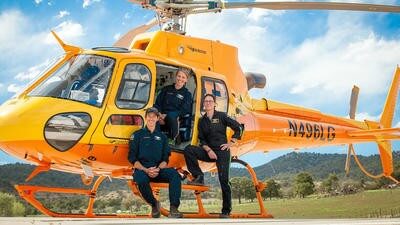
The experiences of LGBTQ+ service members like Chief Warrant Officer 3 Alyxandra Demetrides highlight the importance of representation, inclusivity and support in the field. CW3 Demetrides is an experienced medevac pilot and Air Mission Commander. She has led high-stakes operations in Afghanistan and near the Korean demilitarized zone (DMZ), delivering critical medical evacuations and aerial support. While serving in the medevac unit in Korea, CW3 Demetrides came out as a transgender woman. With the support of an accepting unit and community in Korea, she embraced her identity more deeply, becoming a visible and proud part of the LGBTQ+ military community.
Reflecting on her early love for aviation, CW3 Demetrides shared: “I’m always shocked that everyone didn’t want to become a pilot when they were younger. I felt like the sky was always calling me. I didn’t really care what I was flying, I just wanted to fly.”
I’m always shocked that everyone didn’t want to become a pilot when they were younger.
CW3 Demetrides was intrigued by military aviation, sparked by childhood trips to air shows and watching medevac helicopters land at Shock Trauma in Baltimore. She went on to attend US Army flight school and selected the UH-60 Black Hawk as her platform. “I loved it for its versatility. The platform could be used for so many purposes, and I have done almost everything you could do with a Black Hawk,” she explained.
When deployed to Afghanistan with an air assault unit, CW3 Demetrides had the opportunity to work with the medevac unit. “They flew HH-60s (hospital helicopters). It was still a Black Hawk, but it was designed for a medical mission,” she said. “I flew a few medevac missions and patient transfers in Afghanistan. It was very brief, but I fell in love with that mission.”
Later in the deployment, she flew med chase, providing overwatch and ensuring the medevac team’s safety during the mission. “I was put up as a candidate for Pilot in Command. So, that was my chance to show them what I was made of,” she recalled proudly.
Following Afghanistan, CW3 Demetrides was assigned to a medevac unit in Korea – a role she was eager to return to.

Leading with authenticity
During her deployment and the pandemic, CW3 Demetrides found herself in a deeply introspective period – one that led her to explore her gender identity more openly. “I was kind of forced to deal with my gender identity in a way that I wasn’t made to in the past. There was a lot of downtime, so I began exploring gender expression in private and slowly, along with conversations with my spouse, I began to present more androgynous to femme in public,” she explained.
“The medevac unit I was with in Korea was very accepting,” she continued. “There were no issues with anyone after I came out. There were actually a lot of queer women in the unit which, for me, made it feel safer and more accepting. Before I came out, I slowly started to drop hints that I might be trans. I presented more androgynous, I wore subtle makeup, but I still did my job. No-one questioned my abilities. Eventually, I was nominated for Air Mission Commander, which meant I would be responsible for the success of missions involving multiple aircraft.
No-one questioned my abilities. Eventually, I was nominated for Air Mission Commander, which meant I would be responsible for the success of missions involving multiple aircraft
“I flew many hours in Korea. I got to fly medevac missions. I got to see the North Korean flag flying only hundreds of meters from the edge of the DMZ,” she said. “I got along with everyone I worked with. I loved building up the confidence of new aviators. I flew with a lot of women who I think gave me a lot of confidence to be who I was. They had been smashing the narrow view of what femininity was to them, and that helped me push my own boundaries.”
Over time, CW3 Demetrides became part of a supportive community of LGBTQ+ service members. “I don’t know how much I contributed to the LGBTQ+ community before, but after I came out, I was just kind of unapologetically myself. There were already other queer folks out and proudly serving. I found out about a small group of trans service members in Korea, and I kind of just tried to hang out consistently. By the time I left and I was living my authentic self, I felt like I had really surrounded myself with a vibrant, accepting community,” she concluded.

Progress and pride: inclusion in practice
Awareness of LGBTQ+ inclusion has grown, and many organizations now have diversity, equity, and inclusion (DEI) frameworks in place. While anti-discrimination laws provide a crucial foundation, true inclusion goes further and involves creating an environment where everyone feels safe, respected, and valued. Achieving this requires ongoing education, open dialogue, and a sustained commitment to building workplaces where diversity is celebrated and every individual can thrive.
Organizations can enhance diversity and inclusion by conducting diversity audits, developing inclusion strategies, implementing inclusive policies, and establishing dedicated DEI committees. Ensuring that parental leave and other benefits are inclusive is also essential. In addition, providing training and actively celebrating diversity throughout the year fosters a more inclusive workplace. Offering equal opportunities for progression and career advancement, through access to development programs and mentorship, is also key to creating an equitable and supportive environment for all.
Efforts to celebrate the LGBTQ+ community in the special missions sector are becoming increasingly visible. Many air ambulance operators actively support and take part in Pride events, and initiatives like the UK’s LGBTQ+ Defence Awards highlight the achievements of LGBTQ+ professionals in the field.
Yet, challenges remain. In the USA, recent political changes could affect the ability of LGBTQ+ individuals to serve openly.
Serving openly as an LGBTQ+ individual
Laws regarding LGBTQ+ service members vary greatly around the world, ranging from full inclusion and protections to restrictions or outright bans. Some of the first countries to allow open service were Canada, Australia, and New Zealand, along with several Western European nations. Their ongoing support includes legal frameworks that protect LGBTQ+ individuals from discrimination, as well as active efforts to foster inclusive and welcoming environments for LGBTQ+ service members.
Following previous bans, the USA has made significant progress in allowing LGBTQ+ individuals to serve openly, but challenges remain with the changing political climate.
Sharing her personal experience and reflecting on the progress in the USA in recent years, CW3 Demetrides explained: “When I first joined the military, I remember people in leadership positions and even peers complaining and making fun of trans folks and other LGBTQ+ people. I remember when the first ban came through, there were some guys who were outwardly celebrating, which I thought was weird because I didn’t understand how that affected them. Over time, I saw more gay and lesbian people serving out in the open. I saw advocacy organizations highlighting other trans people, but I hadn’t met any trans folks in the military that I know of. Over time, the visibility of trans service members, coupled with visibility in entertainment and media, I think, led to an increase in overall acceptance.”
Over time, the visibility of trans service members, coupled with visibility in entertainment and media, I think, led to an increase in overall acceptance
CW3 Demetrides explained that the US military had introduced training on transgender service members several years before she came out, which, despite some complaints at the time, signaled progress and offered a sense of protection and possibility. She noted that, by the time she transitioned, the environment had become more accepting, and she felt that things were moving in the right direction. “By the time I was out, I felt like I was barely ‘brave’ for coming out, as some people say. Most people are neutral to accepting, in my experience. Things seemed like they were getting better. Everyone I had worked with didn’t have anything bad to say about me. The environment at the time, overall, was accepting,” she said.

Advice for LGBTQ+ individuals looking to pursue a career in the military or special missions aviation
“Now that I have come out and transitioned, we are looking at another ban,” said CW3 Demetrides. She acknowledged the challenges this could pose for those in the USA. “With rules now affecting our ability to serve openly and even possible changes to Federal Aviation Administration (FAA) rules, I would do research to see if it is safe, depending on where you are,” she advised. “I would find a mentor who has experience with flight and navigating the ever-changing political and regulatory landscape that we need to be flexible with.”
CW3 Demetrides emphasized how living as her true self has transformed her life. “Living authentically has absolutely changed my life for the better, but had I transitioned way earlier, or even just started now, it would be difficult to say how open I would be about it,” she added. “I have a full career, and I have already transitioned, so I feel content. I feel fulfilled in my career goals and in my standing as an aviator. If I was just starting my career, I would plan strategically around regulations, career goals, and family life, depending on how those things or your flight career might be affected.”
She finished with a message of support and encouragement, emphasizing: “You are not alone. There are other people like you out there. The sky is big enough for everyone.”
You are not alone. There are other people like you out there. The sky is big enough for everyone
Room for everyone
Diversity enriches the special missions sector – but true inclusion is an ongoing mission. It means not only acknowledging the value of LGBTQ+ individuals but also actively creating space for them to lead, thrive, and help shape the future of the industry. CW3 Demetrides concluded: “From my perspective, allowing people to serve openly only served to broaden the talent pool that the military has to draw from. I was able to continue with my career, develop other pilots, and support the mission. There’s no reason why flight isn’t for everyone.”
June 2025
Issue
Our June edition covers a range of articles with a wealth of experiential information in the features, such as search and rescue as a career route, the latest night vision technology, the increasing popularity of drones for firefighting, the importance of helmets in special missions, why diversity matters in aviation, and why switching to special missions as a job is more fulfilling; plus we have more of our regular content.