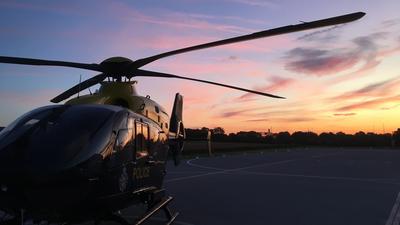

Provider Profile: San Diego Police Department

The San Diego Police Department (SDPD) Air Support Unit was formed in 1986 when the agency acquired its first Bell helicopter. For the next 20 years, the unit would operate several Bell 206 B3s and Bell 206 L4s, also known as the Bell Jet Ranger and Long Ranger. The unit is operational every day, including holidays, from 08:00 hrs to 02:30 hrs, and is airborne approximately 10 hours each day.
Responsibilities
Provide air support to patrol operations in assigned areas.
Provide surveillance of persons engaged in criminal activities.
Fly photographic missions for gathering of evidence, planning, critiquing and surveying.
Provide aerial security for VIP and foreign dignitaries.
Perform search and rescues (SAR) involving downed aircraft and lost or stranded persons.
Current operations
The Unit currently operates a fleet of four helicopters and two fixed-wing aircraft with 12 officers, two sergeants and two mechanics. The police helicopters, named ‘ABLE’ (Air Borne Law Enforcement), are located at Montgomery Field at 4141 Kearny Villa Road in San Diego.
Last year, police helicopters responded to over 8,300 calls for service and was the first police unit on scene almost 50 per cent of the time. In one year, the helicopter was involved in the arrest of 2,100 suspects. Six hundred of the 2,100 suspects were captured solely because the helicopters were overhead. If not for the rapid response of the helicopter, and their high-tech equipment, these suspects would most likely have eluded capture.
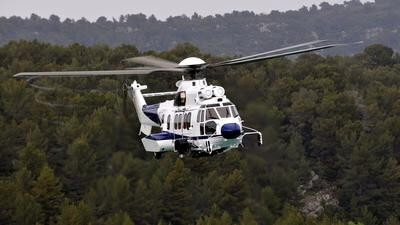
Although most police air units fly much lower, ABLE usually flies missions at approximately 1,500 feet during the day and 2,000 feet after 22:00 hrs to help alleviate helicopter noise. However, at times, air traffic controllers will instruct the helicopter to fly at or below 1,500 feet to give safe separation from airliners coming into San Diego.
All SDPD Air Support pilots and tactical flight officers are experienced street patrol officers prior to their assignment in the air unit. Some have also spent time in other specialized units such as SWAT or Narcotics prior to becoming airborne cops.
Shared space
San Diego Police and the San Diego Sheriff's Helicopter Support Unit often share the same air space and work closely together to assist each other when needed. ASTREA, the San Diego Sheriff’s fleet, is based at Gillespie Airport in El Cajon, California. The San Diego Sheriff’s Department operates a fleet of nine helicopters. Of the nine helicopters, four are MD500 series helicopters and two are Bell 407 helicopters, which are primarily dedicated to law enforcement support. Three helicopters (Bell 205 A1++) are primarily dedicated to fire suppression/search and rescue operations. Staffing consists of one lieutenant, two sergeants, 14 deputy sheriffs and six mechanics.
ASTREA provides air support to all public safety agencies in San Diego County (consisting of about 4,200 square miles). ASTREA responds to radio calls for law enforcement support, fire suppression, and SAR incidents. Additionally, when requested, ASTREA will provide assistance to surrounding counties under State Mutual Aid agreements.

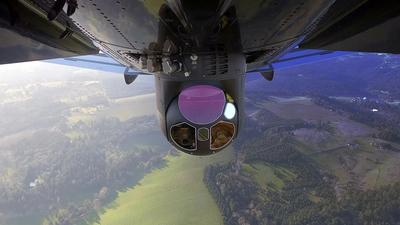
ASTREA law enforcement helicopters generally fly at a minimum altitude of 500 feet above ground level. This altitude is generally accepted as the minimum altitude needed to make a safe and emergency auto-rotational landing if a mechanical malfunction occurs. At nighttime, for safety and noise abatement purposes, air crews are trained and encouraged to fly 1,000 feet above ground level.
At nighttime, for safety and noise abatement purposes, air crews are trained and encouraged to fly 1,000 feet above ground level.
For noise abatement purposes, ASTREA fire / rescue helicopters (Bell 205) fly at 1,000 feet above ground level when transitioning to and from calls.

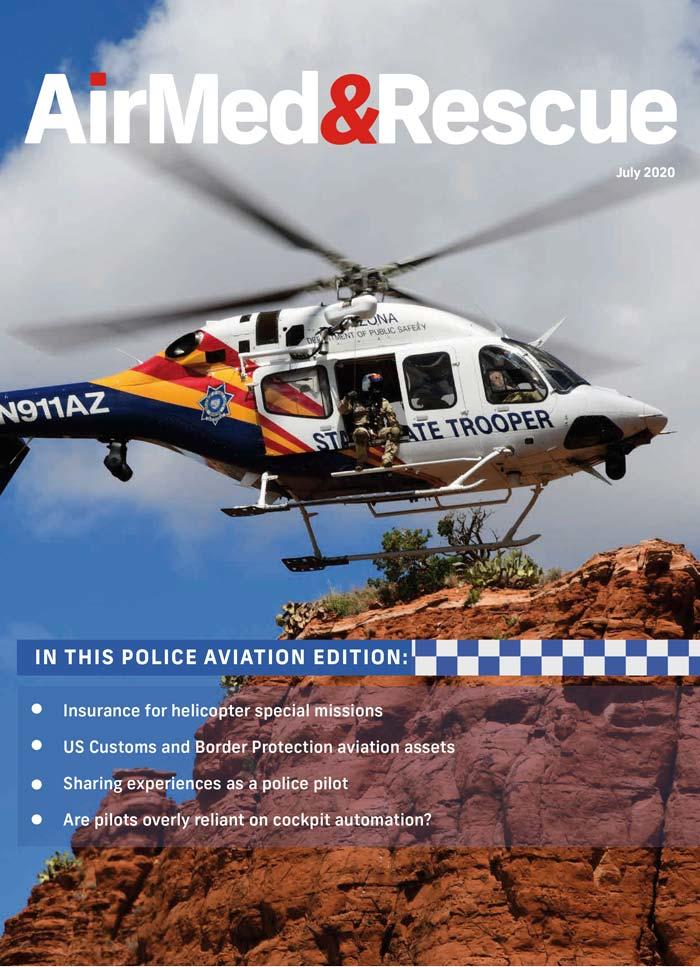
July 2020
Issue
In this Police Aviation issue:
Provider Profile: San Diego Police Department Air Support Unit
Aerial assets of the US Customs and Border Patrol
The cost of special missions insurance
Sharing experiences and CRM as a police aviator
Automatic reactions: When technology isn’t an asset
Multi-agency management: Designing, creating and building a response system
Case Study: AirLec Ambulance
Interview: Cameron Curtis, AAMS President and CEO
Mandy Langfield
Mandy Langfield is a Director of Palladium Media Partners and former Publishing Director at Voyageur Group. She has written extensively on international travel and health insurance, medical assistance provision, and air medical transportation. She was Editor of AirMed&Rescue from December 2017 until April 2021. Her favourite helicopter is the Chinook, having grown up near an RAF training ground.
Also in the June 2020 Police Aviation Edition
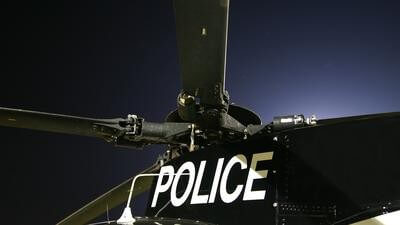
The cost of special missions insurance
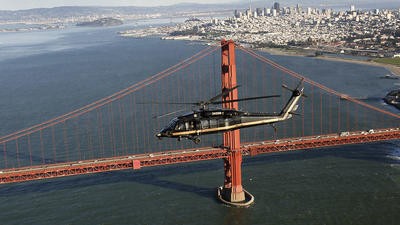
Aerial assets of US Customs and Border Protection