
Provider profile: LifeFlight Australia

Oliver Cuenca talks to the team at LifeFlight Australia about their work providing air medical services to the state of Queensland and beyond
Tracing its roots back to 1979, LifeFlight Australia has provided air medical services to over 90,000 people since its launch 45 years ago, including 8,177 in the 2024 financial year.
Initially flying from a single base on the Sunshine Coast in southeast Queensland, the service – known as CareFlight until a rebrand in 2017 – expanded its operations to cover southern Queensland and northern New South Wales in 1992, and southwest Queensland in 2006.
It subsequently merged with the Sunshine Coast Helicopter Rescue Service in 2013, and the North Queensland Helicopter Rescue Service (NQ Rescue) in 2015, before establishing another base in Bundaberg, Queensland, in 2020.
Bases and aircraft
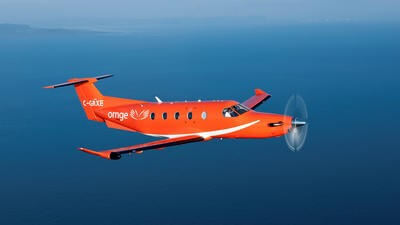
In the present day, LifeFlight flies operations from seven bases across Australia (Brisbane, Bundaberg, Mount Isa, Roma, Sunshine Coast, Toowoomba, and Townsville), as well as an overseas base in Singapore.
It established an in-house training academy in Brisbane in 1994, and also operates a maintenance base in Archerfield, Queensland.
Across these bases, the company operates a fleet of 17 helicopters – including a number of AW139s, Bell 412s, and a BK117 – and four fixed-wing Challenger 604 air ambulance jets.
Lee Schofield, Chief Operating Officer at LifeFlight Australia, explained that while some of the company’s aircraft are owned outright, others are “bank financed or provided by operating lessors”. This approach allows LifeFlight to be flexible in its approach, and “enables us to tailor the aircraft to suit the operation and client in question”.
Schofield added that LifeFlight is in the process of acquiring seven additional AW139 helicopters – the first of which are due to enter service in the coming months.
“These new helicopters will be used to increase our capability across Queensland and beyond,” he said. “The initial deliveries will be used to replace the Bell 412s at our Sunshine Coast and Bundaberg base, along with the BK117 at our Mount Isa base.
These new helicopters will be used to increase our capability across Queensland and beyond
“The additional deliveries will also enhance our capability in Brisbane and Toowoomba, along with our ability to service short-term deployments as needed.”

All maintenance, repair, and overhaul (MRO) of LifeFlight’s aircraft – both fixed-wing and rotary-wing – is conducted in-house, he continued, with most work taking place at the LifeFlight Clive Berghofer Maintenance Centre at Brisbane’s Archerfield Airport. This 5,000m² facility can accommodate up to nine helicopters and one jet at any one time.
Schofield added that LifeFlight also serves a number of external MRO clients, “including the Victorian government – for helicopters operating under the StarFlight brand for Victoria Police, [as well as] Westpac, which leases one of our machines”.
Operations
LifeFlight helicopter crews are called out to a wide range of missions each week, said Schofield. “This ranges from boating incidents through to people setting off emergency beacons after becoming lost in the bush,” he explained. “The most common emergency medical services are to help people with cardiac problems, patients injured in motor vehicle accidents, animal-related incidents, and search and rescues.
The most common emergency medical services are to help people with cardiac problems, patients injured in motor vehicle accidents, animal-related incidents, and search and rescues
“Most of the LifeFlight fleet is fully committed to [public health system] Queensland Health and other commercial customers,” he added. “However, we do operate extra aircraft to ensure we can meet the additional capacity requirements of existing customers, accept short-term deployments and provide operational backup to the contracted fleet.”
Huge distances and wild weather
Providing air medical services in Australia is no easy feat – as Schofield noted, the vast distances involved alone provide unique challenges to LifeFlight crews. “For example,” he said, “northwest Queensland spans 307,082km² – significantly larger than the size of New Zealand.”
Northwest Queensland spans 307,082km² – significantly larger than the size of New Zealand
Crews, such as the one stationed at LifeFlight’s Mount Isa base in Queensland’s north, are required to undertake significant mission planning just to overcome this issue of scale, “to ensure they can access fuel dumps in the region to safely reach their destination and fly back,” Schofield continued.
He noted, however, that once the base’s new AW139 replaces its existing BK117, the crew’s operational range will double.
Beyond this, there are other challenges involving “wild weather patterns”, he added. This includes “flooding and cyclonic winds, which can impact the ability of our crews to operate safely”.
Onboard medical equipment
To support its air medical operations, LifeFlight aircraft carry a range of onboard medical equipment – this kit, said Dr Jeff Hooper, the company’s Medical Director and Head of LifeFlight Retrieval Medicine, is consistent across both its fixed- and rotary-wing fleets.
“Current equipment includes a Hamilton transport ventilator; a ZOLL monitor; Braun infusion pumps; a primary bag and interhospital bag; a Philips Lumify ultrasound machine; and four units of packed cells and fibrinogen concentrate,” he explained.
As well as allowing LifeFlight to maintain a standard level of care across its entire fleet, this standard package of kit helps to simplify education and training, and reduce government-related issues, he noted.
LifeFlight also aims to assess, review, and update its list of equipment regularly. The company is currently looking to implement the B Braun Spaceplus Perfusor as part of its regular line-up.
“The new AW139 aircraft will also be fitted with a Stryker stretcher and Powered Aero Loader (PAL) to increase interoperability with the Queensland Ambulance Service,” revealed Dr Hooper.

Training
While good aircraft and medical equipment go a long way, no air medical service is complete without well-trained flight and medical teams.
As well as requiring all newly hired flight crew to undergo an initial flight training program before being cleared to fly, LifeFlight also requires its existing pilots to undertake regular training throughout the year.
The company’s pilots, co-pilots and rescue crew train “for a minimum of three days per quarter, with a mixture of live and simulated training,” explained Shaun Gillot, General Manager of Operations. Additionally, pilots must complete a minimum of “18 hours of high-fidelity simulator training per year”.
“LifeFlight stages training to concentrate on a different skill set each quarter,” he continued, “including instrument flight, rescue operations, night operations, line (day-to-day) and mission-oriented training.”
LifeFlight primarily recruits its flight paramedics from the Queensland Ambulance Service, while its doctors and nurses are directly employed by the company. All medical crew are expected to undergo a compulsory air medical training course prior to performing their role.
LifeFlight primarily recruits its flight paramedics from the Queensland Ambulance Service, while its doctors and nurses are directly employed by the company
This approach, added Dr Hooper, “has many advantages for crew resource management (CRM), such as recognition of the diverse skill sets across the medical teams”.
The air medical training – conducted at the LifeFlight Training Academy – is an intensive, week-long course that includes the completion of “helicopter underwater escape training (HUET), rescue winching, and clinical scenario training,” he explained.
Dr Hooper continued: “During HUET, the doctors go through four scenarios in the simulator to equip them with the necessary skills to escape an underwater helicopter, in the unlikely event of a crash into water. The winching exercises involve teaching [them] vital lifesaving skills needed to reach patients located in remote and often inaccessible areas.”
He added that new critical care doctors will also be taken through winching, first individually, then in pairs, and finally with a stretcher as part of their exercises.
“New recruits also put their pre-clinical skills to the test at the Queensland Combined Emergency Services Academy at Whyte Island in Brisbane, where they participate in several high-pressure scenarios,” Dr Hooper noted. Each scenario mimics a real-life situation that recruits may be confronted with – such as a “multi-casualty car crash, a house party incident, or a boating disaster,” he said.
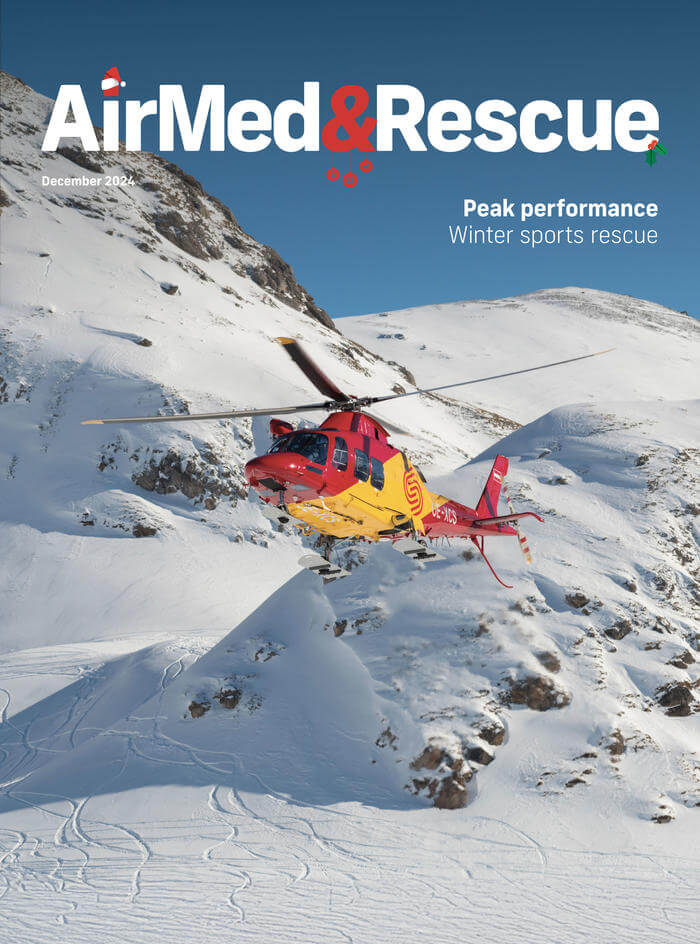
December 2024
Issue
In the December edition, discover what goes into saving people that get into trouble on the ski slopes; find out about drones that are being used for search and rescue; learn about the treatment options for people with fractures; and see what has been happening this year in the realm of avionics development; plus more of our regular content.
Oliver Cuenca
Oliver Cuenca was a Junior Editor at the Voyageur Group. He was previously a News and Features Journalist for the rail magazine IRJ until 2021, and studied MA Magazine Journalism at Cardiff University. His favourite helicopter is the AW169 – the workhorse of the UK air ambulance sector! He also led the creation of Waypoint: The AirMed&Rescue podcast, serving as its Production Editor and co-host.