

Provider Profile: Royal Canadian Mounted Police Air Services Branch

Oliver Cuenca talks to Marie-Eve Breton, about the Royal Canadian Mounted Police’s long-standing aviation division and its operations
The Royal Canadian Mounted Police (RCMP) – commonly known as the Mounties – have long been treated as a romantic symbol of Canada itself. The organization’s romanticized image – of horses, vast wildernesses and striking red uniforms – might give the impression of the RCMP as an institution that is tied to its past, and yet the reality is far from this.
As a modern police force, the RCMP serves as the federal and national police force of Canada, as well as providing community police services under contract to eight of Canada’s 10 provinces – excluding Ontario and Quebec – as well as all three of its territories.
The organization also operates a substantial Air Services Branch (ASB), which provides operational support to law enforcement in all parts of Canada through a mixed fleet of rotorcraft and fixed-wing aircraft.
Eight decades of policing in the skies
Founded in 1937, the ASB originally operated a fleet of four de Havilland Dragonfly biplanes. This has since expanded – the division now operates a wholly owned fleet of 34 aircraft, including a fixed-wing turboprop fleet of 16 Pilatus PC-12s, four Cessna 206s, three Cessna Caravans, one de Havilland DHC-6 Twin Otter, and one Daher Kodiak 100. Additionally, the RCMP operates a helicopter fleet of six H125s (AS350), two H120s (EC120), and one H145.
Marie-Eve Breton, the RCMP’s Media Relations Officer for National Communications Services, explained that the RCMP maintains this fleet through a mixture of in-house work conducted ‘with RCMP Air Maintenance Engineers’, as well as through ‘contracts out to third parties for various work, utilizing requests for proposal (RFP) and standing offers (SO)’.
Centralized control, decentralized execution
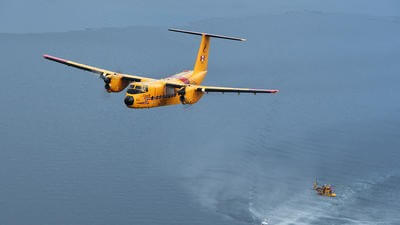
The RCMP serves as the federal and national police force of Canada
The ASB’s operations are divided into 19 distinct semi-autonomous Air Sections. Breton explained that the governance of these Air Sections is ‘best described as centralized control’ based around the ASB’s policy center, with ‘decentralized execution’. Effectively, each section operates with a degree of autonomy within a pre-established framework strategy established by the ASB at a national level.
Breton added that ‘inter-divisional operations are coordinated through the RCMP Air Service Branch’s Systems Operational Control Centre (SOCC) when required’, enabling different sections to respond to incidents in geographical areas outside of their assigned area when additional support is required elsewhere.
Additionally, the ASB will often ‘collaborate with other police departments when requested or required’, Breton explained, adding that such inter-agency participation is coordinated through the RCMP’s Operations and SOCC Managers.
Policing varied and sparsely populated landscapes
Different Air Sections will frequently operate different aircraft according to geographical conditions – as the second largest country in the world, Canada’s landscapes are diverse and encompass the Canadian Rocky Mountains in the west; the vast forests and plains of the country’s interior; Arctic tundra in the north; as well as lakes, and an extensive coastline of bays and islands.
The ASB’s heavy use of PC-12s is indicative of this – Breton explained that this aircraft type is typically operated in Arctic or northern areas, due to the aircraft’s ability to ‘take-off and land on short runways’, as well as its ability to conduct operations over long distances. The aircraft has a range of 2,804km, making it ideal for low-population, rural areas such as the Northwest Territories, Nunavut, and Yukon.
Similarly, the DHC-6 Twin Otter is primarily operated along the sparsely populated Labrador coast due to its ability to land on ‘short, unprepared runways’, Breton said.
Breton explained: “Many RCMP detachments are located in areas with no road access and are only accessible by air transport, [but that] RCMP fixed-wing transport aircraft are capable of operating in varying environments and runway conditions.”
The predominance of fixed-wing aircraft in the ASB fleet is in part due to the distances the RCMP operates across. Breton explained that ultimately ‘transport of RCMP members is more advantageous, effective and efficient using fixed-wing aircraft, as opposed to helicopters’.

Maintaining a range of bases
To maintain operations in the more sparsely populated parts of the country, the RCMP maintains a number of bases in places such as Goose Bay, Newfoundland and Labrador; Iqaluit, Nunavut; Yellowknife, Northwest Territories; and Whitehorse, Yukon.
By contrast, the ASB’s rotorcraft fleet tend to serve in roles that require a shorter range, often in more populated areas. Despite this, they also carry out a range of operations, including the tactical deployment of RCMP members, as well as providing support for search and rescue missions.
Breton explained that RCMP aviators largely receive the same pilot training as other non-police pilots, but added that they also subsequently receive ‘supplementary training at the RCMP Academy for police training’.
Future plans
The ASB has evolved significantly since its establishment, and plans to continue doing so in the future. In addition to standard future plans such as ‘fleet modernization, [and] an increased capacity’, as well as plans to update or acquire a new flight management system, Breton explained that the RCMP has been exploring the use of drone technology to enhance its aerial operations.
When onboarding any new operational technologies, the RCMP will ensure that there is both an operational need and a benefit to the public
“The RCMP is considering various applications, from investigational to surveillance,” she noted, adding: “When onboarding any new operational technologies, the RCMP will ensure that there is both an operational need and a benefit to the public, and that it meets privacy, legal, policy and ethical standards.”
The RCMP launched its remotely piloted aircraft system (RPAS) program in 2010, when it operated a single drone in Saskatchewan to support collision reconstruction. The program has since expanded to include over 200 drones, with the police force now operating several different systems carrying a range of camera types, including still, video and infrared.
July 2023
Issue
We have a special aerial policing edition, find out how police forces utilize night vision; what the requirements are for police aircraft; how datalinks are used to improve police operations; and discover more about the TFO role; and we cover the why there is a shortage of aerial firefighting crews; plus all of our regular content.
Oliver Cuenca
Oliver Cuenca was a Junior Editor at the Voyageur Group. He was previously a News and Features Journalist for the rail magazine IRJ until 2021, and studied MA Magazine Journalism at Cardiff University. His favourite helicopter is the AW169 – the workhorse of the UK air ambulance sector! He also led the creation of Waypoint: The AirMed&Rescue podcast, serving as its Production Editor and co-host.