

Providing Benefits To The Whole MD Helicopters Ecosystem

Ryan Weeks explains his company’s commitment to developing and improving the MD Helicopters 500 series
What makes the MD 500 series of aircraft stand out and why do so many special missions operators have it as their preferred platform?
The MD 500 series is known for its performance, reliability, durability, safety and survivability, and ease of maintenance.
It was and still is designed as a light scout/ attack and military training helicopter, so it already has the genes needed to successfully execute all of the jobs that require extreme levels of performance and precision.
Can you explain a little about the background to and benefits of the three new upgrade kits for the MD 500D?
Most of these configurations were not only conceptualized and flown decades ago but also operators have been asking MD to certify upgrades like these for years, so we are just acting on the voice of the customer.
It’s a win–win situation for everybody in the MD ecosystem.
For operators, they have the opportunity to significantly increase performance and maximum gross weight (MGW) to that of the F-model for a fraction of the price. If you’re not upgrading your engine, list price is $350K for an additional 350lbs of MGW or more in certain conditions. That’s an unheard of value. These performance improvements will allow D-model, E-model, and 520N operators to compete for work they could not previously perform due to aircraft limitations, which will allow them to win more jobs and grow their businesses.
For the 35 x MD Authorized Service Centers, who will be the only entities allowed to perform these upgrades, this will grow their businesses via the initial upgrades and it should also help them attract more MD aircraft back to the MD network.
For MD, it grows our business in the short term via the upgrade kits and in the long term because it keeps the fleet relevant and competitive, which will extend the life of the fleet and annual flight hours, which MD supports through its aftermarket business.
Furthermore, these upgrades are modular in nature, which makes it easier and more affordable to get into for operators. For example, if you are on the fence about whether you need the Super D30, you can install the aircraft portion of the upgrade first (i.e. blades and tail), assess the performance improvements, and, if desired, install the engine portion of the upgrade at a later date, which also helps spread out the cost of the upgrades.
As well as upgrades, you also offer conversions from the MD 500E to the MD 530FF. What does this entail and why should operators consider it?
Similar to the Super D30 upgrade, the E to FF upgrade transforms your E-model into a full-fledged F-model. It even gets an F-model data tag when it’s done. The upgrade includes a C30 engine, longer MR blades, and a new rear end, which increases MGW by 350lbs or more depending on various operating conditions.
There are also other changes due in the future, and what can you say about the MD 520N to 530N upgrades?
One of the biggest challenges the 520N has faced over the years is operating in hot and high conditions at MGW due to the limited performance of the C20R engine in the 520N application. That problem is solved by upgrading to the C30 engine, which is what the 530N upgrade is all about. Ironically, over half of the flights tests performed during the development of the 500N were performed with a C30 engine. There are many rumors about why MD initially decided to go with the C20R instead of the C30, and one of them is they did not want the 500N to take sales away from the new 530FF, so we went with the less powerful engine. In hindsight, we should have gone with the C30 from the beginning.
Ryan Weeks
President and CEO, MD Helicopters
Ryan brings over 15 years of aviation experience from Bell, Honeywell, and MD, and over 10 years of experience in the automotive and outdoor power equipment industries while at Textron. While at Bell, Ryan served as the Chief Engineer and led product management for all commercial models, and spent several years in leadership roles in the commercial aftermarket division.
July 2025
Issue
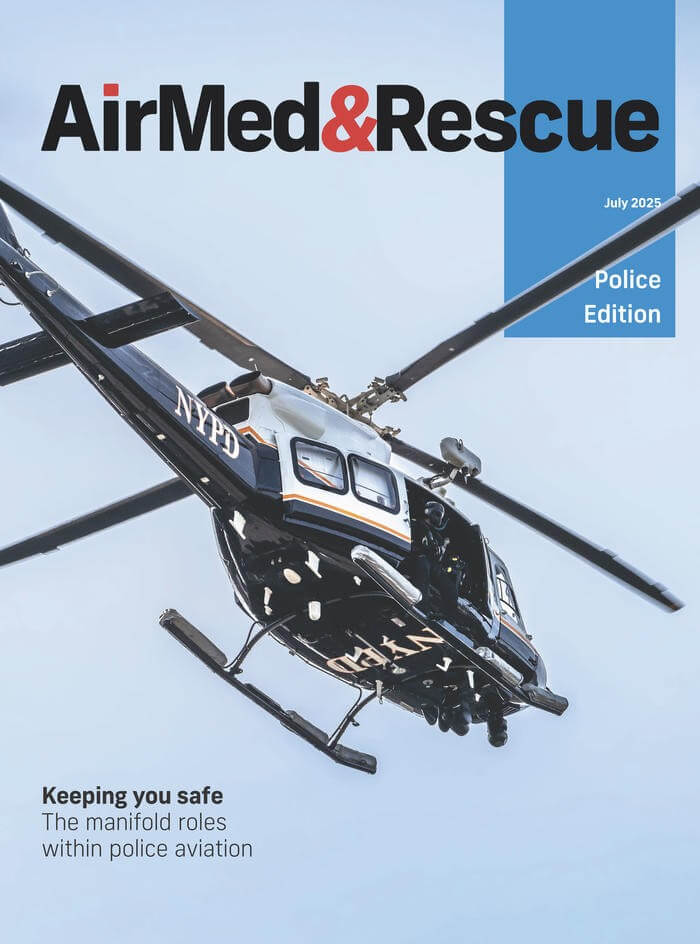
Our July edition highlights police aviation with features on how sensor technology is being used, the other aspects of policing beyond law enforcement, and the challenges of border control. We also have an interview with a police inspector, a gallery from the US Customs and Border Protection, and a provider profile of the US Park Police. Additional features include recruitment and retention, and manikins for special missions and medical training; plus we have more of our regular content.
Editorial Team
The AirMed&Rescue Editorial Team works on the website to ensure timely and relevant news is online every day. With extensive experience and in-depth knowledge of the air medical and air rescue industries, the team is ready to respond to breaking industry news and investigate topics of interest to our readers.