

Simulation and training

Matt Presnal, Chief Theoretical Knowledge Instructor at Coptersafety, explains that by using the simulation training tools available to all rotorcraft pilots, the number one outcome of safety is better achieved
Simulation and training can benefit us all. There are a lot of reasons I could give as to why simulation in training is important, and to integrate it into your training programs. But I want to highlight the most important reason – safety.
In a flight simulation training device (FSTD), the training environment is designed and controlled to avoid any real hazards for the trainees and instructors. In this safe environment, a pilot can make mistakes and learn from them, and perform and repeat normal and abnormal procedures that may not be considered appropriate or safe when performed in a helicopter.
Data from the European Safety Analysis Team accident reviews (EHEST HE 11:Training and Testing of Emergency and Abnormal Procedures in Helicopters) confirms that many helicopter accidents occur during training or testing of emergency and abnormal procedures, where an instructor allowed the student to exceed limitations or put the aircraft into a position where the instructor could not recover safely. In the USA, 17.9% of all helicopter accidents happen during training.
When the USHST Safety Analysis Team examined 104 fatal helicopter accidents in the USA over a four-year period from 2009–2013, their examination revealed that 52 accidents (50%) fell into three top occurrence categories as defined by the Common Aviation Safety Team at the International Civil Aviation Organization (ICAO):
• Loss of control in flight (LOC-I),
• Unintended flight into instrument
metrological conditions (UIMC)
• Low altitude (LALT) operations.
20.2% of the 104 total fatal accidents were identified and linked to USHST Helicopter- Safety Enhancement (H-SE) 123: Increased Simulation/Education to Develop Safe Decision Making, which aims to increase the use of simulation and education to develop awareness and safe decision-making.
That’s 21 fatal accidents that may have been prevented by flight simulator training.
When we talk about simulator training, there is no all-in-one encompassing FSTD. There is a vast selection of devices available, from apps to virtual reality to full-flight simulators, at different levels complementing a pilot’s training at various points in the training journey.
The technological capabilities in today’s glass cockpits and automation are astounding, and sometimes can be quite overwhelming. This can bring challenges to training safely and effectively. Pilots not only need to familiarize themselves with integrated avionics, they also need to manage their cognitive workload.
We should note that good simulation training for helicopter pilots has only been available in the past 15–20 years and, until recently, most commercial helicopter FSTDs were limited to type-rated aircraft or military aircraft applications. We are now starting to see light and medium twin-engine helicopter pilots train on flight simulators and receive the type of training that used to be reserved only for larger helicopter types.
It isn’t a question of why we should use simulation – it’s clear that simulation training is safer, cost-effective, and can even be more realistic. The more important question we, as an industry, should be asking is how do we use these devices to safely and effectively train. If you’re at European Rotors, I’ll be moderating two panel discussions with industry experts from training centers, training device manufacturers, operators, and regulators that focus on answering this question.
It’s important to recognize that FSTD training does not replace, but rather complements, live flight training. Simulation devices are used as tools to safely train muscle memory, proficiency, and aeronautical wisdom so that we can be prepared for situations we hope will never happen.
Matt Presnal
Matt is a rotary-wing aerospace professional with 30+ years of global industry experience both in military and commercial environments with a deep understanding and first-hand knowledge of all aspects of the aircraft life cycle. He is currently the Chief Theoretical Knowledge Instructor at Coptersafety, overseeing all theoretical training programs.
November 2025
Issue
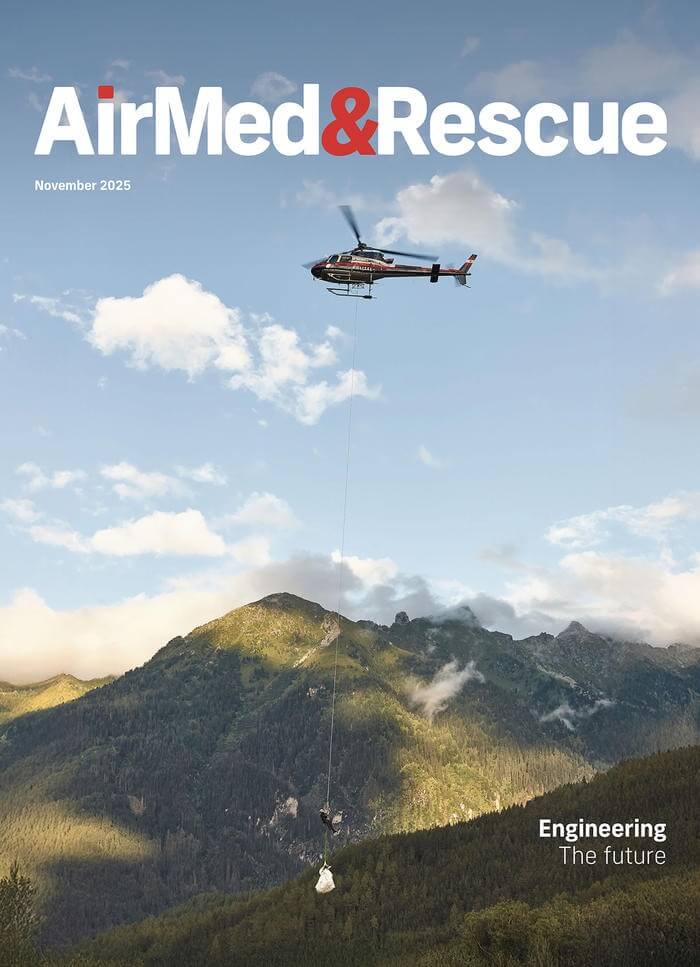
Our November edition is packed with content relating to special missions from around the world. We have features that explore the design and engineering that go into modern rotorcraft; the interactions between ground and air teams on helitack operations; the tools and attire needed for successful water rescues; and the new onboard technology that is revolutionizing special missions by detecting and communicating with cell phones.
Editorial Team
The AirMed&Rescue Editorial Team works on the website to ensure timely and relevant news is online every day. With extensive experience and in-depth knowledge of the air medical and air rescue industries, the team is ready to respond to breaking industry news and investigate topics of interest to our readers.