
When water comes from all directions

For almost 6 decades, Mustang Survival has been making life-saving equipment in North America, with a focus is on providing what a rescuer actually
Crew. Craft. Mission – we all know this mantra by heart. If we can’t keep ourselves safe, we sure can’t expect to save the ones who need it most.
Swiftwater rescues are some of the most dangerous rescues to conduct, simply due to the nature of the environment and the humbling hydraulic power of moving water. For swiftwater and flood rescue crews, staying dry is much more than comfort. They need to move efficiently, maintain mobility, and remain functional throughout any extended operation.
For nearly 60 years, Canadian brand Mustang Survival has been designing and manufacturing lifesaving equipment in North America. Today, Vancouver, BC, remains home to the company’s headquarters and one of its manufacturing facilities, while the brand continues to grow its presence in the UK and Europe.
Its background is in engineering highperformance maritime gear for military, coast guard, rescue personnel, law enforcement, and athletes. Applied research, field testing, and direct input from the people using the gear have shaped products around the purpose of keeping crews protected when hazardous environments leave no margin for error.
Built around the rescue
The constant-wear Sentinel Series Water Rescue Dry Suit is waterproof, breathable, and ideal for flood, swiftwater, and ice rescues. These environments put equipment through an unforgiving test. Crews need protection from cold and contaminated water without adding unnecessary bulk or restricting movement. They need to climb, swim, reach, crawl, haul, and react quickly, often in conditions where footing and circumstances can change in seconds.
A specific example here is the urban flood environment which is filled with contaminants. Water can contain sewage, petroleum products, agricultural runoff, chemicals, and biological hazards. Add jagged and abrasive surfaces such as concrete, rock, vehicles, sheet metal, branches, boat surfaces, and shoreline debris, and durability becomes more than a product feature. Rescuers need to be able to rely on their equipment and keep their focus on the mission.
Materials, seams, and construction all have to work together when the wearer is moving, working, and spending extended periods in rapidly changing conditions. Rather than loading the suit with features, the focus is on what a rescuer actually needs once in the water: freedom of movement, protection in high-wear and impact areas, an adjustable fit, and accessible storage for essential equipment. The suit has been tested and validated with military search and rescue, Naval Special Warfare, and swiftwater and ice rescue professionals.
Leak tested.
Every single suit
Every suit that leaves the factory is thoroughly leak tested using pneumatic air pressure with zero tolerance. Mustang Survival dry suits are made in-house in North America, giving the company control over the process from construction through to final testing.
All suits in the Sentinel Series are made with GORE-TEX Mil Spec 6.5 fabric, selected for waterproof protection, breathability, and resistance to abrasion, salt water, and UV exposure.
Mustang Survival’s Rapid Repair Technology also allows certain damage to be dealt with in the field, allowing for the user to remain operational within minutes rather than immediately taking a suit out of service.
A visibility study
Protection doesn’t end with keeping water out. A big safety aspect is the importance of being seen. Mustang Survival conducted an on-water visibility study, sponsored in part by WorkSafeBC’s Research Services program. The study found that fluorescent green immersion suits consistently outperform standard oranges, reds, and yellows in terms of visual detection in water, especially in lowlight conditions.
During nighttime search and rescue operations or in remote flood environments, that visibility can provide another level of crew accountability and safety on the rescue scene.
That combination of research, field experience and testing is what ultimately matters. Because when the water is moving fast and coming from every direction, rescue crews have plenty to think about already. Whether their dry suit will do its job shouldn’t be one of them.
October 2026
Issue
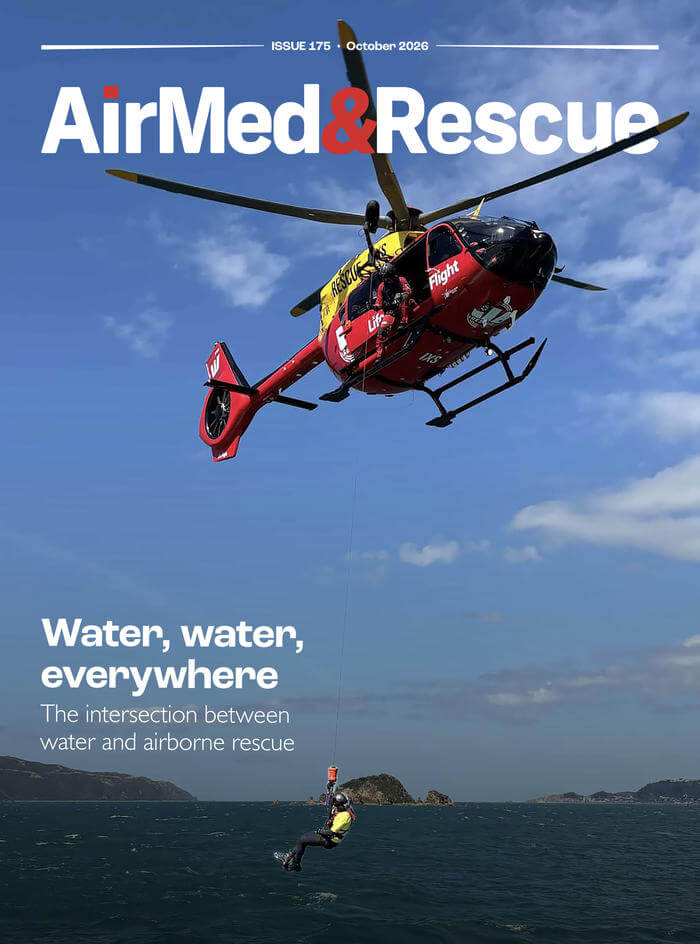
The latest edition of AirMed&Rescue is packed full of content to keep you occupied in October. We have features on the challenges that swiftwater presents when trying to rescue someone; how sensor technology is affecting and improving aerial firefighting missions; why operators choose to have a varied fleet of aircraft to perform special missions; and what can be done to improve the accessibility and awareness of mental health assistance programs for safer and sustainable working conditions.
Editorial Team
The AirMed&Rescue Editorial Team works on the website to ensure timely and relevant news is online every day. With extensive experience and in-depth knowledge of the air medical and air rescue industries, the team is ready to respond to breaking industry news and investigate topics of interest to our readers.