

Advertisement
Home Home

Main navigation

  • Digital Issue Archive
  • Podcast
  • Marketplace
  • Advertise
  • Subscribe now

Secondary

  • HEMS/SAR
  • Emergency Services
  • Avionics and Technology
  • Simulation and Training
  • Drones
  • Industry Moves

Bell 505 receives high-altitude flight certification

HEMS/SAR
6 Jun 2019 | Robyn Bainbridge
Share
bell_505_jet_ranger_x_-_nepal
The Bell 505 Jet Ranger X conducts test flights in Nepal.

Bell Helicopter’s 505 Jet Ranger X aircraft has received certification for high-altitude operations – those involving flying at up to 22,500 feet density altitude.

The helicopter has also now crossed the 13,000-flight hour mark and is flying across six continents.

The Bell 505’s new altitude capability was showcased during a test demonstration in Nepal this spring. The testing efforts included numerous take-offs and landings at density altitudes between 18,000 and 18,500 feet, as well as the evacuation of landings with the loss of control system hydraulic boost.
Related Content

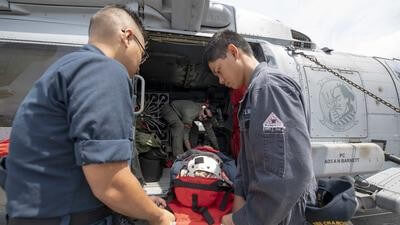
Sailors aboard the Arleigh Burke-class guided-missile destroyer USS McCampbell (DDG 85) move a stretcher during a medical evacuati

USS McCampbell conducts medevac training

A US Navy medical evacuation training exercise took place recently aboard the Arleigh Burke-class guided-missile destroyer USS McCampbell
3 Jun 2019
|
Mandy Langfield

“The Bell 505 is the most advanced short light single helicopter in the world, and we are proud to bring more performance to our operator’s missions,” said LaShan Bonaparte, Programme Director, Bell 505 and Bell 429. “High-altitude demonstrations are another testament to the aircraft’s ability to perform in the most demanding environments, across a variety of segments.”

With a speed of 125 knots (232 km/h) and useful load of 1,500 pounds (680 kg), the Bell 505 was designed to be safe and easy to fly while providing maximum operational efficiency. The customer-driven design of the aircraft, according to Bell, places safety, performance and affordability at the forefront, blending proven systems with advanced technology and a sleek, modern design.

No doubt this new capability will prove immensely valuable for mountaineering search and rescue missions, where up until now, lower air density at higher altitudes amidst mountain peaks has proven to be very difficult, if not impossible on higher mountain ranges, for helicopters to fly in.

HEMS/SAR
6 Jun 2019
Share

Robyn Bainbridge

Robyn is a writer with a degree in English Literature and over four years’ experience in creative journalism. She enjoys the inspiring ingenuity of the Gossamer Albatross (as well as the name).

Keep on reading

No results

There are no results available matching your search term.

Displaying 0 - 0 of 0

Why subscribe to AirMed&Rescue?

In-depth analysis

In-depth analysis

Unique insights and expert opinions on the latest industry developments

A wider perspective

A wider perspective

Get the global view on the topics that are trending in your region

Breaking news

Breaking news

AirMed&Rescue has all the latest news relevant to the global aviation special missions sector

Subscribe now
Home

Footer menu

  • About Us
  • Advertising
  • Writers
  • Contact
  • Privacy Policy
  • Terms
  • Voyageur

Social

  • Facebook link
  • LinkedIn link
  • Twitter link

© Voyageur Publishing & Events 2026

Close