
A study into how aviation workloads affects spatial disorientation

In collaboration with colleagues at the Air Force and Army and with support from the Defense Health Agency Research and Development Directorate and the JPC-5 Aviation Mishap Prevention Working Group, the US Naval Medical Research Unit Dayton’s (NAMRU-Dayton) SD lab is studying how various types of workload interfere with maintenance of a pilot’s spatial orientation. This research aims to help scientists better understand spatial disorientation (SD), ultimately reducing the number of incidents of fatal aviation mishaps caused by SD
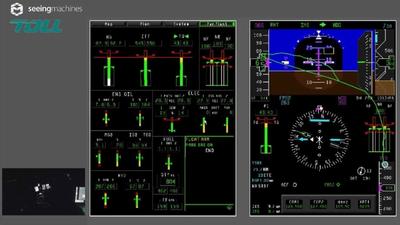
The SD Lab recently conducted a study that saw 24 pilots flying simulated flights where they followed a lead aircraft first above, then into, dense clouds. The lead aircraft then disappeared while in a turn, whereupon the subject was to recover to straight and level flight. Four different workload conditions were presented, and measures of flight performance included the number of control reversal errors (CREs), where the subject banked the aircraft in the wrong direction during recovery, and instances of unusual attitudes in the clouds.
The results of the study revealed an interesting revelation: that the verbal working memory task condition led to a statistically significant threefold increase in the number of CREs, while the mental rotation and variable-following-distance task conditions yielded significant increases in unusual attitudes.
The SD Lab set out to highlight that cockpit workload need not be spatial in nature in order to increase SD incidence, a fact that was highlighted by the numbers of CREs measured in the verbal task. The study also demonstrated the importance of using various measures of SD, as the two spatial workload tasks would have appeared to have had no effect on pilot performance were it not for the unusual attitudes metric.
Dr Henry Williams, Senior Research Psychologist in NAMRU-Dayton, concluded: “Decreasing the occurrence of SD is an ongoing challenge. Through research like this we can increase our knowledge about SD and the conditions that can cause it, and in turn better educate our aircrew on how to avoid and recover from this deadly threat.”
Read the report here.
Editorial Team
The AirMed&Rescue Editorial Team works on the website to ensure timely and relevant news is online every day. With extensive experience and in-depth knowledge of the air medical and air rescue industries, the team is ready to respond to breaking industry news and investigate topics of interest to our readers.