

Access denied: border control and monitoring

The AirMed&Rescue team look at how modern aerial border surveillance efforts are evolving to meet the emerging challenges of policing the world’s borders
Border surveillance has evolved into a critical function for maintaining national security, safeguarding territorial integrity, and ensuring the lawful flow of people and goods. With threats becoming increasingly complex and dynamic, agencies across the world – from Europe to the Americas – have adapted their operational scopes, technologies, and best practices to meet emerging challenges.
Today, aerial assets play an indispensable role in monitoring vast and often inaccessible border areas, leveraging sophisticated sensor systems, communication technologies, and integrated intelligence platforms. This article examines the operational frameworks, technological solutions, and strategic considerations shaping modern aerial border surveillance efforts, drawing insights from agencies and aerospace providers.
Operational scope
The purpose of border surveillance is to maintain order and security at the borders and to prevent unauthorized crossings, according to the Finnish Border Guard (FBG) team. “Particular attention is paid to the external border of the Schengen Area, to prevent unauthorized persons or vessels from crossing it in the areas between the border crossing points,” they said. “Aircraft from the Air Patrol Squadron regularly patrol our sea and land borders. In the sea area, surveillance aircraft are used simultaneously for both border surveillance and environmental monitoring. The scope of air surveillance has not changed much in recent years. However, the FBG is monitoring tanker traffic in the Gulf of Finland with particular attention due to recent changes in the operational environment.”
Air and Marine Operations (AMO) is a federal air and marine law enforcement organization, participating in joint operations with the US Border Patrol (USBP), the Office of Field Operations (OFO), and other law enforcement agencies, according to a US Customs and Border Protection (CBP) spokesperson. “AMO’s scope of operations is to continuously predict, detect, identify, classify, track, deter, and interdict threats to the continued security of the United States border and safeguard our homeland through the coordinated application of air-, sea-, and land-based air and marine law enforcement resources,” they said. “This includes gathering intelligence, conducting patrols and surveillance, and preventing the import/export of illegal and contraband goods.”
Aircraft installations
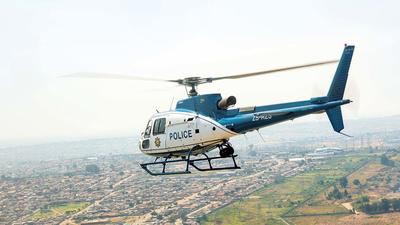
Aircraft are equipped with a variety of mission-specific sensors, systems and advanced technologies designed to support a wide range of operational requirements, according to a spokesperson for the Royal Canadian Mounted Police (RCMP). “We also utilize multiple secure communications systems to ensure effective data sharing and coordination with ground units and partner agencies,” they said.
We also utilize multiple secure communications systems to ensure effective data sharing and coordination with ground units and partner agencies
The air units assigned by Prefectura Naval Argentina (PNA) to patrol the South American country’s borders are equipped with forward-looking infrared (FLIR) cameras with thermographic and IR functions, without a stabilizing gyroscope. “They are operated from the control station in the passenger cabin. The aircraft are equipped with VHF, HF and UHF radio communication systems,” PNA said.
Pilatus aircraft are equipped with modular mission systems that can be adapted to operational needs, affirmed Tony Mueller, Director of Government and Fleet Sales at Pilatus. “Standard sensor and software packages include electro-optical and IR (EO/IR) camera systems for day/night imaging, synthetic aperture radar (SAR) for all-weather terrain mapping, ground moving target indicator (GMTI) radar, Automatic Identification System (AIS) receivers for maritime tracking, and signals intelligence (SIGINT) payload (optional depending on mission profile),” he said. “These sensors are managed via an integrated mission system that offers sensor fusion and automatic target recognition, real-time metadata tagging and recording, and geospatial mapping and threat visualization. Communication and data-sharing capabilities include tactical line-of-sight (VHF/UHF) radios, beyond-line-of-sight (satcom) systems, secure broadband data links (e.g. Link 16, tactical IP networks), and encrypted video downlink and forwarding of mission data to command centers.”
Best practices
AMO requires air and sea domain awareness to ensure air and sea security, according to CBP. “This refers to the ability to continuously detect, monitor, and track all potential air or sea threats operating within or approaching US borders in a variety of environments, including varying weather, terrain, and lighting conditions,” CBP said. “Domain awareness for land surveillance includes coordinating situational awareness with the USBP to enable detection, identification, classification, and tracking of land threats using a variety of capabilities.
“Situational awareness is a more comprehensive understanding of a domain: it merges domain awareness with information and intelligence that provides a detailed overview of the operational environment. Both domain awareness and situational awareness are critical to the AMO’s ability to successfully execute a mission.”
Situational awareness is a more comprehensive understanding of a domain: it merges domain awareness with information and intelligence that provides a detailed overview of the operational environment
PNA believes that there are several best practices and strategic frameworks that guide air border patrol operations to ensure effective coverage, especially in the context of border security. “These practices combine advanced technologies, interagency coordination, continuous training and efficient resource management,” PNA said. “Key principles and frameworks include an intelligence-led approach and data analysis, integration of air and ground resources, optimization of territorial coverage, use of advanced technologies, continuous training and education, a framework for international cooperation, and efficient resource management.”
Indeed, terrain and weather are key factors that directly influence border patrol methods, as they impact both operational tactics and decisions about which resources and technologies to use, according to PNA. “These factors impact the capabilities of both air and ground patrol units, and can determine the success or failure of a mission,” the agency said. “One of the most critical aspects is the nature of the terrain. Areas with complex geographies, such as jungles, pose significant logistical challenges for ground patrols. In regions characterized by dense vegetation, such as the tropical forests of Central and South America, ground operations are particularly difficult: off-road vehicles can get bogged down or encounter insurmountable obstacles, rendering conventional patrol methods ineffective. In these contexts, air units play a central role. Helicopters and drones are becoming indispensable tools, as they allow surveillance of large areas from above and access to areas inaccessible by land, providing a significant tactical advantage.”
Weather conditions impose additional constraints and adaptations. In environments characterized by extreme temperatures, such as deserts, heat can have a direct impact on the physical resistance of agents and the efficiency of equipment, observed PNA. “High temperatures compromise the functionality of vehicles, reduce the life of electronic equipment and pose risks to the health of operators. To mitigate these effects, operations are often planned during the coolest hours, such as dawn or night. Aircraft must also be designed to withstand intense heat, which can negatively affect performance and flight safety,” PNA stated.
“In tropical or equatorial contexts, heavy rains and storms are an additional element of complexity. Heavy precipitation reduces visibility and makes the terrain slippery or impassable, hindering the movements of ground patrols. However, thanks to modern technologies, such as thermal cameras and advanced radars, air units can maintain a high level of operational readiness even in bad weather. Drones and planes can continue to monitor sensitive areas, while ground patrols are forced to adapt, choosing alternative routes that avoid the risks of floods or landslides.”


Tools and platform selection
When it comes to selecting tools and platforms for aerial border control, the goal is for the aircraft to be able to perform all border guard tasks during all seasons and under all conditions, according to the FBG team. “Aircraft perform tasks together with land and sea units, so everyone must have the same situational picture. Tasks are carried out under the direction of our regional command centers, so task objectives and situational information must be exchanged continuously,” they said. “We closely monitor developments in aviation, surveillance sensors and communication systems, and consider improved and emerging technology when planning for improvements in the performance of our aircraft.”
The selection of tools and platforms is driven by several considerations, typically including operational and functional requirements, observed the RCMP. “Emerging technologies, such as advanced sensors, satellite integration, and artificial intelligence (AI)-based analytics, are continually monitored for their potential to improve operational effectiveness and support long-term fleet planning,” the spokesperson said.
Emerging technologies, such as advanced sensors, satellite integration, and artificial intelligence (AI)-based analytics, are continually monitored for their potential to improve operational effectiveness and support long-term fleet planning
When selecting air platforms for border patrol operations, key evaluation criteria include total cost of ownership, including acquisition and life-cycle maintenance; multi-role flexibility for intelligence, surveillance and reconnaissance (ISR), logistics, medical evacuation and personnel transport; durability (especially in harsh environments); ease of use and minimal training requirements; payload capacity; and modular sensor integration, affirmed Mueller. “Emerging technologies impacting fleet planning include improved radar and EO/IR sensors with AI-based analytics, satellite integration for global data transmission and tracking, onboard edge computing for real-time data processing, and cloud-connected mission planning and reporting platforms. We remain committed to innovation, collaborating with leading technology providers to ensure their aircraft are ready for the mission demands of tomorrow,” he said.
Investing in the future
In an era where border security demands real-time responsiveness and high situational awareness, aerial surveillance remains a cornerstone of effective border management strategies. Agencies worldwide are investing in advanced aircraft platforms, sensors, and resilient communication systems to enhance operational capabilities across air, land, and sea domains.
By continuously adapting to environmental challenges, integrating emerging technologies such as AI-driven analytics and satellite connectivity, and maintaining strong coordination between different units, these organizations are setting new standards in border protection. As geopolitical dynamics continue to shift and technological innovation accelerates, the ability to flexibly and effectively survey borders from the air will be more crucial than ever.
July 2025
Issue
Our July edition highlights police aviation with features on how sensor technology is being used, the other aspects of policing beyond law enforcement, and the challenges of border control. We also have an interview with a police inspector, a gallery from the US Customs and Border Protection, and a provider profile of the US Park Police. Additional features include recruitment and retention, and manikins for special missions and medical training; plus we have more of our regular content.
Editorial Team
The AirMed&Rescue Editorial Team works on the website to ensure timely and relevant news is online every day. With extensive experience and in-depth knowledge of the air medical and air rescue industries, the team is ready to respond to breaking industry news and investigate topics of interest to our readers.