
Forging on a head: flight helmets

Suitable headgear is a staple of flight crews’ wardrobes and kit bags. Megan Gaen speaks to experts and users about what the requirements are and how manufacturers meet them
Before any emergency flight – whether it be for firefighting, helicopter emergency medical services (HEMS), or search and rescue (SAR) operations – all helicopter staff must be properly dressed, from head to toe. The helmets that flight crews wear can have a real impact on their performance in the cockpit or cabin, which, if incorrect, can impede ability and, at its worst, cause mistakes.
Therefore, having an open dialogue between crew, designers and manufacturers throughout and beyond the manufacturing process is key to development of the correct headgear and, ultimately, the success of missions.
Head first
The helmet is a clear non-negotiable in the outfit of flight crews. It offers protection, the ability to communicate and compatibility with the latest technologies, such as night vision goggles (NVGs). All crew members must be wearing a helmet when onboard an aircraft, yet each person will need individual attention to make sure it not only meets requirements, but also suits their personal needs.
Helmet manufacturers themselves recognize that the fundamental role of the helmet is to protect. Rob Hames, President of Merit Helmets, a company with 30 years’ flight helmet experience, affirmed: “The most important feature of a helmet used in any mission is the level of protection it offers the user.” This sentiment was echoed by the Head of Sales at Swiss aeronautical helmet design and manufacturing company LD Switzerland, Fabrice Weber. “We must never forget that the helmet is, above all, made to protect the user,” he said.
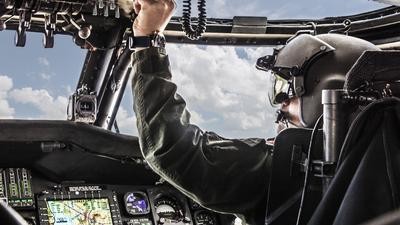
After the ‘working base’ of protection has been established, as described by Weber, manufacturers move on to the next stage. The second most important factor, highlighted by both Hames and Weber, is how comfortable the helmet is for the user. Weber said that once the baseline of protection has been achieved, ‘we can seek to work around the design to have the most comfortable helmet possible with the best ergonomics’. Hames explained why comfort is key: “If the helmet is not fitted properly, it will be uncomfortable. Higher discomfort leads to fatigue and mistakes.”
If the helmet is not fitted properly, it will be uncomfortable
Another important feature of a helmet that is key to successful missions is its balance, highlighted by Nicola Campani, Founder and CEO of Northwall Innovation, an aerospace and aviation component manufacturing company. “The design of many helmets of the past is unbalanced, leaning forward, through the application of accessories that bring the helmet out of balance,” he warned. Campani also stressed why the balance of helmet is crucial to the resting position: “Maintaining the neutral position of the cervical spine, without using the neck muscles, allows you to relax the entire circulation and muscular system around the neck already stressed by the vibrations of the helicopter.” Therefore, a well-balanced helmet will allow pilots to keep their resting position without straining their neck muscles.
Thus, it is not simply a case of putting on just any helmet and the pilot is protected; they must be suitably fitted, comfortable to wear and have the perfect balance to ensure the pilot is protected not just in emergencies, but also from strains and discomfort in their job, which could affect the longevity of their career.

Attention to detail
Due to the importance of flight helmets,precision during the design and manufacturing process is key to ensuring that crewmembers are safe and snug.
Hames identified the factors that must be considered throughout. “Helmet weight, helmet size and center of gravity of the helmet,” he said, with the latter thought to ‘have a significant effect on the user, particularly when using NVGs’.
Helmet weight, helmet size and center of gravity of the helmet have a significant effect on the user, particularly when using NVGs’
Another factor, highlighted by Weber, is ‘the contact surface with the skull’. He explained: “If you have a light helmet, which has only a few points of contact with the skull, these contact areas will quickly become painful, which is why we have chosen to use the entire surface of the head in order to evenly distribute the weight of our helmet.”
Pilots also experience helmet vibration when in flight, which can be limited or avoided, explained Campani: “The comfort resulting from the balancing of the entire helmet and the ability to keep the helmet stable in the wearing position avoids the effect of helmet vibration.”
These identified factors must be taken into consideration by the clients, designers and manufacturers, as any level of discomfort could cause serious harm to the crewmembers and subsequently endanger the patients they treat or people they rescue.
Design discussions
To ensure a great fit, for both the helmets and companies, clear communication channels must be established early on and maintained throughout the design process between the manufacturers and the crewmembers.
“Conversation between crewmembers and helmet distributors is crucial to make sure we are supplying the best possible helmet to our customers,” emphasized Hames. “Sometimes the smallest change can have a very large impact for the user.” Therefore, he added: “At Merit Helmets, we maintain communications with our customers for the life of the helmet.”
Northwall also said that its relationship with its customers is ongoing, with each helmet monitored for the duration of its entire service. “Northwall products are under a ‘continuous monitoring’ process,” explained Campani. “This type of communication is necessary in order to improve and innovate helmet function and features.”
When it is necessary to define the size or the position of the coils for a radio cord, for instance, or it can go up to several months of development when it comes to complex electronic integrations
At LD Switzerland, the frequency of visits and their length can vary depending on their purpose. “It can be a single visit,” said Weber, “when it is necessary to define the size or the position of the coils for a radio cord, for instance, or it can go up to several months of development when it comes to complex electronic integrations.”
But he then explained how important the conversations between the crew, helmet designers and manufacturers are and why. “At LD, it’s crucial because the helmet must be forgotten and for that, it must adapt perfectly to the missions of its users. There’s nothing worse than having the wrong equipment,” said Weber. Having a helmet that is perfectly fitted means the crew can forget that they are even wearing it because of how comfortable it is and instead concentrate on their missions.
Campani summarized the importance of the line of communication: “This connection keeps the solutions alive and up to date.”

Personal protection
Crewmembers themselves know the importance of the right equipment since they are the ones in the hot seat during missions. Benjamin J Berman, Helicopter Program Chief Pilot, Aviation Management Unit at the California Department of Forestry and Fire Protection (CAL FIRE), Jarrett Lunn, Chief Pilot at Talon Helicopters in Canada, and Owen McTeggart, Chief Pilot at UK-based Yorkshire Air Ambulance (YAA), told AirMed&Rescue about their flight protection preferences.
CAL FIRE is California’s fire department and resource management agency. When explaining the protective headgear used by the department, Berman said: “We utilize Gentex SPH-5 and MSA LH250 flight helmets. They must meet Department of Interior standards. The helmets are NVGs compatible.”
Talon Helicopters supplies helicopter services across Vancouver in sectors such as firefighting, HEMS, utility – and even movies. Lunn explained that his current helmet is also the MSA Gallet LH250, like CAL FIRE.
YAA is a UK charity providing HEMS support to the people of Yorkshire. During operations, McTeggart uses an ‘Alpha 900 flight helmet with active noise reduction (ANR)’.
Berman echoed the manufacturers’ beliefs about the importance of the correct fit, particularly in helmets. He said: “Helmet cushion, ear cups and liner need to have somewhat of a forming function to minimize hot spots and discomfort. Lightweight helmets, such as the MSA LH250, are lighter, so when coupled with NVGs, there is less weight on the head and neck.” Lunn agreed: “Custom fit padding in the helmet is key. Especially when flying with NVGs, the fit is very important.”
It is not just in terms of comfort, though, where a properly fitted helmet is key, but also to protect the pilot. Berman noted ‘the face shields and chin straps’ as vital safety features. “These allow the helmet to be properly secure on the head with NVGs and minimizes sliding forward,” he explained.
If we were ever to strike birds in flight, the visor is going to protect my face from impact, just as the rest of the helmet will protect my head
Lunn focused on the importance of the visor to protect the pilot. “A full visor on the flight helmet [is a] great safety feature,” he said. “If we were ever to strike birds in flight, the visor is going to protect my face from impact, just as the rest of the helmet will protect my head.” Bird strikes were also a concern of McTeggart. “Bird strikes are a big risk, as well as more and more drones in the sky,” he explained. “So, with us being single pilot, a helmet with a visor is essential to reduce the likelihood of pilot incapacitation from a bird or drone strike.”
Flying towards the future
New technologies are being introduced all the time to the sector – flight helmets are no exception.
Hames summarized: “The latest developments in helmet technology include reducing helmet weight, improving fit and comfort, making the helmet quieter to protect hearing, offering higher level of protection.”
The latest developments are in the use of new materials, which make it possible to reduce the weights associated with the various functions of the helmet, increasing the protection offered
Weber highlighted some specific advancements. “The latest composite technologies allow us to save weight without losing certification,” he said. “The modern helmet is therefore a very light carbon helmet.” Campani also referenced new materials: “The latest developments are in the use of new materials, which make it possible to reduce the weights associated with the various functions of the helmet, increasing the protection offered,” he explained.
Weber also highlighted some developments for specific missions: “Waterproof helmets with removable cords for scuba crewmembers [and] modular ballistic helmets for the military or police environments.” The requirement for tougher ballistic helmets is to help protect serving personnel from increased chances of the sudden high impact of bullets, blunt objects or debris, for example.
Weber concluded: “It can be said that helmets are evolving today according to the needs of pilots and crewmembers. We only materialize their wishes.” Weber is thus cementing the need for effective lines of communication and the maintenance of relationships between designers, manufacturers and crewmembers regarding flight helmets.
(Not) forgetting the helmet
It has always been a fact that a helmet is essential to the work and lives of flight crewmembers operating across all special missions fields, but it is not a one-size-fits-all solution. Each person and their requirements are unique, yet all require a protective, comfortable and well-balanced helmet to perform in their role, and to ultimately save their life and even those in their care too.
The physical and mental strain that a helmet can have is immense, so eliminating this as much as possible is vital. Therefore, the relationship between crewmembers, designers and manufacturers is fundamental in this goal.
The helmet must not be forgotten by the manufacturer, but the crew wearing it must not be conscious of its presence. A juxtaposition that saves lives.
October 2023
Issue
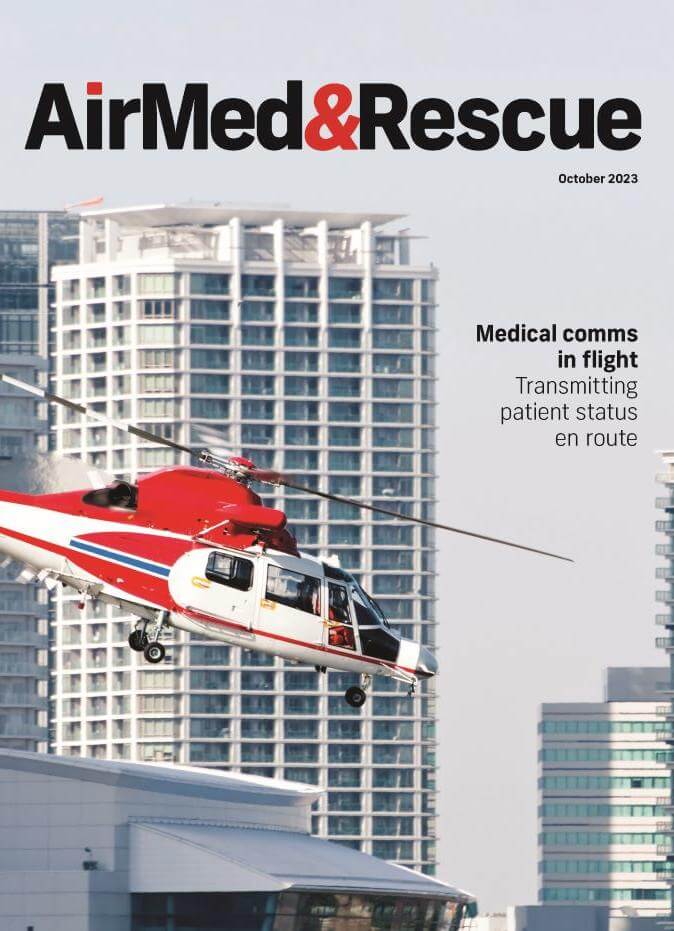
Inadvertent entry into instrument meteorological conditions is still cause of accidents; safety management systems are needed for safer operations; older fleets are harder to maintain and compete with newer models, so a choice has to be made between upgrades or replacement; the EU is responding to wildfires in member and neighboring states with rescEU; and helmets are for safety, but when they are heavy and unbalanced, they can cause problems; and we have all of our regular content on top to keep you engaged with the experts and operators in the special missions sector across the globe.
Editorial Team
The AirMed&Rescue Editorial Team work to ensure timely and relevant news is online every day. With extensive experience and in-depth knowledge of the aerial special missions sector, the team are ready to respond to breaking industry news and investigate topics of interest for our readers.