

Gallery: Northern Edge 2025

More than 6,500 service members, 125 aircraft, and seven vessels were involved in the joint field-training exercise that took place at various locations in and around Alaska, including search and rescue training. US Navy Mass Communication Specialist Seaman Apprentice Gage Thomas, US Navy Petty Officer 3rd Class Nathaly Cruz, and US Air Force Staff Sargeant Dustin Braaten capture and describe the event
Northern Edge 2025, led by US Indo-Pacific Command, is a platform for joint, multi-domain operations to deliver high-end, realistic warfighter training, strengthen joint interoperability, and sharpen the air- and sea-based combat readiness of US and participating forces.
Participants represent all US armed services in multiple domains, including cyber operations with the Army. Additionally, the Royal Canadian Navy and Air Force are fully integrated with US Navy, Marine Corps, and Air Force mission sets.
This year, Northern Edge coincided with Arctic Edge 2025, an annual exercise conducted by the North American Aerospace Defense Command and US Northern Command. For the first time, the two exercises occurred concurrently, with activities spanning the Alaska theater of operations.
Crews from Helicopter Sea Combat Squadron (HSC) 14 demonstrated the US Navy’s advanced search and rescue (SAR) capabilities, establishing an expeditionary advanced base in the Aleutian Islands.
Operating out of Dutch Harbor, Alaska, the squadron staged Sikorsky MH-60S Seahawks on land to provide extended SAR coverage in support of maritime strike scenarios over the Gulf of Alaska, enabling the aircrew and pilots to practice their skills in environments and conditions far from their usual operating area in southern California.
Fixed-wing flight operations can take pilots and aircraft hundreds of miles from the aircraft carriers where they are based. In the cold Alaskan waters, rapid SAR response times become critical, necessitating the need for a quick launch and recovery from nearby assets. By establishing an expeditionary base in nearby Dutch Harbor, HSC-14 provided advanced SAR coverage across the remote region.
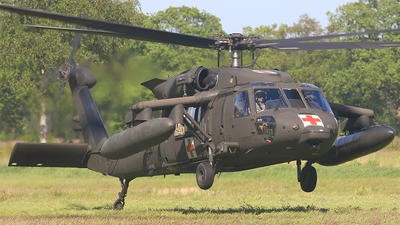
During the exercise, the squadron collaborated closely with the Air Force, Coast Guard, and Naval Aviation Warfighting Development Center personnel recovery experts to coordinate SAR coverage throughout the Aleutian Islands. This ensured smooth integration across commands and enabled HSC-14 to streamline logistics and adapt to Alaska’s unique operational challenges, including extreme weather and limited infrastructure.
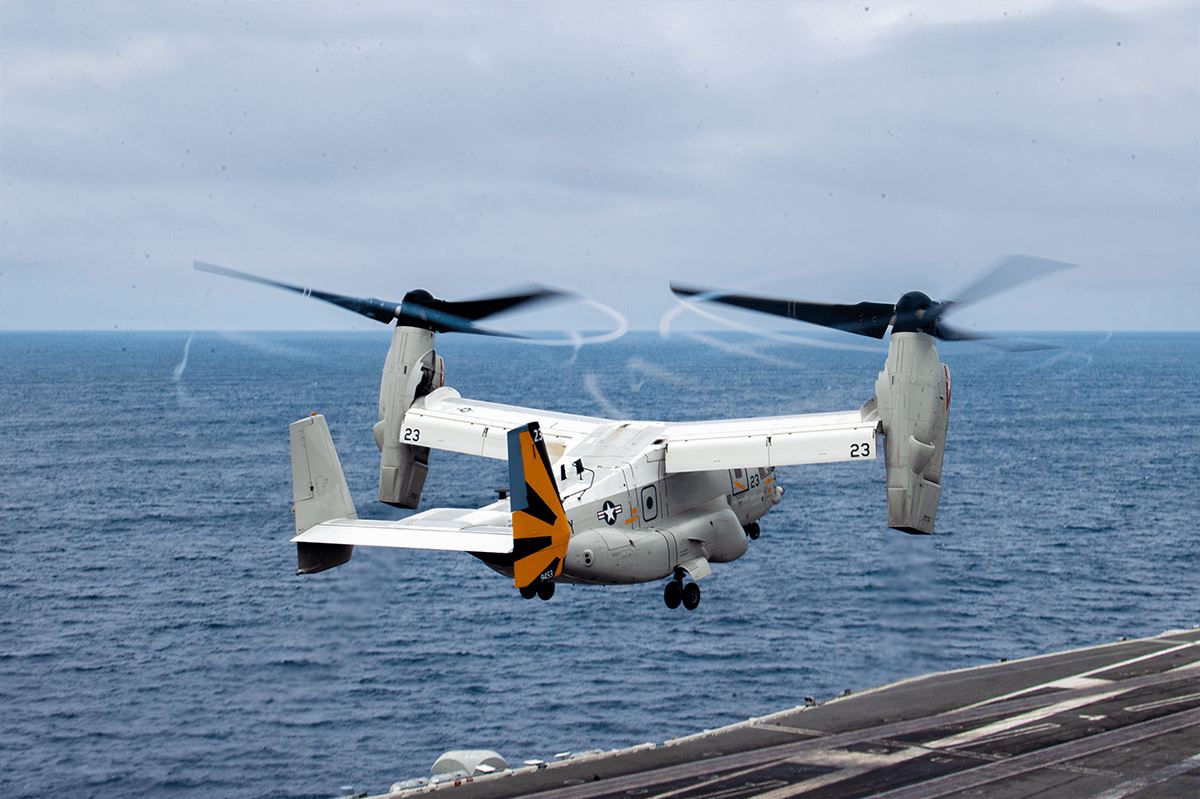
A highlight of the mission, a simulated medical emergency, demonstrated how the joint force could execute a full rescue and medical evacuation sequence. Crewmembers from HSC-14 simulated recovering a patient and then transferred them to a Bell Boeing CMV-22B Osprey, which simultaneously refueled the helicopters.
By working together during this exercise, crews were able to validate new tactics, techniques, and procedures.
The appearance of US Department of War (DoW) visual information does not imply or constitute
DoW endorsement.


December 2025
Issue
Our December edition rounds off the year with articles relating to special missions from around the world. We have features that look into the upgrades that have been integrated into special missions platforms to improve operations; the technology used to alert and support aerial firefighting tactics, helping attack fires quicker and more strategically; the simulators that are making training for special missions better and safer; and the latest updates and announcements of digital and physical technology in the last year.