

Gallery: Taking helicopter skills to the next level

Peter ten Berg travelled to Turkey to record the international rotor drills at Anatolian Phoenix 2025, designed to improve the military performance of medevac and SAR missions
Each year, the Anatolian Eagle Training Center (AETC) at Konya Air Base, located in central Turkey, organizes a series of exercises to take the skills of military pilots and other aircrews to a higher level. Twice a year the exercises are open for international participation, and not only to NATO members, with one edition focused on fighter pilots while the other, Anatolian Phoenix (AP), is mainly for the helicopter community. This spring, helicopters, and some other aircraft, from Qatar, Azerbaijan, Italy, Saudi Arabia, the USA, and Romania exercised together with Turkish aerial assets for two weeks.
The AP missions were set up to strengthen the military relationship and develop interoperability between the participants. To achieve this, the participants executed bilateral and unilateral training missions, such as formation flights and tactical navigation. In the first week of the exercise, there were some smaller-scale mission scenarios planned, like mountain and sea recoveries, to familiarize participants with each other’s tactics and procedures, while at the same time increasing their combat readiness. These planned steps were part of the exercise process, where more mission types were integrated and combined to increase the overall complexity. In the second week, the growing scenarios therefore also included night operations and finally led to the set-up of a large joint task force (JTF) full mission.
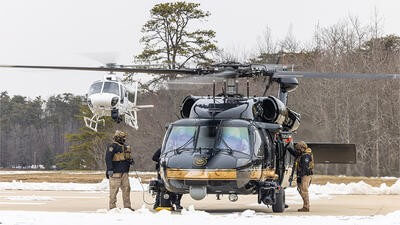
This full mission culminated in a medevac and extraction of an isolated person (ISOP), but, to reach that final phase of combat search and rescue (CSAR), a wide range of mission types like high altitude, low opening (HALO) by pararescue jumpers (PJs), close air support (CAS), ground-assisted air interdiction (GAAI), time-sensitive targeting (TST), and rescue escort (rescort) had to be executed to secure the landing zone (LZ). All of the participating countries, as well as Poland, Germany and Slovakia, contributed with medevac teams, special operations forces (SOF), joint terminal attack controllers (JTAC) and forward air controllers (FACs).
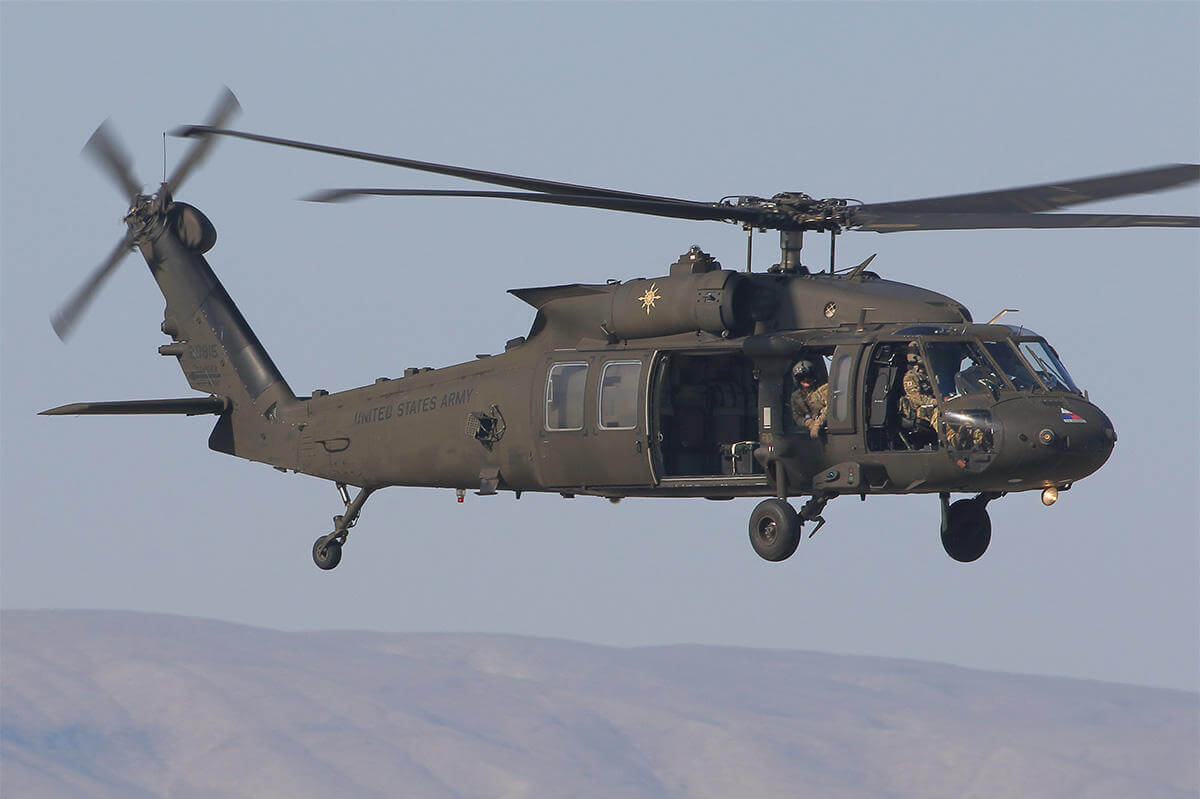
The helicopter types in use for the exercise included Apaches and T129s for attack; Cougars, IAR 330s, HH-101s, UH-60s, and S-70s for CSAR and rescort; and AB412s and T-70s for medevac and extraction ISOP missions. Furthermore, several uncrewed aerial vehicles (UAVs) were in use for CAS and reconnaissance.
After two weeks, Anatolian Phoenix 2025 ended, with more than 3,000 servicemen and women having participated, 623 of them international, and 303 day missions and another 67 night missions executed, with a total of 539 flying hours.


September 2025
Issue
Our September edition is the special military issue, bringing together news, features and other articles that showcase military contributions to special missions. We have themed features on air forces helping with disaster response, the stretchers and baskets that make combat search and rescue possible, and the varied duties of military coast guards, and we have an extra non-themed feature on the medical equipment used in air ambulances.
Peter Ten Berg
Inspired by the dynamics of aviation and a passion for photography, Peter accompanies aircraft and helicopter crews to capture them at work and hear their story for his exclusive reports. His focus is on military aviation as well as governmental subjects including HEMS, SAR, UAV and rescue.