
High fliers: air medical personnel’s continuing medical education

The air medical mission is significantly different from a ground-based one and skills maintenance is a very strategic set of performance management practices. AirMed&Rescue speaks to industry experts for an overview of how air medical providers approach maintaining skills, the training topics and modalities, and the challenges facing the air medical training sector
Air medical transport crews use specialized procedures and equipment that differ from those used in ground transport, according to Dr Anyarit Sangcharaswichai, Flight Physician at BDMS Medevac Center at Bangkok Hospital Headquarters. “All equipment must be Federal Aviation Administration (FAA) approved and specifically designed to meet the unique demands of air medical transport, considering factors such as weight, size, vibration resistance, and extreme temperatures,” he affirmed. “Because the BDMS Medevac Center is based within a hospital, we have access to a wide range of equipment that can be seamlessly integrated for hospital use, ensuring continuity of care.”
Air medical transport team members operating out of hospitals and using fixed-wing aircraft and helicopters are limited in what they can carry, both in terms of volume and weight capacity, observed Dr Terry Martin, Senior Lecturer and Director of Aeromedical Training, provider of the CCAT suite of educational packages. “It is impossible to carry the full equipment of a hospital or a pharmacy, so decisions on what is essential and what is preferable are made based on the mission statement of the service and the skills and expertise of the flight medical team,” he said. “So, the capabilities of the doctors, nurses and paramedics on board, and the equipment that can be carried will dictate what medical procedures and clinical management can be provided to the end clients (the patients being transported).”
According to Clare Goodhew, Communications and Marketing Officer at CareFlight, air medical personnel typically operate in situations that require advanced equipment and specialized procedures that are different from those of road ambulances. “Our team manages a wide range of patients, from seriously ill or injured adults and children to neonatal and obstetric cases, and they tailor their approaches based on acuity and complexity,” she said. “Our clinicians bring hospital-level intensive care unit (ICU) care directly to patients in rural, remote, and austere environments. Flight doctors collaborate with flight nurses or critical care paramedics on high-acuity missions, while flight nurses often manage lower-complexity cases independently. The goal is to exceed the care provided at the referring facility, leveraging specialized aeromedical procedures and equipment.”
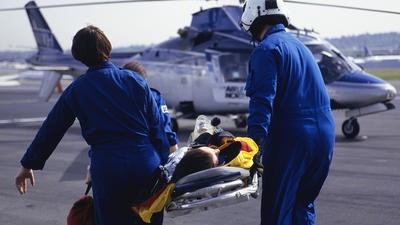
Given the physical and physiological constraints of both the flight and cabin environments, medical equipment must be robust, lightweight, reliable, easy to use, precise, battery powered and cost-effective, pointed out Dr Martin. “All equipment used on aircraft is tested and licensed for resilience against vibration, acceleration (g), low-pressure environments, and should be water resilient, dustproof, firesafe and free of electromagnetic radiation influence (inbound and outbound),” he said.
Air medical procedures are designed to address the challenges of air transport, such as limited space, aircraft motion, and environmental conditions, according to Dr Sangcharaswichai. “One of the main protocols involves gathering detailed patient information in advance, utilizing our hospital network and partners to ensure proper preparations for patient safety,” he affirmed.
One of the main protocols involves gathering detailed patient information in advance, utilizing our hospital network and partners to ensure proper preparations for patient safety
Key procedures include pre-hospital emergency anesthesia (PHEA), rapid sequence intubation (RSI), and advanced airway techniques, such as cricothyroidotomy and fiber-optic bronchoscopic intubation, according to Goodhew. “Other procedures include mechanical and non-invasive ventilation, pleural decompression, and intercostal catheter insertion. Finally, we also find invasive monitoring, resuscitation of hemorrhagic shock and neuroprotective strategies, and point-of-care ultrasound (POCUS) and lifesaving surgeries,” she said.
“Specialised equipment used includes C-MAC video laryngoscopes, HAMILTON-T1 and MEDUVENT ventilators, and Philips Lumify ultrasound devices. Equipment also includes portable blood storage solutions and neonatal transport beds with advanced care capabilities. Standardizing the equipment ensures seamless interoperability across teams and reduces training requirements.”

Training for skills maintenance
According to Dr Martin, training should be an ongoing, daily component of air medical transport professionals’ routines. “Even when not on active duty and during quieter office times, there is no reason not to dedicate time to clinical and logistical/operational training. Training topics should encompass every facet of service delivery,” he said. “Emergency and rarely used procedures should take precedence, but even apparently mundane topics like catching up with the latest service standard operating procedures (SOPs) need to be factored into a planned cycle of continuing professional development (CPD) training.”
Crew training varies between different providers, of which, for example, there are currently 16 in the UK, observed Prof Stuart Maitland-Knibb, Director of the National Centre of Remote and Rural Medicine at the University of Central Lancashire. “Most units provide daily opportunities for ad hoc training, with simulations. Disaster response exercises use HEMS units within the exercise; however, HEMS are not disaster leaders, they are a deployable ambulance asset,” he said.
To ensure continued proficiency, medical crews adhere to a structured training matrix that integrates the latest medical advances and best practices, aligned to the Commission on Accreditation of Medical Transport Systems (CAMTS) Global standards. As part of the hospital team, they also benefit from ongoing in-hospital training to keep their skills current, according to Dr Sangcharaswichai. “Maintenance of proficiency activities include regular drills and exercises consisting of ground exercises and tabletop exercises simulating various scenarios, including equipment malfunctions, in-flight emergencies and mass casualty incidents,” he said.
In specialized training, areas of focus include crew resource management (CRM), aircraft safety, and emergency evacuation and ditching procedures. In the event of disasters and mass casualty incidents, our crews play a critical role in national response efforts and frequently participate in public drills
Other proficiency maintenance activities include specialized cross-training and education, in which crews collaborate with other emergency medical services, aircraft providers and related teams to improve their skills, explained Dr Sangcharaswichai. “In specialized training, areas of focus include crew resource management (CRM), aircraft safety, and emergency evacuation and ditching procedures. In the event of disasters and mass casualty incidents, our crews play a critical role in national response efforts and frequently participate in public drills. A recent example is part of their involvement in the emergency landing of a Singapore Airlines flight at Suvarnabhumi Airport,” he said. “The team is trained in triage and treatment, ensuring efficient stabilization and prioritization of patients based on the severity of their injuries.”
Continuous training is essential to maintaining high performance and readiness for challenging missions. CareFlight implements comprehensive training strategies to ensure crews are prepared for critical situations and disaster responses, affirmed Goodhew. “Proficiency training includes case discussions, which are regular case reviews that promote shared learning and continuous improvement. Scheduled training programs with bi-weekly sessions combine clinical, environmental and logistical training. Simulation-based training with high-fidelity clinical scenarios improves teamwork and communication. Currency training, which is the continuous practice of critical procedures, ensures proficiency and compliance. Finally, life, limb and vision training with annual sessions covers essential surgical procedures and other critical interventions.
“In the event of large-scale incidents, our crews play key roles in initial scene assessment and reporting.”
Training areas and modalities
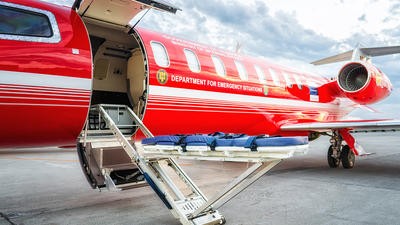
According to Dr Sangcharaswichai, clinical crews receive comprehensive training in key areas to ensure readiness for air medical transport operations. “Training covers three main areas: advanced life support (ALS), civilian aeromedical transport, and communication and teamwork. For ALS, training focuses on critical skills such as intubation, airway management, cardiac care, medication administration, and trauma management. Certifications include Advanced Cardiovascular Life Support (ACLS), Pediatric Advanced Life Support (PALS), Advanced Trauma Life Support (ATLS), and Neonatal Resuscitation Program (NRP),” he said.
“Civilian aeromedical transport is divided into flight physiology, patient care, and aircraft-specific procedures. Flight physiology understands how altitude, pressure changes, and hypoxia affect the human body, including considerations such as fatigue management and adaptation to shift work. Patient care emphasizes specialized care techniques tailored to air transport conditions. Aircraft-specific procedures cover training on safe patient loading and unloading, securing patients during flight, and effective equipment management within the unique constraints of the aircraft, ensuring compliance with global CAMTS standards.”
Training on communication and teamwork involves developing strong communication and teamwork skills to ensure seamless coordination with medical personnel on the ground, particularly in high-pressure situations, explained Dr Sangcharaswichai. “Training tools include checklists and protocols: standardized checklists and procedures to ensure consistent and efficient patient care. Debriefing sessions are also part of the training and include post-simulation and post-mission debriefings to review performance, identify areas for improvement, and drive continuous quality improvement,” he said.
CareFlight training emphasizes human factors specific to aeromedicine and advanced clinical skills, explained Goodhew. “CRM training topics include human interaction and team dynamics, communication and conflict resolution strategies, and leadership development and strategies for high-performance teams. Clinical training topics include critical care procedures, environmental medicine and hyperbaric care, advanced airway and ventilation strategies, and pediatric and neonatal care,” she said. “Training tools and resources include e-learning modules and mentoring programs, simulation equipment, including manikins and operational tools identical to field equipment, and cognitive aids such as checklists and clinical guidelines accessible offline.”
CRM training topics include human interaction and team dynamics, communication and conflict resolution strategies, and leadership development and strategies for high-performance teams. Clinical training topics include critical care procedures, environmental medicine and hyperbaric care, advanced airway and ventilation strategies, and pediatric and neonatal care
High-fidelity simulation provides the best learning outcomes in terms of clinical and operational ‘props’, with the highest fidelity achieved by using the everyday tools of the job – those we are most familiar with. Non-technical tools include teaching modes and methods, which offer a variety of options, according to Dr Martin. “Different individuals have their own preferences when it comes to these methods. Over three decades, we have used everything from program-directed and supervised self-learning to university-based short courses. During the Covid-19 pandemic, we introduced live webinar training, and in the past we ran true e-based, student-controlled virtual training,” he said. “Hybrid courses and standalone study days are particularly popular, offering plenty of choices. It is clear that individual air ambulance and medical assistance organizations will have their own tailored teaching programs, including planned induction and CPD events scheduled during off-duty time. One should not forget that bona fide aeromedical training programs will almost always require professional qualifications and evidence of external training, and they are very often happy to provide internal training and maybe even pay for exam preparation.”

Challenges facing the training sector
As to the challenges facing the air medical crew training sector, Dr Martin highlighted that keeping up to date with new procedures, new drugs and new equipment is always a challenge but an absolute necessity.
He added: “Another challenge is certainly the working pattern, as it is often unpredictable and can lead to extremely long shifts, antisocial hours, sleep and eating disorders, and dangers of fatigue-induced accidents and perhaps even mental health problems.”
Another challenge is certainly the working pattern, as it is often unpredictable and can lead to extremely long shifts, antisocial hours, sleep and eating disorders, and dangers of fatigue-induced accidents and perhaps even mental health problems
A further challenge, Dr Martin said, was “understanding the potential legal and medico-legal implications of international jurisdictions, rights to practice, import and export of drugs, acceptability of consent, ‘do not attempt cardiopulmonary resuscitation’ (DNACPR), upper limit of care instructions, advance directives, and other documents and orders that may not have legal force outside national borders”.
Other major challenges are that the high-stress environment, the demanding nature of the work and exposure to high-pressure situations can discourage potential trainees, said Dr Sangcharaswichai. “Maintaining high standards of training also requires significant investment in equipment, facilities and experienced instructors,” he added. “Finally, keeping pace with evolving medical advances and ensuring training programs are aligned with current CAMTS Global standards is an ongoing challenge.”
Fidelity, authenticity, accountability and trust represent current challenges, according to Goodhew. “Training must closely mimic real-world conditions while balancing cost and safety. With authenticity in mind, programs emphasize problem-solving, critical thinking and adapting hospital skills to aeromedical settings. Finally, open and psychologically safe training environments ensure high standards and promote continuous improvement,” she concluded.
May 2025
Issue
Our May edition is full of articles centered around training, with features covering pilot training, winch and rear-crew training, and air medical training; as well as a feature in the trend towards longer-range air ambulance transfers; plus we have more of our regular content, with lots of articles highlighting different aspects of training, from startle and surprise management to simulation centers and everything in between.
Editorial Team
The AirMed&Rescue Editorial Team works on the website to ensure timely and relevant news is online every day. With extensive experience and in-depth knowledge of the air medical and air rescue industries, the team is ready to respond to breaking industry news and investigate topics of interest to our readers.