
Industry voice: Social modeling: a cornerstone of safety in the aviation industry

Human behavior plays a pivotal role in aviation safety. Aeronautical expert Giulio Fini explains how social modeling can be leveraged to foster a culture where safe behaviors become the norm
The aviation industry, with its complex operations and stringent safety requirements, relies heavily on the diligence and behavior of its personnel. While rules, procedures, and advanced technology are critical, the role of human behavior in maintaining safety cannot be overstated. Social modeling, a well-established psychological concept, offers valuable insights into how to cultivate a safety-first culture by influencing behavior through observation, imitation, and reinforcement.
Understanding social modeling
Social modeling, derived from Albert Bandura's Social Learning Theory, posits that individuals learn by observing others, particularly role models, and emulating their actions. This learning process is central to shaping behavior in various settings, including the workplace. In aviation, where adherence to safety protocols is paramount, social modeling can be a powerful tool for promoting safe practices.
The key elements of social modeling are:
- Observation: Individuals pay attention to the actions of others, especially those they admire or respect. In aviation, this could involve observing senior pilots, experienced maintenance crew, or safety officers
- Imitation: After observation, individuals are likely to imitate the observed behaviors. This is particularly important for new recruits or trainees who learn the ropes by watching seasoned professionals
Individuals are likely to imitate the observed behaviors
- Reinforcement: Behaviors are more likely to be repeated if they are positively reinforced. In a safety context, this means acknowledging and rewarding safe actions while discouraging unsafe ones.
The importance of human behavior in aviation safety
In aviation, safety is paramount, and human behavior plays a pivotal role in ensuring it. Even with advanced technology and rigorous procedures, unsafe actions, errors, or violations can lead to accidents and incidents. Studies have shown that a significant percentage of aviation accidents are attributed to human factors, highlighting the need to address behavioral aspects of safety.
Social modeling provides a framework for understanding how behaviors are learned and propagated within the aviation community
Social modeling provides a framework for understanding how behaviors are learned and propagated within the aviation community. By leveraging the principles of observation, imitation, and reinforcement, it is possible to foster a safety culture where safe behaviors become the norm.
Key strategies for implementing social modeling in aviation
- Leadership as role models: Leaders in aviation, including senior pilots, chief engineers, and safety managers, must consistently demonstrate safe behaviors. This sets a powerful example for others to follow. When leaders adhere to safety protocols, use checklists diligently, and prioritize safety in decision-making, they reinforce the importance of these practices throughout the organization
- Peer influence and mentorship: In aviation, where teamwork and collaboration are essential, peer influence can significantly impact safety behavior. Encouraging experienced professionals to mentor junior colleagues and share best practices can help instill a strong safety ethos. Peer observation and feedback can also create a culture of accountability, where individuals actively look out for each other’s safety
- Effective communication and training: Safety training in aviation should go beyond rote memorization of rules and procedures. Incorporating storytelling, real-life scenarios, and interactive simulations can make training more engaging and memorable. By sharing stories of incidents and their consequences, as well as highlighting examples of successful safety practices, trainers can create a deeper understanding of the importance of safety
- Reinforcement and recognition: Recognizing and rewarding safe behavior is crucial for reinforcing positive actions. This can include acknowledging individuals or teams that consistently follow safety protocols, identify potential hazards, or contribute to safety improvements. By celebrating safety achievements, organizations can create a culture where safety is valued and appreciated.
Overcoming challenges and ensuring long-term success
Implementing social modeling in aviation requires a concerted effort to address potential challenges and ensure sustained engagement. Some common obstacles include resistance to change, conflicting priorities, and the difficulty of maintaining long-term commitment.
Encourage employees to report safety concerns, share best practices, and provide feedback on safety initiatives
To overcome these challenges, aviation organizations should:
- Foster a culture of open communication: Encourage employees to report safety concerns, share best practices, and provide feedback on safety initiatives
- Provide ongoing training and support: Regularly reinforce safety principles and provide opportunities for employees to enhance their safety knowledge and skills
- Monitor and measure safety performance: Track key safety indicators, analyze trends, and use data to identify areas for improvement and measure the effectiveness of social modeling interventions.
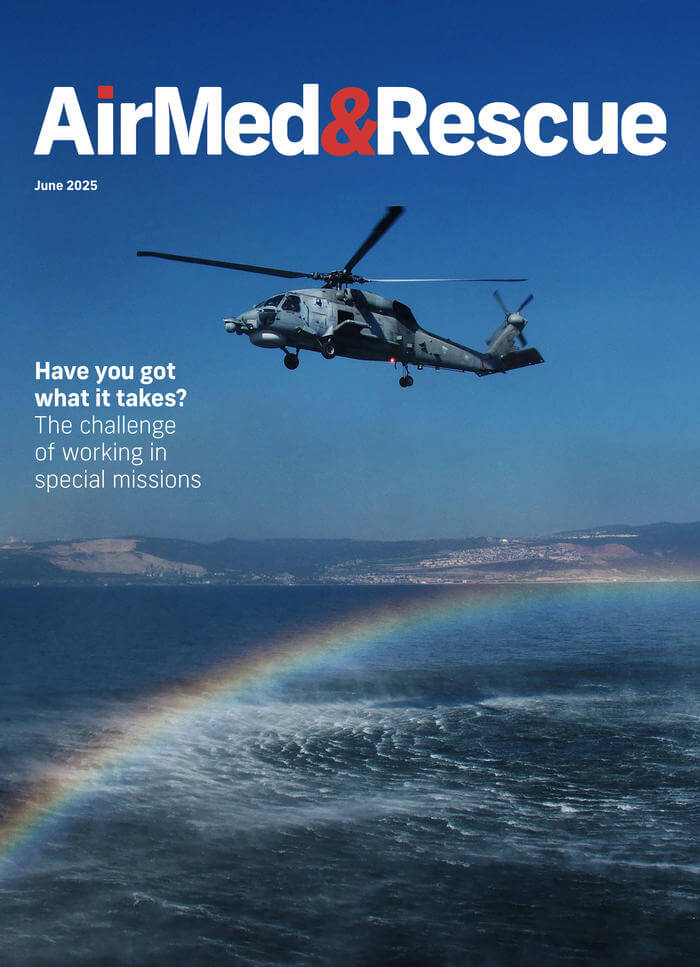
June 2025
Issue
Our June edition covers a range of articles with a wealth of experiential information in the features, such as search and rescue as a career route, the latest night vision technology, the increasing popularity of drones for firefighting, the importance of helmets in special missions, why diversity matters in aviation, and why switching to special missions as a job is more fulfilling; plus we have more of our regular content.
Giulio Fini
Giulio is an accomplished professional with extensive experience in the aeronautical field, including significant roles in the Italian Air Force, Alitalia, and Babcock and Avincis. His expertise spans piloting, safety management, aviation operations, and strategic business development. A former CEO and Managing Director, Giulio has also contributed to international safety initiatives with the United Nations and European Union Aviation Safety Agency (EASA).