

Industry voice: Training for the unexpected

Airlines have introduced training for pilots to mitigate the cognitive effects of in-flight emergencies, but would such techniques work for helicopter pilots? Alex Pollitt, Pilot and CRM Trainer, looks at developing and training a method to manage startle and surprise in helicopter operations
It’s late October 2023. Helijet 705, an S-76 helicopter, departs Vancouver harbour heliport with two flight crew and 12 passengers on board. Minutes after takeoff lightning strikes the aircraft. Half of its tail rotor missing from the impact, it is thrown into an uncontrolled descent. After a full 25 seconds fighting for control, during which time they plummeted nearly 3,000ft, the crew manage to recover a stable flight condition and gather themselves to deal with the emergency.
How to manage startle and surprise in flight has been the focus of both theoretical and applied research by aviation human factors experts since the well-known Air France 447 crash in 2009 and given further impetus by other high-profile air disasters since, such as the Boeing 737 MAX accidents in 2018 and 2019. In response, leading airlines have developed, introduced, and operationally tested techniques for their pilots to manage and mitigate the cognitive and emotional effects of startle and surprise from in-flight emergencies. These techniques are based on helping pilots to recover from their initial reaction to unexpected events by using deliberate breathing and muscle relaxation exercises, and the acknowledgement and communication between the crew of their mental state.
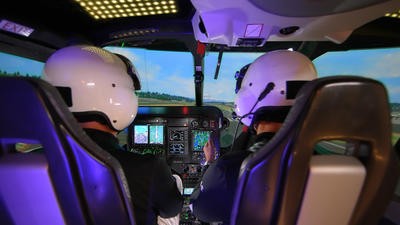
Helicopter aviation is different
My initial instinct as a helicopter pilot was to narrow my eyes with skepticism at both the methods and their chances of success in the rotary-wing environment. But as I studied and learned more about the science behind them, and their use in practice, I began to ask myself whether they could work for helicopter operations, and if so, how? And so it came to pass that at the beginning of last year I embarked on a collaboration with an expert from a leading airline to try to discover some answers.
We started with just three questions:
- Is startle and surprise actually a problem for helicopter crews?
- If it is, what could be done about it?
- To what extent could an existing method used by airlines to manage startle and surprise be applied to rotary-wing flying?
Turning to the helicopter community for data, we discovered that:
- 96% reported having experienced startle, surprise, or a combination of the two in flight, leading us to the hypothesis that helicopter pilots may experience more frequent and more severe startle and surprise events than fixed-wing pilots. It suggested an even greater need for a method to manage the human response to unanticipated startling stimuli or serious emergency situations in helicopters
- Although many helicopter pilots reported having received training for managing startle and surprise, they then went on to cite only generic methods such as “aviate, navigate, communicate”, “fly the aircraft”, or “revert to training”
- There was some skepticism among crews as to the applicability of a method, given helicopter flight profiles. Over 60% of people cited lack of time as a barrier to using a recovery method in helicopters, while others were doubtful about factors such as training requirement or acceptability.
Unsurprisingly the concerns of helicopter crews were dominated by the need to take immediate action and fly the aircraft in an emergency, given the hands-on nature of rotary-wing flight and the proximity of the ground and other obstacles
Here we had a starting point. Unsurprisingly the concerns of helicopter crews were dominated by the need to take immediate action and fly the aircraft in an emergency, given the hands-on nature of rotary-wing flight and the proximity of the ground and other obstacles. We decided to address those concerns head-on by looking at the suitability of the technique in different emergency scenarios.

The most reported events triggering startle and surprise included bird strikes, inadvertent entry into instrument meteorological conditions (IIMC), automation surprise, and system failures. Events that caused crews the greatest stress and perceived mental effort were incidents with a hoist or load, and tail rotor problems. However, when we looked more closely at the range and nature of events that were reported to cause a startle and surprise reaction, a significant number of them did in fact offer sufficient opportunity to successfully apply a basic management method.
I was captivated by the question of tail rotor malfunctions. It seemed to me that here, perhaps above all other emergencies, was the helicopter pilot’s worst nightmare, a scenario that would undoubtedly trigger a stress response in any of us. A tail rotor emergency is noteworthy not only because it is extremely likely to provoke a startle response, but also because it inevitably requires an upset recovery intervention. Our data showed that it was clearly perceived by helicopter pilots as a worst-case scenario in terms of the need for urgent flight path intervention and therefore was also perceived to be an obvious example of how helicopter emergencies lack the time to apply a reset method.
Our results also showed that instances of startle and surprise triggered by tail rotor emergencies were among the top three scenarios for perceived mental load and stress
However, our results also showed that instances of startle and surprise triggered by tail rotor emergencies were among the top three scenarios for perceived mental load and stress. Paradoxically, this means that these events would also benefit the most from an effective method. Interested in testing the suitability of a method against the scenario seen to present the most challenges to making it work, I examined the circumstances of 22 tail rotor emergencies from 2013–23. To my surprise, more than 50% of them offered – in my judgment – sufficient time and altitude to apply a basic management technique to mitigate the effects of startle.
The role of training and SOPs
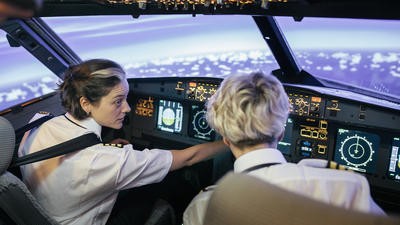
Unlike some leading airlines that have established standard operating procedures (SOPs) that are practiced in recurrent training, helicopter pilots do not currently benefit from any formal, trained strategies to manage startle and surprise. Many of the misgivings of pilots as to the feasibility of the method for helicopters stemmed from misunderstanding the method and could be addressed by training. For it to be used (have credibility with crews) and useful requires crew training in how and when to use it. This brings me back to the S-76 in Vancouver with (now) half a tail rotor because it makes for an excellent case study in how, even in extreme circumstances, there could be opportunities to benefit from taking time to manage your stress response.
Listening to the air traffic control (ATC) recording of this event gives some insights into the human reaction of the pilots. Lightning strikes the tail, provoking a loss of control, heavy vibration, and a startle that is followed by three seconds of silence. Research shows that this kind of reaction time is typical after a startling stimulus, represents a combination of startle and high-intensity distraction, and can continue to affect our ability to carry out complex motor tasks for up to 30 seconds. After this comes the upset recovery. In cases such as this the pilots are battling physiological (G-effects, heavy vibration, disorientation) and cognitive challenges to human performance.
The first misunderstanding to address is that nothing in the method pre-empts the priority of flight path management or upset recovery. The crew did this as they struggled for control for nearly half a minute. Some emergency scenarios that occur when maneuvering helicopters close to the ground, in hover, takeoff or landing phases, require not only immediate flight path intervention but also the option to land. In these cases, application of a method may not be suitable if the flying pilot chooses, or is forced, to land immediately.
Most deliberate cognitive processes, such as fault diagnosis and decision-making, usually take place after the flight path is stabilized. The surprise effect results in a disrupting or dampening of cognitive capacity, which impacts these processes, so this is when we are most interested in the recovery of full cognitive function
Most deliberate cognitive processes, such as fault diagnosis and decision-making, usually take place after the flight path is stabilized. The surprise effect results in a disrupting or dampening of cognitive capacity, which impacts these processes, so this is when we are most interested in the recovery of full cognitive function. A management method addresses this problem, and the time to insert it is now. Going back to the audio of the pilots’ reactions inside the S-76, when you listen, you can hear an obvious acceleration and deepening of their breathing after the initial startle and during the recovery. Once the aircraft is under control, we also hear from radio transmissions how the pilot struggles to gather himself. You can tell that he is still distracted, his voice is shaky, and he finds it hard to explain what just happened. This is evidence of the stress response still gripping him. A timely and well-applied management method has been shown to assist with overcoming these effects.

Applying the science
In 2024 the European Union Aviation Safety Agency (EASA) noted in its safety plan that startle and surprise are “a significant impediment to managing safety-critical situations” and that “not enough is known about how to mitigate it”. Despite doubts about the feasibility of a method for helicopters, 90% of rotary pilots we surveyed were open to using a technique that, when properly learned, could offer potential safety benefits.
When we discuss research and theoretical concepts in crew resource management (CRM) training, I firmly believe that the bottom line is whether or not the theory can be taken into the aircraft
As a trainer, when we discuss research and theoretical concepts in crew resource management (CRM) training, I firmly believe that the bottom line is whether or not the theory can be taken into the aircraft. In the fixed-wing world, KLM Royal Dutch Airlines was one of the first to add a management technique to its SOPs and non-technical skills training. Recent research there has found that, since its introduction, nearly 40% of pilots said they had used it during line operations. That seems to me to be a huge percentage, and evidence enough for its validity in the cockpit. After investigating the possibilities for developing this training in the rotary-wing sphere, I find no reason that it could not, and should not, apply to helicopter aviation. Although it might not be valuable in every situation, it would be valuable in enough situations, and to enough pilots, to make a difference. And that’s what non-technical skills training should be about.
Note: Research to develop startle and surprise management techniques for helicopters is ongoing. For further information on the subject contact the author.
May 2025
Issue
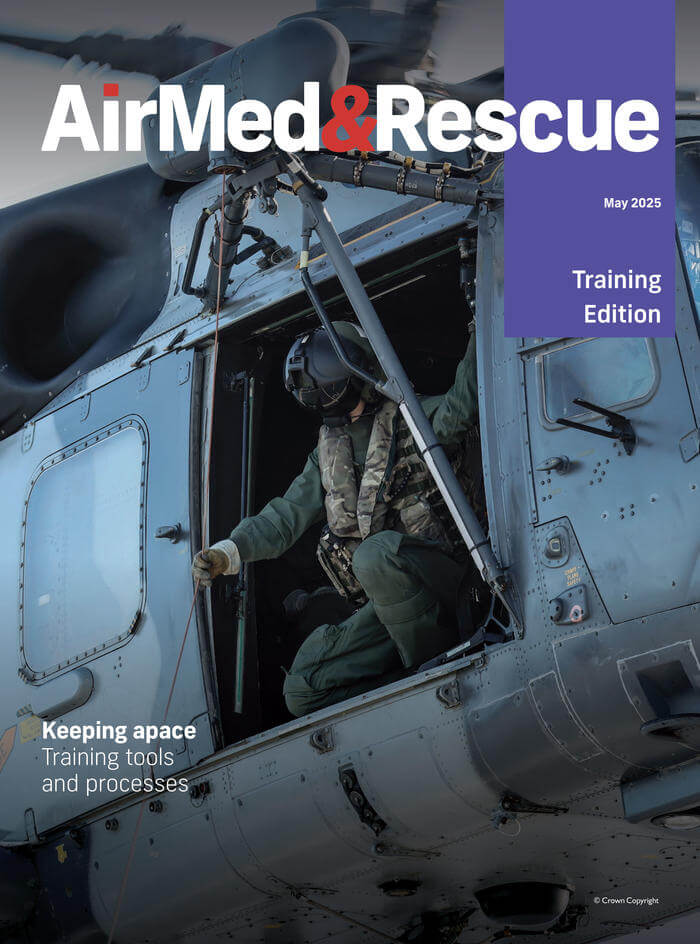
Our May edition is full of articles centered around training, with features covering pilot training, winch and rear-crew training, and air medical training; as well as a feature in the trend towards longer-range air ambulance transfers; plus we have more of our regular content, with lots of articles highlighting different aspects of training, from startle and surprise management to simulation centers and everything in between.
Alex Pollitt
Alex Pollitt, Pilot and CRM Trainer. A helicopter pilot with Bristow Group, currently flying for the Dutch Caribbean Coastguard operation, he has a particular interest in non-technical competencies, Crew Resource Management and Human Factors in Aviation. Alex is a qualified EASA CRM Trainer and UK Military Aviation Authority accredited Human Factors Facilitator with land-based and maritime flying experience, including military and civil search and rescue operations. He holds an MA in International Liaison and Communication and is currently studying for an MSc in Human Factors in Aviation with the University of Coventry.