
Industry voice: Into thin air – helicopter rescue at the edge of the sky

Charley Shimanski, President of the Air Rescue Commission at the International Commission for Alpine Rescue (ICAR), summarizes 19 essential considerations from the ‘Helicopter Rescue at Very High Altitude: Recommendations of the International Commission for Mountain Emergency Medicine’ paper published in the High Altitude Medicine & Biology journal
At 7,200m at Mount Everest’s Camp 3, pilot Maurizio Folini’s helicopter hovers above a climber suffering from frostbite and acute mountain sickness (AMS). The Airbus H125 B3e helicopter labors in the thin air, as Folini expertly manages the threat of degrading power output at such a very high altitude. On the ground, the climber is attached to the long line hanging below Folini’s helicopter. This injured climber will be flown away without an attendant rescuer; at this altitude, there is no option to short-haul the additional weight of a rescuer.
This is helicopter rescue at very high altitude (VHA); at operations above 3,500m, where physics, physiology, and weather converge to make even routine missions extraordinary. What was once the domain of rare, record-setting flights has become increasingly common due to the rapid rise in high-altitude climbing, mountain tourism, commercial aviation in high terrain, and expedition traffic in the Himalaya, Alps, Alaska, and Rocky mountain ranges. In Nepal alone, during peak trekking season, as many as 60 helicopter rescue flights may launch in a single day, while in the European Alps and North American Rocky Mountains, rescues above 4,000 meters are common and rise year over year.
VHA helicopter rescue has evolved into one of the most specialized, high-stakes intersections of aviation and mountain rescue. As climbing, trekking, and commercial air tourism surge at high elevations, helicopter rescue teams are increasingly called upon to do what several decades ago seemed too risky.
This article examines 19 essential considerations that shape these operations. It is based on the latest work of the International Commission for Alpine Rescue (ICAR) Medical and Air Rescue Commissions, as outlined in their original work recently published in High Altitude Medicine & Biology. This journal serves as a blueprint for executing safe, effective, and survivable helicopter rescue missions in the world’s highest and harshest environments, and was developed under the expert leadership of primary author Dr Kyle McLaughlin.
1. Team dynamics: the foundation in thin air
Ask any high-altitude pilot what separates a successful mission from a challenging one, and the first answer is rarely aircraft technology – it’s teamwork.
At VHA, where every variable is amplified, high-performing teams operate with an almost intuitive sense of each other’s capabilities and limits. Years of shared training, repeated exposure to stressful scenarios, common operating language, and a culture of open communication build a level of trust that simply cannot be faked when rotors turn in a 40kt wind.
The incident command system (ICS) provides structure even in the chaos of an evolving VHA emergency. Meanwhile, crew resource management (CRM) turns communication into a survival tool: clear, concise, and never ambiguous. Pilots and rescuers must be fully empowered – in fact, encouraged – to voice concerns and, critically, to abort when the situation calls for it. Above 5,000m, courage includes saying no.
2. Training: rehearsing the impossible
In the thin air above 4,000m, muscle memory matters. VHA training is not just repetitive training; it is inoculation against the unexpected. Teams practice hovering over complex terrain, working in austere mountain environments and performing single-skid, toe-in, hover exit/entry (STEP) maneuvers in real mountain conditions.
Pilots must master proximity flying and develop a sixth sense for aircraft performance at altitude. Rescuers must train in crevasse extraction, avalanche scenarios, technical rope systems, and patient packaging in brutal cold. Perhaps most importantly, all personnel must recognize early cognitive decline caused by hypoxia.
Pilots must master proximity flying and develop a sixth sense for aircraft performance at altitude
High-altitude helicopter rescue specialists do not rely on being able to ‘rise to the occasion’; they rely on one of the most important keys to learning: repetition, repetition, repetition.
3. Acclimatization: the human limiter
The many physician and scientist specialists of the ICAR Medical Commission have performed countless studies that demonstrate that hypobaric hypoxia is unforgiving. It slows thinking, weakens judgment, degrades motor skills, and, with time, triggers acute mountain sickness. For pilots and rescuers, who may spend only minutes ascending thousands of vertical feet, the risk is unique: sudden cognitive impairment without a gradual physiological warning.
Ideally, VHA rescue personnel live or stage at elevations similar to their operating altitudes. Realistically, many must deploy before meaningful acclimatization occurs. The result: mission planners must consider human physiology as carefully as aircraft performance.
4. Meteorological conditions: the unpredictable adversary
Weather at high altitude is its own character in this story – occasionally volatile, sometimes invisible, and often vicious.
Winds bend around terrain in ways that would challenge an inexperienced pilot, often defying intuition. A headwind that stabilizes an approach can, seconds later, shift into a rotor-sapping crosswind. Icing threatens any helicopter flying into clouds or precipitation. Temperatures can drop low enough to freeze moisture inside the cabin, fogging windscreens and degrading visibility.
Icing threatens any helicopter flying into clouds or precipitation. Temperatures can drop low enough to freeze moisture inside the cabin, fogging windscreens and degrading visibility
In these environments, ‘good enough’ weather often isn’t good enough. Pilots require not just meteorological data but a deep experiential understanding of how the wind flows through specific valleys and peaks, and how extreme cold temperatures can degrade the performance of both the machines they fly and the rescuers who support them.
5. Pre-flight risk assessment: the discipline that saves lives
Before any VHA rescue flight begins, the mission must be carefully dissected and briefed with ruthless honesty:
- What is the altitude?
- What power margins are expected?
- How long will the rescuers be exposed?
- What are the backup plans?
- What are the unknowns?
- What is the go/no-go process?
At lower altitudes, pilots often accept certain levels of manageable risk. At VHA, the safety margin shrinks dramatically. A structured risk assessment protects everyone – even if the result is a difficult but necessary stand-down.
6. Backup ground rescue plan: when the sky says “no go”
Some missions simply cannot be flown. The aircraft may not climb high enough; winds may be unmanageable; clouds may shroud the rescue site. The tragedy occurs when air rescue is not only Plan A, but Plan B, and Plan C.
A ground team – whether professional mountain rescuers or, in some cases, other climbers on the mountain – must be ready to intervene. Communication between air and ground must be seamless. In many regions, combined operations produce the highest survival rates, particularly when visibility deteriorates or multiple casualties complicate the extraction.
7. Contingency for aircraft grounding: preparing for the unexpected
Rarely, but predictably, a helicopter may be forced to land at VHA and become stranded. If weather closes in or the aircraft loses performance, pilots and rescuers must be ready for the possibility of spending hours – or a full night – at extreme altitude.
This is where planning becomes survival. Rescuers should have:
- A predetermined descent route
- Personal high-altitude survival kits
- Redundant communication devices
- Medical supplies for treating altitude illness.
At VHA, rescue personnel can become patients shockingly fast, and training for such an ‘incident within an incident’ event is critical.
8. Personal survival equipment: the last line of defense
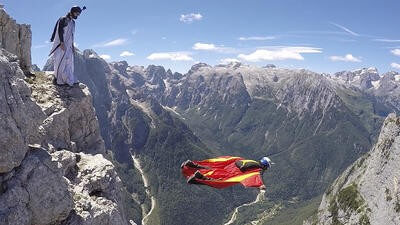
Even the most technologically advanced helicopter cannot protect rescuers from exposure the moment they are dropped into high-altitude austere environments. Frostbite, hypothermia, and hypoxia are constant threats.
Modern survival kits are lightweight and minimal – just enough to keep rescuers stable until extraction. These include insulated layers, heat packs, bivy sacks, and medications for altitude illness. In VHA rescue, rescuers pack not for comfort but for survival.
9. Supplemental oxygen: cognitive insurance
Supplemental oxygen is one of the few tools that can immediately improve human performance at altitude. It sharpens judgment, increases situational awareness, and restores the fine motor skills needed for technical operations.
Supplemental oxygen is one of the few tools that can immediately improve human performance at altitude
On the ground, rescuers may not be required to use oxygen, but the evidence is compelling: oxygen dramatically reduces cognitive fatigue during rapid ascent and improves altitude-related physical performance decline. Lightweight bottles with masks or nasal prongs allow communication without sacrificing performance.
10. Pharmacological prophylaxis: when physiology needs help
Altitude illness does not care that you are a rescuer. When a mission involves rapid ascent to VHA – especially for prolonged duration at altitude and above 5,000m – medications may be warranted.
The ICAR Medical Commission has noted that acetazolamide accelerates acclimatization and reduces AMS risk; dexamethasone protects against high-altitude cerebral edema (HACE); and, for rescuers with a history of high-altitude pulmonary edema (HAPE), prophylactic nifedipine can be lifesaving.
These medications do not replace supplemental oxygen – but they can buy critical time when oxygen supply is limited or when prolonged ground exposure is expected.

11. Optimizing aircraft performance: fighting physics
A helicopter at 5,500m is a different machine than at sea level. Thin air robs rotor blades of lift, erodes tail rotor authority, and forces engines to work harder for less power output. Pilots must reduce weight – sometimes drastically – to achieve sufficient performance with their aircraft.
Fuel planning also becomes a precise science: too much fuel and performance collapses; too little and return flights become impossible. True airspeed increases with altitude, retreating blade stall occurs at slower indicated speeds, and minor changes in wind direction can shift the helicopter from stable to uncontrollable.
Fuel planning also becomes a precise science: too much fuel and performance collapses; too little and return flights become impossible
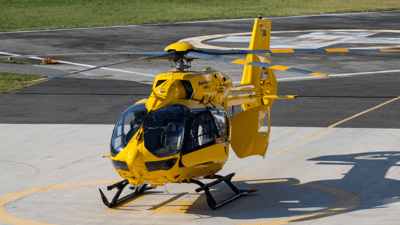
The Airbus H125 remains the workhorse of most VHA programs for its power-to-weight ratio and maneuverability, but even the best aircraft can only do so much in the thin air of extreme altitude.
12. Reducing exposure time: the clock ticks faster up here
Hypoxia is cumulative. The longer pilots and rescuers spend at VHA, the more their cognitive edge erodes. Every minute saved increases safety.
Teams reduce exposure by:
- Planning logistics in advance
- Conducting a pre-extraction reconnaissance flight
- Minimizing unnecessary personnel
- Choosing the simplest extraction method possible.
When conditions permit, land-and-load is safest. But at VHA, suitable landing sites are rare, and hover-loading may push the aircraft beyond safe margins. For this reason, short-haul often becomes the safest available option, especially at extreme altitudes.
13. Human external cargo: when landing is not an option
If there is a single skill that defines modern high-altitude air rescue, it is short-haul. By inserting rescuers on a long line – often 150–250ft below the aircraft – pilots keep rotor blades safely away from rock walls, cornices, or snowfields.
Longer short-haul lines also place rescuers in cleaner, less turbulent air. The tradeoff is reduced visual contact between pilot and load, requiring flawless radio communication.
Rescuer selection becomes critical: lightweight, highly experienced, acclimatized personnel capable of independent decision-making are key. At VHA, there may be no physician on the line – medical specialists usually remain at lower staging areas – so rescuers must be capable of stabilizing patients for transport without higher-level medical support.
In the world’s highest mountains, human external cargo (HEC) is not a special operation; it is the operation.
14. Staging areas: the mission’s middle ground
Intermediate landing zones – sometimes carved out of moraine, glacier flats, or rocky terraces – may be helpful in VHA rescue. They allow teams to reconfigure the aircraft for HEC and/or to stage secondary helicopters and rescuers.
A well-chosen staging area reduces flight distance to the rescue site, enabling pilots to carry less fuel and more payload. It also gives unacclimatized personnel a safer altitude to work in while awaiting incoming patients.
15. The rescue site: where theory meets terrain
Preparing a landing zone at VHA is far more challenging than at lower altitudes. Loose snow becomes airborne under rotor wash, rocky slopes provide no flat surfaces, and steep terrain restricts movement of personnel on the ground. When possible, every rescuer must be clipped in; every piece of gear must be secured.
Sometimes, the preparation is the first step in the rescue. Moving a patient a mere 100m to a safer spot for short-haul extraction can require significant effort from an exhausted team working in bitter cold.
16. Determining patient destination: the downhill race
Once a patient is extracted, the mission’s second phase begins: determining where to deliver them. In VHA operations, definitive care may be hours away by air, and many patients – especially those with HAPE, HACE, or trauma – cannot tolerate extended flights. But getting the patient to lower altitudes is often the first and most critical treatment.
Getting the patient to lower altitudes is often the first and most critical treatment
The first stop may be a staging area for stabilization. The second may be a lower-altitude medical post or transfer to a medical helicopter. The third may be a major hospital with altitude illness expertise. VHA rescue is not always a straight line; it may be a staircase.
17. Rest, recovery, and restocking: the reset button
After a VHA mission, crews may be physically spent. Hypoxia, cold, stress, and adrenaline extract a steep toll. Teams must recover at lower altitude before redeployment. Helicopters need thorough inspection; equipment must be cleaned, dried, thawed, and carefully restocked.
A rushed turnaround invites disaster. High-altitude rescue is not compatible with fatigue.
18. After-action review: learning while memories are fresh
The debrief is where future missions become safer. Pilots, rescuers, medics, dispatchers, and mission leaders review every step of the operation – what went right, what went wrong, and what must change.
At VHA, each rescue offers unique lessons about terrain, wind patterns, patient behavior, and equipment performance. These insights become institutional memory, strengthening the team as a whole.
19. Psychological stress: the invisible load
High-altitude rescue personnel carry emotional burdens few outsiders can understand: exposure to fatal accidents, high-risk missions, and the ever-present possibility of losing teammates in rescue and training accidents. As such, integrating stress-recognition training and peer-support mechanisms into routine operations is essential.
Rescuers must know not only how to care for others, but when to seek care for themselves. In this world of understanding and validating the concept of psychological stress, there is no better tool in the rescuer’s toolbox than the work of the Responder Alliance (responderalliance.com), an organization dedicated to providing training and guidance to manage the risk of traumatic stress injury in high-risk occupations.
Conclusion: Toward a global standard for the world’s hardest rescues
VHA helicopter rescue is a complex and highly dangerous convergence of aviation, medicine, mountaineering, physics, and human resilience. The 19 considerations outlined here – drawn from the collective experience of ICAR pilots, rescuers, and medical specialists – form the most comprehensive framework to date for operating helicopters in the world’s thin-air frontiers.
As visitation to high mountains increases, these guidelines will become even more essential. The challenges will grow. The stakes will remain unforgiving. But with disciplined preparation, innovative thinking, and unwavering commitment to safety, helicopter rescue professionals will continue pushing the boundaries of what is possible at the edge of the sky.
Reference:
McLaughlin K, Shimanski C, Zafren K, et al. Helicopter Rescue at Very High Altitude: Recommendations of the International Commission for Mountain Emergency Medicine (ICAR MedCom) 2025. High Altitude Medicine & Biology 2025 (ahead of print). https://doi.org/10.1177/15578682251375408
March 2026
Issue
This edition is bursting at the seams with articles from all corners of the special missions sector. We have features on the California wildfires that ravaged the state last year, what the cost–benefit analysis looks like for single-engine rotorcraft and autorotations, how the mission dictates the modification needed to the platform, and what can be done to further prevent the problems associated with inadvertent entry into instrument meteorological conditions.
Charley Shimanski
Charley Shimanski is President of the Air Rescue Commission for the International Commission for Alpine Rescue. He is a 30-year member of Colorado’s Alpine Rescue Team, the Mountain Rescue Program Co-ordinator for Flight For Life Colorado, and Past President and Education Director of the Mountain Rescue Association.