
Mechanical training and certification

Training the next generation of helicopter mechanics to be mission-ready takes a village, reports Jennifer Ferrero
Airframe and powerplant (A&P) mechanics who work in maintenance, repair, and overhaul (MRO) operations for special missions operators are in demand worldwide. According to the Aviation Technical Education Council (ATEC), a US-based organization, US salaries for these positions range from about $45,000–$120,000. A large share of demand is in commercial aerospace, rotorcraft, and fixed-wing aircraft, for which numerous US-based certification programs are working to meet demand. But there is also strong demand for MRO operators and special missions helicopter mechanics in developing countries.
Philip Schmied, a 15-year veteran helicopter mechanic originally from Switzerland, now works with Mercy Air of South Africa, a Christian mission organization that provides essential services to missionaries, NGOs, and Christian workers throughout Southern Africa. He said the A&P mechanic/engineering industries had not produced enough mechanics to fill the gaps left by retirees and to meet increased demand for flights and equipment. “So there’s a huge drain in numbers, but it’s worse in knowledge and experience. That’s a huge problem. And Covid has just made things worse. It accelerated the problem even more,” Schmied said.
Helimission is a nonprofit organization that supports medical and emergency calls and teams, preventative calls, and disaster relief in Indonesia and Madagascar, with a new base opening in Brazil. The organization is Christian-based, and teams are composed of 15 international family units, with the pilot often serving as the A&P helicopter mechanic.
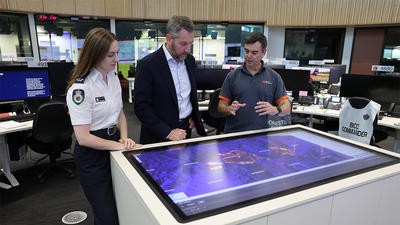
Swiss-based Technical Manager Adrian Romang and US-based International Safety Manager Greg Roberson support Helimission’s international outreach. Roberson said: “We raise our own support before we go; it is a calling to go to these difficult locations. We look for people – pilots, mechanics, base managers, people good at organization, and teachers to teach the children of the pilots and mechanics.” He added that the pilots’ wives sometimes have nursing training as well. “It takes all different gifts and talents to make this machine of Helimission work.” All personnel, including A&P mechanics, are volunteers who seek fundraising support for their missions.
Romang said Helimission has two helicopters in Madagascar and three in Papua, Indonesia. They have planned bases in Brazil and India, scheduled to start in 2027, that will also require personnel support and equipment.
Regarding types of aircraft, Romang said: “Since its founding in 1971, Helimission has always used five-to-seven-seat helicopters of various types. With increasing regulations and operational requirements from 2003 (EASA), Helimission in 2009 decided to standardize on a single fleet type and, after an evaluation, chose the AS350 series as its standard helicopter. A single-type fleet supports every aspect of maintenance, operations, training, spare parts, manuals, and more.”
Introduction to A&P/AMT educational programs
In the USA, there are roughly 170–180 Federal Aviation Administration (FAA)-certified Aviation Maintenance Technician (AMT) programs, which lead to job titles such as A&P mechanic. The Center of Excellence for Aerospace & Advanced Manufacturing (COE Aerospace) in Everett, Washington, is led by Jill Thornton, Executive Director. Thornton said COE Aerospace connects industry needs with educational programs in Washington state to address workforce development. Washington state has five community and technical colleges that offer A&P/AMT programs. She noted that Oregon and Idaho also offer similar programs based on FAA best practices.
Community college programs take 10 quarters (two years) to complete and prepare students to take the A&P exam
Thornton noted that the community college programs take 10 quarters (two years) to complete and prepare students to take the A&P exam. While she said the program doesn’t provide certifications, it does provide eligibility to sit for those exams. She elaborated: “They provide training so the student can prepare to study and pass the exam: verbal, written, and skills tests. It is a regulated curriculum with skills outcomes. The colleges work together to streamline the curriculum to teach best practices. There is freedom for the institutions to teach how they want, but the skills, knowledge, and abilities are the same across the board.”
Affiliated with the COE Aerospace, on the teaching side of AMT training, is Christopher Russell, Associate Dean of Professional and Technical Programs at Everett Community College. Russell said they offer a Part 147 (FAA-certified) A&P program with a curriculum in advanced avionics and preparation for work in repair stations.
He said the difference between A&P mechanics and technicians was negligible. “They are not different: A&P mechanic was the name in the old days; now it is aviation maintenance technician (AMT).” He added that the title was once airframe and engine (A&E) mechanics. In the USA, A&P mechanics are certificated in a different fashion: in other countries, you receive type ratings depending on the aircraft (i.e. 737); in the USA, you can work on any make, model, or form of transport.
International aviation regulatory bodies
Most countries offer aviation regulation programs. For example, Romang said that Helimission’s locations followed the rules of these regulating bodies:
- ACM – Aviation Civile de Madagascar (leans towards EASA)
- DGCA – Directorate General of Civil Aviation (Indonesia; was based on FAA but now leans towards EASA)
- ANAC – Agência Nacional de Aviação Civil (Brazil)
- DGCA – Directorate General of Civil Aviation (India).
In South Africa, Mercy Air helicopters operate under FAA regulations (N-registered), and their fixed-wing aircraft fall under the South African Civil Aviation Authority (SACAA). Of course, any US-based college or university follows the FAA, as do commercial enterprises, including mission-based and nonprofit organizations.
About airframe and powerplant, and whether they are always couched together
According to an FAA Advisory Circular (10/30/24), the roles of airframe and powerplant are not always combined. Generally speaking, the AC says: “Duties of these maintenance professionals include maintaining, servicing, repairing, and overhauling aircraft, aircraft engines, and aircraft components and systems. For the purposes of this AC, aviation maintenance professionals are FAA-certificated and noncertificated individuals who are paid for their services.”
It defines the role’s basic requirement as being highly skilled in mechanics. Beyond that, A&P mechanics/AMTs today must be agile to work across a range of aviation capabilities, from helicopters to commercial, space, and uncrewed aircraft, among others.
Students must train at an Aviation Maintenance Technical School (AMTS), according to the FAA. In the USA, a mechanic can train only in airframe (A rating) or powerplant (P rating).
In Europe, through the European Union Aviation Safety Agency (EASA), the A&P certification is globally recognized, and training is provided for each subject separately. Because of the program’s rigor, EASA-trained candidates can secure jobs in the USA and other countries. SACAA licenses aircraft maintenance engineers (AMEs) with ratings across airframe, powerplant, and avionics. There are different ratings and equivalencies across EASA, FAA, and SACAA (for example), while aviation authorities worldwide offer A&P mechanic training.
Discipline and follow-through for an A&P/AMT program
While many college and university programs are two to four years for an undergraduate degree, A&P/AMT programs are much shorter, lasting one to two years.
Russell spoke about the program’s challenges, however. Feedback from students is broken into three key areas:
- New students face intimidation, up to two years in the program, and a lot to learn
- Midpoint students are in the doldrums. They are getting into a routine, and they feel they’ll never earn certification/licensing
- End-of-program students: gaining confidence, and excitement about entering the industry.
For those who complete the program and pass their FAA certification exam, he said, 80–90% will be placed in the first three months through various workforce development programs. In Washington state, industry partners host recruitment and job fairs, and organizations like COE Aerospace offer opportunities for graduates through their networks.
80–90% will be placed in the first three months through various workforce development programs
Russell said that people from other countries might return home and find employment. The FAA certification transfers, but it is not a direct articulation. He added: “There is transferability between the US and Canada, but they want to see proof of the training regime in the US. They will have their own field office or airworthiness authority to determine whether they can test for their license within their structure.”
Characteristics and skills that mission-ready operators seek in a mechanic
Schmied spoke about the desired skills for mechanics in an organization like Mercy Air: “Although an aircraft mechanic is a highly specialized profession, I believe the greatest skill is having
a broad knowledge of mechanics, like an all-rounder-type person. If interested in becoming an aircraft mechanic, one should seek as much insight as possible into electronics, automotive mechanics, diesel or truck mechanics, etc. That really helps to be an independent, confident engineer who can work well in all circumstances.”
He added that salary was often secondary in this industry and that recruiting was difficult. He said the characteristics their organization was looking for in mechanics were “loyalty, responsibility, reliability, honesty, trustworthiness, confidence, and competence. Human lives are at stake with the aircraft we maintain.” Location and adventure are key reasons they recruit individuals to their organization, but the main recruiting characteristic is Christian faith.
Last, Schmied said mission-oriented jobs like theirs were typically sought by people of passion, given what he said was a lower-salary position with a high skill set: “Passionate people are hard to find and don’t need to be paid well because they love what they do. Also, it’s a high-responsibility job. It takes time to develop the confidence and experience to work independently. Lots of people don’t want to make that sacrifice for the reward one would get.”

Mission-critical work internationally: saving the day
Russell said the work was a matter of life and death. “Realistically, unless we have qualified mechanics to do the work and service it, we can’t fly. We need mechanics to get this done and minimize maintenance downtime.” He said that, in addition to saving patients, the lives of the aircrew must be kept safe.
While training has declined in recent years, Thornton at COE Aerospace said enrollment in A&P programs was becoming easier. “But there is a stronger push to develop pipelines from K-12 to community and technical colleges to determine how students can earn college credit while in high school. Colleges consistently market their programs. Enrollment is up and continues to rise after Covid. Most A&P programs have filled all seats.”
Thornton works directly with industry providers for mechanical services. For service providers seeking mechanics, “there is a big push for A&P technicians and mechanics”. She also said there was a need for female representation in the industry, which is low. In Washington state, a childcare grant for those entering the program may attract more young mothers. The starting wage for an A&P mechanic in the USA is $25–$35 per hour, depending on the employer and company size, which she said yielded $50,000–$70,000 annually with a two-year certification.
There is a big push for A&P technicians and mechanics
Romang said that for those seeking training to become an A&P/AMT mechanic, there are supportive programs for mission work, including MMS Aviation, the School of Missionary Aviation (SMAT), LeTourneau University, and Moody Aviation, among other like-minded mission training programs.
Roberson said mechanics often saved the day: “There are save-the-day moments that happen, but if you ask a lot of mission-oriented people, mechanics are the number one need. If it were not for the mechanics, these machines would not be flying.” He shared that, from a pilot’s perspective, someone with well-rounded flight experience needs a solid mechanic. One who keeps the machines ready to fly in demanding weather, difficult locations, and an imperfect helipad. He said the mechanics are team players who order supplies and parts well in advance. From their perspective, in remote locations, parts must be ordered months in advance, and mechanics must plan ahead.
May 2026
Issue
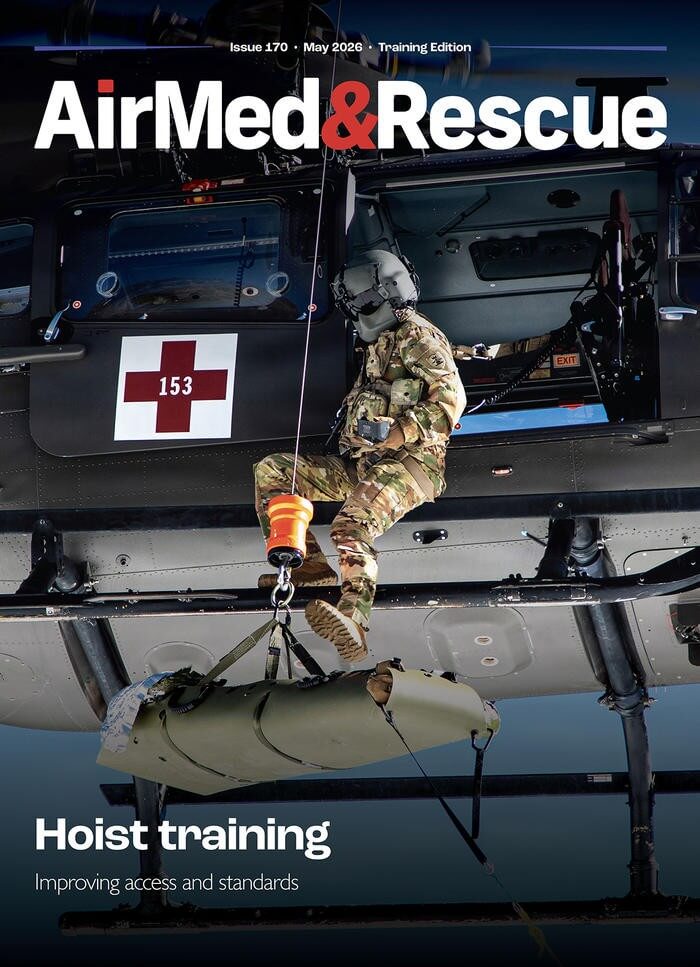
Training for special missions is on another level, so it’s a great pleasure to bring you the training edition of AirMed&Rescue for May. We have features on night flights for police aviators; the simulators for military special missions training; the systems and scenarios for hoist operations; and engineering training for airframe and powerplant mechanics.
Jennifer Ferrero
Jennifer Ferrero owns Ferrero Agency. She focuses her writing on feature stories for aerospace and manufacturing trade publications. She also provides marketing and public relations services. She has been an entrepreneur and writer for over 25 years. She lives in Spokane, Washington.