
Model patients: manikins for medical crew training

Realistic simulation is key to the effective training of air medical teams, and manikins play an important role here. Providers discuss with Lauren Haigh the ways in which they use manikins and how this aligns with their missions
Simulation training is crucial to prepare medical crews for high-stakes situations, enabling them to practice and refine skills in a safe and controlled setting. Realism is a key part of this, which is why manikins are a valuable simulation training aid. Low-fidelity models are important tools for repetition and the building of fundamental skills, while mid-fidelity manikins can simulate basic vital signs and high-fidelity models can react in real time.
Manikins are needed to perform quite specific tasks and help in a variety of ways, explained Sarah Hampson, Global Marketing Manager for Ruth Lee: “Manikins largely fall into two main categories, medical and rescue.
“Traditionally, medical manikins were designed to help teach clinical skills such as resuscitation, though in more recent times there have been huge steps forward in terms of realism and the assortment of different clinical skills that can be performed, including trauma training.
“Rescue manikins offer a solution for those who need to be precise and skilled in safely extricating a person from any number of scenarios including vehicles, up mountains or in confined spaces – even rescue from the water. These manikins need to be robust and hard-wearing, plus realistically weighted to give an accurate representation of what it is actually like to move a person who is unable to assist.” Hampson continued: “It is well known that creating realistic scenarios help to improve knowledge and skill retention. Train like you fight is a common military mantra, and transfers to anyone who will potentially rescue and then provide pre-hospital care to a patient. In recent years, several manikin manufacturers have sought to blend rescue and medical manikins to help give trainers the best tools for both rescue and pre-hospital care. These manikins need the best of both manikin categories – the realism and clinical accuracy of a medical manikin, plus the durability and realistic weight of a rescue manikin – allowing people to train in more realistic environments.”
The importance of manikins in training cannot be overstated, as Casey Clement, Director of Product Management for Safeguard Medical, explained: "Pre-hospital environments are inherently dynamic and often unpredictable, demanding medical crews to perform under immense pressure with limited resources. Simulation with manikins is paramount in this context as it provides a safe, controlled, yet highly realistic setting for medical professionals to practice and refine critical life-saving skills. This allows for repeated exposure to high-stakes scenarios, fostering muscle memory, critical decision-making, and teamwork in an environment where mistakes can be learning opportunities rather than critical failures. The more realistic the simulation, the better prepared crews will be to navigate the complexities of real-world emergencies, ultimately enhancing patient outcomes. Manikins serve as invaluable stand-ins for real patients, offering a consistent and repeatable platform for essential skill development."
There is potential for teams to modify manikins in line with their needs, as Samantha Bendall, Director of Education and Retrieval Specialist at CareFlight, articulated: “We have modified some of our manikins in order to be able to take critical decision-making around medical interventions into a higher-fidelity scenario,” she explained. “For example, one manikin has been modified to allow surgical procedures in the chest to be done in simulation. The ribs are covered with other materials to mimic the ‘layers’ the clinicians need to negotiate, to make it look and feel realistic.”
Manikins can be highly responsive and utilized in immersive situations, creating a realistic training environment. Brad McArthur, Manager of Education and Clinical Simulation at Ornge, said that due to the service’s large scope of practice, its paramedics need to be trained to use every piece of equipment carried to care for every type of critically ill or injured patient. “This training involves high-fidelity Lifecast, Gaumard, 7-Sigma and Laerdal manikins that cover various patient types like neonatal preterm babies or geriatric patients,” he explained. “They mimic real-time patient deterioration and responses to interventions, and they replicate bodily functions and medical conditions. These manikins are used in augmented and virtual reality (AR and VR) for immersive scenarios and simulations within our transport vehicles that integrate medical procedures with transport-specific challenges.”
They mimic real-time patient deterioration and responses to interventions, and they replicate bodily functions and medical conditions
Immersion within the training is enhanced by realism and the ability to perform a range of treatments. Clement described what some manikins are currently capable of: "SIMBODIES manikins offer a remarkable spectrum of simulation capabilities, designed to cover a diverse range of patient types and injury scenarios, from neonates and children to adults, and from uninjured individuals to those with complex trauma, including wounds, amputations, burns, or blast injuries. Our flagship Pro Plus manikin exemplifies this versatility, simultaneously providing:
Advanced airway management: A silicone cast based on cadaveric airways allows for realistic training in examination, suctioning, intubation, cricothyrotomy, ventilation, and CPR
Comprehensive trauma skills: Trainees can practice spinal immobilization, chest trauma management (chest seal application, finger/needle thoracostomy), vascular access (intraosseous insertion with 3D printed, blood-filled bones), and intricate hemorrhage control techniques (tourniquet application, wound packing, junctional bleeding, and interchangeable amputations with a manually operated blood pump), as well as traction device application
Enhanced realism: Features such as lifelike self-sealing silicone skin, removable glass eyes, real human hair (easy to clean), a floating jaw, and acrylic teeth significantly elevate the training realism. The inclusion of our Ultimate SIM Sleeve Kit and Instant Moulage Kit further expands trauma training possibilities with highly realistic moulage effects, adding a crucial emotional dimension to simulations.
“While other manikins may offer some individual features, the comprehensive combination of capabilities, particularly critical elements like realistic cricothyrotomy, the tactile authenticity of the skin, and varied wounding patterns and gender options, sets SIMBODIES manikins apart in their versatility and realism for a wide range of pre-hospital procedures.”
Simulation scenarios
A variety of manikins can be used to support different situations, as Kai Kranz, Head of Continuous Medical Education at the Swiss Institute of Emergency Medicine (SIRMED), and Michael Siegenthaler, Deputy Chief Paramedic at Swiss Air-Rescue Rega, highlighted: “We utilize basic life support simulators (e.g. Laerdal Resusci Anne) with limited training abilities up to extensively sophisticated human patient simulators that allow several emergency procedures like advanced airway management, surgical procedures, etc. (e.g. Laerdal SimMan Essential). In combination with additional systems like a breathing simulator (e.g. IngMar Medical ASL 5000) or an ultrasound simulator (e.g. SonoSim), these simulators are suitable for displaying patients in extremely severe conditions.”
Kranz and Siegenthaler underlined that training and maintenance are key to the effective and smooth running of these simulators. “To unlock the full potential of these full-scale simulators, the instructors need to be aware of what the simulator offers and how to operate it during a simulation scenario. This requires a thorough training of the staff and a substantial maintenance plan to ensure smooth-running simulations.
To unlock the full potential of these full-scale simulators, the instructors need to be aware of what the simulator offers and how to operate it during a simulation scenario
“All in all, the use of full-scale simulators is a very costly endeavor,” they remarked, “but it offers needed training opportunities that can’t be appropriately provided otherwise.”
AirMed&Rescue also spoke with London’s Air Ambulance Charity’s (LAA’s) Institute of Pre-Hospital Care about the manikins they use. “We use basic manikins for simulation so that we can carry out advanced airway procedures, such as intubation,” a spokesperson said. “We also use other manikins and task trainers that can simulate different aspects of a training or education scenario. For instance, we have task trainers that can mimic mass hemorrhage to train clinicians to respond quickly and with the appropriate interventions. We also use a training kit that mirrors the live kit carried by our clinical teams, to ensure that training is realistic and robust at all times.”
Maneuverability and maintenance
Indeed, training that is realistic is essential to reflect the complexity and unpredictability of real-life situations. This is why CareFlight values “training as we fight”. “We use a range of part-task trainers and low-fidelity manikins for our training,” said Bendall. “Manikins need to be able to stand up to the rigors of being ‘treated’ in the bush, on the side of the road, being in the rain, etc. We believe strongly in ‘training as we fight’, so our scenarios take place in realistic environments outside to replicate the missions we do,” she explained. “We use moulage and sounds via Bluetooth speakers to provide signals to the participants to give them cues as to what the ‘patient’s’ injuries are, whether their airway is patent and how alert they are. We also use speakers to play sounds that simulate the environment they will be working in to remind the teams to ‘control their environment’ when they can and/or get used to the noise that will be part of their pre-hospital working environment.”
We use moulage and sounds via Bluetooth speakers to provide signals to the participants to give them cues as to what the ‘patient’s’ injuries are, whether their airway is patent and how alert they are
Delving into the benefits offered by manikins, Erik Nemecek, Director of Clinical Operations at MedHealth Partners, said that the team currently utilizes one high-fidelity simulation manikin that has proven to be robust and reliable. “This manikin is now approximately eight to 10 years old and has all the bells and whistles that were available at the time. Our manikin is full size, however can be moved and placed inside of an aircraft for training purposes,” he stated. “We have wireless capability, which allows for this movement outside of the sim room and is user friendly. We maintain excellent customer support from the manufacturer and have had very little issues with replacement parts needed. Maintenance has been relatively easy, and the typical storage is ‘open’ in our sim room.” This durability, mobility and adaptability are important for the effective use of the manikin.

Training and education
The spokesperson from LAA’s Institute of Pre-Hospital Care highlighted that its manikins are also robust and easily maneuverable: “The basic manikins are really useful for simulation when practicing certain interventions or needing to maneuver them into novel situations. They are also a lower cost than the other manikins and task trainers, and cope well with the high frequency of use that comes with the training and education run by the Institute. We use these basic manikins in conjunction with simulated monitoring, as well as experienced clinical faculty for verbal input throughout the scenarios we deliver.”
They highlighted that their other manikins bring realism to training. “The other manikins we use are fantastic for bringing realism to our simulations and education, as they are particularly lifelike and can mimic some particular clinical features.”
The other manikins we use are fantastic for bringing realism to our simulations and education, as they are particularly lifelike and can mimic some particular clinical features
McArthur agreed that realism and mobility are among the top qualities required of manikins and indicated that the initial investment cost results in a reduction in training costs long-term. “The manikins that we use are selected based on cost-effectiveness, realism and operational feasibility. Each type of manikin has specific use cases, and their price depends on the fidelity of the model. While they come with an initial investment, they reduce long-term training costs by eliminating the need for live patient training and enhancing competency before clinical exposure,”
he noted.
“Low-fidelity models are very easy to use and train our education team on, while high-fidelity models are a lot more complex and require simulation specialists who are trained to use them. The manikins are lightweight, mobile and scalable, which allows for realistic training in confined spaces. Maintenance can be challenging, but we have processes in place to ensure that the manikins are maintained according to manufacturer recommendations.”
Hampson also detailed some of the differences with high- and low-fidelity manikins: “There are pros and cons to using both high-fidelity medical manikins and lower-fidelity rescue manikins. For example, medical manikins clearly give a higher degree of clinical accuracy and are, therefore, beneficial for teaching various aspects of trauma management and resuscitation, including the management of difficult airways – but they are often very expensive and not built to be used outside of a clinical setting, and there is a high risk of damage when used for extrication and patient transfer, for example.
“Likewise, low-fidelity manikins provide a great tool for learning the best techniques for extricating a casualty from hazardous environments, including the water or mountainous areas – they are also useful for winch training as they are not easily damaged and much more cost-effective. However, they often don’t include clinical features.” Hampson added that the differentiation between the types is being blended: “The recent addition of hybrid medical/rescue manikins will help to bridge this gap, somewhat.”
Explaining the importance of the type of fidelity that is functionally supportive of training, Clement said: "High-fidelity means different things to different people. For some it implies manikins that blink, breathe, and output digital vitals; for others it simply means a scenario so immersive that learners forget they’re in training. In prehospital trauma care, what really matters is training fidelity – replicating the pressure, environment, and tactile cues medics face on scene. SIMBODIES design choices, including rugged construction, hyper-realistic skins, and modular wounds let instructors run high-stakes scenarios anywhere, rain or shine, while new materials and sensor add-ons continue to raise the bar without sacrificing reliability."
Exploring the options
When it comes to upgrading manikins, Nemecek reported that their current manikin was still meeting the needs of the program but an additional, specialized manikin was required. “So far, software upgrades are able to be accepted and replacement parts are available. However, we are exploring an additional manikin to support neonatal training, which is currently done utilizing two dolls: one ‘preemie’ and one term,” he confirmed.
Bendall said that the CareFlight team is always looking for new technology, but it has to be useful to them, and achieving a balance between ‘high-fidelity’ and ‘hands-on’ is important. “Pre-hospital medicine is all about critical decision-making and has so many tactile and muscle-memory elements. Finding the balance between enough ‘hands-on’ and increasing the fidelity using technology is really difficult,” she explained. “We are currently looking at augmented reality solutions, but we have yet to find more technologically advanced manikins that actually improve the quality of the training and result in better performance.”
Finding the balance between enough ‘hands-on’ and increasing the fidelity using technology is really difficult
Kranz and Siegenthaler said that, while their existing manikins serve the current training requirements adequately, they also keep an eye on technological developments that may be of use to them and are also exploring the potential of simulated patients. “We now can draw on a number of trained people who act as simulated patients and who can display diseases and injuries much more realistic than manikins can do,” they stated. “The appearance of the symptoms and the possibility of a natural conversation between practitioner and patient diminishes the gap between real world and simulation. It creates a situation where relevant aspects of patient assessment, clinical reasoning and treatment are incorporated to a much more realistic extent.”
AI and the next generation
Looking ahead, there is the potential that, with the application of artificial intelligence (AI), manikins could be transformed into adaptive, intelligent learning partners. “AI could enhance the ability of the manikins themselves, or perhaps even conduct the sims with the programmed simulations,” suggested Nemecek. “There are endless capabilities that could be on the horizon that could be beneficial to the healthcare industry. However, we must also remember the limitations that could possibly exist, such as human emotion or, better yet, the human factor.”
Kranz and Siegenthaler thought that one conceivable benefit of AI could be manikins that can interact independently with participants. “If they could react to commands with the correct physical answer (e.g. opening eyes) or are able to provide a fluid verbal conversation, the simulator would reproduce human behavior more realistically,” they said. “This natural interaction between healthcare practitioner and patient could result in a continuous simulation stream that consecutively allows a consistent cognitive and psychomotor workflow; something that is highly relevant in terms of the learning impact. On the educational side it would reduce the workload amongst the simulation team, which means that they can spend more time observing the course of the scenario.”
McArthur also sees a myriad of potential opportunities, given the pace of technological advancement. “The manikins we use are already capable of so much that it’s hard to imagine the next-generation models. I think AI can enhance their responsiveness, adaptability and language models so that they can react and respond to our medics more naturally,” he commented. “I can see it giving us the ability to simulate more complex cases and emergencies, or even cultural- and age-specific behaviors. With how fast the technology is advancing, it seems like the opportunities are endless.”
Hampson sees growth and development with these tools: “All manikin manufacturers look closely at their research and development to make sure that their innovation strategy is aligned with market needs – therefore, they are all reliant on customer engagement and feedback to make sure they are working on products and projects that will benefit their customers. Whether medical or rescue, improvements can always be made to develop further realism, though of course, there is a pay-off between what is needed, what can be created and what is cost-effective enough to be a commercially viable product! Likewise, technology such as virtual or mixed reality will grow in significance, offering a more flexible way to train a range of challenging scenarios.”
While manikins are a useful simulation tool, they are only as effective as their teams and as training permits, as Kranz and Siegenthaler concluded: “Regarding the desired learning outcome, they are just a part of the educational concept that, as such, has way more impact. This concept needs to be developed by skilled educators who consciously consider the profile of the learners, goals, content, methodology and equipment. I would hypothesize that using manikins in simulation training without a thorough educational concept is less effective. Or, in other words, the key is the software, not the hardware.”
July 2025
Issue
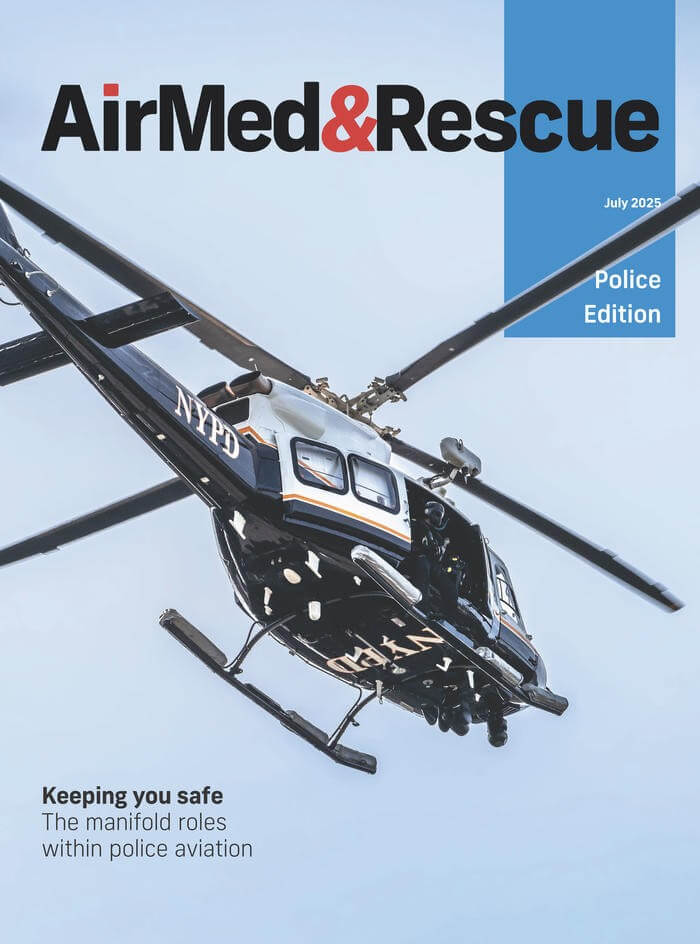
Our July edition highlights police aviation with features on how sensor technology is being used, the other aspects of policing beyond law enforcement, and the challenges of border control. We also have an interview with a police inspector, a gallery from the US Customs and Border Protection, and a provider profile of the US Park Police. Additional features include recruitment and retention, and manikins for special missions and medical training; plus we have more of our regular content.
Lauren Haigh
Lauren has worked in the publishing industry for eight years and reads and writes about healthcare, science and travel insurance on a daily basis. Her favourite aircraft is the plane from the title sequence of British educational children’s TV series Come Outside.