
Provider profile: Midlands Air Ambulance Charity

Oliver Cuenca talks to Karen Baker, Head of Clinical Operations at Midlands Air Ambulance Charity, about the organization’s work and how it’s developed over time
Midlands Air Ambulance Charity (MAAC), which began operations in 1991, provides emergency air ambulance services to the English counties of Gloucestershire, Herefordshire, Shropshire, Staffordshire, the West Midlands, and Worcestershire.The charity currently has a fleet of three helicopters, which it owns outright – two H145s and one EC135 – located at three bases across its territory, in Cosford, Shropshire; Tatenhill, Staffordshire; and Strensham, Worcestershire.
The aircraft are flown in partnership with long-time aviation partner Babcock International, which provides maintenance, servicing, and pilots.
“We actually only renewed [the contract with Babcock] this year,” explained Karen Baker, MAAC’s Head of Clinical Operations. “It’s a 10-year contract.”
MAAC also operates two ground-based rapid response vehicles between 19:00 hrs and 07:00 hrs, based in Cosford and Strensham, to support its nighttime services.
We wanted to provide 24/7 cover because we felt quite strongly that there should be an equality of care, and it shouldn’t matter if it’s 4 o’clock in the morning – you should have access to an advanced care service
Baker noted that the charity recently moved into a new, “state-of-the-art” combined headquarters and air base at its Cosford site in November 2023, while its base at Strensham is currently being expanded and redeveloped to offer new facilities. The Cosford site features a “fully immersive simulation room [with] some fantastic simulation equipment”, she added.
Flying at night
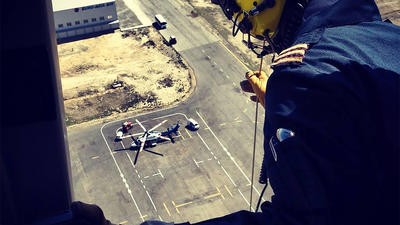
A major shift for the charity was its move to 24-hour aircraft operations in January 2024 – a change that Baker explained was driven in part by a desire to provide an equal level of care across both rural and urban areas.
“You’ve got six counties that we serve, but a lot to the west of us is very rural,” she said. “And a lot of the resources that we had, especially the cars, mainly served the big population centers – Stoke, Birmingham, and Worcester.
“We wanted to provide 24/7 cover because we felt quite strongly that there should be an equality of care, and it shouldn’t matter if it’s 4 o’clock in the morning – you should have access to an advanced care service,” Baker added.
The result, she said, was a number of “really, really good success stories, of people who have had access to our service who would have otherwise been maybe an hour or more away from an enhanced care team”.
A key part of MAAC’s strategy to implement nighttime operations was the use of “pre-surveyed, pre-approved sites”, arranged in partnership with local communities. This includes sites like park areas, local airfields, and sports fields.
Additionally, the charity is making use of “daylight tracking”, Baker explained – a technique by which operating hours are maximized by adjusting them in line with the hours of sunrise and sunset.
“Night vision is not something we’re going down the route of at the moment,” she said. “All of our aircraft are night vision-capable, but, as a charity, there’s an issue of cost versus benefit.”

An independent service
Another key shift in MAAC’s operations in recent times, said Baker, was the charity’s move to become fully independent of the local National Health Service (NHS)-run ambulance service three years ago – something that has allowed the organization to “progress far quicker”, she said.
A key benefit of this is that all of MAAC’s critical care paramedics are now “direct, full-time employees of the charity”, rather than allocated as part of the local ambulance service’s operations.
“It’s far easier for us to develop and progress and innovate when we govern ourselves,” she continued. “When you work in partnership with the NHS – which is a massive organization – let’s face it, although our work is critical, it’s a very small proportion of what the bigger ambulance service does. And it took a lot of time for us to progress things.”
Medical issues
Common medical issues faced by MAAC include cardiac arrests and other heart-related issues – in part due to the charity’s ability “in terms of the drugs that we can give, the equipment we have, and the scope of practice that our paramedics have.
I was trained as a critical care paramedic, and my scope of practice for what you do on an ambulance has increased exponentially
“Something else we do, medical wise, is thrombectomy transfers – so, stroke patients that would go into the nearest hospital that would benefit from thrombectomy,” Baker said. “We get mobilized immediately to transfer those to specialist treatment centers.”
Beyond these, she added that “road traffic accidents obviously still form a big part of our work, and then of course assaults, with the likes of stabbings being on the increase from what they used to be”.
Baker highlighted that MAAC has just passed 70,000 missions flown since the start of its operations.
Equipment and blood
MAAC carries a range of equipment on its aircraft. “We’ve got an intensive care grade ventilator, a cardiac monitor … a LUCAS [Lund University Cardiopulmonary Assist System] device, surgical equipment that allows us to do thoracotomies, thoracostomies, resuscitative hysterotomies.”
The helicopters are also equipped with a drug formulary and facilities to carry red blood components.
“It really is a mini intensive care department now at the side of the road. It’s really, really moved on with the times from when I think back,” Baker said. “Years ago, we were very much a flying ambulance, and it was very much a ‘scoop and run’ type job,” she continued. “I was trained as a critical care paramedic, and my scope of practice for what you do on an ambulance has increased exponentially! I would never have dreamed of doing some of the things I can do now, both with equipment and drugs. And that is fantastic.
“I think we’ve seen the doctor cohort become far more specialized in their field with the introduction of pre-hospital emergency medicine (PHEM),” she noted. “They’ve gone from providing ad hoc, voluntary services to more contracted services.”
Engaging with the community
While MAAC, as a charity, is a regular presence in the lives of those in the region it serves, its involvement in the community does not stop at air ambulance services: it provides a range of emergency first aid training as well.
“We’re keen to provide basic life support and first aid training to the communities, and bleed control training too,” Baker said. “Some of that is provided free to our community groups, and then we commercialize that training as well, and provide training to workplaces and other groups that want to pay for it.”
She also highlighted the charity’s First Biker on Scene courses, which specifically target motorcyclists, teaching them how to provide the immediate aid that is relevant to that demographic, such as aid for “major blood loss, airway problems, how to remove a helmet, recovery position, basic life support”.
“It’s really popular and I think they get a lot out of the ones that we’ve run,” she said.
August 2025
Issue
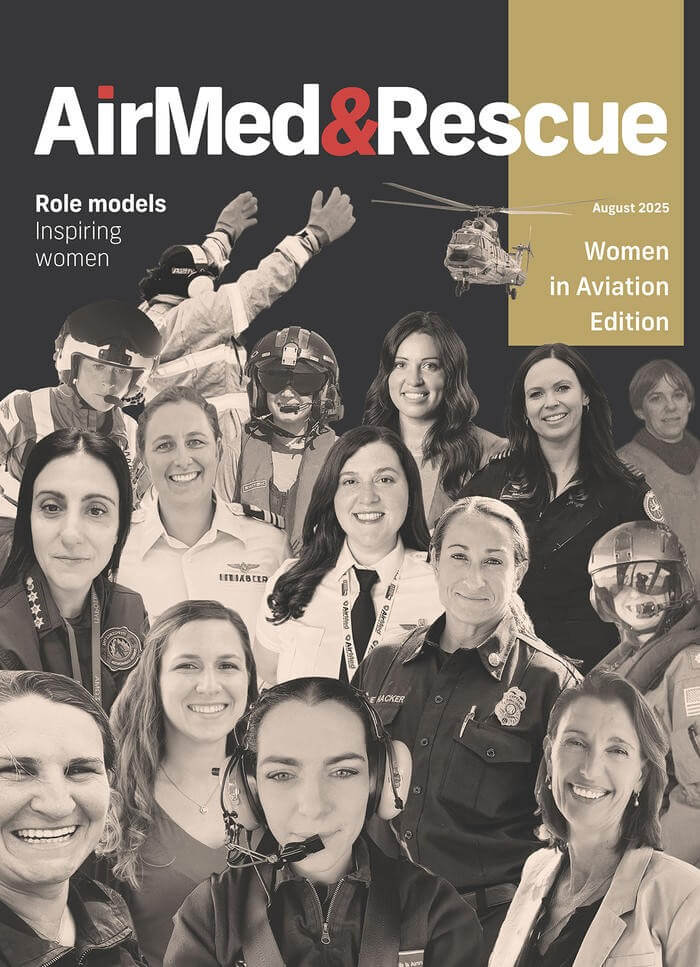
Our August magazine is the inaugural women in aviation edition, highlighting and showcasing female voices from the airborne special missions sector. We have features on blood products used in emergency medical services, challenging hoist rescues, pregnancy while flying, and portable water sources for firefighting. We also have interviews, a gallery, an industry voice, a news analysis piece, and a provider profile, as well as a review of the Paris Air Show.
Oliver Cuenca
Oliver Cuenca was a Junior Editor at the Voyageur Group. He was previously a News and Features Journalist for the rail magazine IRJ until 2021, and studied MA Magazine Journalism at Cardiff University. His favourite helicopter is the AW169 – the workhorse of the UK air ambulance sector! He also led the creation of Waypoint: The AirMed&Rescue podcast, serving as its Production Editor and co-host.