
Recruitment and retention in special missions

It’s not just the missions that are special. David Pearl investigates how aerial firefighters, air rescue, and similar operators find and keep their people
Why would anyone intentionally fly into a firestorm, or hover at high altitude over mountains, or do any of the myriad other things that are commonplace for special operations pilots and air crews? Flying low and slow at their max gross weight, often over treacherous terrain, is just a routine day at the office for them. They do the very things that most pilots were taught not to do. Yet they do so fearlessly and successfully and are reshaping how we perceive what aircraft can do.
As demand for these ‘special’ capabilities explodes, how do companies that work in the special missions sector recruit the pilots and other personnel they need? More importantly, once they hire the right people, how do they keep them, especially when competition for their services is so fierce?
In exploring how successful special missions organizations address these challenges, three core principles in recruiting and retaining people were revealed:
- Embracing the special nature of their missions
- Promoting and encouraging innovation
- Creating a family culture.
They integrate these principles to create vibrant, proactive, and team-oriented cultures that will attract elite mission specialists. This is their most effective recruiting tool and is key to their sustainability.
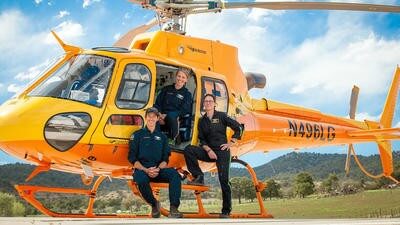
Aviators seek challenges and special missions provide these
Coulson Aviation is a global aerial firefighting company headquartered in Thermal, California, with operations spanning North and South America, Australia, and beyond. With over 700 employees, Coulson is the only company in the world operating both large fixed-wing airtankers and Type 1 heavy-lift helicopters in wildfire response. Britt Coulson, Coulson Aviation’s President and Chief Operating Officer, characterizes wildfires as the one of the top three greatest sources of carbon emissions globally. He highlights this point when recruiting new pilots (most of whom are ex-military), as well as mechanics trained on similar platforms, which reflects the company’s military-derived fleet. Coulson Aviation’s mission is not just about fighting fires from the air; it is also an opportunity to “help the world – to help people who actually want to be helped”.
The California Department of Forestry and Fire Protection (CAL FIRE) responds to all wildfires in California and frequently beyond. It is headquartered at McClellan, a former Air Force Base, near Sacramento. According to Division Chief Paul Karpus, CAL FIRE’s goal is to limit 95% of all fires to 10 acres or less. It directly hires its own helicopter pilots and contracts with the state and other agencies, such as Amentum, for fixed-wing pilots and maintenance services. It echoes Coulson Aviation’s emphasis on the bigger picture involved in special missions as an effective recruiting tool. “We’re not competing with the airlines,” Karpus explained. “That’s not the type of flying we do, and the people who apply to CAL FIRE know that. It’s not about the money. People come to us because of what we do, which is to protect the lives and livelihoods of the people in our community.”
It’s not about the money. People come to us because of what we do, which is to protect the lives and livelihoods of the people in our community
Conair Group is also a Canadian company headquartered in British Columbia. Its primary focus is aerial firefighting, it employs approximately 500 people, 150 of which are professional aerial firefighting pilots, and it operates a fleet of 70 fixed-wing aircraft. It has the largest privately owned fleet of fixed-wing aerial firefighting aircraft in the world. Mike Benson, Conair’s Director of Business Development, pulls no punches in describing the challenges that confront anyone who wants to fly for Conair: “We accept only a small percentage of the hundreds of applications we receive yearly. Those we do accept must be both consummate instrument pilots and highly skilled at low-level flying over hazardous terrain under challenging circumstances. They must be prepared to sacrifice creature comforts and time with their families while maintaining passion and dedication in the face of unpredictable and ever-changing demands.
“We accept only the best and emphasize that up front,” Benson continued. “Our pilots are tough as nails; they work tirelessly in extreme conditions, staying calm, collected and laser focused in
chaotic environments.”
19-01 Holding is an Italian company based in Rome. It is building a revolutionary new aircraft, the WF-X, specifically designed to change the paradigm for all special missions operations, but especially for aerial firefighters. Renato Sacchetti, Founder and CEO of 19-01, endorsed the same general approach to recruiting new people. “We look for people who want to be challenged,” he said. “We don’t need to teach flying; rather, we want problem solvers, people who strive to make
things better.”
19-01 Holding, although still putting its teams together, focuses entirely on finding people who willingly embrace the daunting challenge of launching an entirely new aerial platform, the WF-X, and changing the firefighting paradigm.
Innovate or fall behind – it’s never business as usual in special missions
Unlike passenger and cargo carriers, where doing things the same way with the same equipment for years at a time is common practice, special missions operators must adapt quickly to change, and integrate new technologies and techniques if they want to survive. With the advent of artificial intelligence, satellite communications, and uncrewed aircraft, companies that refuse to innovate quickly become dinosaurs. Elite pilots and support personnel demand cutting-edge technologies and state-of-the-art equipment to stay ahead of future challenges, instead of reacting to them.
19-01 Holding takes innovation very seriously. In fact, every aspect of the company reflects new ideas and novel approaches to fighting wildfires. Recognizing that the typical aircraft used for firefighting were designed more than 60 years ago, and have been out of production since 2015, and given some predictions that wildfires may increase in frequency by as much as 50% in the next 10 years, 19-01’s founders decided it was time for a radical new approach. They created a revolutionary aerial firefighting system from the ground up, the SoS Firefighting System. The central feature of the system is the WF-X, an aircraft designed specifically for aerial firefighting but readily adaptable for other applications as well. It incorporates drones, artificial intelligence and data-link capabilities that represent a massive leap forward in wildfire management. The System will become operational in 2030. Meanwhile, Sacchetti has already designated the pilots and support staff who will fly the first missions. In his words, applicants “flocked to the opportunity to change the aerial firefighting paradigm. I have everyone I need and we’re ready to go.”
Applicants flocked to the opportunity to change the aerial firefighting paradigm
Innovation also spurs Coulson Aviation’s, CAL FIRE’s and Conair’s recruitment success. While these companies do not envision a complete makeover of their operations like 19-01, they also do not have to start from scratch. Thus they can focus on innovations that enhance what they already are doing. For example, while Coulson Aviation was successfully meeting all its pilot and aircrew needs by hiring from military ranks, it recognized a growing challenge in finding enough qualified airframe and powerplant (A&P) mechanics. As Coulson explained: “Pilots and aircrews aren’t much use without aircraft that are ready to fly, so we established our own training programs and launched outreach initiatives in local middle and high schools to help build the next generation of aircraft mechanics.”
CAL FIRE’s innovations include locating support bases within 20 minutes’ flying time of any fire. This significantly reduces crew fatigue and wear and tear. CAL FIRE also equips its helicopters to address multiple missions with little to no refitting. This enables one aircrew to perform a variety of missions without requiring a different platform. “We want to be ready for anything,” Karpus explained, “and the equipment we carry allows us to do that.”
Conair has invested over CA$20 million in specialized aerial firefighting technology and procedures that make firefighting at night not only possible but a routine aspect of its mission profiles. Its investment in training systems and simulators prepares its pilots and crews for anything they might encounter on a live mission.

Treating everyone like family – us, not me
As any veteran pilot will attest, the success or failure of a mission often depends on an aircrew’s collective commitment to the task and their fear of letting a teammate down. Such ‘esprit de corps’ is a common characteristic of successful special missions operations. Achieving it takes a lot more than lip service, however, and as much as every CEO wants to believe their company is like a family, the reality is often quite different.
For CAL FIRE, the process begins with total investment in its people. “We take care of our people in every way possible,” Karpus explained. “Everyone is accountable for the success (or failure) of our missions and accepts responsibility for their actions because, in the final analysis, our people are the only thing that matters.” While this investment takes many forms, ranging from ongoing currency and technical training to continually integrating new technologies, it can be summarized in one sentence: “CAL FIRE has your back, and you have ours.
Everyone is accountable for the success (or failure) of our missions and accepts responsibility for their actions because, in the final analysis, our people are the only thing that matters
“Our people are fully engaged because they know they have a say in what we do, and they trust us to do what we say. We have fun together,” Karpus concluded.
Conair also promotes a strong family culture. “Our pilots are among the best in the industry,” stated Benson, “and to enhance both their overall safety and mission efficiency, we created the Flight Envelope Awareness System (FEAS) for our aircraft. This system minimizes many of the hazards associated with our demanding missions.
“In addition, our culture sets us apart from other operators. We support our teams and prioritize our safety practices and operational procedures with one goal in mind: to bring everyone home safely at the end of an assignment. We take responsibility for our mistakes, we learn from them to get better. And we know how to have fun together. We’re a family.”
Developing the right culture, one that emphasizes family, has been a cornerstone policy for 19-01 Holding since its inception and will continue to guide company decisions as it builds toward the future. “We look for good people first and foremost because we have learned that they are the foundation of any successful operation,” noted Sacchetti. “We invest in them by providing amenities like childcare and a swimming pool as we create a working environment that is both supportive and professional. We are poised to expand our culture as we grow.”
Coulson Aviation is a family-owned company in the aerial firefighting industry – and has its name proudly displayed on the side of every aircraft. Coulson said: “That name stands for more than just legacy; it reflects a deep, personal commitment to the mission, the team, and the people they protect. Family ownership means that decisions are made with a long-term purpose, rather than shareholder pressure. It also means every employee, from pilots to mechanics, is treated as part of the extended Coulson family: with loyalty, trust, and respect at the core.”
Success is from your people
The policies and practices of successful operators and organizations within the special missions sector provide valuable insights for any of their peers seeking to emulate their success in recruiting and retaining the high-caliber people needed to perform dangerous and extremely demanding missions. Begin by embracing the special character of such missions, and recognize that elite professionals are drawn to elite challenges and demand innovation. Finally, demonstrate an unwavering commitment to your people while holding everyone accountable.
One caveat must be taken into consideration. As these companies had already built a thriving culture, they didn’t need to actively recruit. Their well-earned reputations accomplished that for them. People want to work for them, and they turn away most of their applicants. For operators that do not enjoy this luxury, the message is clear. Emulate these companies, adopt their principles, and get your house in order.
July 2025
Issue
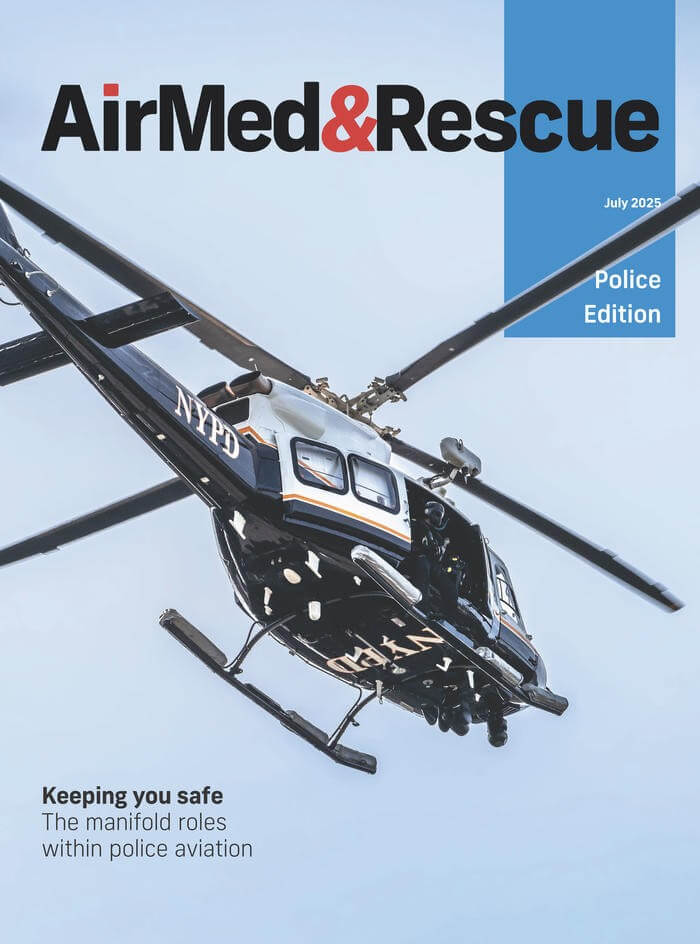
Our July edition highlights police aviation with features on how sensor technology is being used, the other aspects of policing beyond law enforcement, and the challenges of border control. We also have an interview with a police inspector, a gallery from the US Customs and Border Protection, and a provider profile of the US Park Police. Additional features include recruitment and retention, and manikins for special missions and medical training; plus we have more of our regular content.
David Pearl
David is a former Navy pilot and an attorney specializing in aviation law. He defended pilots, aircraft manufacturers, airlines, and aviation businesses including several significant jury trials.
Flying and airplanes are his passion. Now a freelance writer, David writes for a wide variety of clients on range of topics.