
Top gear: clothing and equipment for water rescue

What clothing and equipment do rescue swimmers, hoist operators, and other crewmembers use to do their job safely and effectively? Jennifer Ferrero finds out
Clothing and equipment for water-based rescues require time and consideration to be given to understanding the use and application of each, along with storage and longevity. Clothing and equipment brands, as well as brand loyalty, are also crucial to crewmembers.
Angela Hung, Critical Care Flight Paramedic (CCFP), said that within the scope of all rescues conducted, “approximately 2% involve water-related rescues and/or searches”. Hung provides search and rescue (SAR) and emergency medical services based in Wellington, New Zealand, for the company Search & Rescue Services, operating the Westpac Rescue Helicopter out of the Wellington Life Flight Trust base. She said the company has 123 operations staff employed in different roles, such as pilot, critical care paramedic, and aircrew, and has been operating since November 2018. About 25% of its business includes SAR.
For rescues in bodies of water, the CCFPs wear a wetsuit, mask, snorkel, fins, booties, a hood, a winch harness (which also holds an inflatable life vest), a strobe light, a personal locator beacon, and a helmet. Crew also wear survival suits and life jackets, she said.
Cody Berg is a rescue swimmer with Larimer County Dive Rescue Team and serves as Director of Sales for Air Rescue Systems (ARS), a Vita Inclinata company, in Fort Collins, Colorado. Berg has 24 years of experience as a Naval Aircrewman (NAC) and rescue swimmer. He has conducted water-based international rescue in places like Australia, Korea, Singapore, Florida, California, and the Mariana Trench (outside of the Philippine Sea).
Due to the diverse activities Berg conducts, he has expertise in water rescue clothing and equipment, including types of material, flotation devices, signaling devices, fins, booties, masks, snorkels, and more. Berg has also experienced a variety of water temperatures and conducted helicopter aviation with SAR in all bodies of water, including lakes, rivers, oceans, and seas. He greatly enjoys the work and finds it meaningful and enjoyable.
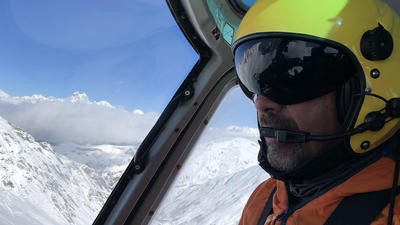
Noah Tober, Senior Base Aircrew Officer with CHC Helicopter in Australia, said he has a dual role, as both an Aircrew Officer (ACO) and Rescue Crew Officer (RCO). “This dual role is unique as it allows crew to perform down-the-wire duties as the RCO one day and ACO duties the next.” The ACO role is multifaceted, encompassing both operational and patient management responsibilities. “The RCO role performing down-the-wire duties involves stop rescues, stretcher rescues, patient management and care, both on land and in the water,” he said.
Brand loyalty
Regarding clothing brands, there are loyalties, said Hung. She likes two-piece flight suits from Sisley in Australia, its polar fleece flight jackets, and cotton T-shirts. The cotton T-shirts were also crucial to Berg as an insulating layer. Hung uses the brand Stoney Creek for “puffer jackets, wool blend jumpers, gloves, beanies, rain wear, and backpacks”.
Berg likes Mustang Survival’s dry suits, and said that in cold water, he relies on a wet or dry suit with an underlayer for water temperatures under 65°F. He wears an insulating layer made of polar fleece, which is almost like pajamas, under a dry suit, especially if he will be in the water for a while. The Mustang brand offers insulation layers along with dry suits, flotation devices, dry bags, gloves, and headwear. It has made survival-quality heavy clothing since 1967. Putting this brand into perspective, per its website, “Mustang Survival has pushed the boundaries of what is possible in marine safety to enhance your experience on the water. We’ve designed, engineered, and manufactured products for NASA, Navy Seals, Coast Guard, Police & Military, Ocean Racers, Professional Athletes, and take the same progressive level of dedication towards every aspect of our products.”
Berg said, regarding warmer weather: “In Florida (with warmer water temperatures), I will wear a short-sleeved rash guard and shorts, a wetsuit.” He added that during a shift, no matter where he is in the world, there can be broad variations in the weather and water temperature. If he is at a lower elevation and near a lake in the summer, he may use different clothing than if he is transported to a mountain lake or into an ocean.
Knee pads and hoist-specific gloves are mission-critical, according to Tober. “In addition to clothing, hoist operators commonly wear knee protection such as knee pads as added protection whilst kneeling during confined area approaches and hoisting operations. Hoisting gloves are worn whilst handling the hoist hook, hoist cable, and rescue equipment.” CHC hoist operators wear company-issued custom flight trousers and flight jackets or one-piece flight suits.
In addition to clothing, hoist operators commonly wear knee protection such as knee pads as added protection whilst kneeling during confined area approaches and hoisting operations
Wear and tear
Regarding the heavy-use nature of the clothing, each expert weighed in on wear and tear. Tober said: “We aim to always supply the safest, most versatile clothing equipment on the market to our crewmembers – so our clothing is constantly being evaluated, upgraded, and replaced when needed. The clothing and equipment we use are constantly being tested in the strenuous physical environment we work in and the array of weather conditions CHC operates in. Around Australia, we use equipment in a variety of weather conditions, including extreme heat, cold climates, rain, and snow.”
Around Australia, we use equipment in a variety of weather conditions, including extreme heat, cold climates, rain, and snow
For her part, Hung said: “The products are very resilient, and they are replaced on an as-required / wear-and-tear basis.”
Explaining the need for rugged and long-lasting gear, Paul C Arnold, Director of Commercial Sales at Switlik, said they had a new product designed specifically for the extreme demands of open-water rescues: “Switlik’s new U-SAR Rescue Swimmer Dry Suit is purpose-built for in-water missions, incorporating the latest swimmer-focused technology. Comfort and durability are paramount, so Switlik offers 24 sizes of dry suits to fit any body type. Extended leg reinforcements with padding, and ruggedized socks enhance longevity and performance. Its low-profile collar reduces drag, while quick-draining pockets add functionality and utility. Adjustable waist and internal suspenders improve mobility and fit in the water. Switlik’s signature U-shaped entry zipper allows for faster, easier donning and doffing, and reduces interference with personal flotation devices. Every suit is fully pressure-tested before leaving our facility, ensuring a watertight, leak-free guarantee upon delivery. An optional winter liner is available for cold-water missions. Designed in collaboration with rescue professionals, the U-SAR keeps swimmers mission-ready in the most extreme environments, providing unmatched reliability when every second counts.”
When Berg enjoys a product, he will keep it for many years: “It depends on the gear and depends on the use – I have a set of fins I’ve had for 20 years; the only thing I’ve had to do is replace the straps (a $5 replacement). With dry suits, as long as you take care of them, I can use [them] for five or six years straight.”
He said that, with wetsuits, the longevity is less, as he feels they “seem to shrink on me”. But he added that, often, wetsuits can last a long time and go through many cycles, when suddenly he’ll notice a tear or a large hole. He said it is not favorable if you come into each situation needing new gloves, for example; however, “if I am sacrificing the equipment, but I manage to save a life, it puts me in a position to help effect a rescue”. He said they get the best gear possible, and things show wear quickly.
One other thing that Berg noted was the storage of equipment and clothing. He cited the “kits” they have for each mission, which are stored either on the aircraft, such as an H-60, or in the hangar or at the aircraft location. He also brings his kit to specific events. He added that, in Larimer County, as a volunteer rescue swimmer in SAR, they offer a standard mission kit. Because of standardization, if he runs into trouble on a mission, he can call in support, and the additional rescuer can know precisely what is needed. “Rescue work is a team sport,” Berg said.

Know your environment
Hung shared a story about a successful water rescue in windy conditions to rescue a child swept out to sea. The child and a bystander, who tried to rescue the child, were both extracted with a double hoist with winds at 40kts (46.3mph), gusting up to 50kts (57.5mph). The child was treated at Wellington Regional Hospital. The CCFP wore a wetsuit, Triton harness with inbuilt flotation device, booties, and a helmet.
Berg pointed out that air and water temperatures can be vastly different, so the key is to dress for the rescue or training environment: “Don’t dress for the aircraft, or the conditions on the beach; dress for where you are going.” He cited the snow melt runoff in Colorado and how he might “freeze my butt off” in a lake while the air temperature is warm. “It is knowing your environment and dressing for the environment you are operating in. Dress for the missions where you are going.”
Don’t dress for the aircraft, or the conditions on the beach; dress for where you are going
Arnold agreed that the right kit for the mission is paramount: “The right equipment and apparel are critical for mission success during maritime rescues. Switlik’s Constant Wear Life Vests provide both safety and mobility, allowing helicopter crews to operate effectively without added bulk and increased fatigue. For cold-water swimming operations, Anti-Exposure Dry Suits protect against hypothermia while maintaining flexibility for swimming and recovery work. Once on scene, durable life rafts ensure rapid deployment and survival capability for those rescued, while our MRP-10 Rescue Platform provides victims with stable and reliable emergency flotation until more permanent rescue can be made. Together, these products are designed to integrate seamlessly into helicopter-based missions, ensuring safety, performance, and efficiency in high-stakes environments.”
For safety equipment, Berg recommends Mustang flotation devices, and he said he is devoted to Lifesaving Systems for harnesses and hoisting devices like the Triton and TRI-SAR harnesses. Tober also likes Lifesaving Systems for the surface swimmer life jacket (Triton 497-PAX-M), and the SeaVision 2000 Low Volume Mask.
Regarding dive fins and booties, Berg has used the same fins since he was in the Navy and likes them because they are “really stiff, and provide great torque – one or two kicks provide significant power”.
Flight suits come in two pieces with flight jackets and trousers, or as one-piece flight suits. Hung said she liked the Sisley brand again: “The Sisley flight clothing is long-lasting, along with the wool blend jumpers. The Nomex assists with the wearing, and the cotton/merino items wear very well over two years.” It also offers a coverall/overall and Nomex maternity trousers.
From fins to helmets, Tober has many preferences:
Dive fins – Apeks RK3 Dive Fins
- Dive booties – Aqualung Echozip Boots
- Dive gloves – Mechanix Original Hi-Viz gloves
- Dive snorkel and mask – SeaVision 2000 Low Volume Mask
- Dive helmet – Gath Gedi Helmet.
Regarding the helmet, Berg said that he must use a variety of helmets based on the water he’s in to protect his head and the base of his skull – “get the best that works for you,” he said.
Other equipment
When deploying into the water from the helicopter, Berg said that signaling was critical to communicate with the aircraft and shore-based rescuers. “For anyone deploying out of an aircraft, means of signaling and communication are important to communicate with aircraft and rescuers on shore; [this includes] strobe lights, signal mirrors, a radio, and a wireless communication system that works in the water and allows you to communicate with the aircraft. At ARS we highly recommend Axnes wireless communication systems as an excellent method of communication around safety equipment.”
Integrating and comfort is vitally important, said Arnold: “We believe it’s essential that apparel and gear integrate seamlessly to ensure both mission success and user comfort. In rescue scenarios, team members may wear the U-SAR Rescue Swimmer Dry Suit for hours at a time with limited breaks. The unique U-shaped zipper on the new U-SAR Rescue Swimmer Suit reduces interference with personal flotation devices, eliminating ‘hotspots’, and allows rescuers to stay focused on the mission, not on their gear. Switlik designs its suits and vests with the users’ comfort in mind. Comfort is essential to safety, because if you’re uncomfortable, you’re not focused. If you’re not focused, you’re not safe.”
We believe it’s essential that apparel and gear integrate seamlessly to ensure both mission success and user comfort
CHC Helicopter provides in-house training to those of all levels. Tober said it allows them to provide a consistent national standard. As a part of scenario-based training, the company also offers clothing and equipment: “CHC fully supplies all required clothing and safety equipment for trainees and operational crew. Participants are not required to purchase their gear. The equipment provided includes uniforms, kneepads, wetsuits, helmets, hoisting gloves, dive masks, fins, dive helmets, dive knives, strobe lights, dive booties, dive gloves, and both dive and helmet bags.
This comprehensive provision supports safety, operational consistency, and readiness from the outset of training through to deployment.”
A lifetime of lifesaving
The depth of knowledge for all SAR and swim crews is deep and wide. For those engaged in this work, obtaining the necessary training experience and certifications is crucial, followed by a lifetime of using clothing and equipment to identify the right brands and models for lifesaving activities.
November 2025
Issue
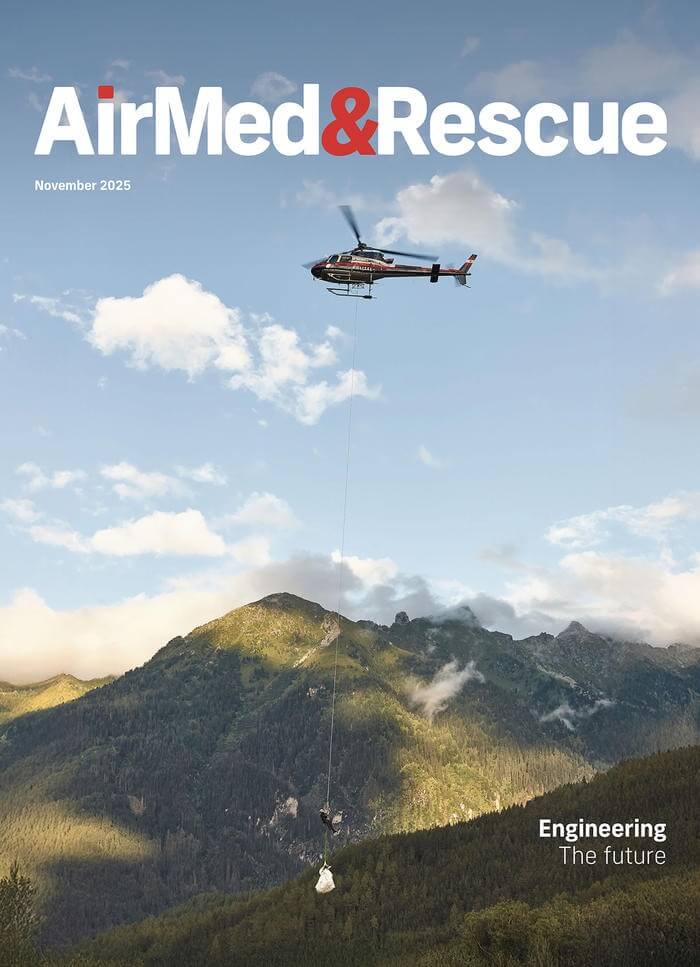
Our November edition is packed with content relating to special missions from around the world. We have features that explore the design and engineering that go into modern rotorcraft; the interactions between ground and air teams on helitack operations; the tools and attire needed for successful water rescues; and the new onboard technology that is revolutionizing special missions by detecting and communicating with cell phones.
Jennifer Ferrero
Jennifer Ferrero owns Ferrero Agency. She focuses her writing on feature stories for aerospace and manufacturing trade publications. She also provides marketing and public relations services. She has been an entrepreneur and writer for over 25 years. She lives in Spokane, Washington.