
Can't fly without it

Today’s search and rescue and helicopter emergency medical services aircraft carry a range of advanced primary care equipment. Chris Croot talks with operators and manufacturers about the tools they consider essential for successful missions
Pre-hospital aircraft attend a range of emergencies and are outfitted to stem bleeding, provide cardiopulmonary resuscitation (CPR), and ventilate patients, to name a few situations that may require specialist equipment. These tools have become progressively more efficient and compact, with some incorporating other devices into their operation.
Standardized equipment
The Lincs & Notts Air Ambulance (LNAA) provides a helicopter emergency medical service (HEMS) across the Midlands and east of England, using a single Leonardo AW169, though by mid-2027 the charity hopes to also operate an AW109 GrandNew.
The AW169, and indeed the LNAA’s two BMW X5 critical care cars (CCCs), carry an ultrasound, patient monitor, supplementary oxygen supply, ventilator, syringe pumps, and a mechanical CPR device. This equipment level should provide the team – typically one doctor and up to two critical care paramedics (CCPs) – with the devices they need for the full range of incidents they are likely to attend, including trauma, out-of-hospital cardiac arrest (OHCA), and illnesses. There are no age restrictions; onboard equipment can support infants through to geriatric patients.
Carrying the same equipment in both aircraft and the CCCs allows doctors and paramedics to build muscle memory and familiarity, something LNAA says is “invaluable when faced with multi-patient scenes or extremely complex cases that may otherwise take up the team’s bandwidth”.
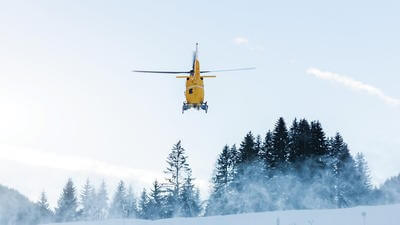
One of the largest HEMS providers in the USA, Air Methods serves more than 100,000 people every year. The company operates in excess of 450 helicopters and fixed-wing aircraft across 48 states.
Like the LNAA, Air Methods’ aircraft are extensively equipped to cater for a variety of emergency medical callouts. “We provide a standard response equipment inventory that covers both adult and pediatric missions. These include scene and interfaculty missions of all types,” said William Kelly Miller, Vice President of Clinical Services at Air Methods.
That standardized loadout (across its Airbus Helicopters EC145, H125, Bell 407 and 409) included the following equipment:
- Zoll X Series monitor and defibrillator
- Zoll NXT mechanical CPR device
- HAMILTON transport ventilator
- HAMILTON-H900 heating and humidification device for high-flow therapy
- Sapphire IV pumps (seven)
- C-MAC video laryngoscope
- QinFlow Warrior Lite blood warmers (two).
Rick Knight is Flight Crew Manager/Paramedic with GCH Aviation, which provides air medical services in New Zealand. GCH works in conjunction with Helicopters Otago, through a joint venture company called HEMS NZ, to provide HEMS coverage for the South Island region. In keeping with their UK and US colleagues, GCH operates with a standardized equipment level which ensures flexibility.
“Tasking can change rapidly and aircraft may be diverted to a different incident type while already airborne,” explained Knight. “For example, a routine interhospital transfer could quickly become a remote-area rescue or winch operation. Carrying the majority of our equipment ensures we can respond effectively to a wide variety of missions without needing to return to base for additional resources.”
Carrying the majority of our equipment ensures we can respond effectively to a wide variety of missions without needing to return to base for additional resources
More often, the standard tools and equipment on board HEMS craft includes whole blood, and this needs to be stored and transported under refrigeration. Cold blood cannot be administered to a patient direct, so with the rise in carrying blood, blood warmers also then need to be on board. Edan Naiberg, Vice President of Europe, Middle East, and Africa at QinFlow, explained the growth of transporting blood on board: “Pre-hospital transfusion of whole blood and blood components has expanded significantly as the importance of treating hemorrhage as early as possible has become increasingly recognized. More HEMS programs now carry blood as part of their standard capability, reflecting both the maturation of trauma systems and lessons learned from military medicine.

“As blood moves closer to the point of injury, warming becomes increasingly important. Infusing cold-stored blood can contribute to hypothermia and worsen coagulopathy at a time when preserving the patient’s ability to clot is critical.”
Naiberg continued: “We are also seeing blood programs drive broader adoption of active inline warming, with the same technology increasingly used for both blood and IV fluids when warming is indicated. The QinFlow Warrior lite is designed to make high-performance warming practical at scale by combining strong warming performance and safety with one of the most affordable per-use costs among portable warming solutions.”
Extra equipment
Alongside the more typical equipment, LNAA also carries some more specialized equipment and pharmacy items. This includes the tools required to conduct endovascular resuscitation (EVR), whereby a catheter is used to insert an inflatable balloon into the aorta. When the balloon inflates, blood flow to the abdomen is significantly reduced. This helps control internal bleeding following a major trauma and redirects blood to protect the heart and brain. The team also has access to a Cyanokit, an antidote (using hydroxocobalamin as the active ingredient) to treat known or suspected cyanide poisoning. Cyanide poisoning can result from exposure to smoke or fire, along with ingestion or contact with the skin or mucus membrane.
Across the country, our teams are trained to address multiple specialty missions based on the critical care transport needs of the area. In some situations, our team operates alone, and, in others, we partner to blend teams with specialty providers
Many European air ambulance services, such as the LNAA, cover specific parts of a country or region. In contrast, Air Methods provides coverage across the continental USA. As a result, the company will work with a broad range of healthcare providers in areas with varying transportation needs. Miller explained further: “Across the country, our teams are trained to address multiple specialty missions based on the critical care transport needs of the area. In some situations, our team operates alone, and, in others, we partner to blend teams with specialty providers.”
To support these missions, Air Methods may install specialty equipment such as neonatal transfer units like the Draeger Isolette or Advanced Healthcare Technology (AHT) BabyPod, fetal monitoring devices, Impella (a catheter-based, intravascular blood pump that supports a patient’s circulatory system), extracorporeal membrane oxygenation (ECMO) devices – which can temporarily take over cardiac and respiratory functions – or an intra-aortic balloon pump.
New Zealand’s varied terrain can lead to stark contrasts in callouts. Knight explained that for missions in the nation’s mountains, GHC may carry avalanche rescue equipment, specialist search and rescue (SAR) gear, and even overnight survival equipment when operating in remote areas or when deteriorating weather may hamper the removal of a casualty. This equipment includes bivvy bags, food, water, fire-lighting implements, and other such items to support crew and patients if an unplanned overnight stay occurs.
For Air Methods, a tool with an underestimated value is the video laryngoscope, as Miller explained: “Our device provides multiple blades with multiple approaches to allow our team to maintain [an] overall intubation success rate that exceeds 99% of establishing definitive airway access when needed.”
The device’s recording function is used to bring quality management right to the patient’s bedside. “With the airway videos being part of our continuous quality improvement (CQI) program, the medical director, educator, and other subject matter experts (SMEs) are able to see exactly what the clinician was dealing with and highlight learning opportunities. We also take advantage of the videos to recognize best practices. The same quality team nominates our ‘Airway Heroes’ from the CQI process of reviewing the videos to provide positive recognition to those who follow all of the best practices taught to obtain a difficult airway using this tremendous tool for our team,” Miller added.
With the airway videos being part of our continuous quality improvement (CQI) program, the medical director, educator, and other subject matter experts (SMEs) are able to see exactly what the clinician was dealing with and highlight learning opportunities
Ensuring that all the equipment is working harmoniously is incredibly important, as is the integration of technology to provide rapid and suitable delivery of care for patients in urgent need: “The Warrior lite can warm cold-stored blood to near-body temperature within seconds, even at high flow rates, allowing clinicians to deliver a warm unit of whole blood in approximately 2.5 minutes. With the Extra Power battery, it can warm up to six units of cold-stored whole blood or 5L of room-temperature fluid on a single charge,” said Naiberg. “Temperature matters because infusing cold blood and fluids can contribute to hypothermia, which impairs coagulation precisely when hemorrhaging patients need their clotting system most.
“Importantly, unlike some other solutions on the market, the Warrior lite was not found to compromise blood quality during warming,” concluded Naiberg.
Technological advances and airframe modifications
Like all HEMS/SAR operators, Air Methods has benefited from the advancements in medical equipment technology. “We saw a time period where there were dramatic savings as battery technology improved drastically, but, as of late, the focus has been more on keeping up with the capabilities and durability needed in our missions rather than size,” said Miller. He went on to say that the company’s desire is always to push manufacturers to further reduce equipment size and weight; however, this cannot be at the expense of capability, quality, and durability, which has been the reality during some attempts.
Air Methods has worked with multiple aviation medical interior providers to implement adjustments in mounting solutions, power outlet availability, oxygen access locations, and the quantity of oxygen. Miller told AirMed&Rescue: “A prime example of this would be the work we did with United Rotorcraft to add an additional wall of tracking on the Bell 407 along with oxygen access. This allowed for more visibility, access, and overall capability to securely mount medical equipment while in use.”
Knight also highlighted the benefits of reductions in equipment size and weight: “Advances in equipment design have resulted in medical and rescue equipment becoming increasingly compact, lightweight, and mission-specific.” GHC’s medical packs are now more modular, which allows crews to take only the equipment they need. The company has what it calls the “down-the-wire” medical pack, which has been specifically designed for winch operations. The kit contains essential equipment in a compact package that can be safely transported during technical rescues.
Advances in equipment design have resulted in medical and rescue equipment becoming increasingly compact, lightweight, and mission-specific
GCH has transitioned to an Airbus H145, which Knight said “has significantly improved our operational capability”. The aircraft’s larger cabin provides substantially more workspace and storage capacity than the company’s previous HEMS platform, the MBB/Kawasaki BK117, allowing improved patient access and management. The H145 was designed with HEMS in mind and features an enhanced oxygen delivery system and an internal wiring network capable of supporting modernized medical equipment. The cabin space is maximized further with the new Aerolite stretcher system with incorporated equipment storage bridge. The bridge houses patient monitors and ventilators, freeing up cabin space for either additional equipment or more workspace for paramedics.
Even though modern and modified helicopter platforms are capable of carrying more weight and larger tools, space is still in great demand, so the tools being used still need to be as light and small as possible, Naiberg explained the design considerations behind making a tool suited for HEMS missions: “Performance per gram was a core design objective. The complete Warrior lite system weighs approximately 900g with the lite battery, including the disposable warming unit, yet continuously measures fluid temperature hundreds of times per second and adjusts energy delivery in real time to maintain an output temperature of 38°C.

“A major contributor is thermal efficiency. The heating element does not need to exceed the target fluid temperature to warm the blood effectively, while the insulated expanded polypropylene housing minimizes heat loss and helps protect patients and caregivers from contact with the warming component,” added Naiberg. “That combination allows more of the battery’s energy to go into warming the fluid rather than being lost to the environment. It also enables the Warrior technology to maintain high performance during intermittent, rapid bolus delivery – a capability for which the technology is uniquely validated.”
Can’t live without it?
Miller told AirMed&Rescue that the HAMILTON-T1 ventilator was Air Methods’ most vital piece of equipment: “The HAMILTON allows our team to provide oxygenation and ventilation to some of the most complex respiratory patients.” He noted that the theory provided by the ventilator was only half of its benefit, the other being its ability to help clinicians to follow the Hippocratic Oath, ‘First, do no harm.’ Without the HAMILTON and its skilled operation of it, there is a risk of harm to patients while attempting to ventilate and oxygenate during Air Methods’ challenging missions.
Miller was keen to stress that although the HAMILTON-T1 is the most important piece of equipment on board the helicopter, the most valuable assets are the clinicians: “Our clinicians behind the equipment are our most valuable asset. We invest tremendously in our teammates, and they are the masterminds behind the inputs and outputs of every device we use. Without our highly skilled clinicians, no piece of equipment we carry would save a single life.”
Our clinicians behind the equipment are our most valuable asset. We invest tremendously in our teammates, and they are the masterminds behind the inputs and outputs of every device we use
Oliver Andersen is Marketing and Communications Manager at MEQU, a Danish company that manufactures a portable blood and IV fluid warming device. “Delivering warm blood in the air is vital for improving patient outcomes,” he said. “Pre-hospital blood programs are becoming more the norm than the exception. If you have blood on board, you should have blood warmers as well, or you run the risk of hypothermia.”
He added: “The °M Warmer enables HEMS professionals to give trauma care that aligns with the Tactical Emergency Casualty Care (TECC) guidelines in the field and in transit, thus helping prevent patients from entering the lethal triad.”
The lethal triad to which Andersen refers is hypothermia, acidosis (the condition of too much acid in the blood), and coagulopathy (a condition that affects how the blood clots). Though these processes are interdependent, they exacerbate each other: hypothermia impairs clotting, ongoing loss drives acidosis, and acidosis further disrupts coagulation.
Andersen told AirMed&Rescue: “Studies show that every decrease of 1°C (1.8°F) in core temperature below 36°C (96.8°F) results in a 10% increase in blood consumption in the first 24 hours of admission.¹ In addition, in a study of 1,500 trauma patients, every one-minute delay in delivering early resuscitative care increased the risk of death by 2% within the first 30 days.”²
In a study of 1,500 trauma patients, every one-minute delay in delivering early resuscitative care increased the risk of death by 2% within the first 30 days
MEQU designed the °M Warmer System to be small, light, and reliable, measuring just 5x10x20cm. The system can be used for the entire continuum of care, meaning it can stay with the patient from the point of injury throughout different stages of care for up to 72 hours.
Another company producing advanced primary care devices is Weinmann, based in Hamburg, Germany. Andy Mawson, Weinmann’s UK Regional Manager and a HEMS CCP, gave AirMed&Rescue an insight into its key products and which are most valuable to HEMS operations. “If you were to ask me which item that I would never leave behind, it has to be our MEDUVENT ventilator. It comes in at just 2.1kg but has all of the functionality needed to deliver pre-hospital care.”
The MEDUVENT is of the smallest models of ventilators on the market capable of performing the full range of ventilation modes. Crucially for ventilation, its hose system acts as an oxygen reservoir, conserving the valuable gas. This means the system only needs 4–5L/min of oxygen to deliver high levels of fraction of inspired oxygen (FiO2), the percentage of oxygen in the gas a person inhales – atmospheric air contains 21% oxygen (an FiO2 of 0.21) while medical applications run up to 100% oxygen (1.0). This efficiency allows users, if they so wish, to reduce the amount of oxygen carried, thus saving weight.
“Thames Valley Air Ambulance was the first UK user of MEDUVENT, and we now have ongoing evaluations across the
UK and Ireland with NHS trusts, charities, and other medical teams,” said Mawson. “Outside of the UK and Ireland, we have over 6,000 MEDUVENTs in operation around the world since its launch in 2019.”
Weinmann’s company slogan is ‘Simplify Saving Lives’ and this is prevalent in the MEDUVENT, as Mawson explained: “The user interface is really, really simple. I’ve given it to clinicians before and said ‘You already know how to use this’ and they just turn it on. This simplicity and capability was further endorsed by military feedback, who reported it was an ideal device for use in austere and complex environments. We’ve built a product that clinicians don’t have to think about operating.”
The MEDUVENT is under continuous evolution with Bluetooth connectivity, night vision goggles (NVG) compatibility, and tactical modes in development. It also benefits from significantly reduced service intervals in comparison with market competitors.
Knight identified two pieces of equipment as particularly valuable for GHC’s operations, the first being the portable ultrasound: “[This] has become an exceptionally valuable addition to the pre-hospital environment. Modern ultrasound devices are compact, lightweight, and highly portable, yet provide significant diagnostic capability. They can assist clinicians in identifying conditions such as free fluid within the abdomen suggestive of internal bleeding, pneumothorax, or cardiac activity during cardiac arrest. The ability to obtain this information rapidly in remote environments can greatly enhance clinical decision-making and patient management.”
The winch and rescue stretcher allows us to access and extract patients from locations that would otherwise be extremely difficult or impossible to reach, such as steep Alpine terrain in the Southern Alps
Second is the aircraft’s winch system and rescue stretcher: “This allows us to access and extract patients from locations that would otherwise be extremely difficult or impossible to reach, such as steep Alpine terrain in the Southern Alps. The system enables the safe recovery of critically injured patients, including those with suspected spinal injuries, while minimizing movement and reducing extraction times.”
Equipment that is invaluable today was once not a possibility so design, development, and deployment into the sector is an ever-evolving process to change the landscape of HEMS. Naiberg told AirMed&Rescue how this is a cooperative process between industry professionals and manufacturers: “Much of our product development comes directly from HEMS crews, flight medics, and military users operating in demanding environments. Their feedback drives improvements in areas such as usability, mounting, portability, and workflow between missions. For us, innovation is not simply about adding features; it is about removing friction from care and allowing clinicians to focus more of their attention on the patient.
“Every improvement we make traces back to a real clinical need reported by the people using the device at the point of injury. Stay tuned because we will launch another solution specifically relevant to HEMS that we expect to introduce in the fourth quarter of 2026.”
References:
Martin RS, Kilgo PD, Miller PR et al. Injury-associated hypothermia: an analysis of the 2004 National Trauma Data Bank. Shock. 2005;24(2):114–118.
Deeb AP, Guyette FX, Daley BJ et al. Time to early resuscitative intervention association with mortality in trauma patients at risk for hemorrhage. J Trauma Acute Care Surg. 2023;94(4):504–512.
September 2026
Issue
As we reach the equinox, I’m happy that we have an interesting military edition of AirMed&Rescue for you to read on those longer nights. We have features on the benefits of governmental institutions having a multipurpose helicopter; why military operators are at the forefront of exploring optionally piloted aircraft; how uncrewed aerial vehicles are serving as platforms for sensors that can operate in extreme situations; and on the equipment that is essential to carry on board an emergency medical services aircraft.