

Climate change and aerial firefighting technology

As climate change lengthens wildfire seasons across hemispheres and increases outbreak frequency and fire size, Jennifer Ferrero asks what new technologies are being developed to address this growing threat
The winter of 2025/26 in the US Pacific Northwest saw virtually no snow. Those who dislike snow and icy roads may rejoice, although ski resorts struggle to survive. Regardless, the lack of moisture points to broader concerns about hotter, drier summers and the risk of wildfires. According to Drought.gov, “the lack of snow in the Pacific Northwest may contribute to a longer fire season in 2026. A depleted snowpack can lead to early drying of the landscape, thereby increasing fire risk. Additionally, warmer temperatures and dry conditions are expected, further exacerbating fire danger.”
The region has already experienced increased wildfire activity due to prolonged droughts and rising temperatures, indicating that these factors could persist and worsen in the coming years. Firefighting experts worldwide are convening to provide a brain trust to address lengthening fire seasons and larger fires. New technologies and common-sense solutions are emerging.
In Central America, Diego Ibarguen Kipps, CEO of FCA Fire Consulting, is working to unite government agencies and private sector/commercial firefighters to coordinate solutions for a region he says is largely behind in firefighting technology and resources.
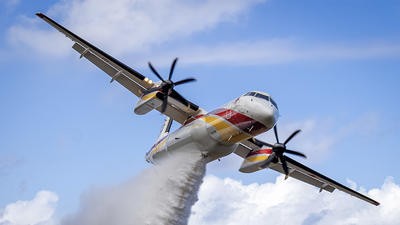
Recoil Aerospace, out of Bowling Green, Kentucky, is an aerial firefighting product provider. It provides aerial fire suppression systems, including the Tsunami External and Internal tanks for military and commercial operations worldwide. Ray Whaley, Product Support Manager, said: “Climate change, along with population growth and land development, is driving more frequent, faster, and more intense wildfires. It seems that every consecutive year we have another ‘record-breaking’ wildfire season, and agencies worldwide face challenges in meeting the demand for resources and assets to quickly mitigate fire risk. Lives, property, environment, and insurance costs are all at risk.” They are developing technological solutions to meet demand in the aerial firefighting community.
Heven AeroTech is a uncrewed aerial system (UAS) provider in Sterling, Virginia, with a manufacturing facility in Bingen, Washington. US Operations President Michael Buscher said they “aim to support wildfire response missions, as well as other humanitarian, defense, and commercial use cases that require long-endurance flight, rapid refueling, and access to difficult or remote terrain where crewed aircraft may be limited by safety, cost, or geography”.
From working with limited resources and funding in Central America to the latest aerial firefighting technology, experts explain how cutting-edge technologies are integrated while human factors are considered in planning.
Opportunities in countries with limited new technology
Zooming in on Guatemala in Central America, Kipps reported that he believes the country is significantly behind in technology and resources. “What is normal or even outdated in the USA and Canada is practically new to us. Keep in mind that 11 years ago, all forest fires here were fought on the ground, and there was some international cooperation with military helicopters from Mexico, the USA, or even Honduras.” Today, through FCA Fire Consulting, Kipps provides training and assessments and sells products and equipment to various sectors in Central America. Their focus has been on industrial fires, but over the past 10 years, “we have expanded into products that improve water performance for Class A and forest fires”.
Over the past 10 years, we have expanded into products that improve water performance for Class A and forest fires
Their initial work involved agricultural spraying companies, which have since evolved to the use of helicopters and Bambi Buckets. “In the Central American region, we began implementing various activities with the military and cooperations through government agencies. We also serve companies in Central America that receive training or equipment through us, thereby enabling them to operate independently,” Kipps said. While he believes Guatemala could improve its resources and planning, he noted that other Central American countries might be further along. But he is optimistic about their efforts.
“I would not say it is a partnership; it’s a coordinating effort. We aim to involve as many companies, individuals, and agencies as possible, but first it has to be the companies with aerial resources. Helicópteros de Guatemala, Fadecasa, Conversa, ARM Aviation, Texpetrol, and Aeroclub Guatemala are the first contacts we should establish to initiate the process.” He said that access to the funds was often granted only when the fire occurred, which he considered an oversight.

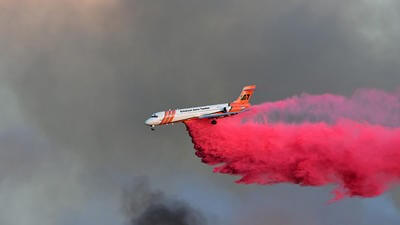
Embedding new technology in problem-solving
Other ideas include using flight simulators, enhancing pilot training, improving tank systems, and leveraging artificial intelligence (AI). Whaley said: “As technology of helicopters and tank systems is developed, the aircrews have to be trained to meet the demands placed upon them. Flight simulators are becoming more common to assist in the safe training of pilots and aircrews to work together for crew coordination, emergency procedures, and firefighting techniques.”
He continued: “To meet the demands on the aerial firefighting community, technology is becoming increasingly important.” Whaley noted that helicopter size was increasing, as was the size of water tanks. Lightweight materials are also an advantage. “Lightweight materials like carbon fiber are being used on water tank systems to make them lighter, giving crews the ability to carry more water or fuel and be on station longer.” Another technology is modular tank systems, which can be replaced during tank maintenance.
Lightweight materials like carbon fiber are being used on water tank systems to make them lighter, giving crews the ability to carry more water or fuel and be on station longer
Heven AeroTech is a relatively new technology company that uses advanced UASs, with a focus on hydrogen-powered endurance drones and heavy-lift electric platforms. Its technology includes onboard AI capabilities, data and analytics solutions, and “deployable gaseous-hydrogen refueling kits”, which Buscher said positioned them as a mission solutions provider rather than a seller of standalone aircraft.
The company aims to enhance situational awareness and protect human responders. Buscher said it wasn’t just about creating new technology for innovation’s sake, but about building tools that could be used for good.
The technology is useful in wildfire response missions, particularly in challenging terrain. He said limitations could be safety, cost, or geography. “Our hydrogen-powered unmanned system, the Z1, enables sustained aerial presence for fire surveillance and intelligence gathering, mapping, and sensor operations, helping incident commanders maintain visibility over evolving fire conditions without frequent landings or battery swaps. The platform’s heavy-lift capability also allows for larger or more advanced payloads, including thermal, imaging, and environmental sensors, which are critical for situational awareness in complex wildfire environments.”
Buscher said the benefits of UAS in firefighting were in “persistent observation”. In those cases where helicopter pilots may be busy with water drops or personnel transport, or other tasks that require crewed aviation, the UAS offers “a more balanced aviation strategy that helps lower operational risk, reduce fatigue on flight crews, and extend overall incident response capacity”.
Whaley shared another tactic, for fighting fires at night, given calmer conditions. He stated that during the California Palisades fire in January 2025, crews used night vision goggles and IR lights. He feels that “this is a concept that will gain momentum as agencies will learn to benefit from having the ability to drop water from helicopters 24 hours a day versus drops in daytime only”.
He noted, however, that with improved technology, aircrew demands might increase. “Flight simulators are becoming more common to assist in the safe training of pilots and aircrews to
work together for crew coordination, emergency procedures, and firefighting techniques.”

Getting beyond the root causes to solutions
Kipps argued that the increase in wildfire severity was largely attributable to both human-caused fires and poor resource management. In Guatemala, he shared, “the dry season is getting drier, but our rainy season is also getting stronger. So it’s something that if we managed it correctly, we might have some chance for the better.”
With fewer resources and technology than he would like, Kipps doesn’t feel limited. He suggested that, with proper planning and execution, they could succeed in their region without a substantial investment in additional aircraft. “Stationing those resources in strategic locations to reach those fires faster and more effectively is the answer. In Guatemala, fires burn longer and more intensely, largely because of our slow response. There is bureaucratic oversight on the government side that must decide whether to release those resources. They are still sending a small plane to survey the area rather than a larger aircraft or helicopter, but it can also carry water. We are making many inefficient efforts that increase spending when we could be working on defense to enable a quicker, stronger offense.”
Regarding drone or UAS usage in Guatemala, Kipps said there was much opportunity, and it was “just a matter of time” before they increased their efforts. Currently, they use drones to monitor the operation’s progress, which is beneficial. But, he added: “We are very careful to keep drones out of the air over the scooping, loading, and waterbombing areas.”
We are very careful to keep drones out of the air over the scooping, loading, and waterbombing areas
Other solutions, according to Whaley, include retractable snorkels and internal tanks. “Retractable snorkels are being developed to give crews additional safety and aerodynamic efficiency while in transit to an active fire.” He added that internal tanks were becoming popular in areas where refilling is challenging due to limited natural resources, such as lakes or rivers. “Being able to fill tanks on the ground with the use of a fire truck or fire hydrant is a game-changer,” he added.
Kipps said one of his favorite tools, although not a newer technology, was the Bambi Bucket. However, he said he also preferred underbody tanks on helicopters and more direct targeting of water sprays. Conversely, one of his greatest assets in Guatemala is not technology but relationships. “When a fire gets too big, what other tech options are there for aerial firefighting to help people? We bring in operations from neighboring countries. The rationale for incorporating this private aerial coordination group is to use more capable aircraft and keep ground crews safe.”
Buscher said strategy was the solution. He suggested that the best approach was to start by identifying operational problems and developing solutions. In most cases, he feels endurance is the constraint in wildfire response.
“A core challenge across aerial firefighting, and more broadly across defense, public safety, and emergency response, is the need for reliable, long-endurance aerial capability that can remain on station without frequent interruptions for refueling or battery swaps. Agencies are often balancing limited aviation resources, difficult terrain, evolving incident conditions, and growing expectations for real-time data and persistent situational awareness.”
Critical approaches to fighting fires
While technological innovations such as lighter-weight carbon-fiber tanks, modular tanks, UASs embedded with AI and metrics, and hydrogen-powered drones are important, technology is not the only factor; but it plays a crucial role. Planning and preparing while utilizing the best available technology in a country, and while anticipating increased demand, is sound advice in the context of climate change and rising fire frequency.
June 2026
Issue
As the northern hemisphere heats up for another hot summer, I’m pleased to bring you the aerial firefighting edition of AirMed&Rescue. We have features on how climate change is accelerating firefighting technology; the improvements in Australian firefighting capacity; and getting ahead of wildfires before they become unmanageable.
Jennifer Ferrero
Jennifer Ferrero owns Ferrero Agency. She focuses her writing on feature stories for aerospace and manufacturing trade publications. She also provides marketing and public relations services. She has been an entrepreneur and writer for over 25 years. She lives in Spokane, Washington.