

Event review: Aerial Fire Fighting Global 2026

Rome – Enhancing outcomes: the latest edition of Aerial Fire Fighting Global showcased over 60 exhibitors, with 30 sessions, and brought together nearly 50 countries. Jon Adams attended the event in the Eternal City
All roads lead to Rome, and this was proven by the vast number of countries represented by the attendees at Aerial Fire Fighting Global 2026 – nearly 50 sovereign states, and additional international organizations. Drawing the crowds to the event were a challenging and diverse set of sessions in the program, as well as a range of 60 exhibitors from the industry. Beyond the sessions and exhibitor hall, there were plenty of opportunities for networking and connecting with people from all areas within aerial firefighting.
The overarching theme of the sessions was ‘Enhancing outcomes’, whereby the speakers and panel guests talked about the improvements to technologies, strategies, interoperability, and cooperation that are contributing to the ongoing fight against increasing wildfire threats.
As the event was based in Rome, it was unsurprising that the Italian contingent was highly visible and a dominant presence both in the sessions and as exhibitors. The welcome address was presented by Eros Mannino, the General Chief of the Italian National Fire and Rescue Service, who stated that Italy “operates one of the most significant aerial firefighting fleets in Europe” and that it was a great honor to host the global event dedicated to fighting wildfires, such that it was “a point of great pride for our country, as well as a significant responsibility”. Talking of technological development, Mannino said: “Innovation is an essential pillar for the National Fire Corps, particularly within the wildfire fighting sector.”
Following the welcome address was the keynote speech delivered by Luigi D’Angelo, Director of Operations for the Italian Civil Protection Department, who explained how the Italian authorities approached firefighting and how they sit within the European model.
As a global event, its delegates and presentations were not limited to Italy and European speakers: there were strong cases and talks from representatives from Turkey, the USA, Canada, and Australia, among others.
Some highlights from the presentations, exhibitors, and sessions follow.
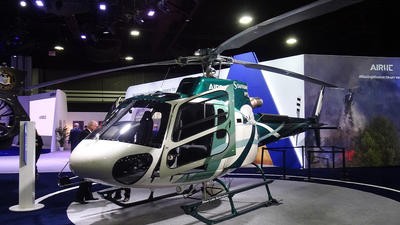
Airbus
Airbus presented two sessions, leading with the development of a forest firefighting ecosystem that involved a digitalized and interoperable approach to the various stakeholders on a firefighting mission. Olivier Chalvet, Senior New Business Manager at Airbus, demonstrated the viability of this approach with a case study about the recently completed proof-of-concept experiment that took place in Nîmes, France. The experiment took 50 people and six months of preparation, concluding in a simulation of a wildfire, deploying a command center, first assessments, using a variety of drones for site monitoring, precise measurements of weather conditions, and asking for and managing air support, including minimizing collision risks.
Airbus then presented the partnership that it has with Hynaero on the Fregate-F100, a new and French sovereign project creating an amphibious water-scooping aircraft for firefighting. This was followed by Airbus’s advances in uncrewed aerial systems and its HTeaming, the management of crewed-uncrewed systems in the same airspace and missions where each platform complements the other to improve the outcomes of the operation. Amparo Sánchez Pombo, A400M Firefighting Campaign Manager at Airbus, then detailed the measurements and testing that the A400M went through with the Centre d’Essais et de Recherche de l’Entente (CEREN), the test and research center for forest fires operated by the Entente Valabre, demonstrating the viability and availability of the rear-ramp gravity dropping kit.
Avincis
Ruben García Medina, Managing Director of Avincis Iberia, presented the key points in Avincis’ report ‘Up in flames: The challenges of fighting wildfires from the air in a hotter Europe’. The report (available in hard copy to the delegates) details how Europe is facing a significant challenge in the wildfire arena; that structural reform is needed for a more robust continent-wide emergency response system; better organization and harmonization will help reduce delays in procurement and reliance on the public sector; and focusing on prevention strategies rather than fire suppression will increase the effectiveness of wildfire response. The report highlights key structures that need to be established to enhance European aerial firefighting, stating that governments themselves have a central role by ensuring that supply chains are functioning to provide firefighters with the parts and tools they need to be adequately equipped. Avincis also uses the Australian model as a comparison, showing that Australia’s system of early detection of fires and thoughtful pre-positioning of standby craft can make all the difference in a battle with wildfires. Furthermore, the report stresses the importance of interoperability and the connectivity between air and ground assets. It concludes that wildfires are not uniquely a European problem, and there needs to be an intercontinental approach of efficient coordination, cooperation, and resource sharing, resulting in better outcomes when there is a surge in demand.
Governments themselves have a central role by ensuring that supply chains are functioning to provide firefighters with the parts and tools they need to be adequately equipped
Conair
Conair exhibited at the event, and Michael Benson, Director of Business Development at Conair, was keen to discuss the unique attributes of the company’s Dash 8-400 series of aircraft converted into airtankers and multi-role platforms used for aerial firefighting, and adaptable to be used for cargo, passenger transport, and medevac, or a combination thereof. Speaking about the conversions turned out from its Canadian workshops, Benson said that demand was high for the airtanker capable of delivering 10,000L of retardant, water, or foam/gel from an external fitted tank in one pass. He added that the size of the tank was not the only benefit of the Dash 8-400, but its ability to use shorter runways meant that it was better suited to rural operations, and its high cruise speed and excellent low-speed maneuverability made it a capable and efficient waterbomber.
Benson also explained that Conair had recently invested in new bird dog aircraft, the Daher TBM 960. These aircraft have cutting-edge technology (including a HomeSafe autoland, hypoxia detection and mitigation, low lag throttle engagement, and much more) and Conair has converted them with 13 modifications to increase and enhance the platform’s effectiveness as an aerial firefighting lead plane. As well as being perfect for the role, Benson said a valuable factor in using the aircraft was the proven reliability of the platform: “Two of them under contract in British Columbia last year flew over 440 hours between them with zero unserviceability, 100% reliability, and incredibly positive feedback from the government agencies.”
Two of them under contract in British Columbia last year flew over 440 hours between them with zero unserviceability, 100% reliability, and incredibly positive feedback from the government agencies
Coulson
Britt Coulson, COO and President of Coulson Aviation, and Stu Sprung, Vice President of EmberWorks, the research and development division of Coulson, delivered a case study showing how Coulson has worked in partnership with Southern California Edison (SCE) and the Quick Reaction Force (QRF) program. They stressed how the night operations are essential to keeping fires under control, explaining how work on the Sunset fire (occurring at the same time as the devastating Palisades fire) was managed, and prevented what prediction models estimated could have destroyed 942 homes and affected 4,400 people, when instead not one structure was lost. Sprung explained that the goal at EmberWorks was to use low-cost sensors to collect as much data as possible and then to leverage that data to work for the operator: “We need that information to be predictive and smart.” Another avenue that Sprung said they were exploring was to develop a retardant that would be as effective as current types while being dropped from a higher altitude and at a faster airspeed, improving safety for the crew as well as efficiency for the operation.
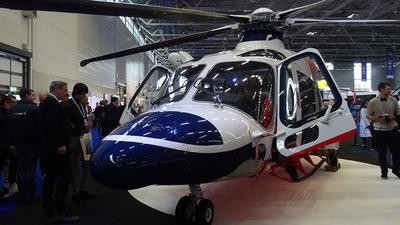
De Havilland Aircraft of Canada
Angela Gimenez Roig, Fleet Manager for Europe and the Mediterranean at De Havilland, presented a short film about the background of the company and its strong roots in Canada, and then explained her personal connections with the manufacturer. She said that the company was modeled in a different way in order to better serve its customer base: “Our focus is simple. We want to think like a customer, and we want to keep your team flying. We pride ourselves on being an aftermarket company that builds aircraft.” Roig said that being in Europe was important for the Canadian company, as “more than half of our fleet is here” and “more than half of our customers are here as well”. Which was why Europe is the launch customer of the Canadair 515: “Europe is not just a market,” she said. “We are a strategic partner in Europe.”
Europe is not just a market. We are a strategic partner in Europe
De Havilland is in the process of building 22 aircraft for European customers, including Croatia, Spain, Italy, Greece, Portugal, and France, as well as for the Canadian provinces of Manitoba, Ontario, and Alberta. Roig then shared the progress of the construction of the Canadair 515, showing the assembly milestones and developments.
Leonardo
Local original equipment manufacturer Leonardo presented a session that highlighted the need for multi-domain aerial firefighting, combining aspects from its aircraft, satellite systems, and digital services and products. Luigi Lupoli, Leonardo’s Vice President of Commercial and Business Development, said that there were challenges of early fire detection in remote areas; effective coordination between air, ground, and command system assets; geoinformational support for operations planning ; and training to increase effectiveness. Lupoli added that some of the key solutions to improving outcomes were to have multi-role assets and to have accurate information, so that people could take advantage of using the right intervention in the right way. Lupoli also said that a modular approach to firefighting could reduce the impact, frequency, and operational challenges of forest fires, by combining prevention, mitigation, and coordination strategies.

Perimeter Solutions
The fire safety solutions company had a booth in the main exhibition hall promoting its portfolio of products, particularly the PHOS-CHEK long-term fire retardant. Seeking to consolidate and improve its standing in Europe, Steven Woolworth, Vice President of Commercial Operations, said that Perimeter Solutions’ presence was intended to “continue those relationships” and to connect with countries “that maybe only use water” in their firefighting efforts. He gave the example that France has a low acreage of burnt land and is a user of the retardant, whereas some other countries that only use untreated water may be experiencing higher levels of burning. He said that the company had been supplying retardant for over 60 years, showing its value as a stable and trusted product, as well as the services that Perimeter Solutions supplies, including the storage, loading, and mixing of the product to ensure maximum effectiveness when it’s delivered.
TracPlus
Todd O’Hara, the new CEO of TracPlus, contributed his experience and perspective to the panel session on data and its implementation to improve outcomes. With the rise in the amount of data from sensors on board aircraft and from other sources, the way that data is gathered, collated, processed, and presented can have a hugely transformative effect on the efficiency and effectiveness of firefighting. O’Hara told AirMed&Rescue that the company had shifted its focus for the software and development “into the agency management of operators and really using the data that’s generated from the aircraft to provide more information through the agencies to really defend the investment in what they’re doing, in what is essentially very expensive and probably the most expensive part of firefighting”.
We have probably the largest commercial data set of aerial firefighting operations in the world; over one billion location records for aircraft engaged in aerial firefighting
O’Hara demonstrated the FireFlyte product and how it can provide insights into the missions, providing a source for better operational efficiency, strategic decision-making, and resource management. He said that a lot of agencies still relied on collecting data on paper or using clunky spreadsheets, which is labor intensive and slow to provide usable and actionable intelligence. The data that TracPlus has at its fingertips is also a resource that O’Hara is proud to discuss: “We have probably the largest commercial data set of aerial firefighting operations in the world; over one billion location records for aircraft engaged in aerial firefighting, going back since 2014. It goes up at about one million position reports per day and what that gives us is this global data set of aerial firefighting suppression activity that can inform decisions for specific areas. Someone like a small European country with a handful of assets can still have access to that same data set that California has that has hundreds of assets engaged in it.”
Future aerial fire fighting conferences
The 2026 Asia-Pacific edition of Aerial Fire Fighting will take place in the Gold Coast, Queensland, Australia, on 22–23 July, while the next Global edition will travel to Anaheim, California, on 2–4 March 2027.
June 2026
Issue
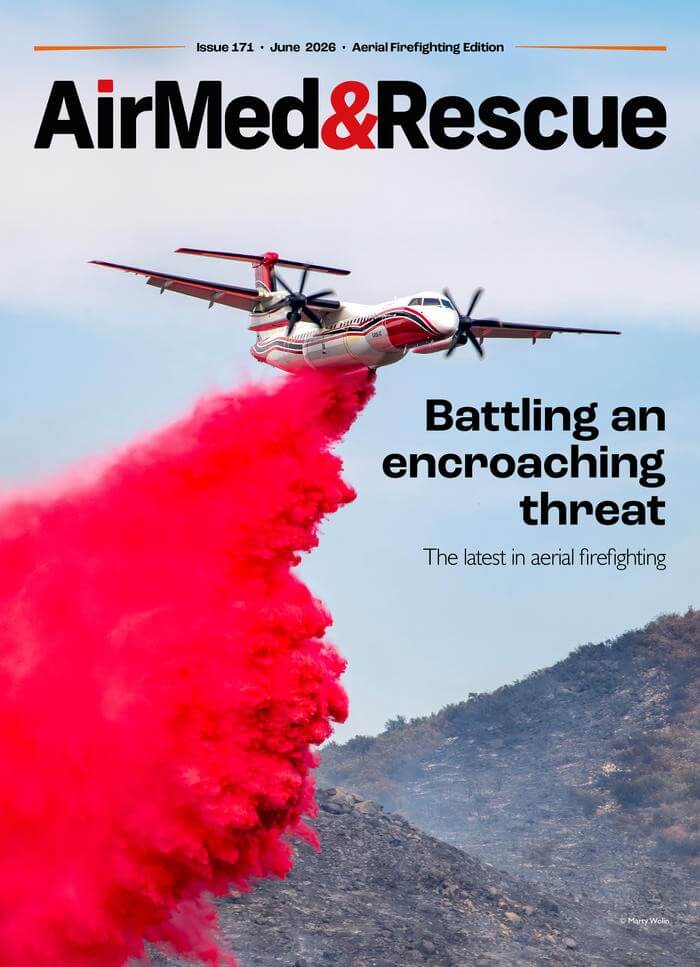
As the northern hemisphere heats up for another hot summer, I’m pleased to bring you the aerial firefighting edition of AirMed&Rescue. We have features on how climate change is accelerating firefighting technology; the improvements in Australian firefighting capacity; and getting ahead of wildfires before they become unmanageable.
Jon Adams
Jon is the Editor of AirMed&Rescue. He was previously Editor for Clinical Medicine and Future Healthcare Journal at the Royal College of Physicians before coming to AirMed&Rescue in November 2022. His favorite helicopter is the Army Air Corps Lynx that he saw his father fly while growing up on Army bases.