

Event review: Cologne welcomes the rotorcraft community

The 2025 edition of European Rotors took place in the ancient city of Cologne, Germany. At the Koelnmesse exhibition center, the conference and show hosted sessions, a symposium, demonstrations, deals and exhibits by and for attendees visiting from around the world. Jon Adams was one of those attendees
European Rotors 2025 covered four days of exhibitions, training, safety-focused discussions, and networking that formed the basis for the vertical lift community. The event was host to 5,478 attendees (a 17.5% increase from 2024) and showcased 266 exhibitors (of which AirMed&Rescue was one) and 23 aircraft in the Koelnmesse in Cologne.
As part of the show, the European Union Aviation Safety Agency (EASA) Rotorcraft Symposium brought together regulators, industry leaders, and technical experts for briefings on certification, the integration of new aircraft technologies, the rotorcraft safety landscape, operational challenges, cybersecurity, and mental health.
The Career Day was led by presentations from NHV Group, Hillsboro Heli Academy, and German Northrop Grumman subsidiary Litef, which briefed attendees on training pathways, global hiring needs, and emerging roles across the vertical takeoff and landing aircraft sector.
Next year’s event, the sixth edition of European Rotors, is scheduled for 30 November – 3 December 2026, at Eurexpo Lyon in Lyon, France.
There were plenty of opportunities for in-person networking this year, and the show was used to reveal new products, announce partnerships, and close deals.
Some of the highlights of the show are listed below.
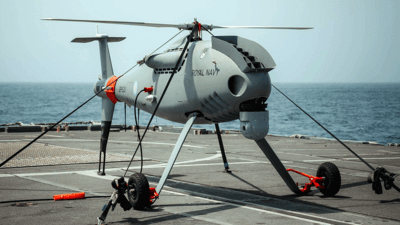
ADAC Luftrettung and DRF Luftrettung
EASA, Airbus Helicopters, and air rescue operators ADAC Luftrettung and DRF Luftrettung conducted a special live hoist demonstration over and on the River Rhine.
The coordinated rescue scenario, performed from a tourist boat operated by the KölnTourist ship company, demonstrated the lowering of rescuers and the subsequent pickup of the rescuers and patients. The two operators demonstrated precision flying, teamwork and trust, skills that make real-world missions possible in floods, road-traffic collisions, and medical emergencies.
“Helicopters are more than machines – they are lifelines,” said Stefano Fico, Head of the Rotorcraft and General Aviation Department at EASA. “Whether during the floods in the Ahr Valley in Germany, a mountain rescue in the Alps, or an urgent organ transport at night, rotorcraft connect people in crisis to help. Our role at EASA is to ensure these operations remain safe, sustainable, and available whenever and wherever they are needed.”
Whether during the floods in the Ahr Valley in Germany, a mountain rescue in the Alps, or an urgent organ transport at night, rotorcraft connect people in crisis to help
For DRF Luftrettung and ADAC Luftrettung, the demonstration was an opportunity to show the professionalism, training, and reliability that define Europe’s helicopter emergency medical services (HEMS). Both operators perform thousands of missions each year across Germany and beyond, supported by European-wide safety standards, modern aircraft, and highly skilled crews.
Airbus
Airbus Helicopters is now supporting the entire fleet of H145-family helicopters of the French Sécurité Civile and Gendarmerie Nationale, following a contract signed with France’s Aeronautical Maintenance Directorate (DMAé). This latest agreement covers 46 H145 helicopters (40 for the Sécurité Civile and six for the Gendarmerie Nationale) for up to 10 years and will be executed by Airbus Helicopters in a co-contracting partnership with Babcock.
This new contract for the H145, combined with a previous support agreement for its fleet of EC145 helicopters signed in May 2024, completes Airbus Helicopters’ support responsibility for all H145-family helicopters operated by these two key French public safety agencies. This unified support structure provides maximum fleet availability and operational efficiency for their critical missions.
“Ensuring the operational availability of our H145 fleet is critical for the public safety missions carried out by the Sécurité Civile and Gendarmerie Nationale,” said Captain Jean-Baptiste Fortin from the DMAé. “This comprehensive agreement provides the long-term visibility and industrial support necessary to guarantee their performance.”
The Securité Civile and Gendarmerie Nationale H145s are used for search and rescue (SAR), emergency medical services (EMS), firefighting, and law enforcement missions. The comprehensive contract covers a large range of support activities, including training, technical support, supply of spare parts, logistics solutions, technical data management, software support, and maintenance, repair and overhaul (MRO) activities.
Airbus and Østnes Helicopters announced a contract for 10 Airbus H125s. This order, when combined with four H125s already booked earlier in 2025, brings the total number of H125s ordered through Østnes Helicopters to 14 aircraft.
“Our customers require a rotorcraft that is not just reliable, but truly versatile, capable of performing everything from long-line utility work to passenger transport,” said Stine Østnes, Chief Sales Officer of Østnes Helicopters. “The H125 delivers on all fronts, and we see a continuous strong demand for the helicopter on the Nordic market. This strategic procurement ensures we can maintain short delivery times and offer our customers the best availability for the world’s most successful single-engine helicopter.”

Airmed World Congress 2026
The registration for AirMed World Congress 2026 officially launched during the European Rotors in Cologne.
Due to take place at the Bergson art center in Munich, Germany, from 16–18 September 2026, the AirMed World Congress is hosted by ADAC Luftrettung on behalf of the European HEMS & Air Ambulance Committee (EHAC), and will see over 800 international HEMS and air ambulance professionals in attendance for an exchange of knowledge, innovation, and collaboration.
The event program will include:
- Scientific sessions, interactive workshops, and simulation training
- Networking opportunities with peers and industry leaders
- Key topics addressing current challenges and innovations in HEMS and air ambulance.
There will also be expert-led sessions, workshops, and training designed for:
- Physicians, paramedics, pilots, and managers
- Experts in flight operations, emergency response, and aviation safety
- Industry representatives and regulatory authorities.
“In 2026 we will continue the worldwide dialogue among aeromedical operators, aircraft and equipment manufacturers, as well as regulators,” said Stefan Becker, President of EHAC. “While focusing on opportunities for the patients deriving from current research and new medical and aviation technologies, we will also discuss strategic aspects for regions and healthcare systems evaluating the potential of aeromedical services to enhance emergency medical care.”
Bell Textron
Bell Textron Prague signed a memorandum of understanding (MoU) with TEREM Holding Bulgaria regarding cooperation and mutual support for a fleet of six Bell 206 aircraft owned by the Bulgarian Air Force. Bell 206 helicopters are used for a variety of roles, including training and observation, with two of the aircraft in medevac configuration.
This MoU will enable the potential development of a solution for the Bulgarian Air Force to receive local customer service provided by TEREM, with aircraft parts and personnel support provided by Bell Textron Prague. The intended Bell support includes Part 145 maintenance services, Part 21 engineering and design, and, in close cooperation with TEREM Holding, heavy and complex maintenance, retrofits, modifications and upgrades, and customization. The solution is designed to provide the Bulgarian Air Force with the critical sustainment and future retrofit, modification and upgrade possibilities, as well as maintenance support.
“We are thrilled to explore this cooperative effort between Bell and TEREM Holding Bulgaria as we provide maintenance support to the Bulgarian Air Force,” said Vlastimil Cepicka, Manager of Bell Textron Prague.
Bell Textron announced that Slovakian-based HEMS operator Air Transport Europe had signed a purchase agreement for its fifth HEMS-configured Bell 429. With the purchase of its newest Bell 429, Air Transport Europe has become Europe’s largest Bell helicopter operator in the HEMS field.
“Bell is proud to support Air Transport Europe, a highly respected and long-standing EMS operator providing services across Slovakia and the Czech Republic,” said Robin Wendling, Managing Director of Europe, Bell. “Their continued trust in the Bell 429 reflects our shared commitment to safety, reliability, and excellence in every mission.”
Since 1991, Air Transport Europe has completed more than 33,691 HEMS missions, specializing in missions focused in remote locations. The HEMS company positions its headquarters in Poprad, a strategic location near the High Tatra Mountains in northern Slovakia. Since its inception, Air Transport Europe has expanded its operations to seven bases throughout Slovakia and two locations in neighboring Czech Republic.
The new aircraft will be customized to meet our exact medical and operational needs, ensuring optimal functionality for patient care and mission efficiency
“The addition of the Bell 429 underscores the company’s commitment to safety, innovation, and delivering reliable helicopter emergency service,” said Milan Hoholik, CEO of Air Transport Europe. “The new aircraft will be customized to meet our exact medical and operational needs, ensuring optimal functionality for patient care and mission efficiency.”
Blueberry Aviation
Blueberry exhibited at the show with a booth by the main entrance. The company offers a wide array of services to operators, owners, financiers, and investors in both the commercial aircraft and helicopter sectors, and recently released its 2025 HEMS Market Report outlining the state of the global HEMS market, excluding Russian or Chinese-made helicopters.
Some key findings of the report were that there was a net annual growth of 69 aircraft (+2.5%) in 2024, which was slightly more than but roughly equivalent to the 2.1% average annual growth rate in the previous 10 years; the HEMS market is mainly a replacement market, even if new aircraft are added every year, and the replacement strategies mostly take place in well-developed countries where medical and operational requirements are brought to higher standards and where operators can afford to bring their helicopter assets to higher technological levels; nearly half of the recent civil H145 deliveries went to the EMS market, making it by far the best seller in that segment; and 80% of the HEMS business opportunities are in the USA and in Europe. Interestingly, at country level, while the USA alone is practically half of the world fleet, the addition of 10 other independent countries accounts for 80% of the world HEMS fleet.
Additionally, a couple of remarkable points include that much of East Asia (China, Korea, Japan, Taiwan) is well equipped in this market, but other Asian countries, considering the size of their population and the level of economic development that they have now reached, have yet to develop a HEMS market or infrastructure; and that several European countries (like Germany, Switzerland, and Austria), and some in East Asia (like Korea and Japan) have reached maturity and a market saturation where newly built helicopters come as substitutes for older and outdated models.
Centum
Centum and HAT.tec have completed the integration of Centum’s Lifeseeker system into the HAT.tec mission system, marking a new milestone in airborne SAR technology.
This development allows operators to benefit from Lifeseeker’s unique capability to locate missing persons through their mobile phones, even in areas without network coverage.
By integrating Lifeseeker directly into its mission system, HAT.tec further enhances its technologies, enabling crews to visualize the full incident picture from the cockpit and to maintain a unified operational view. Moreover, the system seamlessly distributes real-time information from air platforms to patrol cars, teams, and command centers on the ground, facilitating the coordination of SAR mission across all units. The partnership underscores HAT.tec’s strength in connecting external systems into a fully interoperable, mission-ready solution.
“The integration of Lifeseeker into the HAT.tec mission system demonstrates our shared commitment to improving the tools available to rescue teams,” said Héctor Estévez, CEO of Centum. “We are very pleased to collaborate with HAT.tec in bringing this capability to operators.”
Dr Fabian Schmitt, Co-CEO of HAT.tec, added: “With Lifeseeker fully integrated into the unified operational picture provided by our SCALE software, operators benefit from faster, clearer, and more precise situational awareness – significantly enhancing the effectiveness of search and rescue operations. We value our partnership with Centum and are proud to deliver technologies that support those who protect and save lives.”
Entrol
Entrol announced it would build an S-64 flight training device (FTD) for Helicopter Express, boosting critical mission training. The simulator is equipped with the advanced ENVISION visual database and an ENWALL LED visual system, along with specialized mission training capabilities for firefighting, heavy-lift cargo, and more. It is scheduled for completion in October 2026, with an estimated delivery in February 2027.
The new S-64E FTD is engineered to provide a training experience that is highly specific to the demanding missions of Helicopter Express. The simulator will feature dedicated mission capabilities, including realistic scenarios for firefighting with a water cannon, snorkeling via sea snorkel, and intricate cargo handling with a rear-facing control station for the external crew.
The simulator will feature dedicated mission capabilities, including realistic scenarios for firefighting with a water cannon, snorkeling via sea snorkel, and intricate cargo handling with a rear-facing control station for the external crew
The cockpit is equipped with specialized ‘bubble windows’, a key feature of the real aircraft that provides pilots with a better view during heavy-lift operations. With night vision imaging system (NVIS) technology and an enclosed instructor operating station (IOS) with three screens, the simulator offers a completely immersive and controlled training environment.
This new sale is particularly significant as it represents the first S-64 FTD for Helicopter Express. It is the third S-64 FTD in the world, with all three units manufactured by entrol. This milestone reinforces the company’s unique expertise and leadership in providing advanced simulation solutions for this highly specialized heavy-lift helicopter. The simulator will be certified as a Federal Aviation Administration (FAA) FTD Level 7, the highest possible certification for an FTD without motion, ensuring that the training hours logged are officially recognized for a wide range of proficiency checks and courses.
Colby Martin, Heavy Lift Chief Pilot at Helicopter Express, said: “Helicopter Express is proud to announce a major step forward in pilot training and operational readiness with the addition of a cutting-edge Level 7 FTD simulator for the S-64 Air Crane – the first of its kind in the USA. This new capability will significantly enhance our ability to train and maintain mission-capable pilots, offering both initial and recurrent training specific to the Air Crane platform.”
Flightcell
To enhance support for its growing European customer base, Flightcell announced a partnership with Scandinavian Avionics to establish a service center in Europe. Initial capabilities will be available from early to mid-2026.
“By partnering with Scandinavian Avionics, repairs and upgrades to our products will be able to be released with EASA, FAA, and UK Civil Aviation Authority (CAA) authorized release certificates,” said John Wyllie, Flightcell CEO. “Scandinavian Avionics has extensive experience with Flightcell products and, being located at Billund Airport, a major logistical hub for Northern Europe, we see that this partnership will allow Flightcell to enhance our service to customers on the European market.”
“The strategic partnership between Scandinavian Avionics and Flightcell has been a success from the very beginning, where our turnkey offering, including Part 21J design and Part 145 installation services, combined with the versatile and flexible products from Flightcell, have been essential in the high population of Flightcell units installed in Europe and beyond,” stated Michael R Truelsen, CEO of Scandinavian Avionics. “Operators utilizing Flightcell products often operate in critical environments with high expectations for reliability and availability. This initiative to strengthen the support system for these products demonstrates Flightcell’s commitment to its customer base. We are extremely proud to be part of the future service setup of these great products.”

Helicopter Alliance
Helicopter Alliance and Skyrise Leasing announced the acquisition of 12 UH-60 Black Hawk helicopters, scheduled for delivery in 2026 and 2027.
Patrick Moulay, CEO and Co-Founder of Skyrise Leasing, said: “We see tremendous growth potential in the international aerial firefighting market with the UH-60 Black Hawk. Given the increasing threat of wildfires across Europe and beyond, the Black Hawk is the ideal platform to combat these disasters. Our mission-driven leasing model gives operators flexible, ready-to-deploy assets to support critical firefighting and emergency response missions.”
Aleš Kvídera, CEO of Helicopter Alliance, highlighted the strategic significance of the agreement: “Commercial operators have long sought a reliable Black Hawk leasing solution. Through this agreement with Skyrise Leasing, we are providing an immediate, full-service offering with UH-60 Black Hawks modernized by Ace Aeronautics, along with aftermarket support, sustainment, and training provided by European Air Services.”
Moulay said: “We are offering a solution that does not already exist on the market,” and added: “This is only the beginning.”
Česká letecká servisní (ČLS), part of the Helicopter Alliance holding, has been awarded both parts of the tender issued by the Czech Ministry of the Interior for the supply of medium-category helicopters. Representatives of ČLS and the Ministry of the Interior signed two framework agreements with a total value of up to 4.9 billion Czech koruna (approximately US$235 million) for the procurement of up to three modernized UH-60L Black Hawk helicopters and up to three factory-new Sikorsky S-70M Firehawks. These advanced helicopters will serve with the Czech Police in standard service roles, as well as support SAR operations and aerial firefighting efforts, enhancing the country’s aerial capabilities and public safety.
This agreement not only encompasses the delivery of the helicopters but also includes comprehensive training for aviation personnel and technicians, along with an initial package of spare parts and ground support equipment. Under the terms of the framework contracts, ČLS and its partners will deliver each helicopter within 36 months of order receipt.
Based on the first framework agreement regarding the ‘Development of the Czech rescEU capacity for aerial forest fire extinguishing using a medium helicopter – project A’ funded by the European Union, the ministry can order up to three S-70M helicopters in the Firehawk modification. “This model is primarily dedicated to aerial firefighting, but its firefighting equipment can be easily de-assembled,” explained Monika Kowalczyková, CEO of ČLS. She added: “This flexibility will allow the Czech Police, as the first European operators of the Firehawk, to also utilize the helicopter for regular police duties. The acquisition of all three aircraft will be financed by European Union funds, as part of the rescEU civil protection program. This investment aims to strengthen Europe’s aerial firefighting and emergency response capabilities, providing rapid support across member states when necessary.” Sikorsky subsidiary PZL Mielec, Poland, is the main partner and subcontractor for ČLS in this framework contract.
Black Hawk family helicopters are modified into Firehawk helicopters for aerial firefighting and disaster relief exclusively by US company United Rotorcraft, which is also one of ČLS’s subcontractors for helicopter deliveries to the Czech Ministry of the Interior. “We are excited that the Firehawk will have its first European customer. We look forward to working with ČLS to create the first helicopters of this type outside the USA,” said Larry Alexandre, President of United Rotorcraft.
Under the second framework agreement, the Czech Ministry of the Interior has the option to acquire up to three modernized UH-60L Black Hawk helicopters for the air service of the Police of the Czech Republic. These helicopters will be supplied by ČLS in cooperation with the American company Ace Aeronautics, which is also part of the Helicopter Alliance holding. The helicopters will be procured from surplus US armed forces assets and will undergo a comprehensive modernization process. This will include the installation of entirely new dynamic components such as engines and transmissions, as well as a modern digital glass cockpit. Although purchased in a standard service configuration, their equipment will feature Bambi Buckets for aerial firefighting operations.
HeliOperations
HeliOperations announced the continued expansion of its AW139 helicopter fleet, following a formal contract signing with Leonardo at the show. The agreement confirms the purchase of two additional AW139 aircraft – increasing its total AW139 fleet to six. This development underlines the aircraft’s central role in supporting specialist helicopter training and logistics services.
The new AW139 helicopters are scheduled to enter service in early 2027 and will strengthen operational capacity to serve both existing and future customers, including the German Navy (Bundesmarine) and the Royal Navy of the UK
The new AW139 helicopters are scheduled to enter service in early 2027 and will strengthen operational capacity to serve both existing and future customers, including the German Navy (Bundesmarine) and the Royal Navy of the UK. The AW139 is a proven and highly capable platform, ideally suited to the complex and demanding requirements of military and civilian SAR operations, maritime training, and logistical support.
This fleet expansion reinforces HeliOperations’ long-term commitment to operational excellence and continued growth.
Leonardo
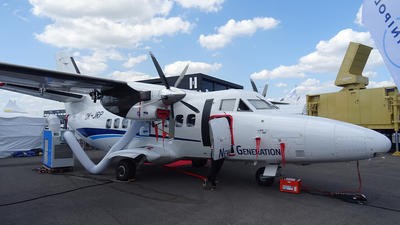
Leonardo announced two major steps to further expand the level of proximity and service to its growing customer base in Norway. On top of an existing fleet of over 25 helicopters of various types for EMS, public services, security, and long-range rescue duties, around 20 more aircraft in a mix of AW139 intermediate twins and AW189 super mediums for SAR and energy support missions are expected to be delivered and enter service by 2027 following contracts signed in 2024 and 2025, with a first batch of units already arrived in the country this summer.
In order to adequately sustain this growing presence and meet the evolving market requirements, Leonardo is establishing an AW189 Level D full flight simulator (FFS) and setting up enhanced localized logistics support.
The new simulator (the third FFS for the AW189 in Europe), fully designed, manufactured, owned and operated by Leonardo, will be established in Stavanger Airport, Sola, close to the AW101 FFS, and is expected to become operational by the end of 2027.
LICO
LICO Stahl- und Kunststofftechnik came to the show with examples of its ground handling and support equipment. On display were the ground handling wheels that have been supporting Airbus and Airbus customers on the H135 and H145 variants, and now also the new H140 platform.
Can Yilmaz, Customer Relationship Manager, explained that LICO was capable and keen to support Airbus, Airbus customers, and other original equipment manufacturers (OEMs) beyond the exhibited wheels, as LICO is a versatile company offering a wide range of solutions, including specialist and bespoke equipment and tools. The modular maintenance ladder was cited as a solution that was both eminently practical and compact, and the hangar taxi electric ground handling system also made moving aircraft quick and simple and helped save space. Head of Order Management Wolfram Schelzig also pointed out that the tools they make can massively improve operations, likening speedy servicing of an aircraft to a pitstop in an F1 race, explaining that LICO’s rotor mast replacement kit can reduce the turnaround time of a maintenance from 25 to five hours.
Expounding his desire to work with potential partners across the industry, Management CEO Thomas Kabilka said: “We want to create tools, [tools that are] safe, quick, and cost-efficient.”
Nova Systems
Nova Systems expands further into Europe with its first completion center for special mission aircraft in partnership with Air Lloyd Aerotechnics.
Air Lloyd Aerotechnics, an aerospace services company and EASA Part 145 Approved Maintenance Organisation based in Germany, will become the first Nova Systems approved completion center, enabling the integration and delivery of fully configured special mission aircraft platforms.
This partnership brings Nova Systems, a European provider of airborne mission systems, closer to its European customer base and enhances its ability to deliver bespoke, end-to-end solutions. The agreement is a significant milestone in Nova’s strategy to expand its special mission aircraft solutions offering across the continent.
“Air Lloyd brings over 62 years of experience in maintaining the airworthiness of helicopters and aircraft across Germany and Europe,” said Wilbert Schmitz, Managing Director of Air Lloyd Aerotechnics. “As an EASA Part-145 certified organization, we are proud to be recognized for our unwavering commitment to safety, quality, and precision. The new partnership with Nova Systems marks an exciting new chapter in Air Lloyd Aerotechnics’ 60-year history, which has been shaped by technical excellence, innovative strength, and a commitment to shaping the future of aviation.”

Reiser
Reiser Simulation and Training announced it would join forces with Leonardo to co-develop a new-generation AW139 helicopter FTD Level 3 simulator to meet specific civil-market requirements for high-fidelity, cost-effective solutions.
This collaboration allows the partners to offer one more opportunity for operators seeking an exceptional training experience at a fraction of the cost of other simulation levels and standards when not explicitly required. With this initiative, Reiser is also responding to specific needs set by HeliOperations of the UK, as an AW139 operator, by signing an MoU to deliver one of these systems.
These simulators will integrate Leonardo’s OEM-grade simulation fidelity with Reiser’s cutting-edge technology.
Tailored for civil operators managing small to mid-sized fleets, this innovative solution dramatically lowers the entry barrier to simulation-based training while preserving a high level of realism. It enables operators to establish in-house training capabilities, improve flight safety, and boost operational readiness, all with minimal upfront investment. This partnership reflects a shared commitment to driving innovation, expanding accessibility, and elevating safety standards in rotorcraft training. “For Reiser, this partnership and the development of another helicopter training device together with Leonardo marks an important milestone in the collaboration and extends the product portfolio by one of the most relevant helicopter types in the world,” said Reiser CEO Dr Johannes Hain.
Robinson Helicopter Company
Robinson attended the show with its European debut of the R88, following its unveiling at Verticon earlier in the year. David Smith, President and CEO of Robinson Helicopter Company, explained that the details from the launch in March had remained in place, and the R88, equipped with the 950shp class Arriel 2W engine, continued to be supported by the Safran Serenity package. Robinson is the only helicopter company offering the Serenity support package as standard.
The R88 is an all-new, highly configurable, multi-use, single-engine helicopter designed with a dual-pilot, eight-passenger cabin, expanding Robinson Helicopter’s product line and meeting diverse mission requirements. Safran has embedded its own engineering personnel at Robinson’s vertically integrated Torrance, California, manufacturing facility to speed up the collaboration and time to market. The two companies are working together closely to prepare for rigorous type certificate testing, designed to uphold the core values of reliability, dependability, and affordability.
In preparation for the high demand for the R88 (there were already 150 deposits for the craft before the show), Smith said that processes at the facility in Torrance had been streamlined and the manufacturing space had been enhanced and improved to increase efficiency, as well as new state-of-the-art machinery having been installed, which would ensure that production of the R88 would proceed smoothly.
Cédric Goubet, Safran Helicopter Engines CEO, said: “We are delighted to be able to present the R88 and its Arriel 2W engine to its future buyers in Europe today. This helicopter is set to be a major success in the light helicopter market. The Serenity service package will be a real asset to R88 users, providing them with guaranteed service from the moment the helicopter is delivered.”
Our objective is to deliver a highly capable, multi-mission utility helicopter that will disrupt and outperform the single-engine market in capability and affordability
Smith added: “Our objective is to deliver a highly capable, multi-mission utility helicopter that will disrupt and outperform the single-engine market in capability and affordability. Integrating the Arriel 2W engine through a continuous and closely managed engineering process since March 2025 ensures we are meeting that objective.”
Robinson also entered into a teaming agreement with Lake Fusion Technologies (LFT) to collaborate on the integration and potential market introduction of advanced obstacle detection systems aimed at enhancing flight safety.
The two companies plan to explore the integration of LFT’s laser-based obstacle warning system, SitAwS (Situational Awareness System). The technology is based on Luminar’s light detection and ranging (lidar) sensor technology and provides 3D detection of obstacles for a wide variety of vertical lift operations. SitAwS is designed to improve pilot situational awareness and reduce potential threats arising from poorly visible obstacles, particularly in challenging environments.
The integration effort is in an exploratory phase, with Robinson and LFT committing to a joint engineering and development schedule over the next 12–24 months. SitAwS is currently undergoing the EASA certification process.
Rotortrade
Rotortrade, the global helicopter dealership, announced that its MRO facility in Tallard, France, had been officially recognized as an Airbus Helicopters approved maintenance center.
The certification confirms that Rotortrade Tallard meets Airbus’s strict standards for infrastructure, processes, and personnel training. The approval covers maintenance center intermediate and operational-level activities, specifically for H120, AS350, H125, and H145 blades.
The approval also confirms the facility’s capability to handle a wide spectrum of maintenance tasks, ranging from routine checks to major inspections, overhauls, and structural repairs, as well as mission-specific upgrades and approved modifications.
“This recognition ensures our customers benefit from OEM-certified maintenance, faster turnaround times, and the highest levels of safety and reliability,” said Philippe Lubrano, CEO of Rotortrade.
This approval gives our MRO strong credibility and establishes a solid platform for future growth, while working hand in hand with Airbus to maintain the highest possible standards
“This approval gives our MRO strong credibility and establishes a solid platform for future growth, while working hand in hand with Airbus to maintain the highest possible standards,” added Gérard Pau, Head of Region Europe at Rotortrade.
This announcement came right on the heels of another, that Rotortrade had just launched its US MRO facility in Latrobe, Pennsylvania. This rapid growth and development was, said Lubrano, part of the Rotortrade strategy to provide a service locally in each region, mentioning that there were several opportunities in underserved regions across the globe that would benefit a service center modeled on the Tallard facility template. He said that hiring and supporting local teams in the facilities would ensure sustainability and efficiency. On his regular site visits, Lubrano insists that his engineers are brutally honest with the clients so that there are never any unexpected surprises, which results in fostering an open relationship and enhancing the brand as “people you can trust”, with a further emphasis on speed, as “we may not be the cheapest but we will be fair and will never make the client wait”.
The approval by Airbus of the Tallard facility is reflective of the market demands as explained in Rotortrade’s recent European Helicopter Market Report, which showed that Europe remains a mature but dynamic market, driven by strong activity particularly in HEMS, but also in firefighting, VIP/ corporate transport, wind energy, and parapublic operations. Western Europe maintains the largest share of demand, while Central and Eastern Europe are increasing fleet modernization efforts as OEM delivery delays and rising costs push operators toward high-quality pre-owned aircraft.
Of the US market, Lubrano said that there was strong growth there, particularly in the HEMS sector because it was being better recognized as an invaluable service with a necessity for very short aircraft-on-ground time.
Skytrac
Skytrac Systems and Airbus Helicopters announced the launch of a line-fit, real-time Helionix alerting solution that is available on H135, H145, H160, and H175 rotorcraft. This solution will allow operators to receive operational data from the helicopter while in-flight.
The solution, enabled by Skytrac’s ISAT- 200A, integrates with Airbus’s Helionix system to transmit the in-flight data captured in real time to ground crews via the Iridium network. Operators can receive real-time in-flight parameters, such as usage monitoring system (UMS) exceedances, helicopter tail number, position, time, speed, and altitude data, one engine inoperative (OEI) alerts, fuel level alerts, caution panel alerts, and chip detection occurrences, through this new solution. Optionally, these in-flight parameters can also be offloaded post-flight over the cellular network to streamline operations and avoid manual data offloading.
Skytrac’s solution enables operators of the H135, H145, H160, and H175 helicopters to meet IOGP 690 standards for offshore missions by seamlessly transmitting UMS data in real time. The same technology enhances various operations across the industry, including HEMS, by improving situational awareness and operational efficiency through real-time UMS visibility.

Smith Myers
Smith Myers showcased two major enhancements to its ARTEMIS Mobile Phone Detection & Location System (MPDLS) at the show: the integration of a Stand- Alone Public Warning System (PWS) and an enhanced SARLOC feature. Together, these innovations strengthen ARTEMIS as a comprehensive solution for SAR and disaster response operations worldwide, supporting operational effectiveness of ground- and air-based (crewed and uncrewed) assets.
The new Stand-Alone PWS enables emergency alerts to be broadcast directly to mobile phones – even in the absence of network connectivity – ensuring that critical, lifesaving messages reach affected populations in disaster zones and high-risk environments.
“This new capability transforms ARTEMIS from a detection and location tool into a full-spectrum emergency communications platform,” said Andrew Munro, Managing Director of Smith Myers. “In situations where infrastructure is compromised, ARTEMIS ensures that critical alerts still reach those who need them most.
”Public warning broadcasts provide instantaneous, reliable alerts that bypass network congestion and can reach both residents and transient populations such as tourists. The system operates without the need for personal data (e.g. phone numbers), offering a privacy-preserving and scalable solution for public safety agencies. The technology also reduces operational costs compared with traditional mass text messaging and can extend to other civic information services.
Also being showcased was the upgraded SARLOC capability within the ARTEMIS MPDLS, designed to enhance two-way interaction with individuals in distress. SARLOC enables operators to selectively contact registered mobile phones in the coverage area, asking if assistance is required and whether users consent to sharing their location with first responders.
Each selected phone receives an SMS message containing a secure link to a website hosted on the ARTEMIS system. Upon clicking the link, recipients can opt to share their GPS coordinates directly with the SAR team. Once consent is given, the smartphone activates its GPS and securely transmits updated coordinates to ARTEMIS every 30 seconds, providing real-time positional data to aircraft or command centers.
“Imagine a natural disaster – such as a flood, earthquake, or wildfire – where all mobile devices within a specific geofenced zone receive this message,” added Munro. “Only those who need help respond. With the SARLOC feature, individuals on the ground can share their precise location directly with SAR teams, entirely under their control. The net result being speedier, more reliable, and safer operations for persons in distress and first responders.”
TRU Simulation
Bell Textron announced that the TRU Simulation Bell 525 flight simulation training device at the Bell Training Academy had received its FAA Flight Simulation Interim Level C Training Device qualification.
“This milestone is a great step toward preparing our teams for future operations with the Bell 525 and future pilots for type rating,” said Mike Deslatte, Senior Vice President at Bell. “Now, our pilots can log Bell 525 flight hours and build on their aircraft knowledge from flight test operations.”
The simulator is equipped with high-fidelity visual systems, realistic cockpit environments, and advanced motion platforms, which collectively create a training experience that mirrors actual flight conditions.
TRU Simulation was also at European Rotors to talk about the Veris virtual reality simulator, which has recently been qualified as a Level 7 FTD by the FAA. The Veris is also designed to meet EASA FTD Level 3 standards, with EASA qualification expected soon.
Jerry Messaris, Vice President and General Manager of TRU Simulation, said that with the Bell 505 and recent Cessna Skyhawk models, they were looking to expand to include more platforms and advance beyond single-pilot operations. He said that a recent development of the technology from launch had now replaced the visible virtual hands, and trainees could now see their own hands in the mixed reality space, improving realism and increasing the immersion in the simulation. Messaris added that TRU was able to tailor the training environment for special missions, using the same technology found on the TRU Level D FFS, and enhance the training scenarios in the Veris simulator.
Varjo
Varjo, a developer of military-grade virtual and mixed reality (VR and MR) technology, together with Reiser Simulation and Training announced that the Reiser H145 D3 MR helicopter simulator had been pre-qualified by the German Federal Aviation Office (Luftfahrt-Bundesamt) under the EASA Special Conditions framework.
The simulator features a full-scale haptic cockpit paired with two fully instrumented extended reality (XR) crew stations, enabling highly realistic multi-crew training. Pilots can rehearse standard operating procedures (SOPs), crew resource management (CRM), checklist flows, and mutual cross-checks in fully immersive environments.
“Reiser’s XR simulator is integrated with Varjo’s latest XR-4 Series headsets that are purpose-built for mission-critical training,” said Valentin Storz, Chief Revenue Officer of Varjo. “Together, we are enabling pilot training to take a fundamental leap toward virtual environments and are proud to work with Reiser in driving the adoption of qualified, MR-based flight simulation training devices (FSTDs).”
This innovation underlines our mission to make the power of perception come alive in every training environment
“With this achievement, Reiser once again sets a new industry benchmark,” said Martin Keil, Reiser Chief Technical Officer. “We are the first to unite MR with a fully haptic cockpit, and to do so within a system that can be seamlessly operated in our proven full-flight simulators using roll-on/ roll-off cockpit technology. This innovation underlines our mission to make the power of perception come alive in every training environment.” Keil added: “Nobody has done this before, [it’s] a world first.”
The H145 D3 XR simulator now holds FTD Level 3 pre-qualification privileges. Full certification will follow completion of the required Flight Simulation Training Device Operator (FSTDO) qualification process and is expected in early 2026.
Storz said that Varjo’s goal was to expand in the civil market by improving simulation technology, making it “faster, smarter, and cheaper”. Advances have already been made with improvements to the eye-tracking software, and in development is the software for night vision operations. The eye-tracking technology improvements have created an opportunity to start developing analysis of cognitive load and to improve pilot training. Storz added that, as well as the headset technology being small and light, the weight was well balanced on the head, making it comfortable and stable during use. The size means that Varjo is able to supply vast quantities in a small box, permitting a group of 15–20 users to get in a single networked simulation all from one container.
He also said that the systems supplied by Varjo were essentially platform agnostic and were being used by pilot and rear-crew customers from various backgrounds, such as Patria Helicopters, TRU Simulation, entrol, Bluedrop Training & Simulation, and Leonardo, all of which were exhibiting at the show, as well as organizations like air medical simulation company BlueRoom Simulations. Storz concluded: “We want to help our partners make more cost-effective, high-quality trainers to address the pilot shortage.”
Web Manuals
Coming into the show, Web Manuals announced that the UK’s Essex & Herts Air Ambulance Trust (EHAAT) had implemented Web Manuals as part of a strategic shift towards operating under its own air operator certificate (AOC).
As one of the UK’s charity HEMS providers, EHAAT is among a growing number of air ambulance organizations choosing to manage aviation operations internally.
Web Manuals is playing a key role in enabling the transition, supporting compliance with UK CAA and EASA regulations through its unified digital document management system.
EHAAT uses Web Manuals to manage and distribute all aviation documentation, including operational manuals, aircraft flight manuals, and navigation system user guides. With around 15 readers – predominantly made up of pilots – the tool ensures vital flight information is accessible both in-flight via electronic flight bags and on the ground for training and reference.
EHAAT’s Chief Pilot, Andy Moorhouse, said: “Digitalization is crucial to our organization. Our medical teams already use digital systems to streamline patient care. With Web Manuals, our pilots now have the same level of efficiency when accessing operational procedures – whether in-flight or preparing for the next mission.”
Tobias Nilsson, Sales Manager – EMEA at Web Manuals, said: “As air ambulance services across Europe face increasingly complex regulatory environments, the need for user-friendly digital tools is more important than ever. Our platform is designed to support operators of all sizes, from large airlines to niche, mission-critical services such as HEMS. We’re proud to support the future of compliant flight operations across the world.”
Nilsson added that, as artificial intelligence use is increasing, Web Manuals is leveraging the technology to assist with searching and authoring, which is helping operators to navigate the increasingly complicated compliance landscape. He said that Web Manuals endeavored as part of its strategy to have a local presence in every region to help serve its customers with local talent that know the requirements of the area. Nilsson also told AirMed&Rescue that a core strength of the system was its ability and flexibility to be able to change documentation depending on shifting regulations and requirements, and to notify users of these changes, such as can be found in the fast-paced environment of special missions.
January 2026
Issue
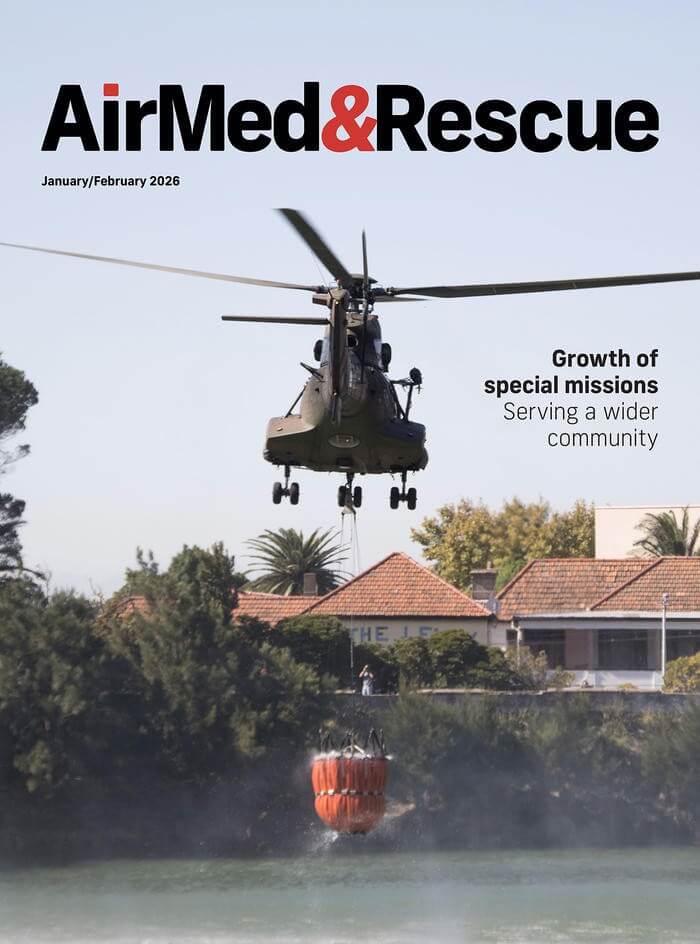
A new year and a new edition, and with it comes articles relating to special missions from all across the globe. We have features that look into the special missions in the Middle East and Africa; the benefits and differences associated with leasing helicopters; and the way that aerial firefighting is conducted at night.
Jon Adams
Jon is the Editor of AirMed&Rescue. He was previously Editor for Clinical Medicine and Future Healthcare Journal at the Royal College of Physicians before coming to AirMed&Rescue in November 2022. His favorite helicopter is the Army Air Corps Lynx that he saw his father fly while growing up on Army bases.