
Industry voice: Fixed-wing air medical safety: experience, technology, and the evolving risk profile

Terry Palmer details how the risks of fixed-wing air medical transfers need to be addressed in an evolving and complex industry to ensure safety for patients and crew alike
Not every air medical flight is urgent, but every flight carries risk.
Fixed-wing air ambulance operations often take place outside the public spotlight, flying longer distances between facilities, frequently at night, and under demanding operational schedules. These flights may not involve the same scene-response pressures as helicopter emergency medical services, but they operate within a different set of risks that deserve closer attention.
Recent high-profile accidents have renewed focus on fixed-wing air medical safety. While the data does not point to a clear increase in accident rates, these events highlight a more important issue. The contributing factors are well known, and many are persistent.
Understanding the risk profile
Fixed-wing air medical operations generally fall under Part 135 on-demand rules, which inherently carry more variability than Part 121 airline operations. Crews operate in changing environments, with variable schedules, mixed experience levels, and diverse aircraft configurations.
Accident data shows that fixed-wing operations account for a smaller percentage of total air medical accidents than rotorcraft. However, when events do occur, they often involve multiple fatalities and draw significant attention.
The perception of increased risk is not necessarily driven by frequency. It is driven by visibility and by the realization that many of the same contributing factors continue to appear.
Where the risk factors converge
National Transportation Safety Board (NTSB) data continues to point to human factors as the dominant contributor in Part 135 accidents, including fixed-wing air medical operations. That is not new. What deserves closer attention is how those human factors are presenting in today’s operating environment.
One of the most consistent findings is that total flight time is not a reliable predictor of safety. Time in type matters more.
Highly experienced pilots, including those with thousands of hours, remain vulnerable when transitioning to new aircraft or unfamiliar avionics. NTSB data and safety alerts show that accident risk decreases significantly after approximately 100 hours in a specific make and model. Below that threshold, pilots are more susceptible to loss of control, mode confusion, and procedural errors, particularly during high-workload phases such as departure and approach.
This is particularly relevant in fixed-wing air medical operations, where crews may rotate between aircraft, operate on-demand schedules, and encounter varying configurations across fleets.
Fatigue is another persistent factor. Longer duty periods, multiple legs, and night operations create cumulative fatigue that is often underestimated. Unlike scheduled airline operations, Part 135 environments can introduce subtle pressure to complete missions, even when conditions are less than ideal.
Fatigue is another persistent factor. Longer duty periods, multiple legs, and night operations create cumulative fatigue that is often underestimated
Weather continues to play a role, although differently than in rotorcraft operations. Fixed-wing aircraft are generally instrument flight rules (IFR) capable, but risk shifts toward decision-making during departure, approach, and alternates. Marginal weather, combined with fatigue and workload, creates conditions where small errors can escalate quickly.
Technology and its operational impact
One area receiving increased attention is the transition from analog to digital cockpits.
The NTSB’s 2010 safety study on glass cockpit implementation found no clear safety improvement and, in some cases, higher fatal accident rates compared to conventionally equipped aircraft. The issue was not the technology itself, but how it was integrated into operations.
Glass cockpits introduce higher cognitive workload, particularly during abnormal situations. Mode confusion, automation dependency, and difficulty maintaining proficiency have all been cited as contributing factors in accidents.
Glass cockpits introduce higher cognitive workload, particularly during abnormal situations. Mode confusion, automation dependency, and difficulty maintaining proficiency have all been cited as contributing factors in accidents
These challenges are directly relevant to fixed-wing air medical fleets, many of which include retrofitted aircraft combining older airframes with modern avionics. Without structured transition training and ongoing proficiency, the introduction of advanced systems can create new error pathways rather than eliminate risk.
Aircraft age and maintenance reality
Aircraft age is often discussed in the context of safety, but the data tells a more nuanced story.
There is no strong statistical link between aircraft age and fatal accident rates in well-maintained fleets. Many fixed-wing air medical aircraft fall into the ‘mature’ category, and when properly maintained, they can operate safely for decades.
However, age does place greater emphasis on maintenance discipline. Structural integrity, system reliability, and component tracking become more critical over time. Occasional NTSB cases involving structural or mechanical issues highlight that while not the primary driver, maintenance remains a contributing factor that cannot be overlooked.
From an insurance perspective, aircraft age still matters. Underwriters factor it into risk assessments, particularly when combined with utilization rates and loss history.
Operational gaps that persist
Beyond individual factors, many accidents point to broader operational gaps. These include inconsistent risk assessment, lack of structured operational control, and breakdowns in communication. In several Part 135 accident reviews, these organizational factors compounded pilot-level issues such as fatigue or unfamiliarity with equipment.
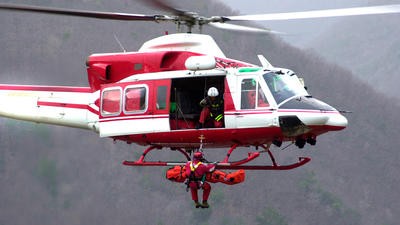
Another area that receives less attention but remains important is equipment management in the cabin. While unsecured medical equipment is not commonly cited as a primary cause in fixed-wing accidents, accreditation standards emphasize proper securing for a reason. In a survivable accident, cabin conditions and equipment restraint can influence outcomes for both crew and patients.
In a survivable accident, cabin conditions and equipment restraint can influence outcomes for both crew and patients
Lessons worth applying
The fixed-wing sector does not need to reinvent safety practices. Many of the solutions already exist.
Structured pre-flight risk assessment, formal safety management systems, and scenario-based training have proven effective in reducing risk in other segments of air medical operations. These tools provide a framework for more consistent decision-making and better identification of hazards before they lead to incidents.
Training remains a central element. Beyond technical proficiency, there is a growing need to focus on decision-making, workload management, and crew coordination. These are the areas where accidents tend to develop, and where targeted training can make the greatest impact.
Simulation, including the use of virtual and mixed reality, is expanding the ability to train for complex scenarios. However, these tools are most effective when combined with hands-on operational training that reinforces real-world performance and team interaction.

Insurance perspective and industry direction
From an insurance standpoint, fixed-wing air medical operations are evaluated based on how risk is managed, not just how many hours are flown.
Underwriters place significant emphasis on safety culture, structured training programs, and operational discipline. Pilot recency in type, not just total time, is a key factor. Operators that demonstrate consistent risk assessment practices, use of data monitoring, and proactive safety management are generally viewed
more favorably.
Aircraft age, maintenance history, and operational complexity also influence underwriting decisions. However, the common thread is clear. Organizations that actively manage risk tend to perform better, both operationally and financially.
Moving forward
Fixed-wing air medical operations remain a critical component of the healthcare system. The risks are not new, and, in many cases, they are well understood.
The challenge is not identifying the issues. It is addressing them consistently.
Improving time-in-type experience, strengthening transition training for modern avionics, managing fatigue, and reinforcing operational control are all areas where meaningful progress can be made.
As demand for air medical transport continues to grow, these factors will become increasingly important.
The goal is not simply to reduce accidents. It is to ensure that crews are prepared, systems are aligned, and decisions are made with a clear understanding of risk.
The goal is not simply to reduce accidents. It is to ensure that crews are prepared, systems are aligned, and decisions are made with a clear understanding of risk
In fixed-wing air medical operations, safety is rarely determined by a single factor. It is the result of how experience, technology, and operational discipline come together, often under pressure, and often in conditions that do not allow for error.
August 2026
Issue
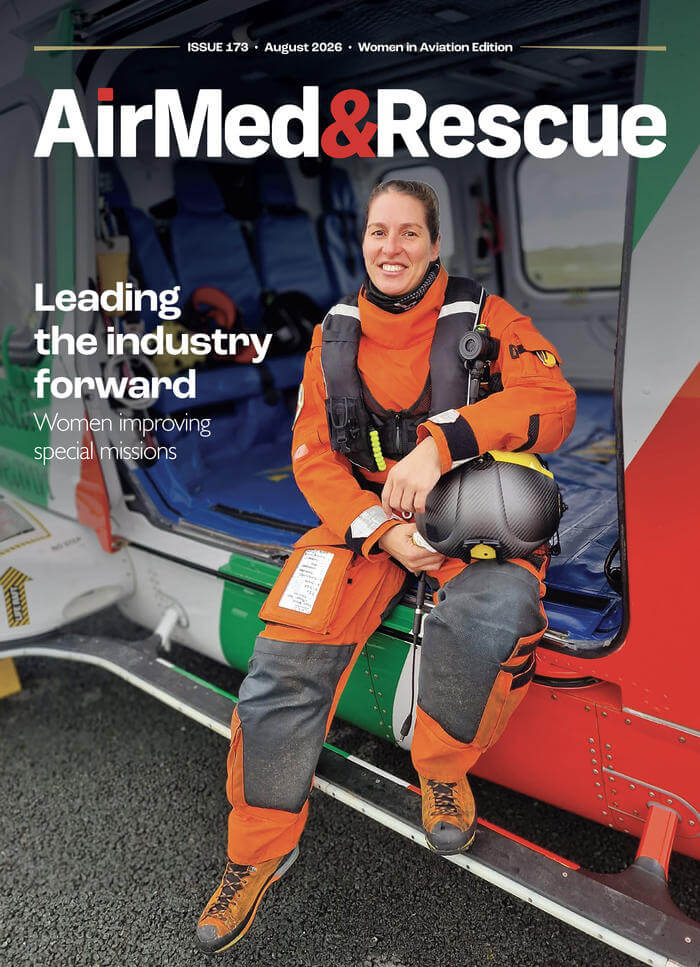
August is a special time of year, and it is my pleasure to present a special Women in Aviation edition of AirMed&Rescue. We have features on the importance of preventing and knowing the early signs of hoist spin; the leadership roles and the value of visibility of women in the industry; the inward-facing and external sensors improving special missions; and the variety and standards that flight suits have to meet.
Terry Palmer
Terry Palmer is a commercial pilot with over 30 years of experience in aviation safety and training and is the recipient of numerous international awards including HAI’s Agusta Westland Safety Award and the Airbus Jim Charlson Safety Award. Palmer is Board member and aviation advisor for the Commission on Accreditation of Medical Transport Services (CAMTS). In the last twenty years, Palmer worked closely with the associations and government agencies in the effort to raise the standard of training for helicopter operations. She has been instrumental in bringing flight simulation and training programs to the air medical industry.