
Industry voice: Mission-focused training: why collaboration matters in vertical lift operations

Terry Palmer explains how the VAI Training and Operations IAC is helping align training with real-world missions
Training for the missions crews actually fly
Night operations. Weather deteriorating. A confined landing zone with obstacles that were not visible on approach. A rapidly evolving mission that requires decisions now, not after the aircraft is secured.
Across air medical, search and rescue (SAR), and public safety operations, missions rarely unfold exactly as planned. Crews operate in dynamic environments marked by time pressure, degraded visibility, complex terrain, and serious consequences for error. In these moments, training is not about compliance or currency, it is about preparation.
As mission profiles continue to expand and operational complexity increases, the vertical lift industry is reexamining how training is designed, delivered, and evaluated. Increasingly, operators are asking a fundamental question: does our training truly reflect the missions we fly?
That question has driven a growing emphasis on mission-specific training, training that integrates aircraft handling with decision-making, crew coordination, risk management, and operational context. It represents a shift away from isolated task proficiency toward training that prepares crews for the realities they encounter in the field.
From generic proficiency to mission-focused readiness
Traditional training models have long provided a foundation for safe operations, but many are strained by today’s operating environment. Crews may demonstrate technical competence and meet regulatory requirements, yet still find themselves underprepared for low-frequency, high-consequence events such as inadvertent entry into instrument meteorological conditions (IIMC), complex scene responses, or rapidly changing mission priorities.
Mission-focused readiness helps bridge this gap. It emphasizes scenario-based learning tied to actual operational profiles, where technical skills are practiced alongside judgment, communication, and workload management. For air medical and public safety crews in particular, this approach reflects how missions unfold in real time, often under pressure, with incomplete information and limited margins.
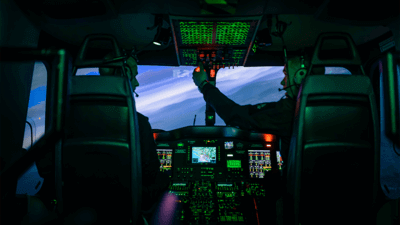
Simulation technology has become a critical enabler of this shift. Modern flight training devices (FTDs) and full-flight simulators allow crews to train in realistic cockpit environments while safely integrating mission-driven variables such as weather deterioration, system malfunctions, airspace complexity, and time constraints. These tools support repetition, error management, and structured debriefing, elements that are difficult to achieve consistently during live-flight training.
These tools support repetition, error management, and structured debriefing, elements that are difficult to achieve consistently during live-flight training
At the same time, operators are recognizing the continued importance of basic skills refreshers. Core competencies such as instrument scan, navigation discipline, stabilized approaches, power management, and crew communication form the backbone of safe operations and can erode without deliberate reinforcement. When foundational skills are routinely refreshed, advanced and mission-specific training becomes more effective and consistent across experience levels.
Turning operational experience into training resources
Ensuring that training reflects real-world operations requires more than individual effort. It requires collaboration across missions, disciplines, and regions so that training resources evolve alongside operational demands.
To support this process, Vertical Aviation International (VAI) relies on Industry Advisory Councils to provide operational insight and subject-matter expertise. Among them, the VAI Training and Operations Industry Advisory Council plays a key role in shaping how training resources align with modern vertical lift missions.
The council does not deliver training or establish policy. Instead, it focuses on identifying emerging training needs and recommending topics and formats that reflect operational reality. Members represent a wide range of mission profiles, including air medical, public safety, SAR, offshore, and utility operations, and contribute perspectives grounded in firsthand experience.
This input helps guide training resources offered through major industry events and year-round education platforms. Just as importantly, the council advises VAI on training recommendations for regulatory agencies to consider, particularly as simulator technology advances and mission profiles continue to expand. By aligning training recommendations with current capabilities, such as advanced simulation, enhanced visual systems, and mission-specific scenarios, the council helps support informed discussions around how training credit and qualification pathways may evolve.
By aligning training recommendations with current capabilities, such as advanced simulation, enhanced visual systems, and mission-specific scenarios, the council helps support informed discussions around how training credit and qualification pathways may evolve
International participation further strengthens this effort. Global perspectives help ensure that training recommendations balance regional operational differences with widely recognized industry practices, supporting consistency while respecting local realities.
Simulation as a mission-critical training tool
Simulation has moved well beyond its role as a supplemental training option. Today, FTDs and simulators are essential tools for preparing crews to manage the complexity of modern vertical lift operations.
Advanced simulation platforms allow crews to train in highly realistic mission environments, supporting instrument proficiency, emergency procedures, crew coordination, and operational decision-making. Improvements in visual systems now enable training for confined landing zones, urban environments, offshore platforms, mountainous terrain, and degraded visual environments with a level of realism that supports visual cue recognition and spatial awareness.
Importantly, some simulators now support hoist and long-line training, representing a significant advancement for rescue, utility, and specialized response missions. These capabilities allow crews to practice coordination, external reference management, crew communication, and procedural discipline in a controlled environment. Repetitive practice of complex hoist and external-load scenarios helps develop habits and judgment that transfer directly to live operations without exposing personnel or equipment to unnecessary risk.
These capabilities allow crews to practice coordination, external reference management, crew communication, and procedural discipline in a controlled environment
Mixed reality and other emerging technologies further enhance simulation’s value by blending physical cockpit elements with digital mission environments. These tools allow training scenarios to be tailored closely to actual operational profiles rather than generic constructs, supporting more effective mission-specific preparation.
Simulation also provides a powerful means of training for low-frequency, high-consequence events, such as IIMC, critical system failures, or rapidly evolving mission changes that are difficult or unsafe to replicate in the aircraft. When used thoughtfully, simulation complements live-flight training by enabling repetition, structured evaluation, and meaningful debriefing.
The Training and Operations IAC includes members with extensive experience in simulation development and training technology. Their participation helps ensure that training discussions reflect both operational needs and the realistic capabilities of modern training devices, strengthening alignment between mission demands and available tools.

The value of instructors who fly the mission
Technology and training devices alone do not produce effective training. The quality of instruction, particularly the relevance of an instructor’s operational experience, remains a defining factor in training outcomes.
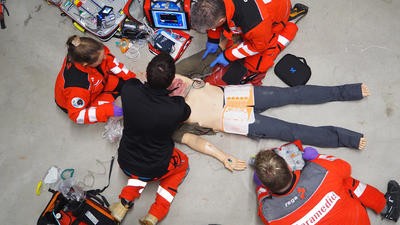
Across air medical, SAR, and public safety operations, the most effective training is often delivered by instructors who actively participate in the missions they teach. Instructors who fly operational missions, work hoists and long lines, coordinate rescue swimmers, or manage tactical operations bring practical context that cannot be replicated through procedural knowledge alone.
Across air medical, SAR, and public safety operations, the most effective training is often delivered by instructors who actively participate in the missions they teach
These instructors understand how decisions are made under pressure, how crews adapt when conditions change, and how small deviations can have outsized consequences. Their insight allows training scenarios, whether conducted in aircraft or in simulation, to reflect not just what should be done, but how and why it is done in real operational environments.
When paired with modern simulation and mission-specific scenarios, operationally experienced instructors add depth and credibility to training. They help crews recognize subtle cues, anticipate challenges, and develop judgment that transfers directly to live missions, particularly during complex operations such as hoist rescues, maritime response, confined-area insertions, and tactical coordination between air and ground units.
Discussions within the Training and Operations IAC emphasize the importance of instructional experience alongside technology. Ensuring that training resources reflect both advanced tools and real-world operational insight helps support training that is not only technically accurate, but operationally relevant.
Access, training credits, and practical implementation
Even the most effective training concepts must account for operational realities. Staffing constraints, aircraft availability, budgets, and schedules all influence how training can be delivered. Blended training models that combine in-person instruction, simulation, and online learning help extend access while maintaining high standards.
Discussions within the Training and Operations IAC also consider how training modalities align with training credit recommendations, particularly as simulation capabilities continue to expand. Thoughtful use of FTDs, simulators, and technology-enabled learning can help operators meet training objectives efficiently while supporting consistent proficiency and safety outcomes.
Participation in the Training and Operations IAC is open to all VAI members, reinforcing the collaborative nature of its work and encouraging broad industry engagement. This openness helps ensure that training resources continue to reflect diverse operational perspectives rather than a single mission or region.
Preparing crews for the missions ahead
The vertical lift industry will continue to evolve, bringing new technology, expanded mission sets, and increasing operational complexity. Training must evolve alongside it, remaining relevant, adaptable, and grounded in real-world experience.
Mission-specific training, supported by advanced simulation, enhanced visual systems, emerging technologies, and instructors who actively fly the mission, offers a practical path forward. When training reflects how missions actually unfold, it strengthens not only technical proficiency, but also judgment, teamwork, and organizational safety culture.
Mission-specific training, supported by advanced simulation, enhanced visual systems, emerging technologies, and instructors who actively fly the mission, offers a practical path forward
Collaboration remains central to this effort. Through shared expertise and open participation, the Training and Operations IAC helps ensure that training resources remain aligned with the realities crews face every day. That collaboration will be visible during Verticon, where daily presentations on training initiatives, along with courses and panel discussions led by council members, provide opportunities for operators to engage directly with current training concepts and emerging tools.
Ultimately, the goal is not to define a single approach to training, but to support a training ecosystem that prepares crews for the missions they fly, safely, consistently, and with confidence.
March 2026
Issue
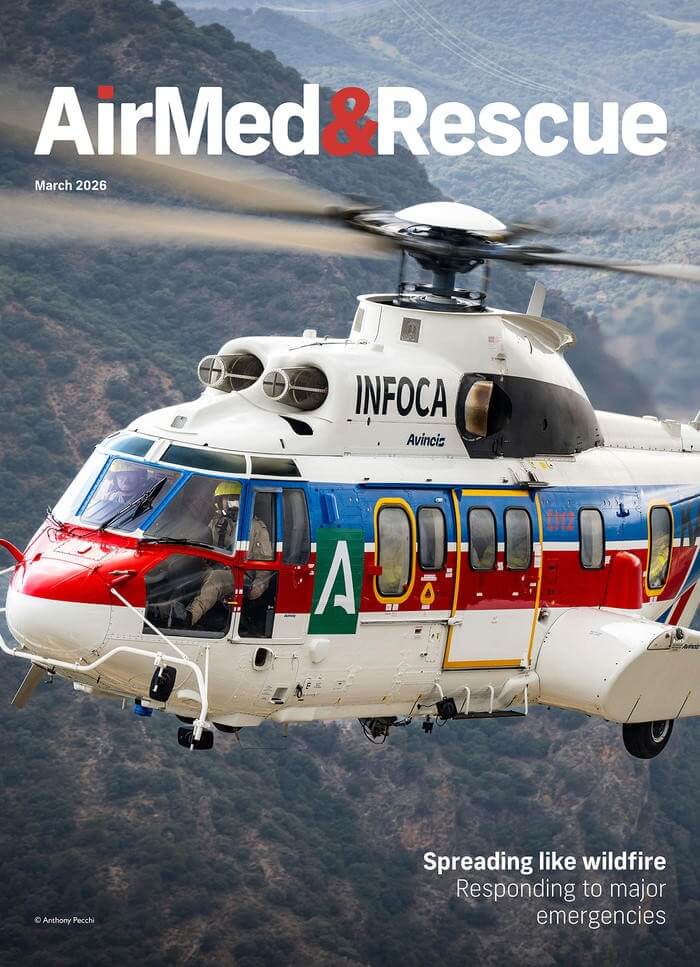
This edition is bursting at the seams with articles from all corners of the special missions sector. We have features on the California wildfires that ravaged the state last year, what the cost–benefit analysis looks like for single-engine rotorcraft and autorotations, how the mission dictates the modification needed to the platform, and what can be done to further prevent the problems associated with inadvertent entry into instrument meteorological conditions.
Terry Palmer
Terry Palmer is a commercial pilot with over 30 years of experience in aviation safety and training and is the recipient of numerous international awards including HAI’s Agusta Westland Safety Award and the Airbus Jim Charlson Safety Award. Palmer is Board member and aviation advisor for the Commission on Accreditation of Medical Transport Services (CAMTS). In the last twenty years, Palmer worked closely with the associations and government agencies in the effort to raise the standard of training for helicopter operations. She has been instrumental in bringing flight simulation and training programs to the air medical industry.