

Intelligent firefighting

Amid season after season of severe wildfires, firefighting agencies around the world are pinning hopes on emerging technologies, including artificial intelligence. Robin Gauldie investigates
In Europe, more than one million hectares had burned in wildfires by the end of August 2025, mainly across Mediterranean and Balkan countries – around three times the annual average between 2006 and 2024. In the USA, the National Interagency Fire Center reported that by August the country had experienced more wildfire outbreaks than in any year since 2020. More than 500,000ac have been devastated so far this year in California alone. Many fire chiefs are advocating a shift from old-school reactive fire response to a more proactive model, enabled by such tools as artificial intelligence (AI)-enabled cameras and sensors for detection, live tracking, and monitoring of outbreaks.
Cost is an obstacle to the wider uptake of such technology, and many firefighting budgets are geared towards reacting to fires rather than rapid pre-emptive response. Estimated costs of cutting-edge AI equipment, including AI-piloted drones and helicopters, are hazy, but will likely run into millions of dollars for fire departments just in the USA.
To put that in context, though, the wave of wildfires across Los Angeles and southern California in January this year caused damage estimated at more than $250 billion, according to the LA Times, and frontline firefighters like Jon Heggie, a battalion chief at CAL FIRE, the California state firefighting agency, argue that AI-enabled technology repays investment by enabling damage mitigation.
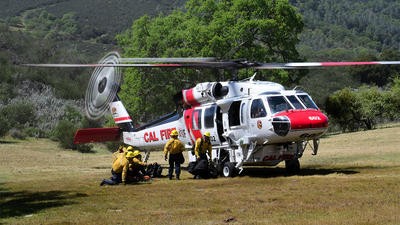
“It enables us to better utilize our resources and be more efficient and effective with our choice of resources and where we use them,” Heggie said of the risk mitigation technology from Spanish developer Technosylva that CAL FIRE has adopted.
“It allows us to use our ground and air assets more effectively by understanding where the values at risk are and where the population base is. It really has saved lives,” Heggie said.
His colleague Geoff Marshall, CAL FIRE’s Chief of Predictive Services, agreed.
“One of the layers that we can pull in [using Technosylva] is that housing layer and population layer,” he said. “So, if we do have a fire, we can actually see where those homes are in order to protect people’s homes and evacuate them out of the area.”
Dan Munsey, Chief of the San Bernardino County Fire Protection District, is another firefighter who argues strongly for investment in innovation. Fire agencies need to reconsider infrastructure, budgets and training alongside installation of AI-powered cameras and drones, satellite dishes, and autonomous helicopters, he said.
Autonomous aircraft – both crewed and uncrewed – can increase flexibility and capacity for on-the-ground incident commanders
“Autonomous aircraft – both crewed and uncrewed – can increase flexibility and capacity for on-the-ground incident commanders. The only way to keep our communities safe is to embrace technology and innovation,” Munsey said.
Regional approaches
With the world’s largest aerial firefighting fleet, CAL FIRE is an acknowledged global leader in using innovative technology such as AI and satellites for wildfire detection and response. Since 2023, the agency has built up a statewide network of more than 1,000 AI-enabled cameras.
The current fleet of more than 60 of its own aircraft ranges from Bell UH-1H and Sikorsky S-70i rotorcraft to North America Rockwell OV-10 Bronco tactical fixed-wing aircraft, and Grumman S-2T and Lockheed Martin C-130 airtankers, plus (in 2025) a further 18 helicopters and six fixed-wing aircraft on exclusive contract. The agency has also inked a five-year deal with Sikorsky and AI developer Rain to develop autonomous technology for the S-70i Firehawk, CAL FIRE’s main helicopter asset, and has partnered with the University of California San Diego’s ALERTCalifornia system. Launched in 2023, ALERTCalifornia manages a ‘camera quilt’ of more than 1,200 high-definition cameras deployed across California for live monitoring of active wildfires, with a range of up to 60 miles on a clear day and 120 miles on a clear night, using near-infrared night vision.
Some British regional services are looking to new equipment such as self-coordinating drone swarms to leverage their capabilities
Fire chiefs in the UK, which has no national service to combat wildfires, and where aerial firefighting is the responsibility of regional fire services, may envy both CAL Fire and Britain’s European Union (EU) neighbors. The UK is less well equipped with fire suppression aircraft than many European countries, but some British regional services are looking to new equipment such as self-coordinating drone swarms to leverage their capabilities. Lancashire Fire and Rescue Service, for example, has recently tested the effectiveness of such technology, developed in partnership with AI and robotics scientists and with the British autonomous drone company Windracers, in early detection and suppression of wildfires.

In contrast with the UK’s ad hoc approach, the EU’s response has been strategic. As of August 2025, 38 planes and 20 helicopters were deployed on missions across 11 countries through the EU’s Emergency Response Coordination Centre (ERCC) under the EU Civil Protection Mechanism, 45 through rescEU and 13 as bilateral offers between the affected countries, a European Commission spokesperson reported.
The ERCC works closely with the European Commission’s Joint Research Centre and with its Copernicus Emergency Management Service (CEMS) and the European Centre for Medium-Range Weather Forecasts (ECMWF), which provides daily fire danger forecasts up to 15 days ahead and feeds into the European Forest Fire Information System (EFFIS) to provide firefighting agencies with near real-time, rapid mapping of active fires, according to a European Commission spokesperson.
“EFFIS consists of a modular web geographic information system that provides near real-time and historical information on forest fires and forest fire regimes in the European, Middle Eastern and North African regions,” the spokesperson stated. “Fire monitoring in EFFIS comprises the full fire cycle, providing information on the pre-fire conditions and assessing post-fire damages. At the core of EFFIS lies the Fire Database, which includes detailed information of individual fire records provided by the EFFIS network countries.”
Satellite imagery and other geospatial data is used to map burned areas, combining automatic data extraction using a combination of bands in the near infrared, with manual checking of pre-event images.
Satellite imagery and other geospatial data is used to map burned areas, combining automatic data extraction using a combination of bands in the near infrared, with manual checking of pre-event images
As yet, EFFIS does not employ AI to model detected fires, but the spokesperson said there was “work on track” to enable it to use AI to model fire behavior and evolution.
Ahead of the 2025 European wildfire season, the Commission pre-positioned firefighters and aircraft from 14 European countries across France, Greece, Portugal, Spain, and Italy to boost the number of firefighters at national level, the spokesperson said.
“We also have a fleet of 22 planes and four helicopters across 10 member states, composed of Canadairs, Air Tractors, Fire Bosses, Super Pumas and Black Hawks, all coordinated and co-financed through the EU Civil Protection Mechanism.”

Innovative suppliers
One supplier responding to the needs of firefighting entities in the European theatre is De Havilland Canada (DHC), which in May launched a wholly owned Greek subsidiary, De Havilland Canada Hellas, which will also function as a strategic base for DHC’s regional operations.
“This investment will allow us to better address the specific needs of our customers in the region, delivering faster response times, improved parts availability, and personalized support,” said the company’s Vice President of Programs and Business Improvement, Jean-Philippe Côté.
Greece is greatly expanding its rotorcraft fire fleet, with eight Airbus H215 helicopters to be delivered from 2026.
While European countries can draw on the technological resources of the ERCC and Copernicus as well as rescEU aircraft, US firefighters looking to adopt cutting-edge AI and sensor tech have a growing range of innovative suppliers to choose from. The number of wildfire tech companies has mushroomed in recent years, from no more than a handful five years ago to around 400 now, according to Bill Clerico, Managing Partner of Convective Capital, a venture capital firm that funds firefighting tech and AI startups.
One of these is Pano AI, which uses deep learning and computer vision to detect, verify, and classify wildfires in real time, providing instant visual confirmation and triage tools to enable faster wildfire response.
San Francisco-based Pano has already built more than 100 AI-enabled fire lookouts for use by firefighters in six wildfire-prone US states, including Colorado, where the Aspen Fire Protection District (AFPD) was the first adopter of Pano AI’s camera system.
Pano’s AI-enabled camera systems detect and analyze smoke or heat shimmer to locate an outbreak, then triangulate its coordinates to vector in airborne suppression.
Pano’s AI stations each cost around $50,000 per year to operate, but outgoing AFPD Fire Chief Rick Balentine said that their effectiveness in speeding up response to a burn justified the budget.
“Early detection and situational awareness give us what we need for smarter, faster decision-making. The amount of time Pano can save can make a difference whether that fire gets big or not,” Balentine said.
Early detection and situational awareness give us what we need for smarter, faster decision-making. The amount of time Pano can save can make a difference whether that fire gets big or not
Now, Aspen is considering complementing Pano’s AI camera network with AI-piloted drones. The AFPD already uses conventional drones without AI for close-up wildfire inspection.
Pano’s systems have also found favor in South Australia, where the Green Triangle Fire Alliance, a consortium of commercial forestry firms, has installed eight tower-mounted AI cameras to cover 130,000ha of forest across the state.
Fire detection in the southern hemisphere
Other Australian fire services are also embracing AI-empowered tech.
The New South Wales Rural Fire Service (NSW RFS) claims its data-crunching fire analysis software, launched in 2023, is a world first. Athena speeds up the prediction of fire behavior by feeding insights from live feeds, mapping, weather reports, and satellites direct to incident managers on the ground.
Athena’s algorithms assess live data from the (Australian) Bureau of Meteorology, satellite tracking, mapping, fuel loads, and known fire behavior patterns to deliver immediate insights to fire controllers in emergency operations centers.
NSW RFS is also equipping its fire trucks with Starlink satellite communications systems to deliver information from Athena and other systems live to firefighters, and is pioneering satellite-based optical recognition technology for early fire detection to help prioritize the protection and evacuation of communities threatened by outbreaks.
Victoria, another Australian state, is expanding its initial network of seven AI-powered high-resolution cameras positioned on top of fire towers across the state.
“Their algorithms are designed to look for smoke,” explained Chris Hardman, Chief Fire Officer at Forest Fire Management Victoria. “They can track and give us a GPS location as to where that smoke may be, and it’s at that stage then we will deploy an aircraft or confirm the sighting from other fire towers or other opportunities.
They can track and give us a GPS location as to where that smoke may be, and it’s at that stage then we will deploy an aircraft or confirm the sighting from other fire towers or other opportunities
“Early detection of bushfires is critical. That is why this fire season (2025/26) we will expand our trial of artificial intelligence and new technologies so we can quickly detect and suppress bushfires. For phase three we will use 10 additional cameras – two on externally owned communication towers – bringing the number of cameras
in use to 28.
“The extra cameras and trial of third-party sites gives us the best opportunity to suppress bushfires while they are still small and before they impact communities and the things they care about and depend on.
“Technology has done nothing but support and improve the way we fight fires in Australia, and artificial intelligence – I think it’s got enormous potential,” he concluded.
Elsewhere in the southern hemisphere, Brazil is investing heavily in new fire prevention and management technologies with initiatives such as Prevfogo, a program managed by the Brazilian Institute of Environment and Renewable Natural Resources (IBAMA), which integrates AI and satellite fire detection to predict and monitor outbreaks; and AI-powered platforms such as PrevisIA, developed by Imazon, a Brazilian research institute. Fire agencies in Brazil’s Acre and Rondônia states are trialing autonomous drones to fight incipient fire outbreaks.
Sharing of resources
Worldwide, a trend towards the international sharing of wildfire-mitigation resources such as AI-enabled sensor technology and satellite imaging is emerging. EU firefighting resources have recently been deployed not only within the EU and neighboring Albania but also further afield to Syria and Israel. Since 2023, Koç Holding, part of Turkey’s largest industrial and services group, has offered to share algorithms and source codes used in its AI-based FireAId initiative with other countries vulnerable to wildfires. FireAId’s AI-powered fire risk map is claimed to be able to predict an outbreak 24 hours in advance with 80% accuracy. It is a non-commercial project, emphasized Koç CEO Levent Çakıroğlu.
“We are eager to work with data providers and piloting partners all over the world, if we can bring together and orchestrate the technological know-how of the private sector, the experience of the public sector, and the knowledge of academia and expand international cooperation,” Çakıroğlu said.
Such tech-sharing initiatives may help to bring down the cost of investing in AI-enabled firefighting tech. As the technology develops, the price tag will also inevitably fall. Meanwhile, the aerial firefighting community is already convinced of its value. Expect to see rapid uptake and deployment.
December 2025
Issue
Our December edition rounds off the year with articles relating to special missions from around the world. We have features that look into the upgrades that have been integrated into special missions platforms to improve operations; the technology used to alert and support aerial firefighting tactics, helping attack fires quicker and more strategically; the simulators that are making training for special missions better and safer; and the latest updates and announcements of digital and physical technology in the last year.
Robin Gauldie
Robin Gauldie is a former editor of Travel Trade Gazette and other travel and tourism industry titles. Now a freelance journalist specialising in travel, aviation and tourism, he writes for a variety of international consumer and business publications including International Travel & Insurance Journal, AirMed and Rescue, and Financial World.