
Interview: Devoted to lifelong learning

US Air Force veteran and nurse Mariah Rosensweet has multiple specialty certifications in emergency, pediatric, trauma, flight, and critical care. She tells Mandy Langfield about the importance of education and certification in optimizing patient care
We’ll start with your current role in nursing – where are you working, and in what capacity?
I am currently working as an Emergency Department Nurse at a Level II Trauma Center and preparing to sit for Nurse Practitioner boards after just graduating with a Family Nurse Practitioner degree.
What does a typical day look like for you?
Balancing a school and work schedule for me the last few years means that my schedule has a great deal of variability. Regardless of the setting or day, though, it always includes gratitude and constantly striving to be in the best spiritual, mental, and physical health that I can be, not only for myself, but also for my patients.
Could you give us a quick rundown of your career in healthcare?
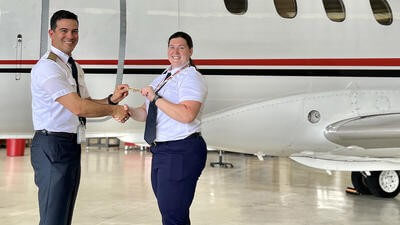
After getting my Bachelor of Science in Nursing (BSN), I worked as a civilian nurse for five years before joining the US Air Force. This civilian time was mainly concentrated in emergency departments, and I had the privilege to work as a travel nurse in various locations across the country. In the Air Force, I was an emergency/trauma nurse, working in emergency rooms in military treatment facilities while stateside. I was also trained as a Critical Care Air Transport Team (CCATT) and Tactical Critical Care Evacuation Team (TCCET) nurse, and functioned in this capacity while deployed. I obtained a Master of Arts in Global Studies while in the Air Force to enhance my knowledge of global communities, to have an enhanced global perspective, and be able to better serve patients from all nationalities. Then, while transitioning out of the military, I started working on a Family Nurse Practitioner degree with a minor in Integrative Care, as I hope to now be on the other end of medicine, optimizing patients’ lives with a holistic and functional approach to care.
How have each of your previous appointments contributed to your professional development and current role?
Through various positions and appointments in my career, I have been fortunate to learn from senior and fellow nurses, as well as other colleagues. I have found that you can take something away developmentally from every professional encounter, regardless of your position or someone else’s, when you have a learning mindset.
You had a very distinguished career in the US Air Force as a Trauma Certified Registered Nurse (TCRN), completing over 103 combat hours and delivering lifesaving trauma care to patients. Looking back, how do you think your time in the military changed you and your approach to trauma care?
My time in the military challenged me and forced me to grow as a leader in ways that I do not think I would have experienced in the civilian world as early in my career. It also gave me professional experiences, including those downrange, that will forever shape my world view. My military experience, being at the tip of the spear for emergency medicine, highlighted the importance of personal mindset, team dynamics, persistence and innovation.
You developed a certification mentorship program that increased the TCRN certification rate by 200% among the emergency nurses and ICU staff of the 20th Medical Group while you were in the Air Force. What was your motivation to start the program?
I felt each professional certification that I gained made me a better nurse and vastly improved my knowledge base, and therefore my capability to expertly and knowledgeably take care of my patients. I have always strived to be better and do better, and have always felt a passion to help others to do the same. It was inspiring to assist people to crush this professional goal and become better practitioners for it in the end.
You’ve held travel nurse roles as well during your healthcare career; did you enjoy those roles, and how did they help you in developing your professional skills both as a medic and as a team leader?
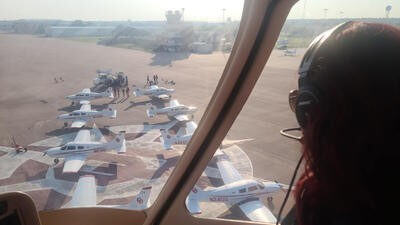
My travel roles were also something I learned a lot from early in my career. I enjoyed these roles because of the vast experiences they gave me. From working outside Dallas in a busy ER to a community access center in Fallon, Nevada, I found that there were so many complexities to different patient populations and geographical locations. It inspired me to learn more on different emergency medicine topics, like rural and flight medicine. Also, I had to learn to quickly intertwine myself into new high-functioning teams for effectiveness, which enhanced my team and leadership skills.
What difference has specialty certification made to your professional development?
Specialty certifications opened doors for me that might not have been opened otherwise. They propelled my career early and made me the provider that I am today.
American healthcare is going through a series of significant changes at the moment. From the perspective of someone working within the system, what do these changes mean for healthcare workers?
With the increase in telehealth models and the incorporation of artificial intelligence (AI), it is an interesting but exciting time to be in healthcare. It is hard to say what exactly these changes will mean for healthcare workers, but from a personal perspective, I believe that they mean that we need to be flexible, embrace the positive changes as they come, and continue to focus on delivering high-quality care to our patients, in whatever model that happens to look like.
What are your hopes for the future of healthcare workers in terms of professional opportunities and development?
My hope for the future is that professional opportunities and professional development for healthcare workers are championed for and supported in ways that enhance careers and advance patient care. It is the select special people who devote themselves to lifelong learning and those who seek growth and development that will be world-class employees and industry changers.
September 2025
Issue
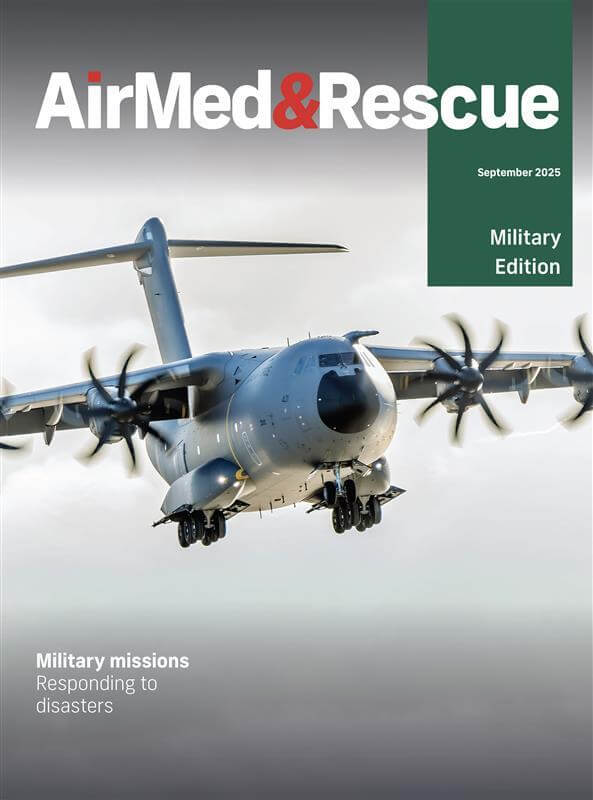
Our September edition is the special military issue, bringing together news, features and other articles that showcase military contributions to special missions. We have themed features on air forces helping with disaster response, the stretchers and baskets that make combat search and rescue possible, and the varied duties of military coast guards, and we have an extra non-themed feature on the medical equipment used in air ambulances.
Mandy Langfield
Mandy Langfield is a Director of Palladium Media Partners and former Publishing Director at Voyageur Group. She has written extensively on international travel and health insurance, medical assistance provision, and air medical transportation. She was Editor of AirMed&Rescue from December 2017 until April 2021. Her favourite helicopter is the Chinook, having grown up near an RAF training ground.