

A journey into the unknown

Inadvertent entry into instrument meteorological conditions remains a leading cause of accidents; what can be done to prevent further fatalities? Jennifer Ferrero reports
Vertigo, confusion, and spatial disorientation pose significant challenges for helicopter pilots when they inadvertently enter instrument meteorological conditions (IMC). Poor conditions can develop rapidly, even after creating a flight plan that includes weather considerations. Visual disorientation, where external visual references are lost, such as during whiteout, brownout, heavy precipitation, or other situations, can be deadly.
We investigate what specific training programs are most effective in preparing pilots for inadvertent entry into IMC (IIMC), and what advancements in technology are being developed to enhance safety for pilots flying in adverse weather conditions.
Several experts from different backgrounds discuss how to prepare for safe flight when transitioning from visual meteorological conditions (VMC) to IIMC. Both are types of flight regarding weather patterns, and transitioning from VMC, which involves visually observing and avoiding obstacles outside the aircraft, to IMC can be risky.
Katina Moliviatis is a private corporate pilot for a VIP family in Guatemala. She has been flying for 17 years and covers Central America with daily flights. Moliviatis said she was one of the few women flying in the country, and she also donates time to air medical rescue and rescue missions.
Air Methods employees, including Ian Matthews, Director of Operations, and Jason Quisling, Senior VP for Flight Operations and AirCom, are headquartered in Denver, Colorado. Matthews has been with Air Methods for 15 years, and Quisling has 25 years at the company. While they hold leadership roles, they continue to maintain their pilot ratings through regular flight training and simulation exercises. Quisling said: “I certainly try to find any excuse I can to get away from the office and get into a simulator or an aircraft. My primary love of flying is on the helicopter side.”
Christoff Heathcote, Operations Manager for GCH Aviation, is headquartered in Christchurch, New Zealand, with 160 aviation professionals operating in both rotor- and fixed-wing aircraft. Heathcote oversees all ground and flight operations for GCH’s Rotor Wing AOC division. He previously worked for the Civil Aviation Authority of New Zealand as a Flight Operations Inspector and continues to fly as a line pilot. The company offers a diverse range of services, including helicopter emergency medical services (HEMS), search and rescue (SAR), and commercial operations. He said: “Inadvertent IMC remains one of the most dangerous scenarios a helicopter pilot can face.”
Geography and elevation
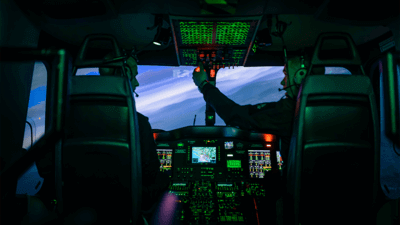
Flying conditions in Guatemala, along with their diverse microclimates, make flight planning particularly challenging. Moliviatis said that between the mountains and volcanoes, the weather changes throughout the day. Her flight elevation can vary significantly depending on the weather conditions and geography – between 5,000 and 11,000 feet – and at midday, due to hot and high conditions, if she flies at 7,000ft, it is like flying at 9,000ft because of the altitude density. She flies the H125 and H130, which she said are powerful vehicles, and “it is not an issue to fly high; it is normal to fly at that altitude”. However, when planning flights, they can transition from sun to rain to dense clouds. “Every day, it is a challenge for us to fly in these conditions – it is the heat and weather,” she added, but emphasized that she strives to fly VFR when possible.
Matthews said that Air Methods operates throughout the continental USA, including Alaska, with close to 300 bases, and thus weather conditions vary from desert to forests to coastal areas. “The greatest risk is in overnight hours, when the atmosphere cools to the saturation point, low clouds can develop. We operate 24/7, 365 days a year, and we find ourselves in these varied weather conditions. We try to position resources and equipment where they would be better positioned to support missions using IFR or VFR aircraft.”
When going into IIMC, Quisling said, “the piece that varies is the equipment that’s on the aircraft and the location you are flying in. If you can be in contact with air traffic control, they will provide you with information about known terrain or large obstacles, as well as current location on their tracking display. They can provide you with vectors or altitude information to help you avoid what might be in front of you. Their fidelity and ability to detect those things are limited in many areas though, so many operators have installed helicopter terrain avoidance and warning systems (HTAWS).”
Recognizing the early indicators of deteriorating weather – such as lowering cloud bases, loss of horizon, or decreasing visibility – is a core skill reinforced in training and post-flight debriefs
In New Zealand, Heathcote said, they operate with a “zero pressure” policy if they need to “delay, divert, or cancel missions without repercussion”. They have a shared responsibility for decision-making. “Recognizing the early indicators of deteriorating weather – such as lowering cloud bases, loss of horizon, or decreasing visibility – is a core skill reinforced in training and post-flight debriefs.” On the South Island, he said, they have “rapid and unpredictable” weather conditions, particularly between Christchurch, Nelson, Wellington, and the West Coast – GCH pilots receive ongoing IIMC recognition and recovery training every 90 days. This training ensures they are well prepared for the dynamic conditions typical of New Zealand’s diverse geography.
Matthews said: “In visual flight, a pilot’s primary sensory input are visual cues. If you remove the visual sense, the vestibular sense takes over, and it can be disorienting to tell which way is up and which way is down.”
Training and experience
Logically, that loss of control can cause accidents. However, even if the pilot can maintain control of the aircraft, unplanned obstacles or terrain, especially when cloud obscured, are additional hazards that a pilot may encounter.
“Gaining a sense of your position and how the aircraft is oriented is essential for ensuring you fly in a safe direction, away from obstacles, terrain, and the ground,” he said. “That vestibular sense can overwhelm a pilot, leading to trusting flying by the seat of your pants instead of relying on the information provided by your instruments. It can be a sensory input that is difficult to overcome. That’s why training and muscle memory, and reliance on training and equipment, are so critical.”
It can be a sensory input that is difficult to overcome. That’s why training and muscle memory, and reliance on training and equipment, are so critical
Simulation training for Moliviatis involves traveling to Denver, Colorado, to FlightSafety International. Air Methods employees also train with the organization. She has trained with them in the past, as well as training with Airbus Helicopters. She plans to return to Colorado in 2026.
“I’ve been flying for this VIP family for two years; they have offered a flight safety training course for IMC.” She said she previewed the program for about 45 minutes and likes the notion of how to fly vectors. “They are guiding you, and you rely on the instruments and don’t look outside. Everything can get out of control.” She feels the flight safety and simulator training provide enhanced skills development while trusting the instruments. “Flight safety and the simulator are an amazing help. You can do it and see where you are going wrong and then correct your errors.”
Quisling said it was not uncommon for people in the air medical industry to experience IIMC. Air Methods performs approximately 100,000 transports annually, accumulating 150,000 flight hours. He said that, on average, there could be 11 events per year.

In fact, early in his career, he experienced IIMC when transporting a patient. He said the weather was green when they went to pick up the patient – no visibility restrictions. But, because the patient was unstable and was coding, they spent an hour on the ground at the hospital for resuscitation.
“In that hour, the weather had changed dramatically. It was hazy, there were halos around the lights, and all indications suggested that fog was approaching. But looking at the weather, nothing had changed regarding IFR conditions. But as we were flying away, you could see scattered clouds at a low layer, with many changes from when we originally arrived. This was a time before night vision goggles (NVGs) were able to be utilized in civilian operations, so it was even more difficult to see the extent of the cloud cover. On the way back, suddenly the ceiling went from broken to an overcast layer, we had good visual conditions on top, but conditions would prohibit landing at the hospital.” His IFR background was helpful, but he wasn’t yet qualified to fly IFR procedures as he was new to the assigned aircraft.
“We turned around to go back to the hospital, the weather was changing quickly and dramatically, and we were close to the ground – maybe 500–600ft; I could see the helipad one second, but then it disappeared. It is that kind of transition that is the tricky part. We are visual creatures, we are used to gravity, and our eyes tell us when we are close to the ground. We use our eyes for about 75% of what we do. When somebody puts a blindfold over you, it throws your body into shock. We executed a go-around and climbed out, where we entered the clouds at 500ft, and we broke out on top at 2,000ft. We needed to get to the ground, so we declared an emergency with air traffic control, and they helped vector us to an approach, which was located at an airport close to the patient’s destination hospital. They had an instrument landing system that allowed for a precision approach and a safe landing. They then transported the patient with a ground ambulance to the hospital a couple miles away.”
We are visual creatures, we are used to gravity, and our eyes tell us when we are close to the ground. We use our eyes for about 75% of what we do. When somebody puts a blindfold over you, it throws your body into shock
In retrospect, Quisling said, “avoidance and knowledge of weather patterns and pre-flight planning about weather changes are the best way to deal with IIMC. However, there may be times that pilots find themselves with limited options, and this is when you also need to be proficient and know how to recover and escape from IIMC.” He said: “Through the use of simulators and a comprehensive training plan, we have been able to eliminate what was at one time the single greatest contributor to fatal accidents in HEMS.”
How to avoid IIMC
The International Helicopter Safety Team (IHST) offers practical, universal advice for pilots seeking to minimize IIMC risk:
- Get a reliable forecast for departure, en route, and arrival
- Avoid flight in marginal VFR conditions
- Continuously check the weather ahead – use local resources if possible and webcams
- Establish en-route decision points and stick to them
- Recognize the signs:
- Deteriorating weather, obscured terrain, fog, or precipitation
- Descending below planned altitudes
- Assess and act early – if conditions worsen, land or turn around before you go IIMC
- Manage your ego – aviation isn’t a competition. Sound judgment is a strength, not a weakness.
Provided by GCH Aviation, on behalf of the IHST.
Mitigating the risks
Heathcote said: “Inadvertent IMC encounters are among the most demanding, disorienting, and dangerous conditions a pilot can experience. Statistically, they carry one of the highest fatality rates of all helicopter accident categories.”
He cited an Australian Transport Safety Bureau (ATSB) research paper, ‘Accidents Involving Pilots in Instrument Meteorological Conditions’, which reported that “In the decade from 1 July 2009 to 30 June 2019, 101 VFR into IMC occurrences in Australian airspace were reported to the ATSB. Of those, nine were accidents resulting in 21 fatalities. That is, about one in 10 VFR into IMC events result in a fatal outcome.”
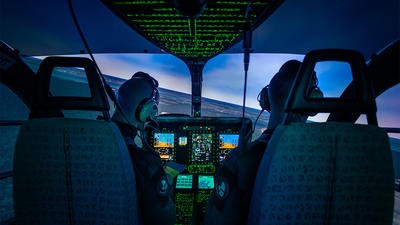
GCH Aviation has implemented training platforms using the BK117 and entrol H145 mixed-reality simulator, which is supported by ground theory and ongoing assessments. Heathcote added: “This holistic approach combines simulator precision with operational realism, replicating local routes, terrain, and weather patterns so that pilots can rehearse recognition, transition, and recovery techniques in authentic conditions.”
This holistic approach combines simulator precision with operational realism, replicating local routes, terrain, and weather patterns so that pilots can rehearse recognition, transition, and recovery techniques in authentic conditions
Tools that can help prepare pilots, according to Moliviatis, include GPS and weather apps. She uses the Garmin 750 and 1000, which she indicated is newer technology in Guatemala, and the app Windy, which offers wind maps and weather forecasts. She uses Windy when flying in clouds, especially late in the morning between 11:00 hrs and noon, and when she is between the coast and to the north. “It is a good help for me as a pilot. I fly every day and use it frequently. The weather apps are very useful.”
IIMC is dangerous and disorienting. Expert pilots reflected on the use of a solid flight plan, anticipating weather changes; simulation training; and the use of technology, including applications. Most importantly, all pilots discussed the importance of a supportive culture that allows them to turn back in challenging weather conditions and to call for additional help. Moliviatis said it best: “When I do my 360s and prepare my helicopter, I pray to God for a good and safe flight, not to be cocky or overconfident – that’s the worst mistake the pilot can make.”
March 2026
Issue
This edition is bursting at the seams with articles from all corners of the special missions sector. We have features on the California wildfires that ravaged the state last year, what the cost–benefit analysis looks like for single-engine rotorcraft and autorotations, how the mission dictates the modification needed to the platform, and what can be done to further prevent the problems associated with inadvertent entry into instrument meteorological conditions.
Jennifer Ferrero
Jennifer Ferrero owns Ferrero Agency. She focuses her writing on feature stories for aerospace and manufacturing trade publications. She also provides marketing and public relations services. She has been an entrepreneur and writer for over 25 years. She lives in Spokane, Washington.