
Mixing bowl

Some operators have mission requirements that demand a mix of fixed- and rotary-wing aircraft in their fleet. Ian Harbison learns how differing operations affect equipment choice
In simple terms, fixed-wing aircraft provide advantages of payload, speed, and range (although this can also translate into endurance, or time on station), while helicopters provide almost unlimited access and do not require airports. Different missions require different mixes of the two types.
RCAF
For the Royal Canadian Air Force (RCAF), its search and rescue (SAR) capability started with fixed-wing aircraft, primarily because this dates back to before the Second World War, when helicopters were either non-existent or not yet operationally viable. During this period, aircraft such as the Noorduyn Norseman and PBY-5A Catalina/Canso (which could operate from water) were used for aircrew recovery, maritime patrol, and Arctic and remote operations.
The period from the late 1940s through to the 1960s saw the introduction of early helicopters such as the Piasecki H-21 ‘Flying Banana’, and later the Boeing Vertol CH-113 Labrador. These brought new rescue capabilities such as vertical lift (hovering), precise extraction (hoisting survivors), and access to confined or rugged terrain. By the 1960s, Canada recognized that SAR demands across its vast geography required complementary capabilities.
Fixed-wing assets have a longer range and faster airspeeds, allowing them to cover more distance more quickly, with fewer refueling requirements en route. They are well suited to covering a larger search area once on scene with a range of different sensors. Once a search object has been located, they can deploy search and rescue technicians (SAR techs) to the scene via parachute, as well as a range of supply bundles to enable survival and communication with rescue assets. In the maritime environment, they can dispatch water pumps to vessels taking on water and, if necessary, sea rescue kits including life rafts. When working with rotary-wing assets, they often take on a supporting role as a communication relay and can provide illumination at night to facilitate rescue efforts.
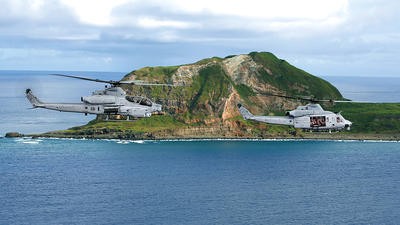
Rotary-wing assets provide enhanced versatility compared with their fixed-wing counterparts. They are equally capable of deploying SAR techs to effect a rescue, but can subsequently extract personnel using a hoist. As a result, they can readily transport patients to higher levels of care and provide closure to the rescue effort. Due to their ability to operate at lower speeds and altitudes, they can operate more effectively in challenging weather conditions when visibility is more heavily restricted.
The current fixed-wing fleet includes the Airbus CC-295 Kingfisher, which entered service in 2025. Designed for SAR, it is equipped with integrated sensors that allow crews to locate persons or objects from more than 40km away, even in low-light conditions. The Lockheed Martin CC-130H Hercules is primarily used for SAR operations. It has a range of more than 7,200km and can transport approximately 80 passengers, operate on short unpaved runways, and fly in severe weather conditions. The later CC-130J Hercules is used for a wide range of missions, including troop transport, tactical airlift, and aircrew training, but can be used for SAR if necessary.
It can operate in severe conditions, making it ideal for Canada’s challenging geography and climate. It can carry up to three stretchers in the SAR configuration (12 stretchers in the casualty evacuation configuration), or a load of 5,000kg
On the rotary side, the Leonardo CH-149 Cormorant is dedicated to long-range SAR. It can operate in severe conditions, making it ideal for Canada’s challenging geography and climate. It can carry up to three stretchers in the SAR configuration (12 stretchers in the casualty evacuation configuration), or a load of 5,000kg. Its advanced systems provide a stable hover for critical hoisting operations. The Bell CH-146 Griffon can be fitted with a variety of equipment, including a searchlight and a hoist to extract people and cargo from almost any terrain.
NPAS
Captain Paul Watts, Head of Flight Operations, said the UK’s National Police Air Service (NPAS) supports policing across England and Wales. It was established in 2012 following a national review by the Home Office. It is led by West Yorkshire Police with all 43 territorial police forces in England and Wales and the British Transport Police contributing funding.
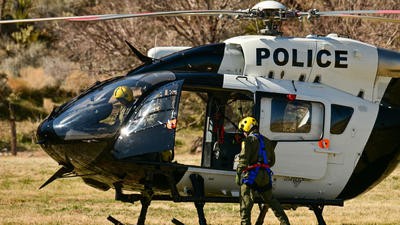
It has a fleet of 16 Airbus EC135s, four EC145 helicopters, and four Vulcanair P.68R aircraft. These operate from a total of 15 bases across the country, with the P.68Rs located at East Midlands Airport to provide national cover. All operate 24/7 in both rural and urban environments, in addition to limited overwater coastal searches.
Both fixed-wing and rotary platforms perform broadly similar missions, including searches for suspects and missing/vulnerable persons; vehicle pursuit and tracking of stolen vehicles; providing imagery for a variety of police incidents, including public order situations; surveillance; and escort. However, helicopters are better suited to highly dynamic tasks requiring swift response times or low-level operations in urban areas; they also have the ability to land in order to give assistance or deliver equipment/people (although are limited in potential payload). The Vulcanairs benefit from a far greater endurance and are more suited to tasks requiring a long loiter time, such as overwatch at public events. They have also proved particularly effective in certain pre-planned operations, for example proactive policing operations to detain and deter off-road motorbikes/quad bikes involved in criminal or anti-social behavior.

As a perfect example of the endurance of the aircraft, on 1 November 2024 a P.68R took off at 22:00 hrs from East Midlands Airport to patrol the Midlands area, but immediately self-tasked to the Derbyshire and Staffordshire border to search for an offender near HM Prison Sudbury, about 25 miles away, before diverting to Banbury, about 80 miles south, where Thames Valley Police needed assistance with a search for a highly vulnerable person. Remaining in southeast England, the crew was tasked three further times – to reports of a high-risk missing person, a vehicle that had failed to stop for officers, and a suspect who had made off. The crew found the suspect and made sure vital evidence was recovered. As the crew returned to base, shortly before midnight, they picked up a missing person search that was being conducted by Derbyshire Police. They finally landed after five hours.
Coulson Aviation
Coulson Aviation was founded in 1960 to provide a wildfire response. Initial operations were with helicopters but, said Britton Coulson, President and COO, they expanded into fixed-wing as customer requirements grew. The same agencies and emergency-service customers were looking for a reliable partner that could provide more than one solution, so broadening the fleet was a natural evolution. In fact, operations now cover retardant and water drops, air attack and lead operations, crew and equipment movement, emergency rescue support, evacuations, disaster response, and utility transport.
Having multiple tools in the toolbox gives a broader view of the industry, enabling the company to match the aircraft to the mission more intelligently, and helping it to innovate across platforms rather than operating in a narrow lane.
Coulson works with the US Forest Service and the California Department of Forestry and Fire Protection (CAL FIRE) and is part of the Quick Reaction Force (QRF) – a public-private partnership that includes Southern California Edison, the Los Angeles County Fire Department, and the Ventura County Fire Department. In addition, it has seasonal wildfire operations in South America, working with agencies like CONAF in Chile and MAyDS in Argentina, and, in Australia, operating in close coordination with agencies like the NSW Rural Fire Service (RFS) and Department of Fire and Emergency Services (DFES).
Wildfires can move quickly and unpredictably, so the FireLiner can provide a rapid response on long dispatches. Getting to the fire earlier and delivering a large load of retardant can change the outcome
Starting at the top of the fixed-wing fleet are six Boeing 737 FireLiners. Wildfires can move quickly and unpredictably, so the FireLiner can provide a rapid response on long dispatches. Getting to the fire earlier and delivering a large load of retardant can change the outcome. The aircraft can also be used to transport firefighters without reconfiguration, if additional resources are needed. Next are 10 Lockheed Martin C-130H Hercules, which provide strong drop performance at low level and low speed, enabling them to deliver a 4,000gal load accurately in demanding terrain.
Fourteen Cessna Citations are used for lead and air attack duties. These can operate from short runways at smaller airports and remote locations. The jets are equipped with a multi-mission pod and can also be configured with additional sensors, including a FLIR 380HD, WESCAM MX-15, or line scanner/lidar system for gathering data on fires. Finally, a Beechcraft King Air 350 aircraft is used for utility transport.
Heading the helicopter fleet are nine Boeing CH-47D Chinooks. These can carry 3,000gal each, refill their drop tanks in 90 seconds from the hover, and, with night vision, operate 24/7. They can also be used for heavy lifting: over 25,000lbs at sea level. The Sikorsky UH-60 Black Hawk helicopter combines aerial firefighting and heavy-lift missions, transporting firefighters, equipment, and supplies to the front lines of a wildfire, as do three Sikorsky S-61s. Two Sikorsky S-76s are used for command and control, in the air or on the ground. Equipped with thermal imaging cameras and configured for night operations, these are ideal for hotspot detection, fire behavior analysis, fire perimeter maps, and mobile and/or static command-and-control center operations. They also provide firefighter and supply transport to remote locations. Last, but not least, are six Bell 412s, fighting fires with foam or suspended water buckets and providing logistics support.
Upgrades and innovations
NPAS operates the world leaders (in flying hours) for the EC135/EC145 and it is likely that some of the current airframes will have to remain in service for a further 10 years. Despite this long history, they can still be effective platforms providing that the mission equipment is updated.
It is likely that some of the current airframes will have to remain in service for a further 10 years. Despite this long history, they can still be effective platforms providing that the mission equipment is updated
The service is currently trialing the use of a large beyond-visual-line-of-sight (BVLOS) drone, while work is ongoing to identify suitable missions for uncrewed aerial systems (UAS). These are likely to be similar to those undertaken by the P.68Rs, but there are significant challenges to be overcome before these can operate in unregulated airspace in a similar manner to crewed aircraft.
For Coulson Aviation, innovations include the Retardant Aerial Delivery System (RADS), which has been developed over 30 years, now with a lightweight RADS-XXL version that can dump 1,600gal per second. The system weighs 3,300lbs and can be installed or removed an in under an hour.
The company also pioneered the use of night vision goggles (NVGs) to continue operations into darkness – cooling temperatures, reduced wind, and rising humidity at night make it the ideal time to subdue a raging fire.
A further example is SafeFuel, an onboard fuel-quality assurance and protection system that analyzes fuel during refueling, before it reaches the tanks. Firefighting aircraft often operate from remote bases, temporary staging areas where fuel may be handled under pressure. The system is designed to detect risks such as water, particulates, chemical degradation, or off-spec fuel in real time and alert the crew.
In December 2025, Coulson Aviation launched its Boeing 767 Very Large Airtanker (VLAT) program. This was in response to the grounding of the McDonnell Douglas MD-11 and DC-10 fleets late last year that resulted in a significant reduction in high-capacity, large-scale retardant delivery capability. The 767 VLAT will have a RADS tanking system fore and aft of the wing and over 160 seats. Its capacity has not yet been publicly disclosed, but it should offer greater payload, lower fuel burn, and long-term sustainability compared with existing platforms, as there are a large number of Boeing 767s in service and being retired, so conversion feedstock is not a problem. The conversion will be covered by a Federal Aviation Administration (FAA) supplementary type certificate (STC), with the first aircraft expected to enter service in the next 24–36 months.

Finding crew
Coulson says the challenge of finding crew varies by aircraft, but the bigger challenge is finding people who fit the mission. Aerial firefighting is demanding, specialized work, so it brings in military team members who already understand certain aircraft and train them on the mission, as well as commercial team members who understand parts of the mission and are trained on the aircraft.
Watts said when NPAS started operating fixed-wing aircraft, there was an expectation that it would be easier to recruit for these than for rotary, due to there being a larger number of fixed-wing pilots. This has not proved to be the case, though, as there are very few with experience of low-level, dynamic/reactive, all-weather operations. The line training for fixed-wing pilots is also considerably longer, again because they do not join with extensive experience in the operating environment.
Introduction of the UAS will also require new skill sets.
Maintenance and lifetime
The lifespan of SAR aircraft in the RCAF is not fixed. It depends on airframe design, operational intensity, and life-extension programs. However, there are clear, typical ranges and real fleet examples that illustrate how long each type is intended to operate. The Kingfisher’s planned support contract extends out to 2042. As for rotary-wing aircraft, the Cormorant entered service in the early 2000s. Its implied lifespan is approximately 35 years with a mid-life upgrade. The Griffon was introduced in the 1990s and has a planned extension into the 2030s, so its implied lifespan is also in the realm of 35 years. In general, rotary-wing aircraft have a shorter baseline life due to vibration and mechanical stress. Mid-life upgrades and component replacement cycles can help to extend their life cycles.
In general, rotary-wing aircraft have a shorter baseline life due to vibration and mechanical stress. Mid-life upgrades and component replacement cycles can help to extend their life cycles
For Coulson Aviation, most rotary-wing platforms are managed through component lives and approved maintenance programs rather than a single whole-aircraft life limit. Large airtankers are different because structural life, inspection requirements, conversion investment, and long-term economics all matter. Typically, a large airtanker conversion needs a 10-plus-year service horizon to make sense, and the actual useful life depends on cycles, maintenance condition, parts support, and regulatory requirements.
When it comes to maintenance, different platforms bring very different maintenance demands, tooling requirements, training requirements, and supply chain considerations. Ex-military aircraft such as the C-130H and CH-47D were designed around military operating concepts and maintenance programs, so they require a different level of sustainment expertise. Commercial platforms such as the 737, Citation, and King Air benefit from broad global support networks, but special mission conversion work still adds unique maintenance requirements.
For NPAS, the P.68R has lower operating costs than the helicopters and the UAS is expected to be lower still.
These are all very different operators working in different environments but with a common requirement for a mixed fleet. It is best summed up by Britton Coulson: while a mixed fleet creates more overhead, it also creates more capability, more resilience, and more options for the customer.
October 2026
Issue
The latest edition of AirMed&Rescue is packed full of content to keep you occupied in October. We have features on the challenges that swiftwater presents when trying to rescue someone; how sensor technology is affecting and improving aerial firefighting missions; why operators choose to have a varied fleet of aircraft to perform special missions; and what can be done to improve the accessibility and awareness of mental health assistance programs for safer and sustainable working conditions.
Ian Harbison
Ian has had a long career in the defense and aerospace industry, including journalism, PR and market intelligence.
Between 1990–2000, he was at Shephard Press as Editor of Commuter World, later Regional Airline World, and launch Editor of Air Ambulance and Inflight magazines.
From 2004–2020, he was at Air Transport Publications, as Editor of MRO Management, as well as launch Editor of Low Cost & Regional Airline Business, GreenSky - Aviation and the Environment and Aircraft Cabin Management and MRO News Focus newsletter.
From 2000–2004, he variously handled PR for Bombardier Regional Aircraft, was Editor of Offshore Patrol magazine and Airline News Weekly, and freelanced. He is currently freelancing for several publications in the UK and the USA.