
Multi-role helicopters

As military aviation evolves to embrace operations in support of civilian populations in crisis, utility rotorcraft with the flexibility to quickly repurpose from combat readiness to serving multiple non-combat missions are much in demand. Robin Gauldie reports on the military operators that are aiming to get more years of service out of long-serving types as well as renewing their multi-role fleets
Like the original Volkswagen Beetle, Indiana Jones, the Rolling Stones or the Kalashnikov rifle, some rotorcraft just keep on keeping on, regardless of age.
The legendary Bell UH-1 ‘Huey’ maintains its position as an iconic workhorse, and other utility helicopter platforms such as Boeing’s mighty CH-47 Chinook (in service since 1962), Airbus’s H145 and Super Puma, the extended Sikorsky Black Hawk family, and Leonardo’s EH/NH series look set to give many years more service with the world’s militaries.
Explaining the breadth of impact that the Huey has, Scott Sims, H-1 Program Director at Bell Textron, said: “The UH-1Y platform remains very popular, [it] serves as the US Marine Corps’ primary utility helicopter, operating worldwide in some of the most demanding environments. In total, over 70 countries currently use or have operated models in the H-1 family. While Bahrain has not yet operated the UH-1Y Venom, it has procured the AH-1Z Viper as part of its helicopter modernization program.
“Operators are attracted to the UH-1Y because it offers a combination of proven operational performance, mission flexibility and affordable lifecycle support. Its ability to operate in challenging environments, carry significant payloads, and rapidly adapt to different mission sets is complemented by the 85% commonality shared with the AH-1Z attack helicopter. This delivers significant savings in training, maintenance, and logistics. For many operators and armed forces, that commonality provides a practical way of building an effective rotary-wing capability. And we know that pilots enjoy flying these aircraft, too.”
Over decades, military utility rotorcraft like these have served as often in non-combat roles such as search and rescue (SAR), medevac, emergency medevac, and humanitarian disaster relief as in combat.
Veteran models are due for replacement by new types poised to lift off the drawing board in the next decade, according to NATO’s Support and Procurement Agency.
“A significant amount of the medium multi-role assets currently in service… will reach the end of their life cycle in the 2035-40 period and beyond,” the NATO agency reported in a statement profiling its Next Generation Rotorcraft Capability project, which aims to define requirements for a platform to replace the NH90, Puma/Cougar, the Soviet-era Mi-8/17, and the Merlin in the 2030s. Meanwhile, the US military is scheduled to receive the first MV-75 tiltrotor aircraft, part of the US Army’s Future Vertical Lift (FVL) program, in 2030.
Until such new-generation utility aircraft achieve liftoff at scale, though, militaries around the world typically find it makes sense to keep on enhancing their existing fleets, aiming to extend the operating life of large numbers of utility workhorses well into the 2030s.
Incorporating new technologies
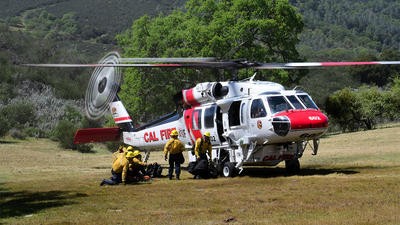
Happily for military operators operating non-combat missions, utility airframes are surprisingly able to incorporate new technologies and bolt them on to long-serving platforms.
Decades of upgrades and reincarnations have extended the operational life of the Huey and the equally iconic UH-60 Black Hawk, but militaries are eyeing younger multi-role utility platforms to replace them.
Germany’s Luftwaffe has ordered 60 H145M airframes, with options for 20 more. With its cabin-mounted hoist and MX-15 surveillance equipment in place, the H145M is capable of disaster relief and SAR missions, while removing its HForce heavy weapons system enables it to carry up to 10 passengers, 200kg of internal cargo, and 1,600kg of cargo carried externally.
Britain’s Royal Air Force (RAF) selected Leonardo’s AW149 as its New Medium Helicopter (NMH) in February 2026, citing the AW149’s ability to carry out humanitarian assistance and disaster relief tasks in addition to combat missions.
“The NMH program will deliver multiple rotary-wing requirements using a single aircraft type. The platform will be able to undertake tasks that were previously delivered by different aircraft types,” the RAF stated.
“The AW149 platform is ideally suited to modernize defense helicopter fleets and replace a range of aging types in the medium weight category,” the statement added.
Replacement of the RAF’s 50-year-old Puma HC2 helicopters began last year, with the Puma to be replaced by six new Airbus H145 D3s.
Like the Pumas, the H145s “will provide rotary-wing capability in support of the UK’s global overseas presence,” according to the UK’s Ministry of Defence, including aerial firefighting in Cyprus, alongside another trusty RAF warhorse, the heavy-lift Chinook. The RAF’s current operational fleet of Mk5 and Mk6 Chinooks is scheduled to be replaced by 14 new CH-47 Extended Range rotorcraft under the RAF’s Chinook Sustainment Programme, with flight trials set to begin next year.
Sims added that an older airframe does not necessarily mean that it is out of date or a victim of obsolescence: “The UH-1Y Venom is one of the most exceptional aircraft Bell Textron has produced, and it was designed to be continually developed with the future in mind.
“There’s no doubt it remains at the cutting edge; it continues to evolve through a careful modernization roadmap that keeps pace with the ever-changing operational requirements of modern combat zones. Recent enhancements include the Structural and Power Improvements for NextGen Effects (SPINE), along with upgraded avionics and improved digital mission systems that provide the capacity to integrate future technologies as they become available, making sure the UH-1Y is consistently a mission-critical asset to any operation.
“Just as importantly, and what really sets it apart from the competition, the UH-1Y benefits from more than 85% parts commonality with the AH-1Z Viper, reducing logistics, training, and maintenance costs. This makes fleet management far simpler. Combined with an established global support network and a proven, reliable production line, operators gain a highly capable, combat-proven aircraft that excels in different environments. If there’s one aircraft – or duo in this case – that’s been engineered to stay relevant for decades to come, it is the H-1 platform.”
Flexible interiors
As militaries seek to extend the life of their currently serving utility fleets or replace their multi-role rotorcraft with newer types, suppliers see strong demand for flexible, mission-ready medical interiors, particularly from government, military, SAR, and emergency response operators, according to Ricky Reno, Vice President Account Executive at Spectrum Aeromed. The air medical manufacturer has developed solutions for a wide range of rotor-wing platforms, including aircraft from Airbus, Bell, Leonardo, Sikorsky, and other utility helicopter manufacturers.
Spectrum’s projects can include stretcher systems, medical modules, oxygen solutions, equipment racks, electrical integration, storage systems, and mounting solutions for critical care equipment.
“Aircraft that already have strong utility, SAR, or emergency medical services (EMS) pedigrees tend to be especially well suited because they were designed with operational flexibility in mind,” Reno added.
Platforms such as the Airbus H145, AW119, AW139, Bell 212 and 412, and larger utility aircraft such as the EC225 Super Puma, known as the Cougar in military service, can all be strong candidates depending on the mission requirements.
A key driver, Reno said, is the need for aircraft to support multiple mission types rather than being dedicated to a single role.
“Military and government operators may rely on the same helicopter fleet for combat support, disaster response, medical evacuation, SAR, humanitarian missions, and civilian emergency operations,” Reno emphasized.
Military and government operators may rely on the same helicopter fleet for combat support, disaster response, medical evacuation, SAR, humanitarian missions, and civilian emergency operations
A case in point is the Montana National Guard, serving a US state that is larger than Germany, with aircrews operating missions including firefighting and SAR support in mountainous terrain, remote wilderness areas, agricultural regions, and communities separated by vast distances.
The National Guard relies on versatile rotary-wing aircraft capable of supporting a wide range of missions, from military training and combat readiness to domestic operations supporting communities across Montana, according to Senior Master Sergeant Devin Doskey, a National Guard spokesperson.
“The strength of Montana National Guard aviation lies in its ability to provide capable, adaptable, and ready forces that can respond to a wide range of challenges while serving both state and federal missions,” SMSgt Doskey added.
“The UH-60 Black Hawk and CH-47 Chinook are among the most flexible platforms in our inventory due to their ability to transport personnel, move equipment, support SAR efforts, conduct aerial firefighting operations, and assist with disaster response.

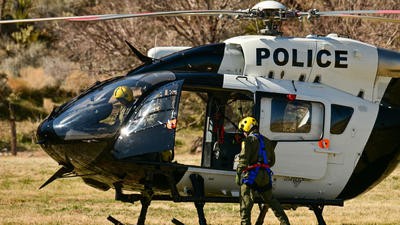
“The addition of modern sensors, communications equipment, and mission systems generally increases flexibility by improving situational awareness and enhancing crews’ ability to operate safely and effectively in a variety of environments.
“While some systems support specific mission requirements, many provide benefits across multiple mission sets. Aircraft interiors are designed to be adaptable, allowing crews to configure aircraft for passengers, cargo, medical support equipment, or specialized mission requirements. This flexibility enables aviation units to respond to changing mission demands with minimal downtime,” SMSgt Doskey concluded.
For medical missions, according to Reno, there is a growing focus by operators on rapid reconfiguration, fleet standardization, and equipment that supports advanced patient care in flight.
“Operators are looking for solutions that integrate efficiently with aircraft power and oxygen systems, securely mount critical medical devices, and create an effective working environment for medical crews operating in challenging conditions,” he added.
Operators are looking for solutions that integrate efficiently with aircraft power and oxygen systems, securely mount critical medical devices, and create an effective working environment for medical crews operating in challenging conditions
Providers of these solutions must balance mission flexibility with certification, safety, and aircraft performance requirements, and medical interiors must be secure, durable, and compliant, while still allowing the aircraft to be used for other missions when needed, Reno said.
“Every platform presents its own engineering considerations, including cabin layout, loading access, available space, electrical power, oxygen integration, weight and balance, and how medical equipment interfaces with the aircraft structure.
“Military and government operators may also have additional requirements related to durability, maintainability, and operating in remote or austere environments,” he pointed out.
“The UH-1Y Venom was developed as a genuine multi-mission platform, capable of supporting troop transport, tactical assault, medevac, SAR, special operations, humanitarian assistance, disaster response, and command and control missions from the same airframe,” said Sims, expounding the reasons why military operators look to use a multi-role utility craft. “There’s very little it can’t do. Its spacious cabin and modular design allow operators to configure the aircraft for the task at hand without extensive modification, whether that’s installing rescue hoists, auxiliary fuel, or defensive systems. That flexibility is vital in today’s operating environment, where aircraft are expected to move quickly between combat support, security, and humanitarian missions. The UH-1Y enables crews to respond to changing requirements while offering the reliability and performance expected from a utility helicopter.”
Multiple fleets
Few national militaries have more experience of such extreme environments than Canada’s. Like the US National Guard, the Canadian Armed Forces must operate domestically in demanding terrain and extreme weather conditions and must respond to incidents across vast and often remote areas, including maritime, Arctic, and mountainous environments, so geography is a key factor shaping how the RCAF organizes, bases, and employs its helicopter fleets, according to Laura McIntyre-Grills, a Royal Canadian Air Force spokesperson.
The Canadian Armed Forces must operate domestically in demanding terrain and extreme weather conditions and must respond to incidents across vast and often remote areas, including maritime, Arctic, and mountainous environments, so geography is a key factor shaping how the RCAF organizes, bases, and employs its helicopter fleets
“Given Canada’s size, varied terrain, and extensive coastlines, aircraft are strategically positioned for rapid response across multiple regions and mission types,” she said.
All Canada’s military and naval helicopters are operated by the RCAF, with special missions including SAR, casualty evacuation, humanitarian assistance, domestic response, and surveillance, and grouped into four operational fleets, according to type.
The CH-146 Griffon fleet provides flexible aviation capability used for troop and materiel transport, domestic response, surveillance and reconnaissance, casevac, and occasionally SAR.
“The Griffon’s adaptable cabin makes it one of the most frequently employed platforms across multiple mission types,” McIntyre-Grills said.
The RCAF’s CH-147F Chinook fleet operates domestically and abroad, with a size, range, and payload that make it a capable multi-role platform for large-scale humanitarian assistance, disaster response, and casualty evacuation, she added.
Additionally, the RCAF’s CH-148 Cyclone maritime rotorcraft fleet, operating from Royal Canadian Navy vessels, has a secondary capability for utility transport and SAR in addition to its primary surface and sub-surface surveillance role, and the CH-149 Cormorant is a dedicated long-range SAR platform.
Griffon and Chinook rotorcraft are largely co-located with Canadian Army units across the country, enabling close integration with land forces for rapid response to domestic emergencies. The Cyclone fleet operates from bases on Canada’s east and west coasts on sustained maritime operations in support of naval missions, and the Cormorant fleet is positioned to support Canada’s SAR regions, with aircraft based at Gander and Greenwood on the east coast and Comox on the west coast.

While all aircraft can perform general utility tasks, multi-role capability varies across the four fleets. Aircraft interiors are designed to strike a balance between mission specialization and adaptability, though the degree of flexibility varies by platform, according to McIntyre-Grills.
“The Griffon and Chinook offer the greatest flexibility across multiple mission sets, while the Cyclone and Cormorant are more specialized,” she said.
“For the Griffon and Chinook, mission effectiveness is often achieved through scalable onboard equipment rather than permanently installed, role-specific systems,” she added.
With good cabin access, adequate interior space, flexible seating or floor configurations, and sufficient power capacity, utility platforms like these are typically well suited for multi-role missions, opined Reno.
Sims added that, when choosing an airframe, the versatility of a platform and its ability to adapt for different future needs is what can make it a viable and attractive prospect: “Procurement decisions aren’t based solely on an aircraft’s performance needs today, but on how effectively it can adapt over a service life that will span decades. Operators need confidence that new mission systems, communications, sensors, and defensive technologies can be integrated without fundamentally redesigning the platform.” Sims concluded: “This is where an upgradeable platform delivers even more value to their operators. It enables them to introduce new capabilities, while protecting long-term investment and reducing lifecycle costs. For many operators, adaptability is now just as important as payload, range or speed because modern utility helicopters are expected to support a much broader range of missions than when they first enter service.”
McIntyre-Grills said: “Ultimately, the ‘best’ aircraft depends on the operator’s priorities, including patient capacity, range, cabin size, loading method, crew workflow, and how quickly the aircraft needs to transition between roles. The most successful military and government programs typically start with a clear understanding of the mission: how many patients need to be transported, the level of care required, the equipment that must be carried and secured, and the expected speed of reconfiguration between missions.
Airframes that support a broad range of tasks – such as the Griffon and Chinook – benefit from relatively open and reconfigurable cabin spaces
“Airframes that support a broad range of tasks – such as the Griffon and Chinook – benefit from relatively open and reconfigurable cabin spaces. This allows crews to adjust onboard equipment and loadouts to suit different missions, including troop transport, casualty evacuation, and domestic response operations.
“In practice, however, adaptability across the fleets is often achieved less through major physical reconfiguration and more through the selection and integration of mission-specific equipment and onboard kit,” she added.
However it is achieved, for the world’s military utility rotorcraft fleets, adaptability is going to be the name of the game for years to come.
September 2026
Issue
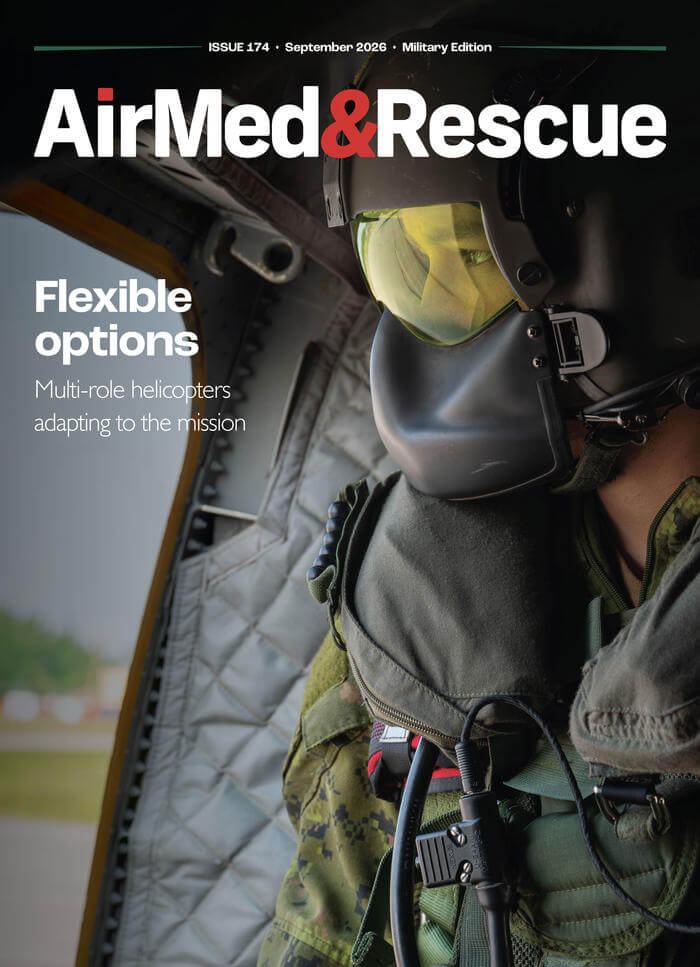
As we reach the equinox, I’m happy that we have an interesting military edition of AirMed&Rescue for you to read on those longer nights. We have features on the benefits of governmental institutions having a multipurpose helicopter; why military operators are at the forefront of exploring optionally piloted aircraft; how uncrewed aerial vehicles are serving as platforms for sensors that can operate in extreme situations; and on the equipment that is essential to carry on board an emergency medical services aircraft.
Robin Gauldie
Robin Gauldie is a former editor of Travel Trade Gazette and other travel and tourism industry titles. Now a freelance journalist specialising in travel, aviation and tourism, he writes for a variety of international consumer and business publications including International Travel & Insurance Journal, AirMed and Rescue, and Financial World.